Connect with us

Feature/OPED

A Nation in Search of Its Soul

Published

on

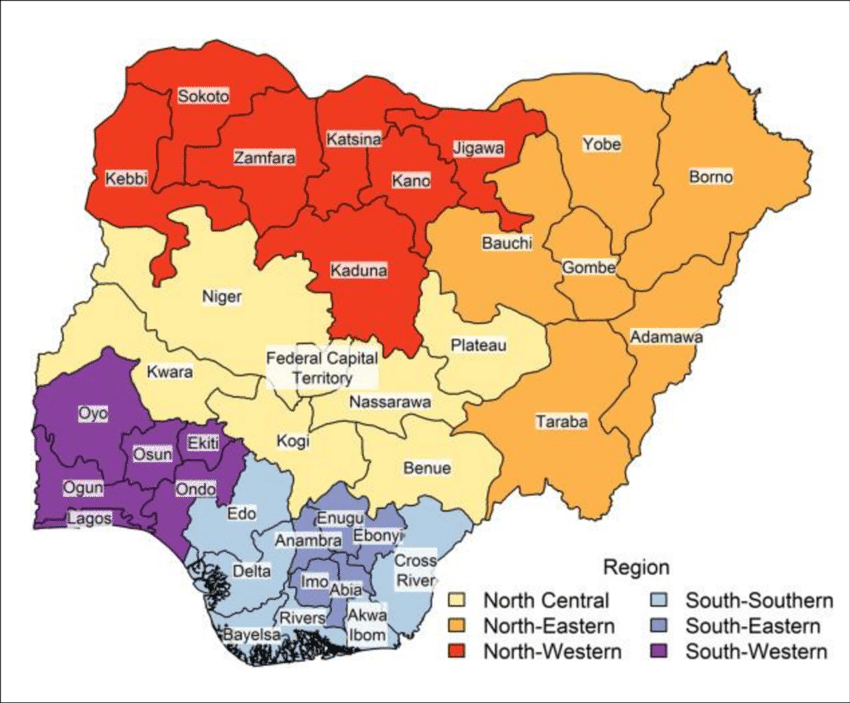
map of nigeria

By Jerome-Mario Chijioke Utomi

The debate on the interrelatedness of equity, justice; peace and development is among the most presently discussed topics on the surface of the earth.

The reason for this unending debate stems from the time-honoured belief that without equity and justice, there will be no peace. And without peace, no society, group or nation should contemplate development.

For Nigeria to achieve the above feat, there exists the need to think over the marriage of two unwilling brides who had no say in their forced and ill-fated union; the amalgamation of the northern and the southern protectorates on February 14, 1914, by Sir Lord Luggard- as well as the pre-and post-independence political structure of Nigeria.

The British colonial overlords probably intended the protectorates to operate in a symmetrical manner with no part of the amalgam claiming superiority over the other. And at independence in 1960, Nigeria became a federation, resting firmly on a tripod of three federating regions-Northern, Eastern and Western Regions.

Each of the regions was economically and politically viable to steer its own ship, yet mutual suspicion among them was rife. In fact, regional loyalty surpassed nationalistic fervour with each of the three regions at a juncture threatening secession.

On the reason for amalgamation, two economic reasons/objectives, going by reports were documented.  First, the supply of primary raw material (agriculture and mineral) for which Nigeria as a large nation was abundantly endowed to the British home industry, and to secure Nigeria as a large market for the industrial goods (capital and consumer items) and professional technological services of the British home industry and personnel.

The second and most serious reason for amalgamation, according to one of Nigeria’s foremost lawyers, late Richard Akinjide, is found in Fredrick Lugard’s Book titled The Dual Mandate of Europe in Tropical Africa London, 4th Edition, 1929, where, Lord Harcourt, the British Colonial Secretary, after whom Port Harcourt (PH) was named, clearly stated the Purpose of Amalgamation of the Entities named Nigeria as follows, “We have released Northern Nigeria from the lending Strings of the Treasury (British Government Treasury). The promising and well-conducted youth is now on Allowance on his own and is about to effect the Alliance with a Southern Lady of means. I (Lord Harcourt) have issued the special License and Sir Fredrick Lugard will perform the Ceremony. May the Union be fruitful and the Couple constant”.

Now, this is the foundation of the nation’s crisis. Unfortunately, it is rather one of leadership, management and perennial egotism.

The late Premier of the Western Region once described Nigeria as a “mere geographical expression” and later threatened “we (Western Region) shall proclaim self-government and proceed to assert it” a euphemism for secession.

In the same vein, the Northern Region under the Premiership of the late Ahmadu Bello never hid its desire for a separate identity. Just before independence, the region threatened to pull out of Nigeria if it was not allocated more parliamentary seats than the south. The departing British colonial masters, desirous of one big entity, quickly succumbed to the threat.

In fact, the north at that time did pretend it never wanted to have anything to do with Nigeria. For example, the motto of the ruling party in that region at that time was “One North, One People, and One Destiny.” And the name of the party itself “Northern People’s Congress, NPC,” was suggestive of separatist fervour, distinct identity.

However, of all the secession threats since independence, it was the one issued by the Eastern Region in 1966-67 following the bloody counter-coup of July 1966 and subsequent genocide by northern soldiers and civilians in which thousands of easterners living in the north lost their lives or maimed, and the failure of Gowon to implement the Aburi Accord which was aimed at settling the crisis, that was much more potent because it was actually carried out.

The result was the declaration of the Eastern Region independent country with the name, “Biafra” on May 30, 1967, by the then Military Governor of the Region, the late General Chukwuemeka Odumegwu Ojukwu.

The proclamation ended with emotional ‘Biafra Anthem” –‘The Land of the rising Sun’ rendered in the beautiful tune of ‘Finlanda” by Sibelius, symbolizing the end of the struggle to assert the self-determination of a new nation.

The scene was set for a confrontation between the new state of Biafra and the balance of the ethnic nationalities that made up the Federal Republic of Nigeria and to resolve the question of the unity of the Nigerian states by use of force (see the report titled; Scientific and Technological Innovations in Biafra)

Looking at the above tragic developments/accounts, the question may be asked; could the civil war have been avoided? In the same vein, from the present spiralling demand in some quarters for the marriage of 1914 be ended as the basis for its continued existence has severely been weakened, coupled with the current wave of secessionist sentiments sweeping across the country with restive youths in the north and south-east particularly the very vociferous agitation for Biafra’s restoration by Indigenous People of Biafra, IPOB, led by youthful Nnamdi Kanu, another question that is as urgent as the piece itself is; did Nigeria and Nigerians truly learn any useful lesson from the experience of the Nigerian civil wars? Are those factors that set the stage/fuelled Nigeria’s civil war still alive and active in the nation’s political geography?

Again, here is another affirmation that we did not learn any lesson.

Currently, a wave of secessionist sentiments is sweeping across the country with restive youths in the north and southeast as the main gladiators.

Some groups in the southwest and south-south have also joined the fray to demand the marriage of 1914 be ended as the basis for its continued existence has severely been weakened. However, the very vociferous agitation for Biafra’s restoration by IPOB has been the loudest of the separatist movements.

Though separatist bug has also caught some sections of the country, there is no denying the fact that even with the defeat of the Igbo in the Nigeria/Biafra civil war, the majority of the people, especially those born after the war harbour immense sentiment for separate political and cultural identity for the Igbo nation in the mould of restoration of the short-lived Republic of Biafra.

For example, at the return of democracy in 1999, Ralph Uwazurike, an Indian-trained lawyer from Imo State, ignited a passion for Biafra among southeast youths via his separatist platform, Movement for the Sovereign State of Biafra (MASSOB).

MASSOB and its founder enjoyed a tremendous following and respect among mostly youths of the region that it almost became an alternative government in the southeast. The group’s sit-at-home orders were religiously obeyed just as the one declared by IPOB on May 30th was a monster success.

Uwazuruike’s support base has since drastically waned following dissent in MASSOB. But from the ashes of MASSOB’s bye-gone years of strident pro-Biafra agitation came Kanu and IPOB, a much more vitriolic but charming personality and organization.

Kanu happened on the national and international limelight through a pirate radio Biafra which he used as a vehicle to promote the agitation to actualise the IPOB quest for independence.

Two factors have so far worked for Kanu in his separatist agenda: His long incarceration by the Buhari government over Biafra and the recent quit notice given to the Igbo residing in the north by Arewa youths.

Both factors, apparently unknown to President Buhari’s handlers, have helped and still helping IPOB and Kanu’s cause. One, his incarceration for almost two years helped to project him to his supporters, a mass of Igbo youths, and the international community as a prisoner of conscience and freedom fighter.

A random sampling of opinions of pro-Biafra supporters indicates that they have rock-solid belief in their cause and are even prepared to give their lives to actualise it. They also believe that in no distant future, Biafra will be realized and point to the total compliance by the entire south-east and some parts of the south-south states like Delta and Rivers to IPOB’s sit-at-home order as evidence of the justness of the Biafra cause and unstoppable progress of their dream.

While those of us who believe in the unity of Nigeria may not agree with Kanu’s campaign or campaign of any group or ethnic nationality to dismember Nigeria, the truth must be told to the effect that the whole gamut of restiveness of youths, whether in the south-east, south-south, north or south-west, and resurgent demand for the dissolution of Nigeria stems from mindless exclusion, injustice and economic deprivation.

I believe that the likes of Kanu would instantly fizzle away and their cause dies naturally if Nigeria is restructured to ensure more inclusiveness. But agitations for the death of Nigeria cannot go away when nepotism and sectionalism continue to be evident in the manner of political patronage and distribution of our common patrimony as currently obtained.

It is a barefaced truth that the Nigerian state has not treated the Igbo, one of the three tripods on which the federation of Nigeria stands, fairly since the war ended. The situation is exacerbated by the current government with its mindless near-exclusion of that zone in government appointments.

And specifically to the governors of the south-east states, they are not expected to support a group that is advocating the dissolution of Nigeria but as at this material time, Biafra agitators are still their subjects and citizens of this great country. That alone qualifies them to be listened to.

Finally, the Igbo, especially its youths, should allow sanity to prevail over emotion. I hold the opinion that if by omission or commission this agitation is allowed to sail through, Kanu may not be the messiah they lost their limbs for. Chances are that Kanu, from the character he exudes, may want to establish what Niccole Machiavelli called the “hereditary principalities.” For example, he now parades himself as the supreme leader of Biafra with his supporters equating him with God.

As I usually quote, “The destiny of the ship is not in the harbour but in sailing the high sea” and so shall our collective responsibility be, not to destroy this great nation but join hands to nurture and sustain it.

If we are able to manage this situation and other social menaces effectively and navigate out of dangers of disintegration, it will once again, announce the arrival of a brand new great nation where peace and love shall reign supreme. But, then, no nation enjoys durable peace without justice and stability without fairness and equity!

Utomi Jerome-Mario is the Programme Coordinator (Media and Public Policy), Social and Economic Justice Advocacy (SEJA), a Lagos-based Non-Governmental Organization (NGO). He could be reached via [email protected]/08032725374.

Advertisement
Click to comment

Leave a Reply

Your email address will not be published. Required fields are marked *

Feature/OPED

Navigating Nigeria’s $1 Trillion Roadmap: Growth Indexes and PR Intelligence That Define Success in 2026

Published

on

Nosa Iyamu IVI PR

By Nosa Iyamu

As we navigate the threshold of 2026, the Nigerian economic landscape is finally shedding the “survivalist” skin that defined the previous two years. The data from 2025 paints a compelling picture of a nation pivoting toward stability. Headline inflation, which sat at a staggering 34.8% in December 2024, underwent a significant decline through 2025, cooling to 14.45% by November. This disinflationary trend, paired with economic reforms such as the Nigerian Electricity Regulatory Commission’s (NERC) aggressive reforms and strategic shifts in the Oil and Gas sector, has effectively reopened the floodgates for Foreign Direct Investment (FDI). The narrative has shifted from a desperate scramble for survival to a strategic quest for sustainability. Investors who were once hesitant are now looking at Nigeria not as a volatility risk, but as a market undergoing profound structural re-engineering. This transition is marked by a renewed focus on transparency and a commitment to market-driven policies that reward institutional resilience and long-term planning.

Building on the stability achieved last year, 2026 is projected to be a period of “Growth Consolidation.” With GDP expansion forecasted between 4.1% and 4.2% and headline inflation expected to settle into a manageable range of 12.5% to 20%, the mandate for brands should shift. It is no longer about merely surviving the storm of volatility; it is about scaling within high-impact corridors that have been cleared by these macroeconomic reforms. Strategic opportunities are ripening in four key sectors: Energy, driven by the Electricity Act 2023 and NERC’s cost-reflective market reforms; Healthcare, anchored by the landmark $5.1B Bilateral MOU between the U.S. and Nigeria; Financial Services, fueled by post-recapitalization lending power; and the Digital Economy, accelerated by the 5G rollout and the maturity of social commerce. Brands playing in these spaces and other industries must recognize that the consumer of 2026 is more discerning, having been refined by the economic hardships of the past, and will only reward businesses that offer clear value and authentic connection.

Perhaps the most pivotal anchor for 2026 is that $2 billion bilateral health Memorandum of Understanding (MOU) signed between the U.S. and Nigeria. This five-year agreement, which began its full implementation cycle in early 2026, is far more than a healthcare play; it is a massive economic stimulus and a resounding vote of global confidence in Nigeria’s institutional reforms. It signals that Nigeria is ready for high-level international cooperation and that the groundwork for a stable, productive economy is being laid. As we march toward the ambitious goal of a $1 trillion economy by 2030, visibility is no longer the endgame for any serious brand. To survive and thrive during this transition from subsistence to high productivity, brands must be deeply understood. It is about moving from the “top of mind” awareness to “top of heart” resonance, where the brand’s purpose aligns with the aspirations of a nation on the move.

In the fast-evolving communications landscape of 2026, visibility has become a cheap commodity, but clarity is a premium asset. The Public Relations industry has officially entered the era of Narrative Intelligence. Traditional Search Engine Optimization (SEO) is being rapidly superseded by Generative Engine Optimization (GEO). As consumers increasingly rely on AI agents and large language models (LLMs) rather than scrolling through pages of search results, brands must ensure they aren’t just “present” on the web—they must be cited as authoritative, credible voices by AI models. This requires a shift from keyword stuffing to high-context storytelling and data-backed authority. If an AI agent cannot summarize your brand’s value proposition accurately in two sentences, you are effectively invisible to the next generation of digital consumers. Narrative Intelligence is about ensuring your brand’s story is coherent, consistent, and machine-readable across all digital touchpoints.

However, this AI-driven world brings a darker side – the proliferation of Deepfakes and hyper-realistic misinformation. As the 2027 political cycle begins to warm up in late 2026, the Nigerian digital space could become a minefield of synthetic media designed to manipulate public opinion. For brands, this represents a significant reputational risk. PR professionals must now act as “Narrative Bodyguards,” deploying advanced AI detection tools to monitor, detect, and neutralize synthetic media before it erodes brand equity. Authenticity is no longer a buzzword or a marketing slogan; it is a defensive necessity. Brands must lean into “Responsible Communication,” ensuring that every piece of content is verifiable and that their response mechanisms for crisis management are faster than the speed of a viral deepfake. Trust, once lost in this high-speed environment, is nearly impossible to regain.

The era of the “Press Release for the sake of it” is officially dead. In 2026, Nigerian boardrooms are demanding a direct, quantifiable line between PR activity and business impact. This marks the definitive death of vanity metrics. Success is no longer measured by the thickness of a press clipping file or the number of generic “likes” on a social media post. Instead, we are seeing a shift from volume to impact, where the primary KPIs are how a campaign drives customer acquisition, increases investor interest, or improves employee retention. Measurement has shifted focus to quality over quantity; it is about the sentiment of the conversation and the conversion rate of the audience. If your PR strategy does not move the needle on the set measurable objectives, it is considered mere noise. PR is now a performance-driven discipline, integrated deeply into the sales and growth funnels of the modern Nigerian enterprise.

The age of the N100 million celebrity brand ambassador is also rapidly fading. Battle-hardened by years of economic shifts and broken promises, Nigerian consumers are increasingly skeptical of high-gloss, low-substance celebrity endorsements. In 2025, the Creator Economy has professionalized and matured. We will see the ascendancy of Niche Creators—the personal finance expert on TikTok, the sustainable farmer on YouTube, or the tech-policy analyst on Instagram. These voices offer what traditional celebrities cannot: community, deep credibility, and a mastery of their craft. Brands in 2026 will pivot toward long-term “Responsible Communication” partnerships with these creators who speak the hyper-local language of their audience. The “next big creator” is no longer a movie star; they are a subject matter expert with a loyal, high-intent community that values authentic insight over superficial fame.

While we must continue to support and prioritize independent media platforms to maintain democratic health, the reality is that traditional newsrooms continue to shrink under the weight of digital disruption. In response, savvy brands are increasingly becoming their own media houses. “Owned Media”—newsletters, podcasts, proprietary research reports, and custom-built community platforms—is the new frontier for brand storytelling. By owning the platform, brands can ensure their story is not diluted or lost in the noise of a fragmented media landscape. This allows for Direct Empathy, speaking to the consumer’s daily reality without a third-party filter. It provides Narrative Control, which is essential in an era of deepfakes, and grants Data Ownership, allowing brands to deeply understand who is engaging with their story and why. Owned media is the bridge that moves a brand from being seen to being truly understood and must be a strategy for 2026.

The 2026 landscape is a high-stakes arena of immense complexity and opportunity. With the active involvement of global powers like China, Russia, and the USA in trade and commerce, and a renewed national commitment to fighting insecurity to protect the $1 trillion goal, Nigeria is a land of profound transformation. But for a brand to capture this opportunity, it must move beyond the surface-level metrics of the past. Brands must empathize through genuine partnerships, drive cross-sector collaboration, and tell stories that resonate with the Nigerian spirit of resilience. The verdict for the year is clear: Trust is the new currency. In a world of AI-generated noise and economic restructuring, the brands that win will be those that have spent the time to build a foundation of understanding. The mandate for 2026 is simple: Don’t just show up. Ensure your audience knows exactly who you are, what you stand for, and why you are essential to their future.

Nosa Iyamu is the CEO of IVI PR

Continue Reading

Feature/OPED

On the Gazetted Tax Laws: What if Dasuki Was Indifferent?

Published

on

Abdussamad Dasuki

By Isah Kamisu Madachi

For over a week now, flipping through the pages of Nigerian newspapers, social media, and other media platforms, the dominant issue trending nationwide has been the discovery of significant discrepancies between the gazetted version of the tax laws made available to the public and what was actually passed by the Nigerian legislature.

Since this shocking discovery by a member of the House of Representatives, opinions from tax experts, public affairs analysts, activists, civil society organisations, opposition politicians, and professional bodies have been pouring in.

Many interesting events capable of burying the tempo of the debate have recently surfaced in the media, yet the tax law discussion persists due to how deeply entrenched public interest is in the contested laws.

However, while many view the issue from angles such as a breach of public trust, a violation of legislative privilege by the executive council, the passage of an ill-prepared law and so on, I see it from a different, narrower, and governance-centred perspective.

What brought this issue to public attention was an alarm raised by Abdulsammad Dasuki, a member of the House of Representatives from Sokoto State, during a plenary on December 17, 2025. He called the attention of the House to what he identified as discrepancies between the gazetted version of the tax laws he obtained from the Federal Ministry of Information and what was actually debated, agreed upon, and passed on the floors of both the House and the Senate.

He requested that the Speaker ensure all relevant documents, including the harmonised versions, the votes and proceedings of both chambers, and the gazetted copies, are brought before the Committee of the Whole for careful scrutiny. The lawmaker expressed concern over what he described as a serious breach of his legislative privilege.

Beyond that, however, my concern is about how safe and protected Nigerians’ interests are in the hands of our lawmakers at the National Assembly. This ongoing discussion raises a critical question about representation in Nigeria. Does this mean that if Dasuki had also been indifferent and had not bothered to utilise the Freedom of Information Act 2011 to obtain the gazetted version of the laws from the Federal Ministry of Information, take time to study it, and make comparisons, there would have been no cause for alarm from any of Nigeria’s 360 House of Representatives members and 109 senators? Do lawmakers discard the confidence we reposed in them immediately after election results are declared?

This debate should indeed serve a latent function of waking us up to the reality of the glaring disconnect between public interest and the interests of our representatives. The legislature in a democratic setting is a critical institution that goes beyond routine plenaries that are often uninteresting and sparsely attended by the lawmakers. It is meant to be a space for scrutiny, deliberation, and the protection of public interest, especially when complex laws with wide social consequences are involved.

We saw Ali Ndume in a short video clip that recently swept the media, furiously saying during a verbal altercation with Adams Oshiomhole over ambassadorial screening that “the Senate is not a joke.” The Senate is, of course, not a joke, and either should the entire National Assembly be.

Ideally, it should not be a joke to us or to the legislators themselves. Therefore, we should not shy away from discussing how disinterested those entrusted with the task of representing us, and primarily protecting our interests, appear to be in our collective affairs.

It is not a coincidence that even before the current debate around the tax reform law, it had continued to generate controversy since its inception. It also does not take quantum mechanics to understand that something is fundamentally wrong when almost nobody truly understands the law. Thanks to social media, I have come across numerous skits, write-ups, and commentaries attempting to explain it, but often followed by opposing responses saying that the authors either did not understand the law themselves or did not take sufficient time to study it.

The controversy around the gazetted Tax Reform Laws should not end with public outrage or media debates alone. It should force a deeper reflection on how laws are made, checked, and defended in Nigeria’s democracy. A system that relies on the alertness of one lawmaker to prevent serious legislative discrepancies is not a resilient or reliable system. Representation cannot be occasional and vigilance cannot be optional.

Nigerians deserve a legislature that safeguards their interests, not one that notices breaches only when a few individuals choose to be different and look closely. If this ongoing debate does not lead to formidable internal checks and a renewed sense of responsibility among lawmakers, then the problem is far bigger than a flawed gazette. When legislative processes fail, it is ordinary Nigerians who bear the cost through policies they did not scrutinize and consequences they did not consent to.

Isah Kamisu Madachi is a public policy enthusiast and development practitioner. He writes from Abuja and can be reached via: [email protected]

Continue Reading

Feature/OPED

After the Capital Rush: Who Really Wins Nigeria’s Bank Recapitalisation?

Published

on

CBN Building Governor Yemi Cardoso

By Blaise Udunze

By any standard, Nigeria’s ongoing bank recapitalisation exercise is one of the most consequential financial sector reforms since the 2004-2005 consolidation that shrank the number of banks from 89 to 25. Then, as now, the stated objective was stability to have stronger balance sheets, better shock absorption, and banks capable of financing long-term economic growth.

The Central Bank of Nigeria (CBN), in 2024, mandated a sweeping recapitalisation exercise compelling banks to raise substantially higher capital bases depending on their license categories. The categorisation mandated that every Tier-1 deposit money bank with international authorization is to warehouse N500 billion minimum capital base, and a national bank must have N200 billion, while a regional bank must have N50 billion by the deadline of 31st March 2026. According to the apex bank, the objectives were to strengthen resilience, create a more robust buffer against shocks, and position Nigerian banks as global competitors capable of funding a $1 trillion economy.

But in the thick of the race to comply and as the dust gradually settles, a far bigger conversation has emerged, one that cuts to the heart of how our banking system works. What will the aftermath of recapitalisation mean for Nigeria’s banking landscape, financial inclusion agenda, and real-sector development?

Beyond the headlines of rights issues, private placements, and billionaire founders boosting stakes, every Nigerians deserve a sober assessment of what has changed, and what still must change, if recapitalisation is to translate into a genuinely improved banking system.

The points are who benefits most from its evolution, and whether ordinary Nigerians will feel the promised transformation in their everyday financial lives, because history has taught us that recapitalisation is never a neutral policy. The fact remains that recapitalization creates winners and losers, restructures incentives, and often leads to unintended outcomes that outlive the reform itself.

Concentration Risk: When the Big Get Bigger

Recapitalisation is meant to make banks stronger, and at the same time, it risks making them fewer and bigger, concentrating power and risks in an ever-narrowing circle. Nigeria’s Tier-1 banks, those already controlling roughly 70 percent of banking assets, are poised to expand further in both balance sheet size and market influence. This deepens the divide between the “haves” and “have-nots” within the sector.

A critical fallout of this exercise has been the acceleration of consolidation. Stronger banks with ready access to capital markets, like Access Holdings and Zenith Bank, have managed to meet or exceed the new thresholds early by raising funds through rights issues and public offerings. Access Bank boosted its capital to nearly N595 billion, and Zenith Bank to about N615 billion.

In contrast, banks that lack deep pockets or the ability to quickly mobilise investors are lagging. The results always show that the biggest banks raise capital faster and cheaper, while smaller banks struggle to keep pace.

As of mid-2025, fewer than 14 of Nigeria’s 24 commercial banks met the required capital base, meaning a significant number were still scrambling, turning to rights issues, private placements, mergers, and even licensing downgrades to survive.

The danger here is not merely numerical. It is systemic: as capital becomes more concentrated, the banking system could inadvertently mimic oligopolistic tendencies, reducing competition, narrowing choices for customers, and potentially heightening systemic risk should one of these “too-big-to-fail” institutions falter.

Capital Flight or Strategic Expansion? The Foreign Subsidiary Question

One of the most contentious aspects of the recapitalisation aftermath has been the deployment of newly raised capital, especially its use outside Nigeria. Several banks, flush with liquidity from rights issues and injections, have signalled or executed investments in foreign subsidiaries and expansions abroad, like what we are experiencing with Nigerian banks spreading their tentacles to the Ivory Coast, Ghana, Kenya, and beyond. Zenith Bank’s planned expansion into the Ivory Coast exemplifies this outward push.

While international diversification can be a sound strategic move for multinational banks, there is an uncomfortable optics and developmental question here: why is Nigerian money being deployed abroad when millions of Nigerians remain unbanked or underbanked at home?

According to the World Bank, a large number of Nigeria’s adult population still lack access to formal financial services, while millions of SMEs, micro-entrepreneurs, and rural households remain on the edge, underserved by traditional banks that now chase profitability and scale.

Of a truth, redirecting Nigerian capital to foreign markets may deliver shareholder returns, but it does little in the short term to advance domestic financial inclusion, poverty reduction, or grassroots economic participation. The optics of capital flight, even when legal and strategic, demand scrutiny, especially in a nation still struggling with deep regional and demographic disparities.

Impact on Credit and the Real Economy

For the ordinary Nigerian, the most important question is simple: will recapitalisation make credit cheaper and more accessible?

History suggests the answer is not automatic. The tradition in Nigeria’s bank system is mainly to protect returns, and for this reason, many banks respond to higher capital requirements by tightening lending standards, raising interest rates, or focusing on low-risk government securities rather than private-sector loans, because raising capital is expensive, and banks are profit-driven institutions.  Small and medium-sized enterprises (SMEs), often described as the engine of growth, are usually the first casualties of such risk aversion.

If recapitalisation results in stronger balance sheets but weaker lending to the real economy, then its benefits remain largely cosmetic. The economy does not grow on capital adequacy ratios alone; it grows when banks take measured risks to finance production, innovation, and consumption.

Retail Banking Retreat: Handing the Mass Market to Fintechs?

In recent years, we have witnessed one of the most striking shifts, or a gradual retreat of traditional banks from mass retail banking, particularly low-income and informal customers.

The question running through the hearts of many is whether Nigerian banks are retreating from retail banking, leaving space for fintech disruptors to fill the void.

In recent years, players like OPAY, Moniepoint, Palmpay, and a host of digital financial services arms have become de facto retail banking platforms for millions of Nigerians. They provide everyday payment services, wallet functionalities, micro-loans, and QR-enabled commerce, areas traditional banks once dominated. This trend has accelerated as banks chase corporate clients where margins are higher and risk profiles perceived as more manageable. The true picture of the financial landscape today is that the fintechs own the retail space, and banks dominate corporate and institutional finance. But it is unclear or uncertain if this model can continue to work effectively in the long term.

Despite the areas in which the Fintechs excel, whether in agility, product innovation, and customer experience, they still rely heavily on underlying banking infrastructure for liquidity, settlement, and regulatory compliance. Should the retail banking ecosystem become split between digital wallets and corporate corridors, rather than being vertically integrated within banks, systemic liquidity dynamics and financial stability could be affected.

Nigerians deserve a banking system where the comforts and conveniences of digital finance are backed by the stability, regulatory oversight, and capital strength of licensed banks, not a system where traditional banks withdraw from retail, leaving unregulated or lightly regulated players to carry that mantle.

Corporate Governance: When Founders Tighten Their Grip

The recapitalisation exercise has not been merely a technical capital-raising exercise; it has become a theatre of power plays at the top. In several banks, founders and major investors have used the exercise to increase their stakes, concentrating ownership even as they extol the virtues of financial resilience.

Prominent founders, from Tony Elumelu at UBA to Femi Otedola at First Holdco and Jim Ovia at Zenith Bank, have all been actively increasing their shareholdings. These moves raise legitimate questions about corporate governance when founders increase control during a regulatory exercise. Are they driven by confidence in their institutions, or are they fortifying personal and strategic influence amid industry restructuring?

Though there might be nothing inherently wrong with founders or shareholders demonstrating faith in their institutions, one fact remains that the governance challenge lies not simply in who holds the shares, but how decisions are made and whose interests are prioritised. Will banks maintain robust internal checks and balances, ensuring that capital deployment aligns with national development goals? The question is whether the CBN is equipped with adequate supervisory bandwidth and tools to check potential excesses if emerging shareholder concentrations translate into undue influence or risks to financial stability. These are questions that transcend annual reports; they strike at the heart of trust in the system.

Regional Disparity in Lending: Lagos Is Not Nigeria

One of the persistent criticisms of Nigerian banking is regional lending inequality. It has been said that most bank loans are still overwhelmingly concentrated in Lagos and the Southwest, despite decades of financial deepening in this region; large swathes of the North, Southeast, and other underserved regions receive disproportionately smaller shares of credit. This imbalance not only undermines inclusive growth but also fuels perceptions of economic exclusion.

Recapitalisation, in theory, should have enhanced banks’ capacity to support broader economic activity. Yet, the reality remains that loans and advances are overwhelmingly concentrated in economic hubs like Lagos.

The CBN must deploy clear incentives and penalties to encourage geographic diversification of lending. This could include differentiated capital requirements, credit guarantees, or tax incentives tied to regional loan portfolios. A recapitalised banking system that does not finance national development is a missed opportunity.

Cybersecurity, Staff Welfare, and the Technology Deficit

Beyond balance sheets and brand expansion, there is a human and technological dimension to the banking sector’s challenge. Fraud remains rampant, and one of the leading frustrations voiced by Nigerians involves failed transactions, delayed reversals, and poor digital experience. Banks can raise capital, but if they fail to invest heavily in cybersecurity, fraud detection, staff training, and welfare, the everyday customer will continue to view the banking system as unreliable.

Nigeria’s fintech revolution has thrived precisely because it has pushed incumbents to become more customer-centric, agile, and tech-savvy. If banks now flush with capital don’t channel a portion of those funds into robust IT systems, workforce development, fraud mitigation, and seamless customer service, then the recapitalisation will have achieved little beyond stronger balance sheets. In short, Nigerians should feel the difference, not merely in stock prices and market capitalisation, but in smooth banking apps, instant reversals, responsive customer care, and secure platforms.

The Banks Left Behind: Mergers, Failures, or Forced Restructuring?

With fewer than half the banks having fully complied with the recapitalisation requirements deep into 2025, a pressing question is: what awaits those that lag? Many banks are still closing capital gaps that run into hundreds of billions of naira. According to industry estimates, the total recapitalisation gap across the sector could reach as much as N4.7 trillion if all requirements are strictly enforced.

Banks that fail to meet the March 2026 deadline face a few options:

–       Forced M&A. Regulators could effectively compel weaker banks to merge with stronger ones, echoing the consolidation wave of 2005 that reduced the sector from 89 to 25 banks.

–       License downgrades or conversions. Some banks may choose to operate at a lower license category that demands a smaller capital base.

–       Exits or closures. In extreme cases, banks that can neither raise capital nor find a merger partner might be forced out of the market.

This regulatory pressure should not be construed merely as punitive. It is part of the CBN’s broader architecture of ensuring that only solvent, well-capitalised, and risk-prepared institutions operate. However, the transition must be managed carefully to prevent contagion, protect depositors, and preserve confidence.

Why Are Tier-1 Banks Still Chasing Capital?

Perhaps the most intriguing puzzle is why some Tier-1 banks, long regarded as strong and profitable, are aggressively raising capital. Even banks thought to be among the strongest, such as UBA, First Holdco, Fidelity, GTCO, and FCMB, have struggled to close their capital gaps. UBA, for instance, succeeded in raising around N355 billion toward its N500 billion target at one point and planned additional rights issues to bridge the remainder.

This reveals another reality that capital is not just numbers on paper; it is investor confidence, market appetite, and macroeconomic stability.

One can also say that the answer lies partly in ambition to expand into new markets, infrastructure financing, and compliance with stricter global standards.

However, it also reflects deeper structural pressures, including currency depreciation eroding capital, rising non-performing loans, and the substantial funding required to support Nigeria’s development needs. Even giants are discovering that yesterday’s capital is no longer sufficient for tomorrow’s challenges.

Reform Without Deception

As the Nigerian banking sector recapitalization exercise comes to a close by March 31, 2026, the ultimate test will be whether the reforms deliver on their transformational promise.

Some of the concerns in the minds of Nigerians today will be to see a system that supports inclusive growth, equitable credit distribution, world-class customer service, and resilient financial intermediation. Or will we see a sector that, despite larger capital bases, still reflects old hierarchies, geographic biases, and operational friction? The cynic might say that recapitalisation simply made big banks bigger and empowered dominant shareholders.

But a more hopeful perspective invites stakeholders, including regulators, customers, civil society, and bankers themselves, to co-design the next chapter of Nigerian banking; one that balances scale with inclusion, profitability with impact, and stability with innovation. The difference will be made not by press releases or shareholder announcements, but by deliberate regulatory action and measurable improvements in how banks serve the economy.

For now, the capital has been raised, but the true capital that counts is the confidence Nigerians place in their banks every time they log into an app, make a transfer, or deposit their life’s savings. Only when that trust is visible in everyday experience can we say that recapitalisation has truly succeeded.

Blaise, a journalist and PR professional, writes from Lagos and can be reached via: [email protected]

Continue Reading

Trending