Economy
UK to Boost Trade in Nigeria by £2bn
By Adedapo Adesanya
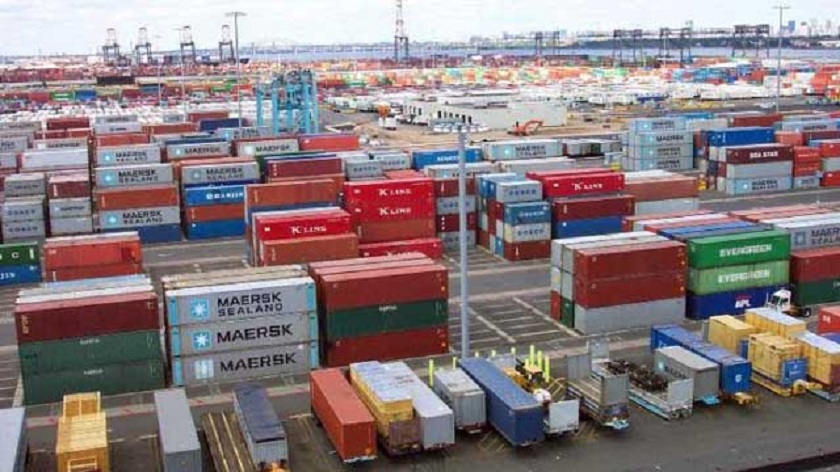
The United Kingdom has pledged to increase its trade foothold in West Africa by expanding its trade in Nigeria by about £2 billion.
This is coming as data from the UK Export Finance showed that the country provided over £500 million worth of support for projects in West Africa throughout 2021, the most in over two decades.
This will allow exporters to gain a foothold in the West African region, which accounts for over one-quarter of Africa’s Gross Domestic Product.
As demand for UK products and services expands in West Africa, it will also be expanding its input to the region as it will increase support to build hospitals, roads and bridges.
At last week’s Africa Investment Conference (January 20), the UK Prime Minister, Mr Boris Johnson said the UK is already one of Africa’s biggest commercial partners but was “determined to do much more – our shared task must be to ensure that Africa prospers from the green industrial revolution.”
The conference is an annual showcase event, designed to partner investment projects in Africa with British investors. Over 3,000 delegates took part this year, boosting trade and investment ties between the UK and the continent.
The government is also mobilising support from its export credit agency (UKEF) to boost exports to Africa – it provided support worth £2.3 billion in the past year, more than trebling the amount provided in 2018-19.
In West Africa, this has been deployed to a range of vital infrastructure projects, helping to build major roads and bridges as well as providing medical and IT equipment, design services and environmental and social work.
The region provides a unique opportunity for UK exporters as West Africa has experienced a surge in economic growth since the early 1990s. Research shows that since 2000 its collective GDP has risen from $105 billion to more than $659 billion in 2020.
UKEF has the capacity to provide further support for UK trade in West Africa, with up to £3 billion available in Senegal, £2 billion in Cote D’Ivoire, and up to £2 billion in Nigeria.
The UK Minister for Investment, Mr Gerry Grimstone, said: “We want more British firms to sell to the world, taking advantage of new opportunities that present themselves in growing markets like this. The potential is huge. This government has the finance available to back British firms going global in West Africa, supporting growth and development in the region and helping communities and local economies to thrive.”
Examples of successful investments include an over £40 million UKEF guarantee for Gloucestershire firm Mabey Bridge to build 87 emergency bridges used to strengthen flood defences in Ghana, supporting countries suffering from the effects of climate change.
In 2021, UKEF also signed its largest-ever deal in the region worth over £200 million to support the construction of six hospitals, with support from UK suppliers, creating jobs in the UK and improving health outcomes in the Côte d’Ivoire.
Economy
Naira Loses Against Dollar Official, Black Markets
By Adedapo Adesanya
The Naira opened the new trading week on a negative note on Monday at the Nigerian Autonomous Foreign Exchange Market (NAFEX) and the black market.
At the parallel market, the Nigerian currency weakened against the US Dollar by N5 to sell for N1,380/$1 compared with the preceding session’s rate of N1,375/$1, and at the GTBank FX desk, it shed N1 to trade at N1,373/$1 versus N1,372/$1.
At the official market, it lost 63 Kobo or 0.05 per cent against the Dollar during the session to close at N1,362.84/$1, in contrast to last Friday’s value of N1,362.21/$1.
However, the Nigerian Naira gained N2.30 against the Pound Sterling at the spot market yesterday, quoting at N1,821.29/£1 compared with the previous rate of N1,823.59/£1, and improved against the Euro by 23 Kobo to settle at N1,574.35/€1 versus N1,574.58/€1.
Data from the Central Bank of Nigeria (CBN) showed that interbank forex turnover increased to $92.248 million across 90 deals, from $73.565 million last Friday.
On the policy front, participants believed that the application of the fourth edition of the Foreign Exchange Manual of the central bank, which introduces updated guidelines for foreign exchange transactions and tightening compliance requirements for authorised dealers and market participants, will enhance market flexibility and ease previous restrictions.
Meanwhile, the cryptocurrency market snapped from recent declines, jolted by Strategy’s purchase of 1,550 Bitcoin for approximately $101 million, increasing its total holdings to 845,256 BTC. The company raised $181 million through common stock sales, using the proceeds to fund the bitcoin purchase and increase its cash reserves to $1 billion, pushing the price of the coin higher by 3.2 per cent to $63,731.69.
Cardano (ADA) appreciated by 8.4 per cent to $0.1738, Ethereum (ETH) rose by 5.2 per cent to $1,711.54, Solana (SOL) expanded by 5.1 per cent to $67.82, and Ripple (XRP) improved by 4.9 per cent to $1.18.
Further, Dogecoin (DOGE) jumped by 4.3 per cent to $0.0873, Binance Coin (BNB) soared by 2.7 per cent to $609.50, and TRON (TRX) increased by 0.7 per cent to $0.3274, while the US Dollar Tether (USDT) and the US Dollar Coin (USDC) remained unchanged at $0.9997 and $0.9998, respectively.
Economy
Economist Tasks FG to Explore Alternative Funding Sources
By Aduragbemi Omiyale
The federal government has been advised to consider exploring other funding sources to finance its budget deficits.
Speaking with Punch recently, the chief executive of CSA Advisory, Mr Aliyu Ilias, said the current appetite for borrowing by the government cannot be sustained because it elevates debt-servicing costs.
The economist suggested the sale of some public assets and the involvement of the private sector in infrastructure financing for economic growth.
According to him, running to the debt markets to raise funds for the government is not the best route to take, as the reliance on borrowing always leads to higher debt-servicing obligations.
“The more you borrow, the more you are also incurring more debt services,” he said, tasking the government to also capitalise on increased oil revenues stemming from ongoing geopolitical tensions in the Middle East.
“The government can actually sell off some of their assets to raise more money. The government can also, if you look at the revenue we are getting from oil, it’s getting more, especially with this war. It’s another opportunity for us to actually not borrow again,” Mr Ilias submitted.
He also pointed to ongoing tax reforms as another avenue to improve government finances and narrow the fiscal gap.
“The government can also look at tax reform. The fact is that the government does not have money. The only chance for getting more money is to address the financial deficit,” he added.
Economy
Crude Oil Gains Over $1 Despite Easing Iran-Israel Tensions
By Adedapo Adesanya
Crude oil was up by $1 on Monday as Iran and Israel said they had halted attacks on each other following an appeal from US President Donald Trump.
Brent crude futures gained $1.16 or 1.3 per cent to trade at $94.25 a barrel, while the US West Texas Intermediate (WTI) crude futures were up 76 cents or 0.8 per cent to $91.30 per barrel.
Iran’s military said Monday it halted attacks on Israel after the two countries exchanged their most intense strikes in months, further straining an already shaky ceasefire as well as the US-Israeli relationship. Iran, however, said it would resume strikes if Israel continued to hit Hezbollah in Lebanon.
Israel also halted attacks on Iran, Israeli Prime Minister Benjamin Netanyahu said, stopping short of acknowledging a ceasefire that US President Donald Trump said the countries were aiming for.
President Trump said earlier that the US blockade, which was introduced in April, would remain in place “in full force” until a final peace agreement between the two warring nations is reached.
Prices gained more than 5 per cent earlier on Monday after renewed Israeli strikes on Iran and attacks on Lebanon had reduced hopes of an imminent end to the wider war.
Market analysts noted that because of the strikes, investors were concerned that flows through the Strait of Hormuz might remain restricted for longer. Roughly a fifth of the world’s daily supply of oil and liquefied natural gas passed through the waterway before US-Israeli airstrikes at the end of February unleashed the latest escalation of the Middle Eastern conflict.
Yemen’s Iran-aligned Houthis said on Monday they would ban ships linked to Israel from the Red Sea after Israel renewed its military attacks on Iran, adding to concerns about global shipping and energy flows.
In the face of the supply crisis, a sub-group under the Organisation of the Petroleum Exporting Countries and its allies (OPEC+) on Sunday agreed on its fourth oil output target increase in four months. The seven members decided to increase targets by 188,000 barrels per day from July, the same as the June hike, which was adjusted down from monthly increases of 206,000 barrels per day in May and April to take into account the exit of the United Arab Emirates (UAE).
On paper, the sub-group has increased its output quotas from April to June by almost 600,000 barrels per day, but in reality, the group’s production has collapsed due to export cuts by Gulf members, averaging 33.19 million barrels per day in April compared with 42.77 million barrels per day in February.
Saudi Arabia has cut its official selling prices for crude oil to Asia in July for a second month.
-
Feature/OPED6 years agoDavos was Different this year
-
Travel/Tourism10 years ago
Lagos Seals Western Lodge Hotel In Ikorodu
-
Showbiz3 years agoEstranged Lover Releases Videos of Empress Njamah Bathing
-
Banking8 years agoSort Codes of GTBank Branches in Nigeria
-
Economy3 years agoSubsidy Removal: CNG at N130 Per Litre Cheaper Than Petrol—IPMAN
-
Banking3 years agoSort Codes of UBA Branches in Nigeria
-
Banking3 years agoFirst Bank Announces Planned Downtime
-
Sports3 years agoHighest Paid Nigerian Footballer – How Much Do Nigerian Footballers Earn