Connect with us

Auto

MAX.ng Sells N400m Bonds from N10bn Debt Scheme

Published

on

Max.ng N400m Bond

By Adedapo Adesanya

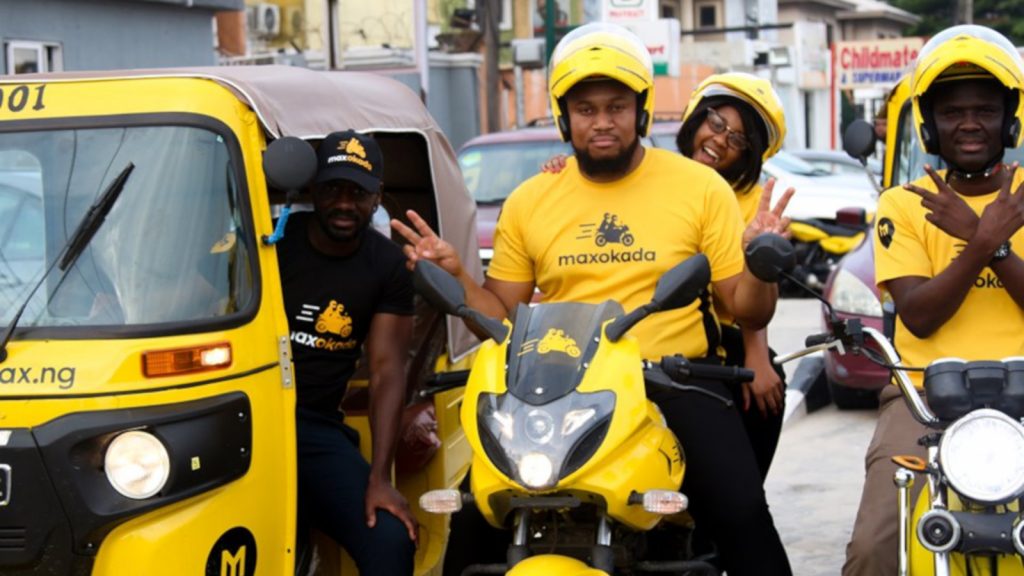
Metro African Xpress, otherwise known as MAX.ng, has announced the successful issuance of a N400 million one-year fixed-rate notes series 1 bond, making it the first bond issued by a mobility company in Africa.

The bond is the first tranche of its newly N10 billion ($22 million) multicurrency Private Company Bond (PCB) programme and was offered to pre-selected investors.

The Nigerian mobility startup made the disclosure on Monday, September 28, 2020, adding that the transaction was arranged by DLM Advisory Limited, a developmental investment bank regulated by the Securities and Exchange Commission (SEC).

In the notice seen by Business Post, MAX noted that proceeds from the papers will be used to fund its growing asset financing program across 2-wheeler, 3-wheeler and other vehicle classes in Nigeria and beyond, as MAX continues to institutionalize driver financing across the continent.

It added that despite the challenging global economic backdrop, “the bond, distributed through a private placement, received strong interest from highly reputable local and international fixed-income investors that are seeking exposure to a high-quality issuer like MAX.”

Speaking on the success of the milestone, Mr Adetayo Bamiduro, CEO and co-founder of MAX.ng noted, “MAX is extremely pleased with the successful bond issuance, which reflects the market confidence in MAX’s mission, strategy and execution capabilities.

“This is further evidence that MAX remains at the forefront of technology, financial and business model innovation to solve a fundamental aspect of Africans’ lives.”

Also, Chief Growth Officer and co-founder of MAX.ng, Mr Chinedu Azodoh said, “the fully integrated and innovative nature of MAX’s DVC [driver-vehicle-collection] technology stack was essential to demonstrating our ability to scale and manage an ever-growing pool of financed drivers across six cities with unmatched efficiency, speed and agility.

“This funding was delivered on the basis of those proprietary technology capabilities that enable heightened levels of portfolio scrutiny and monitoring. These were fundamental to successfully closing this trailblazing transaction.”

Mr Sonnie Ayere, Group CEO of DLM Capital Group, added; “This is a bold step in advancing DLM’s developmental driven mandate by providing innovative solutions to meet the funding needs of players in key sectors of the economy, through the capital markets. MAX has positioned itself at the forefront of its industry with its unique business model that deploys technology to cater to the peculiarity of mobility within Nigeria’s major cities.

“In addition to this, the MAX funding program has played positively in the aspect of employment creation. Given the average cost of the vehicles financed, the capital unlocked through the Series 1 Bond will lead to the creation of close to 1,400 additional jobs, which in turn has a positive multiplier effect on the Nigerian economy.

“As a developmental Investment Bank committed to creating direct impacts to the lives of people, we have put our money where our mouth is and have taken a credit decision to support their inaugural issuance, due to its strong credit fundamentals and the social and economic impact it brings. We are delighted to have assisted MAX on this significant stride.”

On his part, Mr Guy-Bertrand Njoya, Chief Financial Officer of MAX.ng, “most exciting for us about this ground-breaking funding structure is being able to close it amidst the current social and economic uncertainty.

“We are deeply honoured by the confidence shown by the investment community in our ability to continue leveraging access to wholesale finance as well as other internal capabilities — including proprietary technology solutions, exclusive vehicle manufacturer deals, low-cost credit, discounted insurance and other financial services — to serve the growing group of overlooked, underserved, unbanked or underbanked Africans like it has never been done before.”

Mr Emeka Ngene, the head of DLM Advisory also commented that “This is in keeping with the vision of the DLM brand. With a commitment to increasingly deepen the penetration of the domestic capital markets with every new project we undertake, delivering this assignment for MAX further helps in driving that concept. It will be good to also make special mention of the team at the Shell Foundation who played a key role in the delivery of this mandate by the provision of catalytic capital.

“At DLM we have always believed that local currency funding is the way to go for businesses like MAX with significant impact potential. Our hope now is that the success of this deal further paves the way for more collaboration towards providing similar solutions for other businesses with clear development objectives.”

MAX forayed into the mobility scene to ease the transportation problem in Lagos, but it has since moved to various offerings in other transport and logistics services following the restriction of commercial motorcycles and tricycles by the Babajide Sanwo-Olu administration earlier this year.


Adedapo Adesanya is a journalist, polymath, and connoisseur of everything art. When he is not writing, he has his nose buried in one of the many books or articles he has bookmarked or simply listening to good music with a bottle of beer or wine. He supports the greatest club in the world, Manchester United F.C.

1 Comment

Leave a Reply

Your email address will not be published. Required fields are marked *

Auto

Interswitch Digitises Nigeria’s Interstate Travel With Ticket Vending Platform

Published

on

Interswitch

By Modupe Gbadeyanka

Nigeria’s interstate transport ecosystem has been digitalised by the introduction of a ticket vending platform by one of Africa’s leading integrated payments and digital commerce companies, Interswitch.

This comprehensive digital solution was designed to transform ticketing, streamline operations, and enhance service delivery.

At the core of the solution is a secure, token-based system that allows travellers to purchase digital tickets across multiple channels, including web, mobile, and dedicated point-of-sale (POS) devices deployed at transport terminals.

These tokens serve as verifiable digital vouchers, which are validated and redeemed at boarding points, significantly reducing inefficiencies associated with manual ticketing, cash handling, and fragmented sales processes.

It was developed as both an operational management system and a digital marketplace to allow transport operators, particularly small and medium-scale businesses, to digitise their end-to-end processes while connecting to a broader customer base through the Quickteller ecosystem.

With this innovation, operators can seamlessly create and manage routes, oversee terminal activities, track sales, and access real-time performance insights from a single, centralised platform.

It also introduces a marketplace experience that enables travellers to search, compare, and select transport options across multiple operators based on routes, schedules, and pricing. This not only simplifies journey planning but also promotes transparency and choice for commuters.

The platform also supports corporate and institutional users by enabling bulk token purchases, offering a flexible and efficient solution for organisations managing employee or group travel.

In addition, it delivers value to regulators and stakeholders within the transport ecosystem by providing access to structured data and actionable insights that can support oversight, licensing, and consumer protection efforts.

“Transportation remains a critical backbone of Nigeria’s economy, yet much of the sector still operates with fragmented systems and manual processes that limit efficiency and growth.

“With the Ticket Vending Platform, we are introducing a scalable digital infrastructure that empowers transport operators to modernise their operations, expand their reach, and deliver a more seamless experience to travellers.

“Beyond ticketing, this is about creating a connected ecosystem, one that brings together operators, commuters, and regulators on a unified platform, while driving transparency, efficiency, and long-term value across the industry,” the Managing Director for Industry Ecosystems at Interswitch, Ms Chinyere Don-Okhuofu, said.

Continue Reading

Auto

FRSC, Brewery Companies Renew Pact to Tackle Drink-Driving

Published

on

FRSC Brewery Companies

The Federal Road Safety Corps (FRSC) has renewed a strategic partnership with major brewing companies in Nigeria to intensify efforts against drunk driving and improve road safety nationwide.

The renewed Memorandum of Understanding (MoU), signed with members of the Beer Sectoral Group (BSG), extends the collaboration for another five years, with both sides pledging to deepen public awareness, enforcement and community engagement.

FRSC Corps Marshal, Shehu Mohammed, said the partnership underscores the importance of synergy between government and the private sector in addressing road crashes, particularly those linked to alcohol consumption.

He stressed that saving lives on Nigerian roads requires sustained collaboration, adding that the corps would continue to work with industry players to promote responsible behaviour among motorists.

Speaking on behalf of the BSG, Managing Director of Nigerian Breweries Plc and Chairman BSG, Thibaut Boidin, said the renewal reflects the industry’s commitment to sustained collaboration with regulators. He cited previous joint campaigns, including the Don’t Drink and Drive Campaign, as impactful, adding that the next phase would focus on expanding reach and strengthening implementation.

Also speaking, the Managing Director of Guinness Nigeria, Girish Sharma, said the industry remains committed to supporting initiatives that promote safer roads. He noted that while alcoholic beverages are often blamed for road crashes, the real issue lies in irresponsible consumption, particularly drinking and driving.

“We are here to work with you and ensure that this programme grows bigger and delivers real impact. Saving lives is what matters most,” he said.

Similarly, the chief executive of International Breweries Plc, Mr Nicholas Kade, commended the FRSC for its dedication, describing the corps’ efforts as critical to making communities safer. He said the brewing industry would continue to support initiatives that promote responsible drinking and road safety.

The Executive Director of the Beer Sectoral Group, Ms Abiola Laseinde, described the renewal as a milestone in public-private collaboration.

She said the partnership had driven nationwide campaigns against drunk-driving, influenced behaviour and reached millions of Nigerians with road safety messages.

Ms Laseinde added that both parties would scale up interventions in the next five years to further reduce crashes and promote responsible alcohol consumption.

The FRSC and BSG’s partnership has been central to national campaigns discouraging drunk-driving, with stakeholders expressing optimism that the renewed agreement will deliver stronger outcomes.

Continue Reading

Auto

NRS Denies Introduction of New Vehicle Tax from July 1

Published

on

new vehicle tax

By Modupe Gbadeyanka

The Nigeria Revenue Service (NRS) refuted reports making the rounds on social media that the federal government plans to introduce a new tax on vehicles from July 1, 2026.

Mr Dare Adekambi, who serves as the Special Adviser to the NRS Chairman, Mr Zach Adedeji, and spokesperson for the organisation, said in a statement that the government was not planning to introduce the vehicle tax as claimed.

He described a viral infographic purporting the policy as false and misleading, urging members of the public to disregard it.

Mr Adekambi advised citizens to only rely on information from the NRS, urging them to follow the company its official handles on all social media platforms and its website for accurate information about tax and its activities.

In the infographic, motorists were directed to pay an unspecified vehicle tax rate online or at approved banks and agencies. The website listed as NRS’s was the old one, http://www.firs.gov.ng and not the new http://www.nrs.gov.ng created after it was rebranded.

“The NRS wishes to state categorically that the information did not emanate from the service or any government agency.

“Citizens are, therefore, advised to disregard the fabricated messages designed to mislead the public and instead rely on official government channels for information on government policies,” Mr Adekambi said in the statement.

Continue Reading

Trending