Connect with us

Auto

Metro Africa Xpress Secures $31m to Expand, Build Electric Vehicles

Published

on

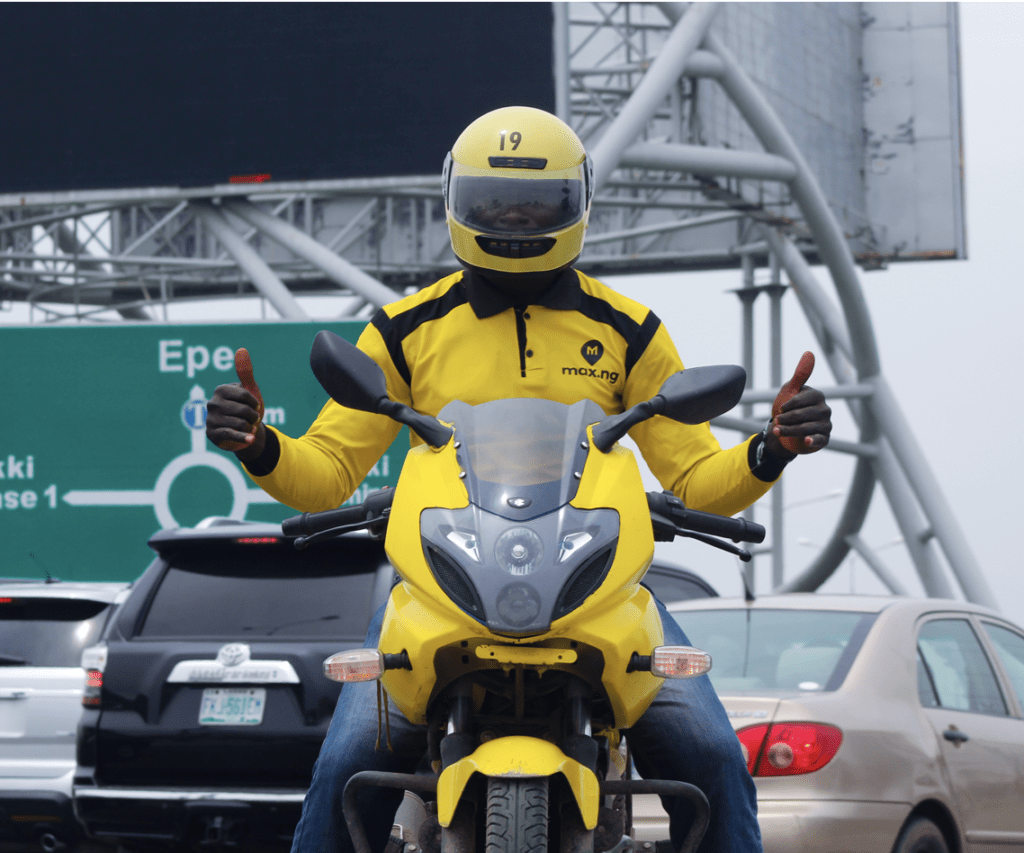
MAX electric vehicles

By Adedapo Adesanya

Nigerian mobility tech startup Metro Africa Xpress Inc. (MAX) has secured $31 million in Series B funding that will spur its expansion into Ghana and Egypt by the end of the first quarter of 2022 as well as aid in its infrastructural development of electric vehicles.

The startup will also be looking at pushing further expansion into other additional markets in Francophone, East and Southern Africa by the close of the same year.

The latest funding round was led by the global private equity platform, Lightrock, which is making its first investment in the African mobility space.

Others included the UAE-based international venture capital firm, Global Ventures, as well as existing investors Novastar Ventures, and Proparco, the French development finance institution, through their Digital Africa initiative.

The new injection into the company will also be used to extend vehicle financing credit to over 100,000 drivers in the next two years.

Also part of its catalogue of services, MAX plans to build electric vehicle infrastructure in its new markets, with the intention of introducing electric vehicles (EVs) to its emerging clientele.

Speaking on the new development, the Chief Executive Officer and co-founder of MAX, Mr Adetayo Bamiduri noted that, “It is another milestone in our journey to make mobility safe, affordable, accessible, and sustainable by deploying high-performance technologies and operators.

“The investment will enable us to transform the lives of hundreds of thousands of drivers across the continent, accelerate international expansion, and continue our pioneering initiatives in the mobility space.”

The company currently provides two, three and four-wheeler EVs to drivers through various leasing and financing options and the Chief Financial Officer (CFO) of the company, Mr Bertrand Njoya explained that EVs are the next big thing and it was important that the company be at the forefront.

“It’s an additional option that we wanted to provide to the drivers because what they care most about is making a decent living through increased income. For us, electric mobility is going to be a significant driver of that objective because EVs are today more cost-effective than their gas equivalents,” Mr Njoya said.

According to the CFO, MAX currently designs and assembles its own line of electric motorcycles working with partners across the ecosystem, including Yamaha, a leading motorcycle manufacturer, to deliver their EVs.

“We work with Yamaha in the area of access to vehicles for the drivers, and in the access to finance. As a testament of the success of our work and partnership, Yamaha today has set up a dedicated driver vehicle financing entity for Africa against the backdrop of the work that we’ve been doing with them over the past couple of years,” said Mr Njoya.

MAX started out in 2015 as a delivery startup using motorcycles to fulfil customer orders before venturing into ride-hailing, and later into vehicle subscription and financing services – solutions it came up with based on the data from its first services.


Adedapo Adesanya is a journalist, polymath, and connoisseur of everything art. When he is not writing, he has his nose buried in one of the many books or articles he has bookmarked or simply listening to good music with a bottle of beer or wine. He supports the greatest club in the world, Manchester United F.C.

Click to comment

Leave a Reply

Your email address will not be published. Required fields are marked *

Auto

FRSC, Brewery Companies Renew Pact to Tackle Drink-Driving

Published

on

FRSC Brewery Companies

The Federal Road Safety Corps (FRSC) has renewed a strategic partnership with major brewing companies in Nigeria to intensify efforts against drunk driving and improve road safety nationwide.

The renewed Memorandum of Understanding (MoU), signed with members of the Beer Sectoral Group (BSG), extends the collaboration for another five years, with both sides pledging to deepen public awareness, enforcement and community engagement.

FRSC Corps Marshal, Shehu Mohammed, said the partnership underscores the importance of synergy between government and the private sector in addressing road crashes, particularly those linked to alcohol consumption.

He stressed that saving lives on Nigerian roads requires sustained collaboration, adding that the corps would continue to work with industry players to promote responsible behaviour among motorists.

Speaking on behalf of the BSG, Managing Director of Nigerian Breweries Plc and Chairman BSG, Thibaut Boidin, said the renewal reflects the industry’s commitment to sustained collaboration with regulators. He cited previous joint campaigns, including the Don’t Drink and Drive Campaign, as impactful, adding that the next phase would focus on expanding reach and strengthening implementation.

Also speaking, the Managing Director of Guinness Nigeria, Girish Sharma, said the industry remains committed to supporting initiatives that promote safer roads. He noted that while alcoholic beverages are often blamed for road crashes, the real issue lies in irresponsible consumption, particularly drinking and driving.

“We are here to work with you and ensure that this programme grows bigger and delivers real impact. Saving lives is what matters most,” he said.

Similarly, the chief executive of International Breweries Plc, Mr Nicholas Kade, commended the FRSC for its dedication, describing the corps’ efforts as critical to making communities safer. He said the brewing industry would continue to support initiatives that promote responsible drinking and road safety.

The Executive Director of the Beer Sectoral Group, Ms Abiola Laseinde, described the renewal as a milestone in public-private collaboration.

She said the partnership had driven nationwide campaigns against drunk-driving, influenced behaviour and reached millions of Nigerians with road safety messages.

Ms Laseinde added that both parties would scale up interventions in the next five years to further reduce crashes and promote responsible alcohol consumption.

The FRSC and BSG’s partnership has been central to national campaigns discouraging drunk-driving, with stakeholders expressing optimism that the renewed agreement will deliver stronger outcomes.

Continue Reading

Auto

NRS Denies Introduction of New Vehicle Tax from July 1

Published

on

new vehicle tax

By Modupe Gbadeyanka

The Nigeria Revenue Service (NRS) refuted reports making the rounds on social media that the federal government plans to introduce a new tax on vehicles from July 1, 2026.

Mr Dare Adekambi, who serves as the Special Adviser to the NRS Chairman, Mr Zach Adedeji, and spokesperson for the organisation, said in a statement that the government was not planning to introduce the vehicle tax as claimed.

He described a viral infographic purporting the policy as false and misleading, urging members of the public to disregard it.

Mr Adekambi advised citizens to only rely on information from the NRS, urging them to follow the company its official handles on all social media platforms and its website for accurate information about tax and its activities.

In the infographic, motorists were directed to pay an unspecified vehicle tax rate online or at approved banks and agencies. The website listed as NRS’s was the old one, http://www.firs.gov.ng and not the new http://www.nrs.gov.ng created after it was rebranded.

“The NRS wishes to state categorically that the information did not emanate from the service or any government agency.

“Citizens are, therefore, advised to disregard the fabricated messages designed to mislead the public and instead rely on official government channels for information on government policies,” Mr Adekambi said in the statement.

Continue Reading

Auto

Court Restrains Police, FRSC from Imposing Car Insurance Fines Without Court Order

Published

on

third-party insurance

By Adedapo Adesanya

The Federal High Court in Abuja has restrained the Nigeria Police Force and the Federal Road Safety Corps (FRSC) from imposing fines on motorists for third-party motor vehicle insurance violations without a court order.

The ruling followed a suit marked FHC/ABJ/CS/291/2025 filed by activist-lawyer, Mr Deji Adeyanju, against the Inspector-General of Police, the Attorney-General of the Federation and the FRSC.

Delivering judgment on Friday, Justice Hauwa Yilwa held that while both the police and the FRSC have the power to enforce compliance with third-party motor insurance, they lack the legal authority to impose fines on alleged offenders.

The suit was initiated through an originating summons, brought pursuant to Section 17 of the Motor Vehicles (Third Party Insurance) Act, 1950, Sections 68(3) and (4) of the Insurance Act, 2003, as well as provisions of the Federal Road Safety Commission (Establishment) Act, 2007.

Mr Adeyanju had asked the court to determine whether the police could enforce third-party insurance, impose fines without judicial backing, and whether such enforcement during routine stop-and-search operations violated constitutional rights.

He also sought a declaration on whether the power to enforce third-party motor insurance lies exclusively with the FRSC.

In addition to the declaratory relief, the applicant requested orders of perpetual injunction restraining the police from enforcing third-party insurance and from imposing fines without judicial backing.

He further urged the court to hold the Attorney-General of the Federation accountable for providing legal guidance on the scope of police powers under the relevant statutes.

However, in its judgment, the court drew a distinction between enforcement and sanctioning powers.

Counsel to the applicant, Mr Marvin Omorogbe, said the court upheld the authority of both the police and the FRSC to ensure compliance with motor vehicle insurance laws, but firmly ruled against the imposition of fines by either agency.

According to him, the court held that “the police and the road safety may enforce” compliance but “outrightly lack the powers to impose fines on third parties or vehicle owners” in the course of such enforcement.

“The court went further to restrain the IGP, the Police Force and all their officers, including the FRSC, from imposing fines on motor vehicle users or Nigerian citizens,” Mr Omorogbe said.

Reacting to the judgment, Mr Adeyanju expressed satisfaction, noting that the central objective of the suit had been achieved.

“The sole reason why we came to court is that we wanted the court to make a positive declaration that the police and the road safety do not have the right to impose fines on any Nigerian over motor vehicle insurance. And we have succeeded,” he said.

He argued that the ruling would curb what he described as a pattern of extortion by enforcement agencies and restore confidence among motorists.

Mr Adeyanju added that although the court declined to grant all the reliefs sought—particularly the request to strip the police entirely of enforcement powers—it nonetheless made a significant pronouncement on the limits of those powers.

He also urged Nigerians to take advantage of the judgment to assert their rights and seek legal remedies where necessary.

On the other hand, counsel to the defendants, Mr Victor Okoye, said the judgment was only partly favourable to the police and signalled plans to challenge it at the Court of Appeal.

Mr Okoye disclosed that the defence had raised a preliminary objection questioning the jurisdiction of the court to entertain the suit, arguing that the originating summons was incompetent and unsuitable for resolving contentious issues.

He relied on appellate authorities to stress that jurisdiction is fundamental to adjudication and must be determined before any substantive issues.

Despite this, he noted, the court proceeded to deliver judgment.

Continue Reading

Trending