
Banking
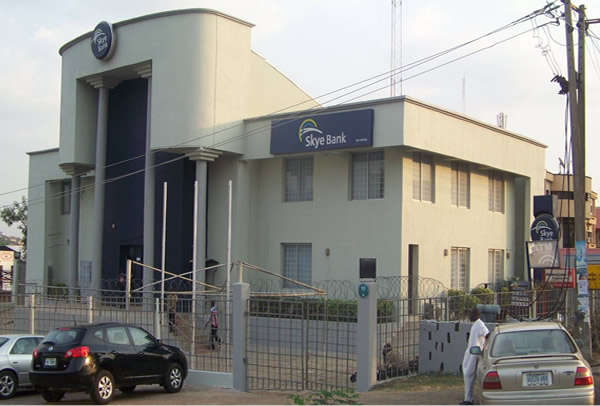
$793m TSA Funds: Skye Bank Confirms Possession of $41m

By Modupe Gbadeyanka
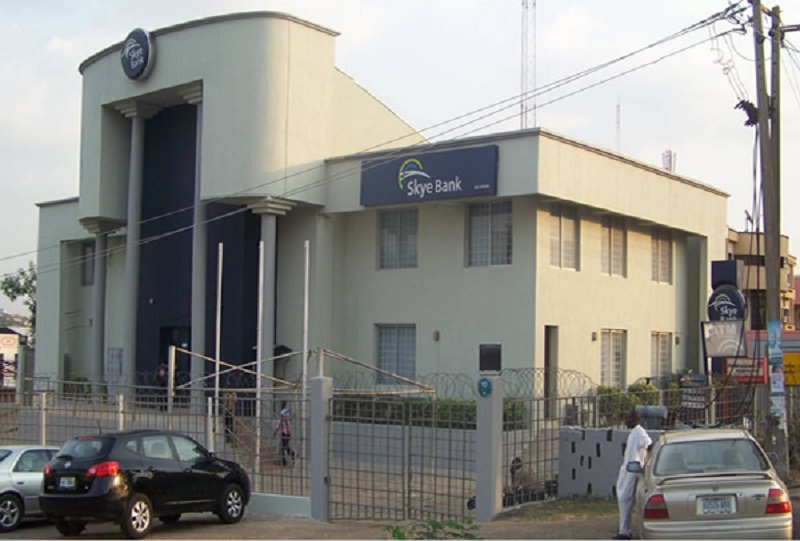
One of the seven banks accused of hiding about $793.2 million that should have been remitted to the Federal Government through the Treasury Single Account (TSA) account domiciled with the Central Bank of Nigeria (CBN), Skye Bank, has confirmed keeping a part of the money, $41 million.
However, the lender emphasised that the money is in its possession with the full knowledge of the apex bank and other government arms and agencies.
In a statement issued on Friday by its spokesperson, Mr Nduneche Ezurike, the lender emphatically denied colluding to hide the “reported sum or any other funds in its custody.”
“On the contrary, the said funds are held with the full knowledge of the relevant agencies of government, including the Central Bank of Nigeria (CBN), the DSS, the National Assembly and the Inspector General of Police’s Special Investigation Panel, with whom we have engaged extensively over same,” the bank explained.
Mr Ezurike, who described the bank as a “law abiding institution,” stressed that Skye Bank would not conduct itself in breach of the laws or policies of the government, including the TSA policy.
He promised that the bank would take appropriate legal steps to respond to the court ruling this week in Lagos.
It was alleged that Skye Bank held about $41 million belonging to the Nigerian Investments Management Services (NAPIMS).
Justice Chuka Obiozor of a Federal High Court in Lagos had on Thursday ordered seven banks to remit about $793 million to the FG.
The affected lenders are Skye Bank, United Bank for Africa (UBA), Diamond Bank, First Bank Limited, Fidelity Bank, Keystone Bank and Sterling Bank Plc.




By Modupe Gbadeyanka
The chairman of Access Bank Plc, Mrs Ifeyinwa Osime, has called for deliberate and strategic investment in women as a catalyst for sustainable economic growth.
According to her, empowering women should be seen as a strategic economic decision rather than charity.
“When we speak of giving, it is about expanding access to finance, markets, knowledge and platforms that enable women to build sustainable businesses,” she said at an International Women’s Day Conference organised by Access Bank.
At the event, which attracted over 5,000 participants both physically and virtually, and attended by stakeholders across the public and private sectors, she noted that women own about 39 per cent of businesses in Nigeria and drive nearly
40 per cent of new enterprises, while small and medium enterprises contribute about 48 per cent of Gross Domestic Product (GDP) and over 80 per cent of employment.
Mrs Osime, however, decried the persistent financing gap facing women, describing it as a major constraint on productivity and economic growth.
“No economy can optimise its potential while underinvesting in half of its population,” she said, highlighting the bank’s interventions through its W Initiative and Womenpreneur Pitch-a-ton programme, which provides financing, training and healthcare support to thousands of women.
Also speaking at the programme, the Minister of Art, Culture, Tourism and the Creative Economy, Ms Hannatu Musawa, reiterated the government’s commitment to empowering women as key drivers of the nation’s creative economy, with a focus on expanding access to finance, skills development and leadership opportunities.
The Minister, represented by the Director-General of the Centre for Black and African Arts and Civilisation (CBAAC), Mrs Aisha Adamu, said women were increasingly taking the lead in building businesses, driving innovation and shaping society.
“Across Nigeria, women have always been the invisible architects of our culture, yet their contributions have been underrepresented and undervalued,” she said.
The Minister said the ministry was repositioning culture as a structured economic sector through creative hubs, skills development and enterprise support programmes targeting women in film, fashion, digital media and tourism.
On financing, Ms Musawa noted that women-owned businesses account for about 40 per cent of small and medium enterprises but continue to face significant funding gaps.
“Too many ideas remain small not because they lack potential, but because they lack access to capital,” she said, adding that the government was working to unlock targeted funding for women, strengthen market access and improve data systems to support women entrepreneurs, while also promoting their inclusion in leadership and policy-making processes.
Also, former Minister of Education, Mrs Oby Ezekwesili, stressed the need to prioritise women’s inclusion in development processes, noting that societies transform when critical issues such as women’s inclusion are deliberately prioritised.
“There is no other way societies have transformed than when people who care make an issue a priority,” she said, stressing that removing structural barriers limiting women’s participation would unlock significant economic potential, adding that agricultural output could increase by up to 30 per cent if women had equal access to inputs as men.
In the same vein, the Group Head for Women Banking at Access Bank, Mrs Nene Kunle-Ogunlusi, said the bank remained committed to supporting women across all segments.
She said the bank recently organised a special Women’s Day programme for market women in Oyingbo, Lagos, offering free health checks, beauty services and financial education.


By Adedapo Adesanya
The Central Bank of Nigeria (CBN) has directed banks to complete a mandatory cybersecurity self-assessment within three weeks.
In a letter dated March 30, 2026, and published on its website on Tuesday, the apex bank said, “Institutions are required to submit their completed CSAT within the following timelines: i. Three (3) weeks – Deposit Money Banks (DMBs); ii. Five (5) weeks – All other regulated institutions.”
The directive, addressed to banks, selected other financial institutions, and payment service providers, introduced a Cybersecurity Self-Assessment Tool to evaluate the cyber risk exposure of regulated entities.
The CBN stated that the move was in line with its statutory mandate under the Banks and Other Financial Institutions Act 2020 and its broader commitment to improving cybersecurity standards in the sector.
“The Central Bank of Nigeria, in furtherance of its statutory mandate under the Banks and Other Financial Institutions Act (BOFIA) 2020 and consistent with its commitment to strengthening cybersecurity resilience across the financial sector, hereby notifies all Deposit Money Banks, Payment Service Banks, Microfinance Banks, Payment Service Providers, Finance Companies, and Development Finance Institutions of the deployment of its Cybersecurity Self-Assessment Tool,” the letter read.
The apex bank explained that the CSAT is designed as a supervisory instrument to provide a comprehensive view of financial institutions’ cybersecurity posture.
It explained that the tool would assess critical areas, including governance structures, risk management frameworks, technology systems, third-party risk exposure, incident response capacity, and overall operational resilience.
“The CSAT is a structured supervisory instrument designed to obtain comprehensive information on the cybersecurity posture of regulated institutions,” the CBN said.
The bank added that insights generated from the exercise would support risk-based supervision and enhance regulatory oversight of cybersecurity threats within Nigeria’s financial ecosystem.
Earlier in December 2025, banks in Nigeria were urged to strengthen their cybersecurity systems as rising digital fraud continued to erode customer trust and slow the growth of the country’s digital banking sector.
In the latest update, the CBN told banks to ensure compliance, adding that all affected institutions must complete and submit the assessment through a dedicated portal, with access credentials to be communicated to their Chief Information Security Officers and other relevant officials.
“All submissions must be fully completed and accompanied by relevant supporting documentation, where applicable,” it stated, noting that the data to be provided must reflect institutions’ positions as of December 31, 2025.
The CBN also issued a warning against false or incomplete disclosures, stressing that accuracy and transparency would be strictly enforced.
“Supervised institutions are reminded that all information submitted to the CBN must be accurate, complete, and verifiable. Submission of false, misleading, or inaccurate information constitutes a regulatory breach and will attract appropriate sanctions,” the letter added.
It also disclosed plans to validate submissions through off-site reviews and supervisory engagements to confirm the data’s reliability.
The directive, which takes immediate effect, signals tighter regulatory scrutiny of cyber risks in the banking sector amid rising digital transactions and increasing exposure to cyber threats.

Nigeria’s relationship with digital banking has changed almost beyond recognition in a decade. Where cash once dominated every transaction, from the roadside market to the corporate boardroom, mobile apps, instant transfers, and USSD codes have reshaped how tens of millions of Nigerians interact with their money every single day. The figures speak for themselves: point-of-sale transactions surged to a record N18 trillion in 2024, a 69 per cent increase from the year before, and the number of POS terminals in operation more than doubled to 5.5 million. Mobile banking is now the most widely used digital financial service in the country, with four in five users having accessed it within any given 90-day window.
This is, by any honest measure, an extraordinary story of financial inclusion and technological adoption. But it is an incomplete story if told without its other half.
Behind the growth curves and transaction volumes, a quieter and more troubling story has been unfolding. According to the 2024 Nigeria Consumer Protection Survey published by Innovations for Poverty Action, nearly one in four digital financial services users reported experiencing unexpected fees, charges or fraud attempts in the past year. Of those who encountered a problem, only half sought any form of formal redress. That silence is not apathy. It is the sound of eroded confidence: customers who have concluded that raising a complaint is unlikely to produce results.
The fraud data from the Nigeria Inter-Bank Settlement System tells the same story from a different angle. Actual losses to digital payment fraud rose to N52.26 billion in 2024, a figure inflated significantly by a single N31.1 billion incident involving one institution but still representing a 196 per cent increase in fraud losses over five years, even as the number of individual cases declined. The decline in case counts is not reassuring enough. It suggests that while fraudsters are making fewer attempts, they are making each one count considerably more.
By channel, e-commerce and internet banking remain the most exposed, followed by point-of-sale, mobile and web platforms. The most common technique is social engineering, which requires no sophisticated technology at all. It requires only a convincing conversation and a customer who does not know what to guard against. Insider abuse, where bank staff are complicit in fraud, is identified by NIBSS as the single greatest structural threat to the sector. That is a sobering finding, and one that no institution should read past quickly.
What this data collectively points to is a gap that the industry must confront honestly. Nigeria’s digital banking infrastructure has expanded at speed. The consumer protection architecture that should travel alongside it has not always kept pace. Convenience and safety are not natural enemies, but they require deliberate and sustained design to coexist. Left to grow at different speeds, they create precisely the conditions that fraudsters, rogue actors and complacent institutions exploit.
The encouraging news is that the gap is closing. Nigeria exited the Financial Action Task Force’s grey list in 2025, a signal that the country’s financial system has materially strengthened its safeguards. The CBN’s 2024 rollout of risk-based cybersecurity frameworks for deposit money banks formalised the standard of care that institutions are required to demonstrate. Regulatory enforcement actions in 2024, including reported industry penalties totalling over N15 billion, have underscored that consumer protection is a compliance obligation with real and immediate consequences. The industry is being held to a higher standard, and that is the right direction.
Within institutions themselves, the most effective safeguards are often the ones customers never see. The strongest security infrastructure operates silently in the background: monitoring account behaviour in real time, identifying anomalies before they become losses and intervening before a suspicious transaction completes rather than after. This is not glamorous work, but it is the work that matters most. A customer who never has to report a fraud incident has been protected more effectively than one who was offered a sympathetic apology after the damage was done.
Union Bank’s experience illustrates what this balance looks like in practice. Across its digital channels, including UnionMobile, the USSD platform (*826#) and the Union360 business banking suite, the bank’s full-year 2025 customer experience data reflects consistently strong satisfaction and loyalty scores. These are not outcomes that emerge from convenience alone. They reflect what customers value above all else when they transact digitally: the confidence that the experience will be safe, seamless and complete. That quality of outcome does not happen by accident. It is the product of sustained investment in backend security infrastructure that operates largely out of sight, proactive monitoring systems that identify and intercept anomalies before they become losses, and an institutional culture that treats customer protection as a core organisational value rather than a compliance line item. It is a culture Union Bank articulates through its ICARE values, where the commitment to being customer and community-focused is not a policy position but a founding principle, reinforced consistently from the moment any member of staff joins the bank.
In March, as institutions across Nigeria marked World Consumer Rights Day, Union Bank reaffirmed to its staff the responsibility that every individual within the organisation carries to uphold the rights and dignity of the customers it serves. It is the kind of internal commitment that rarely makes headlines, but it ultimately determines the quality of every customer interaction that does.
Trust is the only currency in banking that cannot be manufactured on demand. It is built over time, through consistent behaviour, through systems that protect customers before they know they need protecting, and through institutions willing to be accountable when they fall short. Nigeria’s digital banking revolution has done extraordinary things for financial access and economic participation. Its next chapter must be defined by what it does for financial safety. The two are not in competition. In the long run, they are, in every meaningful sense, the same thing.











-
 Feature/OPED6 years ago
Davos was Different this year
-
Travel/Tourism10 years ago
Lagos Seals Western Lodge Hotel In Ikorodu
-

 Showbiz3 years ago
Estranged Lover Releases Videos of Empress Njamah Bathing
-
 Banking8 years ago
Sort Codes of GTBank Branches in Nigeria
-

 Economy3 years ago
Subsidy Removal: CNG at N130 Per Litre Cheaper Than Petrol—IPMAN
-

 Banking3 years ago
Sort Codes of UBA Branches in Nigeria
-

 Banking3 years ago
First Bank Announces Planned Downtime
-

 Sports3 years ago
Highest Paid Nigerian Footballer – How Much Do Nigerian Footballers Earn