Banking
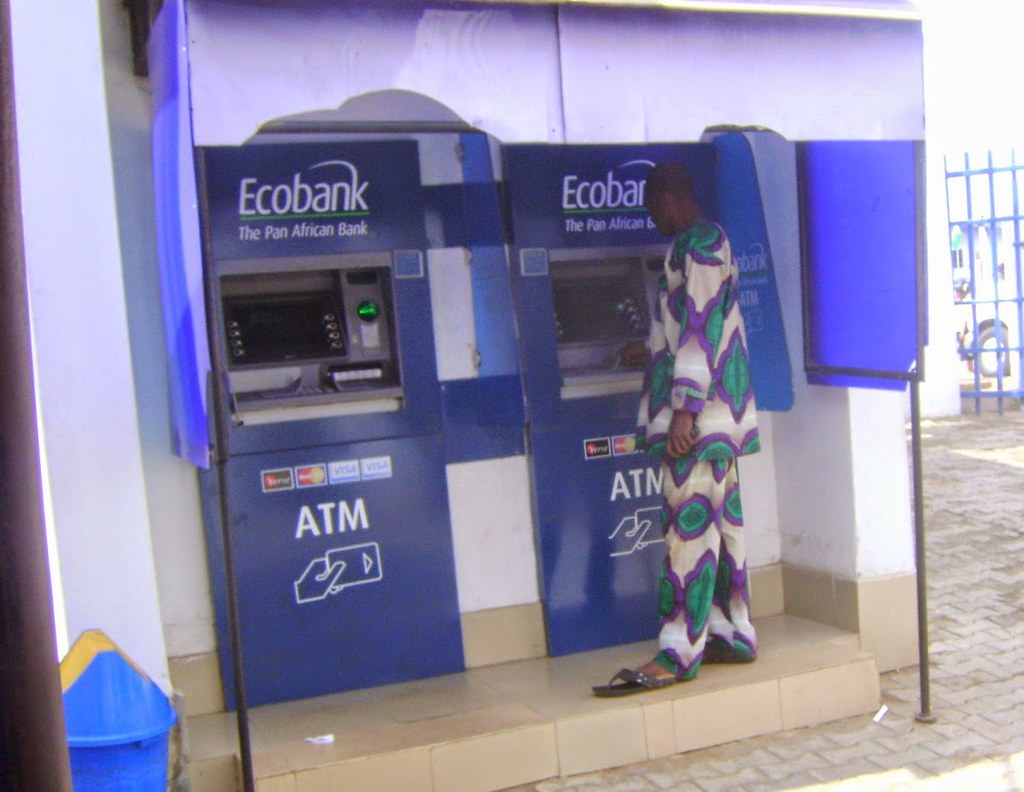
Ecobank Assures MSMEs Cutting Edge Solutions
By Modupe Gbadeyanka
Stakeholders in the Micro, Small and Medium Enterprises (MSMEs) have been assured cutting edge solutions by Ecobank Nigeria Limited.
The Managing Director of the bank, Mr Patrick Akinwuntan, gave this assurance in his message to celebrate this year MSME week.
He noted that devoting one week to celebrating the sector would further generate participation, discourse, and attention to the role of small businesses in the economy.
The banker said Ecobank will continue to support and sustain the development of the sector because of its importance to the nation’s economy, which recently exited a recession.
Mr Akinwuntan said he was impressed with the attention being extended to the subsector by both government and private sectors and further assured that the lender will maintain its industry leadership role by supporting the subsector to contribute more to the growth of the nation’s economy.
On his part, the Country Head, SME, Ecobank Nigeria, Mr Emeka Agada, submitted that the bank remains the financial institution of choice by the MSMEs in the country.
According to him, Ecobank recognises that one of the key drivers of employment creation, poverty alleviation and economic growth and development is the timely extension of credit to businesses, stressing that the bank is a big player in financial intermediation in the subsector.
He explained that the bank had recently organized webinars on the need to support the subsector with capital, including examination of key issues and ways of achieving their objectives through digital financial inclusion, adding that the bank also engaged various multilateral agencies and trade groups such as the Nigerian Association of Small & Medium Enterprises (NASME) and the Small and Medium Enterprises Development Agency of Nigeria (SMEDAN) with a view to detailing various lending options, harnessing and exploring the various Central Bank of Nigeria (CBN) intervention schemes as well as other funding and business opportunities provided by the bank.
“Ecobank is a major player in the SME space. We have won several awards in this regard; which is why Ecobank is commonly referred to as the SME friendly bank.
“We will continue to partner with CBN and other funding partners to play the important role of promoting economic growth and development through the process of financial intermediation in the subsector under any circumstance,” he said.
Mr Agada listed business loans offered by Ecobank to SMEs as merchant advance for businesses using digital collection channels, inventory finance for key distributors, shop owner’s facility for traders, purchase order and invoice discounting, asset finance and agriculture finance.
Further, he said the bank’s digital platforms such as Ecobank Mobile, *326#, OmniLite, OmniPlus, EcobankPay, and POS enable MSMEs to receive collections and payments seamlessly.
Ecobank Nigeria is a subsidiary of the Ecobank Group, the leading pan-African banking group with operations in 33 African countries and an international presence in four locations (London, Paris, Beijing and Dubai).
The financial institution is a full-service bank providing wholesale, retail, investment and transaction banking services and products to governments, financial institutions, multinationals, international organizations, medium, small and micro businesses and individuals.
It is a major player in the distribution of financial services in Nigeria, leveraging digital platforms and an extensive network of over 250 branches and more than 30, 000 agency banking locations (Xpress Points).
Banking
Zenith Bank Probes Customer Data Breach, Says Funds Remain Safe
By Adedapo Adesanya
Zenith Bank Plc is investigating an incident involving unauthorised access to customers’ data, noting that the breach does not involve financial information and has not compromised its banking services or digital channels.
In an email sent to customers on Wednesday, the bank stated that the incident was part of a broader global cyberattack affecting multiple international organisations across various sectors.
The lender stated that it immediately activated its incident response protocols and intensified its cybersecurity and remediation efforts upon discovering the incident.
“This incident is part of a broader, global cyber-attack targeting multiple international organisations across various sectors. Upon discovery, we promptly activated our incident response protocols, cybersecurity actions and remediation efforts,” the bank said.
The bank reassured customers that its banking services and digital channels remain secure and fully operational.
As a precautionary measure, Zenith Bank advised customers to remain alert to potential phishing attempts and other forms of social engineering.
“As a precaution, we encourage our customers to remain vigilant against phishing emails, text messages, or phone calls, and never to disclose their password, PIN, One-Time Password (OTP), or other security credentials to anyone,” the bank said.
The incident is the latest in a series of cybersecurity challenges facing Nigerian financial institutions, with banks in recent months suspending their social media operations over impersonation and other fraudulent activities.
Earlier in April, the Nigeria Data Protection Commission (NDPC) said it was investigating alleged data breaches involving Sterling Bank, Remita and the Corporate Affairs Commission (CAC).
Nigerian banks have long been prime targets for cybercriminals because of the vast amounts of customer data and financial transactions they handle every day.
While many attacks have traditionally sought to steal funds, cybercriminals are increasingly targeting personal information, which can be used for identity theft, phishing schemes, account takeovers and other forms of financial fraud.
Cybersecurity threats have increasingly targeted Nigerian banks in recent years. In 2025, Union Bank of Nigeria warned customers about fraudulent websites and phishing campaigns designed to steal login credentials and personal information by impersonating the bank.
In August 2024, Guaranty Trust Bank experienced a domain-related security incident that temporarily disrupted access to its official website, although the lender assured customers that their deposits and banking services remained secure while it resolved the issue.
Banking
Otedola Reveals Ambition to Take Majority Control of First HoldCo
By Adedapo Adesanya
The chairman of First HoldCo Plc, Mr Femi Otedola, has affirmed plans to increase his 26 per cent holding in the organisation to 51 per cent, confirming a planned takeover of Nigeria’s oldest banking institution.
Mr Otedola spoke in an exclusive interview with Nairametrics published on Monday, giving a rare direction following recent speculations about the financial institution.
The milestone followed a series of share acquisitions, as Mr Otedola sought to tighten his grip as the company’s largest shareholder following the recent acquisition of additional shares worth N222.21 billion.
In the interview, the mogul said he has invested more than N600 billion of his personal wealth in First HoldCo, describing the move as a “long-term generational commitment” rather than another turnaround investment he would eventually exit.
Responding to speculation that he intends to consolidate his position in the group, Mr Otedola hinted that his investment journey is far from over.
“My investment threshold is always over and above 51 per cent,” he said. “One of my key investment principles is that firm shareholder control, with due regard for minority interest, is a key ingredient to executing reforms and restructuring to deliver value to all stakeholders.”
The businessman said the same strategy had guided his investments in African Petroleum Plc, later renamed Forte Oil Plc, where he gradually increased his shareholding from 28 per cent to 75 per cent before exiting the company in 2019.
He said he also increased his stake in Geregu Power Plc from 51 per cent to 95 per cent before reducing it to 77 per cent after the company’s public listing.
“I am on the same trajectory with First HoldCo Plc,” Mr Otedola said.
“To date, I have invested over N600 billion of my personal wealth in First HoldCo Plc — a figure that speaks not to speculation, but to unflinching confidence in the institution’s future, fundamentals and an unwavering personal commitment to its success.”
Mr Otedola said his decision to invest in First HoldCo came at a time when the institution was facing one of the most challenging periods in its history.
The billionaire steadily increased his investment in the group, accelerating his share purchases in 2026. His stake grew from 6.68 billion shares (15.95 per cent) in June 2025 to 8.06 billion shares by March 2026, then to 9.28 billion shares by June after acquiring about 1.22 billion shares in one quarter. A further purchase through Calvados Global Services last month lifted his holdings above 10 billion shares for the first time.
Banking
WEMPCO Executives Risk Jail Over Contempt in N61.5bn UBA Debt Recovery Action
By Modupe Gbadeyanka
Nine persons linked to one of Nigeria’s biggest indigenous steel-and-manufacturing conglomerates, Western Metal Products Company (WEMPCO) Limited, could land in prison for allegedly defying an order of a Federal High Court protecting United Bank for Africa’s claim and disrupting the operations of a court-appointed receiver manager.
Justice Akintayo Aluko of the Federal High Court sitting in Lagos issued a stern Form 48 (Notice of Consequence of Disobedience to Order of Court), warning key directors and shareholders—including Lewis Shui Ngor Tung, Phillip Shui Che Tung, Robert Tung, Lawrence Tung, Taiwo Alli and others—that they face possible imprisonment for contempt of court after allegedly interfering with the Receiver/Manager appointed by UBA to take over key collateral assets.
The Form 48 notice, a formal warning under Nigerian civil procedure that precedes imprisonment for contempt, was published as a legal notice after personal service could evidently not be completed on the individuals, all listed at the same address: 18 Wempco Road, Ogba, Ikeja, Lagos (Federal High Court of Nigeria, Suit No. FHC/L/CS/555/26).
UBA is aggressively pursuing the recovery of syndicated and direct loan facilities amounting to about N61.5 billion (approximately $39 million) from WEMPCO and 16 related corporate entities.
Justice Aluko has already granted an Order of Mareva Injunctions freezing accounts belonging to the WEMPCO group across 27 commercial banks and fintechs.
According to MoneyCentral, UBA wants to recover the funds from 17 companies in the WEMPCO stable, from flagship Western Metal Products Company Limited down to Nigerian Enamelware Company Plc, Lagos Oriental Hotel Limited and Prime Nigeria Wood Products Co. Ltd. It disbursed the money to the firms under a Multicurrency Multiple Credit Facility Agreement dated September 30, 2019.
On April 2, 2026, the court granted UBA an interim Mareva injunction freezing up to N61.5 billion in WEMPCO-linked funds across 27 banks and fintech platforms, appointed a receiver-manager over WEMPCO’s unencumbered assets, and ordered the financial institutions to disclose any WEMPCO funds in their custody.
Anatomy of the Freeze
By the Order of April 2, 2026, Justice Aluko granted UBA ‘s Application filed on March 31, 2026. The Orders made were:
- Broad Asset Freeze (Mareva Injunction): The court restrained WEMPCO and 16 sister companies from operating accounts or transferring funds up to N61.5 billion. All 27 financial institution respondents—ranging from tier-1 banks to modern fintech processors like Moniepoint, OPay, and Kuda—must disclose and hold any balance standing to the credit of the defendants.
- Receiver/Manager Appointment: One Romeo Ese Michael, Esq., was appointed Receiver/Manager over WEMPCO’s assets not under the Multicurrency Multiple Credit Facility Agreement. This includes physical asset takeovers, such as two major Wärtsilä power generators.
Nine Names, One Address
The Form 48 lists nine individuals “to be committed” to prison for contempt, namely Lewis Shui Ngor Tung, Phillip Shui Che Tung, M.A. Ola Yusuf (Alh), Tung Lawrence Blake, Alli Aare Hadji Tokunbo, Paul Shui Po Tung, Tung Robert, Cl Ip, and Taiwo Alli.
Two names are independently identifiable in WEMPCO’s public corporate filings: Taiwo Alli is the sitting Managing Director/CEO of NGX-listed Nigerian Enamelware Company Plc — one of the 17 corporate defendants — while Robert Tung sits on that same board as a non-executive director and is one of the two brothers who built WEMPCO into its current scale.
That a sitting MD of a publicly listed Nigerian company now faces a documented risk of committal to prison over a corporate group’s unpaid debt underscores the reputational and governance stakes for WEMPCO’s listed arm, quite apart from the group’s privately held entities.
The Receiver and the 2019 Facility
The receiver-manager order points to the roots of the dispute: A Multicurrency Multiple Credit Facility Agreement dated 30 September 2019, under which UBA financed part of WEMPCO’s industrial build-out — the same period in which the group was completing major steel and power infrastructure investments.
The court’s specific mention of “two Wärtsilä engines (generators)… wherever they may be found” as receivership targets signals that WEMPCO’s captive power assets — critical to running energy-intensive steel and ceramics plants — are now squarely within the bank’s reach for recovery.
The Rise and Fall of WEMPCO Group
Few Nigerian conglomerates have as large a footprint with as little public profile as WEMPCO. The group was founded by the late Mr K.F. Tung, a Chinese-born entrepreneur who first visited Nigeria in 1967 and built an enamelware business before expanding into steel, ceramics, timber, agriculture and hospitality; he died in March 2019 at age 97, having led the group for more than five decades.
His sons, Lewis Tung and Robert Tung, subsequently took the business forward, growing it into one of Nigeria’s largest manufacturing employers, with more than 12,000-13,000 workers across 11-plus subsidiaries.
At its peak, WEMPCO was one of Nigeria’s largest diversified conglomerates, operating massive cold-rolled steel mills, enamelware plants, ceramic tile factories, nail production plants, and agricultural investments across Lagos and Ogun states.
The group owns high-profile real estate assets, including the 5-star Lagos Oriental Hotel on Victoria Island/Lekki, alongside industrial facilities spanning over 700,000 metric tonnes of steel capacity.
Over the past decade, however, severe foreign exchange shortages, cheap imported/smuggled alternatives, high energy overheads, tax defaults, and shifting government trade policies caused deep operational paralysis across WEMPCO’s 11+ subsidiaries.
As revenue collapsed, debt loads surged into hundreds of billions of Naira across the Nigerian financial sector, culminating in UBA’s enforcement actions to protect its balance sheet.
That scale is precisely why the case matters beyond the courtroom: WEMPCO is not a marginal borrower, but one of Nigeria’s largest indigenous industrial employers, and the outcome of this dispute carries direct implications for thousands of manufacturing jobs concentrated in Ogba and Ogun State.
Why This Matters: Depositor Money Is Not Free Money
The scale of UBA’s claim — N61.5 billion frozen pending trial, against a backdrop of a 2019 multicurrency facility likely running into the hundreds of billions of naira in total exposure across WEMPCO’s group structure — is a reminder of a basic truth in banking that is easy to lose sight of in a contentious court fight: the money banks lend to conglomerates like WEMPCO is not the bank’s own capital sitting idle.
It is depositors’ money — the savings of ordinary Nigerians, the working capital of small businesses, and the pension and insurance assets pooled through the banking system — recycled into loans that the bank is obligated to repay to its depositors whether or not the borrower repays the bank.
This is not an abstract concern in Nigeria’s current banking environment. The industry’s non-performing loans (NPL) ratio climbed to 8.03 per cent in January 2026 and to 9.85 per cent by February 2026, well above the Central Bank of Nigeria’s 5 per cent prudential threshold, after the CBN withdrew pandemic-era regulatory forbearance that had allowed banks to avoid classifying restructured loans as impaired.
Fitch Ratings has projected the ratio could fall back toward 5 per cent by year-end 2026, helped by fresh bank capital raised to meet the CBN’s new minimum capital requirements and by write-offs — but only if recoveries like UBA’s WEMPCO action succeed in converting non-performing exposures back into cash.
The CBN itself has warned that a stubborn rise in bad loans “could impair asset quality and weaken banks’ balance sheets,” posing systemic risk, and has pushed banks to deepen use of the Global Standing Instruction framework — precisely the kind of cross-bank fund-tracing mechanism reflected in UBA’s 27-institution Mareva order against WEMPCO — to improve recovery discipline.
Every naira UBA cannot recover from a defaulting borrower is a naira the bank must provision for out of its own capital and earnings — capital that could otherwise support new lending to other Nigerian businesses, or income that could otherwise be paid out as dividends to millions of Nigerian shareholders and pensioners with holdings in UBA stock.
Aggressive but lawful recovery action of the kind on display in the WEMPCO case is, in that sense, not simply a bank protecting its own balance sheet; it is a bank protecting the deposit base and credit capacity of the wider financial system.
Corporate Responsibility and the Nigerian Economy
Firms of WEMPCO’s scale carry an obligation that runs in both directions. On one hand, WEMPCO’s decades of investment in steel, enamelware, ceramics, wood products and hospitality have made it a genuine contributor to Nigeria’s industrial base and a major direct employer, with the group’s own account of its history stressing that it has “contributed immensely to the economy of Nigeria in particular and West Africa in general”.
On the other hand, that same scale means WEMPCO’s credit obligations were sized accordingly — a multicurrency, multi-billion-naira facility syndicated in 2019 — and the responsibility to service such facilities is inseparable from the privilege of accessing that scale of capital in the first place.
When large borrowers fall behind and resist enforcement, as UBA alleges is happening here, the costs are not confined to the bank’s shareholders.
Delayed recoveries constrain the credit banks can extend to other manufacturers, exporters and small businesses; they can pressure a bank’s capital adequacy ratios and, in aggregate across the industry, contribute to the kind of system-wide NPL pressure the CBN has flagged as a threat to financial stability.
Conversely, orderly and timely repayment — even when it requires restructuring or receivership rather than immediate cash settlement — protects the thousands of workers whose jobs depend on WEMPCO’s continued operation, preserves the bank’s capacity to keep lending into the real economy, and reinforces credit discipline across a banking sector the CBN is actively trying to strengthen after the post-forbearance clean-up.
It is worth noting that the reliefs UBA has obtained so far are interim measures granted pending a full hearing on the Motion on Notice, and that WEMPCO’s companies and the named individuals retain the right to contest the underlying claims in court.
The Bottom Line
UBA’s push to freeze N61.5 billion in WEMPCO-linked funds, install a receiver-manager over the group’s flagship steel unit, and now pursue contempt proceedings against nine individuals tied to the conglomerate marks one of the more aggressive corporate debt-recovery actions in Nigeria’s banking sector this year.
For a bank operating in an industry still working through the aftershocks of the CBN’s forbearance withdrawal and a near-10 per cent sector NPL ratio, recovering large legacy exposures is not optional housekeeping; it is central to protecting depositor funds, sustaining lending capacity and keeping Nigeria’s banking system stable.
The court’s enforcement action in UBA vs. WEMPCO marks a decisive moment for credit governance in Nigeria. With 27 financial institutions bound by court injunctions and corporate officers facing criminal contempt, UBA’s Receiver/Manager is positioned to realise underlying assets. Analysts say the outcome of this case will set a precedent for corporate debt resolution, financial system accountability, and the rule of law across Nigeria’s industrial landscape.