Connect with us

Banking

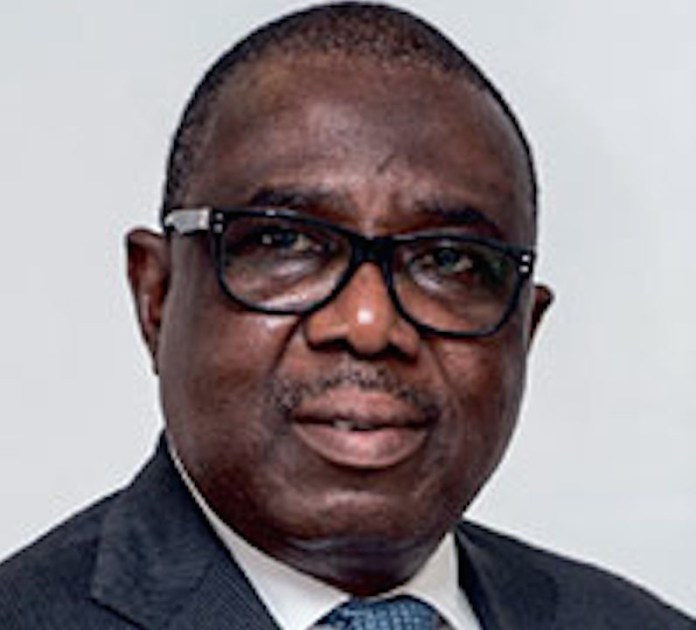
Ernest Ebi Appointed Fidelity Bank Chairman

Published

on

ernest-ebi-fidelity-bank

By Modupe Gbadeyanka

The appointment of Mr Ernest Ebi as a Non-Executive Director and Chairman-designate of the Board of Directors of Fidelity Bank Plc has been announced.

Also announced by the bank is the appointment of Mr Charles Chidebe Umolu and Mr Kings C. Akuma as its Non-Executive Directors.

The appointment of Mr Ebi follows the retirement of Mr Christopher Ezeh as the Chairman of the bank.

Mr Ezeh retired after spending over 11 years of meritorious service to Fidelity Bank and also attaining the retirement age for non-executive Directors in line with the bank’s policy.

However, these appointments, according to the bank, are subject to the approval of the Central Bank of Nigeria (CBN).

Mr Ebi is a former Deputy Governor, Policy and Corporate Services of CBN. He occupied the position for 10 years, from 1999 to 2009.

He is expected to bring to the Board a solid wealth of corporate experience.

Prior to CBN, Mr Ebi’s sterling career saw him rising to top position of Deputy Managing Director/Chief Operating Officer of Diamond Bank plc in 1998 having also served as Managing Director/Chief Executive Officer of New Nigeria Bank plc.

Also a former Executive Director, African Continental Bank, earlier Executive Management positions held by Mr Ebi included various departments of International Merchant Bank, Nigeria between 1981 to 1993.

A Fellow of the Chartered Institute of Bankers of Nigeria, Mr Ebi has participated in several Management Development Courses both locally and overseas in the areas of Strategic Planning, Financial and Risk Management amongst others.

Some of the notable leading institutions where he received Executive education include IMD Switzerland, Harvard, Oxford-Said Business School, amongst others. He started his working career in the United States of America (USA) as an Accounts Technician with the National Association of Counties, Washington DC in 1976 and subsequently worked at the Federal Savings & Loans Association Washington DC where he served as the Assistant Vice-President Community Federal Savings & loans Association.

In a very distinguished career within the financial services industry, Mr Ebi went on to serve in leadership positions in various notable banking sector organizations where he acquired mastery of executive leadership, financial goals delivery, business management, human resources capacity building, and general business performance management. He served as the Chairman of Deputies of the Group of G24 countries and as Director of Afromedia PLC until July 28, 2015.

He serves as the Member of the Governing Board of Venture Garden Nigeria and has been an Independent Non-Executive Director of Dangote Cement Plc since January 30, 2014.

Apart from the corporate world, he has served extensively on many for profit as well as not-for profit Organisations. He supports Worldvision and is also involved in various other humanitarian causes, especially in fundraising to promote its programs across the nation.

Mr Ebi attended Holy Ghost College Owerri from 1970 and Howard University, Washington DC, where he graduated with a Bachelor of Business degree in Marketing in 1978 and a Master’s Degree in Business Administration in 1979.

He holds the National Award; MFR and married with children.

Dipo Olowookere is a journalist based in Nigeria that has passion for reporting business news stories. At his leisure time, he watches football and supports 3SC of Ibadan. Mr Olowookere can be reached via [email protected]

Click to comment

Leave a Reply

Your email address will not be published. Required fields are marked *

Banking

Education Not Social Obligation, But Strategic Investment—Union Bank

Published

on

Union Bank of Nigeria New Logo

By Modupe Gbadeyanka

Union Bank of Nigeria has again stressed the importance of education to the nation, saying it is a strategic investment and not a social obligation.

The Chief Brand and Marketing Officer of Union Bank, Ms Olufunmilola Aluko, said this is why the company continues to throw its full weight behind quality educational programmes.

According to her, education is central to the financial institution’s purpose rather than a peripheral cause.

She was speaking in respect to the bank’s partnership with Nigerian Breweries Plc and the Felix Ohiwerei Education Trust Fund for the organisation of the 12th Maltina Teacher of the Year Competition.

The flag off of this year’s programme was held in Lagos on Monday, and it is the third consecutive year Union Bank has served as a partner.

“At Union Bank, we believe education is not a social obligation. It is a strategic investment. A nation that does not invest in its teachers and its learners is borrowing from its own future, and we are in the business of building futures, not mortgaging them,” Ms Aluko stated.

She pointed to Edu360, the bank’s flagship education initiative under the UnionCares platform, as the practical expression of that conviction.

Edu360 spans the full education value chain, from widening access for children in underserved communities and investing in the teachers who multiply learning outcomes, to building digital literacy and STEM capability, and preparing young people for employment or enterprise.

On the role of the financial sector, Ms Aluko challenged her peers to think differently.

“Financial institutions need to stop thinking of ourselves as donors and start thinking of ourselves as ecosystem builders. We can embed financial literacy into school curricula, design products that help parents save for their children’s education, and convene policymakers, educators and the private sector around shared goals. Above all, we can show up consistently, not only when it suits our brand calendars,” she disclosed.

She noted that lasting change requires sustained collaboration between the public and private sectors, and pointed to the strength of the signal sent when institutions commit to teachers at scale, citing the competition’s N100 million grand prize. With twelve editions and more than three hundred teachers recognised to date, she described MTOTY as a model of the consistency Union Bank embodies through Edu360.

Her closing message was directed at educators across the country, stating, “To every teacher in this country, what you do is not small. Your story deserves to be told, and Nigeria needs to know your name.”

Continue Reading

Banking

Funding Delays African Energy Bank H1 2026 Launch, Now September

Published

on

African Energy Bank Headquarters

By Adedapo Adesanya

The African Energy Bank (AEB) will now officially launch in September in Abuja after failing to meet its targeted first-half 2026 commencement date, marking a fresh timeline for the continent’s energy financing institution.

The Secretary General of the African Petroleum Producers’ Organisation (APPO), Mr Farid Ghezali, as per Argus Media, acknowledged “several postponements” but said the new deadline is “to make the bank operational in September 2026 in view of the incompressible deadlines from an administrative point of view”.

A planned April start was pushed back to June before APPO members were again mobilised around a third-quarter deadline. At a recent meeting, the Nigerian government reiterated the country’s commitment to the African Energy Bank’s formal commencement of operations.

The bank was established by the APPO and the African Export-Import Bank (Afreximbank) to address the critical financing needs of Africa’s oil, gas and broader energy sectors and mitigate the global funding pressure against hydrocarbon investments in Africa.

The APPO scribe said funding has remained a major challenge even when the Nigerian government said the headquarters of the bank was ready since 2025.

Mr Ghezali called on APPO members to redeem their pledges towards the $500 million start-up capital before the end of June.

Argus quoted sources as saying that 91 per cent of the capital had been raised and that the Nigerian National Petroleum Company (NNPC) Limited and the Nigerian Content Development and Monitoring Board (NCDMB) would make up the balance.

Mr Ghezali said AEB aims to reverse the situation that sees Africa importing more than 60 per cent of its oil products consumption and producing only 12 per cent of global upstream liquids while being home to many of the world’s largest national oil and gas reserves.

He stated that the bank will target the financing of 20–30 LNG, petroleum products pipeline, terminals and refining projects by 2030. Projects that monetise natural gas as a transition fuel will take up 40 per cent of AEB’s loan book, and priority will be given to projects that contribute towards the creation of “500,000 to 1 million direct and indirect jobs in the energy value chain”.

Speaking at a Nigerian energy summit in February, Mr Ghezali said the bank plans to raise $15 billion in its first three years of operations to fund strategic energy projects.

He also unveiled the three-phase road map for the AEB, including “Phase one, which, as I said in the first half of 2026, launches the African Energy Bank platform with 10-pillar projects involving countries such as Nigeria, Angola, and Libya. APPO certification and integration of IOCs such as Shell or ENI.”

“Phase two, in 2027, we plan to start a regional gas-oil trade, integrating the principles of the Bassari Declaration for 15 per cent local content.”

Phase three, reaching 2030, the African Energy Bank will be a true African financial hub, with $200 billion mobilised.”

Continue Reading

Banking

Zenith Bank Marks 2026 World Environment Day With Lagos Clean-up Drive

Published

on

Zenith Bank Adaora Umeoji

By Modupe Gbadeyanka

Zenith Bank Plc has joined other global corporations to commemorate the 2026 World Environment Day with a two-phase environmental clean-up initiative in Lagos State.

The financial institution participated in the commemoration under the global theme Inspired by Nature. For Climate. For Our Future through a two-day event.

In the first phase, which was a morning clean-up conducted by staff of the Bank on Wednesday, 3 June 2026, along Ajose Adeogun Street, Victoria Island, Lagos, employees of the lender cleared waste, sensitised residents on proper disposal practices, and reinforced the bank’s culture of community service and environmental stewardship.

The second day, participants engaged in a waterways clean-up at the Falomo Waterways, Ikoyi, Lagos. This was in collaboration with the Lagos Waste Management Authority (LAWMA) and the Lagos State Waterways Authority (LASWA). The joint effort focused on removing marine debris, promoting cleaner waterways, and supporting the state’s broader climate-resilience agenda.

“At Zenith Bank, sustainability is integral to how we operate. Clearing our streets and our waterways is a practical reminder that protecting the environment is a shared responsibility – and one we are proud to take up alongside LAWMA and LASWA.

“Through these exercises, we are taking deliberate action to preserve our communities, support climate action, and inspire others to act. Our operations will continue to align with global environmental standards as we build a more sustainable future for Nigeria and Africa,” the chief executive of Zenith Bank, Ms Adaora Umeoji, stated.

Zenith Bank says it remains committed to embedding Environmental, Social and Governance (ESG) principles across its operations, investing in green initiatives, energy efficiency, and community-focused programmes, in line with its commitment to environmental sustainability and responsible business practices.

These efforts advance the United Nations Sustainable Development Goals – particularly SDG 7 (Affordable and Clean Energy), SDG 11 (Sustainable Cities and Communities) and SDG 13 (Climate Action). Sustainability remains an operational imperative across the Bank’s Nigerian base and its broader African, UK and European footprints.

Continue Reading

Trending