Banking
Flutterwave, Yemi Edun Nominated for 2023 African Banker Awards
By Adedapo Adesanya
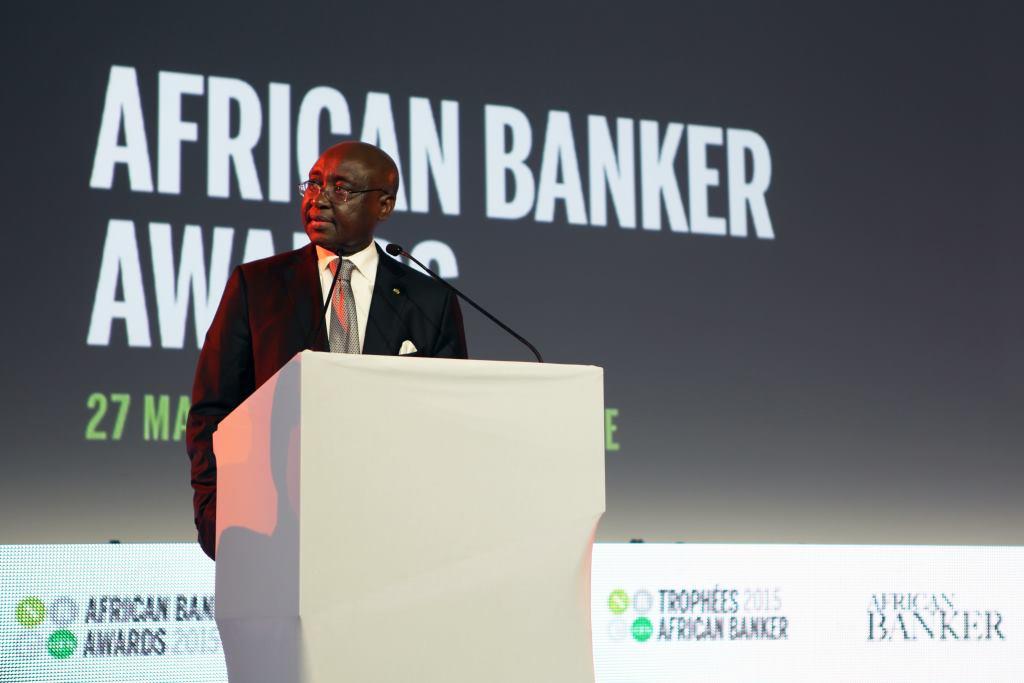
Nigerian fintech unicorn, Flutterwave, has been nominated for this year’s African Banker Awards, which is taking place on May 24 in Sharm El Sheikh, Egypt, and a part of the official programme of the African Development Bank (AfDB) Annual Meetings.
Since its inception in 2007, the African Banker Awards aim to recognise the exceptional individuals and organisations driving Africa’s rapidly transforming financial services sector. The winners of the African Banker Awards will be announced during the official gala ceremony.
According to a statement, this year’s awards gala is poised to accentuate the theme of gender equity in the industry, as demonstrated by the substantial proportion of female candidates vying for the coveted title of Banker of the Year, where Ms Yemi Edun of FCMB is nominated.
In addition, in partnership with the African Guarantee Fund, a fresh accolade has been instituted to acknowledge and encourage initiatives aimed at propelling financial inclusivity for women across the African continent, the AFAWA Bank of the Year award. AFAWA (Affirmative Finance Action for Women in Africa) is a pan-African initiative to bridge the $42 billion financing gap facing women in Africa.
The African Banker Awards nominees were selected from a record number of entries, representing the entirety of the African continent, over a total of 10 categories, and shortlisted by the Awards committee. The nominees for the African Banker Awards 2023 are:
Banker of the Year:
Mr Admassu Tadesse – Trade and Development Bank
Prof Benedict Oramah – Afreximbank
Ms Esther Kariuki – Co-operative Bank of Kenya
Mr Moezz Mir – SBM Bank, Kenya
Ms Mukwandi Chibesakunda – Zanaco, Zambia
Mr Othman Benjelloun – Bank of Africa
Ms Yemi Edun – First City Monument Bank
Bank of the Year:
Afreximbank
Bank of Africa
Co-operative Bank of Kenya
CRDB Bank – Tanzania
The Mauritius Commercial Bank
Trade and Development Bank
Trust Merchant Bank, Democratic Republic of the Congo
Sustainable Bank of the Year:
Absa, South Africa
Commercial International Bank, Egypt
Nedbank, South Africa
Rand Merchant Bank, South Africa
Trade and Development Bank.
DFI of the Year:
Afreximbank
Africa Finance Corporation
Arab Bank for Economic Development in Africa: BADEA
Lesotho National Development Corporation
Trade and Development Bank
Fintech of the Year:
Ensibuuko Technologies, Uganda
Flutterwave, Nigeria
JUMO World, South Africa
Lulalend, South Africa
MFS Africa, South Africa
SME Bank of the Year:
Absa, South Africa
Caisse de compensation et de consignation, Tunisia
CRDB Bank, Tanzania
Ecobank, Senegal
KCB Bank, Kenya
Deal of the Year – Debt:
EUR174m (US$190m) investment in the 44MW Singrobo-Ahouaty Project – Africa Finance Corporation
R1.143bn (US$66.13m) gender-linked bond (“GLB”) issuance across 3-year and 5-year tranches for Barloworld Limited– Rand Merchant Bank
$564m equivalent private placement green bond issuance for GrowthPoint – Absa
Harmony Gold Company syndicated multi-tranche, multi-currency, loan facility of US$400 million and R4 billion– Absa & Nedbank
Dual currency USD 292.4 Million, and EGP 1.9 billion Syndicated Long Term Facility (US$400m) to the Egyptian Chemical Industries Company (KIMA) – National Bank of Egypt
Deal of the Year – Equity:
Advisory on the US$2.5bn initial public offering (IPO) of ADNOC Gas – EFG Hermes
US$47m investment in Africa Go Green – International Finance Corporation (IFC)
US$298m Infinity Energy equity investment and Lekela Power acquisition – Africa Finance Corporation
R892m (US$55m) acquisition of Windlab Africa’s wind and solar assets I partnership with Seriti Resources – Rand Merchant Bank
R8.9bn (US$550m) evergreen B-BBEE transaction for Shoprite– Rand Merchant Bank
Agriculture deal of the Year:
Launch of a first-of-its-kind AgriHarvest Platform – Rand Merchant Bank
US$100m working capital trade finance facility to Export Trading Group (ETG) – Trade and Development Bank
8bn EGP (US$266m) Syndicated Long-Term Loan Facility for Evergrow – Banque Misr
Syndicated Long Term Facility US$161m General Authority for Rehabilitation Projects & Agricultural Development (GARPAD) – National Bank of Egypt
US$78m funding facility for the Southern Oil Structured Commodity Finance Transaction – Absa
Infrastructure deal of the Year:
$650m equivalent syndicated loan facility to EDF Renewable – Absa
$21.7m Corporate Sukuk issuance for Family Homes Fund – Greenwich Merchant Bank
$1bn 7-year Amortizing Term Loan in favour of a Special Purpose Vehicle (“SPV”) for NNPC Limited Project Yield – Afreximbank
US$900m debt funding facility for Scatec Solar PV plus Battery Storage Project – Standard Bank
US$310m debt package for the Sports and Roads Infrastructure Kigali – Trade and Development Bank
African Banker Awards will also host the first AFAWA Bank of the Year Award which will spotlight the banks advancing the financial inclusion of women across the continent. The nominees for the AFAWA Bank of the Year Award are:
Letshego Nigeria
Fin’ELLE; Rawbank
Letshego Uganda
Oiko Credit
Banking
CBN Grants Bank of Industry Approval to Operate Non-Interest Banking
By Adedapo Adesanya
The Bank of Industry (BoI) has secured regulatory approval from the Central Bank of Nigeria (CBN) to offer Non-Interest Banking (NIB) services, marking a major expansion of its financing framework.
The approval was disclosed in a statement by the BoI Managing Director, Mr Olasupo Olusi, on Sunday, February 8, 2026.
The move is expected to strengthen the bank’s role in promoting sustainable industrial development and improving access to finance for underserved and high-impact business segments across Nigeria.
With the approval, BoI is authorised to commence non-interest banking operations, providing ethical, asset-backed financing options that prohibit interest and promote risk-sharing.
The initiative aligns with growing demand for alternative financing structures that support inclusive growth and social development objectives.
Mr Olusi described the approval as a significant milestone in the bank’s growth and long-term development agenda, adding that it positions BoI to deepen its contribution to Nigeria’s industrialisation drive through tailored financial solutions.
“This development marks a significant milestone in the Bank of Industry’s growth and long-term development agenda,” Olusi said.
“It positions the bank to further advance Nigeria’s sustainable and inclusive industrial development through tailored financial solutions for underserved and high-impact business segments.”
“Under this framework, BoI will be able to finance assets and raw materials for customers using approved non-interest banking products,” he added.
Mr Olusi noted that the approval underscores the CBN’s confidence in BoI’s governance and commitment to responsible financing.
He said the licence would allow the bank to scale its operations, introduce innovative financing solutions, deepen support for Micro, Small and Medium Enterprises (MSMEs), and reach a new category of borrowers who were previously unable to access BoI’s funding.
Reconstructed in 2001 from the former Nigerian Industrial Development Bank (NIDB) Limited, BoI was originally incorporated in 1959 to transform the country’s industrial sector by providing long-term, low-interest financing and advisory support to various enterprises.
The introduction of a non-interest banking window is expected to broaden BoI’s financing toolkit and attract new pools of ethical and faith-based capital.
Banking
Yemi Kale for Second Ecobank Customer Forum on Regional Integration
By Modupe Gbadeyanka
The Group Chief Economist and Managing Director for Research and Trade Intelligence at the African Export-Import Bank (Afreximbank), Mr Yemi Kale, has been pencilled down to deliver the keynote address at the second Ecobank Customer Forum.
The programme, themed Strengthening Regional Integration for Economic Transformation, will take place at the Ecobank Pan-African Centre (EPAC) in Lagos.
The forum, organised by the bank’s Fixed Income, Currencies and Commodities (FICC) Business (Treasury), is designed to examine critical issues shaping Nigeria’s and Africa’s economic outlook in 2026, with particular focus on trade, financial markets, foreign exchange liquidity and regional integration, especially as the African Continental Free Trade Area (AfCFTA) agreement enters a strategic phase of implementation.
The Regional Treasurer for Ecobank Nigeria Limited, Mr Olumide Adebayo, said the one-day programme reinforces the lender’s role as a trusted financial partner and customer-focused institution, with the intention to foster dialogue, support informed decision-making, and deeper regional economic integration across Africa.
According to him, the seminar will open with welcome remarks by the Managing Director/Regional Executive of Ecobank Nigeria, Mr Bolaji Lawal, who will underscore the bank’s commitment to supporting customers and driving inclusive growth through strategic dialogue, innovation and pan-African collaboration.
The keynote address, titled The Future of Trade in Africa: Harnessing the AfCFTA for Economic Transformation, will be delivered by Mr Kale and will provide insights into Africa’s trade prospects and the transformative potential of the AfCFTA.
The forum will feature two high-level panel discussions: Balancing the Risk between Interest Rate and Exchange Rate: Business Expectations and Outlook in 2026, and Export Proceeds, Oil Receipts and Remittances in 2026: Exploring Options that Best Support FX Liquidity and Flows in Nigeria.
The event would be moderated by Messrs. Aruoture Oddiri, Host and Producer of Global Business Report on Arise News and Barnabas Vajeh of Ecobank Nigeria Limited.
Banking
Sterling Holdco Interim FY25 Results Show Rise in Earnings, Profit
By Aduragbemi Omiyale
The 2025 full-year interim financial statements of Sterling Financial Holdings Company Plc released to the Nigerian Exchange (NGX) Limited revealed that pre-tax profit increased by 99 per cent to N90.7 billion.
The parent company of The Alternative Bank and Sterling Bank showcased an improvement in operational efficiency by cutting its cost-to-income ratio to 63 per cent from 72 per cent in 2024.
In the period under review, the gross earnings grew by 46 per cent to N476.5 billion, driven by healthy growth in both interest and non-interest income, with the former up by 43 per cent to N369.6 billion, fueled by an increase in loans and advances and improved yields on investment securities.
Also, the non-interest income expanded by 57.3 per cent, supported by higher trading income and growth in fees and commissions.
As for the balance sheet, it was robust as total assets surged by 11 per cent to nearly N4 trillion, a strong indicator of its expanded market footprint, with customer deposits rising by 18 per cent to N2.98 trillion, further reflecting the organisation’s successful efforts in enhancing customer engagement and product adoption across its platforms.
Sterling Holdco has also continued to strengthen its capital position, with shareholders’ funds increasing 39 per cent to N424.0 billion.
This bolstered capital base ensures the group’s banking subsidiaries are well-equipped to support its future growth initiatives, having met the recapitalisation requirements of the Central Bank of Nigeria (CBN) ahead of the March 2026 deadline.
This achievement was driven by a series of disciplined capital-raising initiatives, including a public offer of over N88 billion to bolster Sterling Bank’s position, and a prior capital injection that secured The Alternative Bank’s status as a national non-interest bank.
The results reflect a diversified earnings base, an emphasis on efficient capital deployment, and a strengthened operational foundation, all of which position Sterling Holdco for continued growth in the competitive financial services landscape.
-
Feature/OPED6 years agoDavos was Different this year
-
Travel/Tourism9 years ago
Lagos Seals Western Lodge Hotel In Ikorodu
-
Showbiz3 years agoEstranged Lover Releases Videos of Empress Njamah Bathing
-
Banking8 years agoSort Codes of GTBank Branches in Nigeria
-
Economy3 years agoSubsidy Removal: CNG at N130 Per Litre Cheaper Than Petrol—IPMAN
-
Banking3 years agoSort Codes of UBA Branches in Nigeria
-
Banking3 years agoFirst Bank Announces Planned Downtime
-
Sports3 years agoHighest Paid Nigerian Footballer – How Much Do Nigerian Footballers Earn