
Banking
Heritage Bank Partners Customers To Grow Their Businesses


By Modupe Gbadeyanka
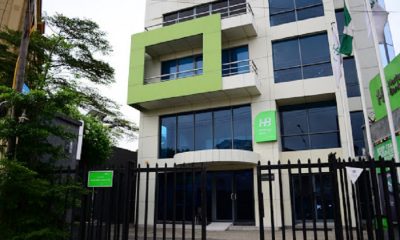
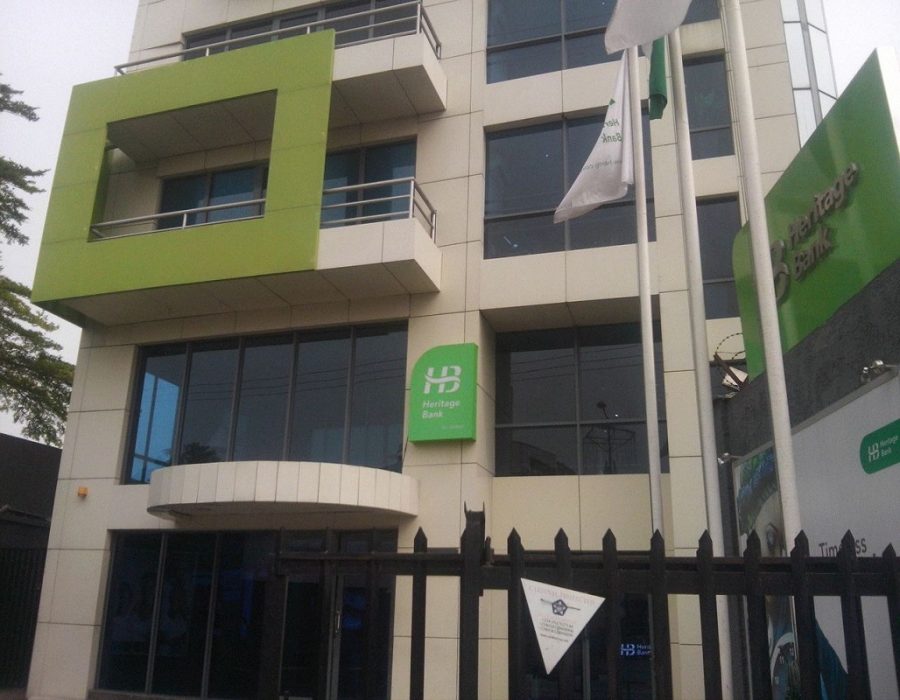
Due to its desire to partner and create wealth for their individual customers, Heritage Bank took advantage of the customers’ service/appreciation week to organise a business fair that showcases and celebrates the business activities of their various customers.
The fair which took place at 12 Ligali Ayorinde Street, Victoria Island, Lagos, last Sunday and Monday, saw various entrepreneurial clientele of the bank displaying their products and services to potential customers.
The event was strategically kick started on Sunday, a work free day, to enable customers alongside their family and friends hang out at the fair.
Just as was obtainable in trade fairs, products were reasonably cheap as they were sold at much discounted prices and prospective shoppers also used the occasion to obtain the contact addresses of sellers.
In her welcome address, the Executive Director, South Bank, Mrs Adaeze Udensi, disclosed that Heritage Bank aims at collaborating with its customers to grow their businesses into generational conglomerate.
Mrs Udensi said, “Our desire is for Nigerian businesses to be listed on the stock exchange and eventually become global brands and household names.
“We believe that businesses like yours are the backbone of the economy because you create jobs and play a huge role in moving our country out of this present recession. I encourage you to rise up to this challenge facing every Nigerian entrepreneur and make our economy vibrant again.”
She stated that the Heritage Bank business fair is where new deals are brokered and partnerships initiated. ‘It is the place to connect’ she said.
According to her, a contact at the fair could lead to a business opportunity tomorrow and shoppers in turn will appreciate the vendors’ home grown businesses and in turn, the vendors would learn more innovative ways to meet their needs. ‘That is why we have created a platform like this, to propel a network of fast growing businesses’.
“Seize this opportunity, network with other vendors that are present, engage our SME consultants at the mini-bank and let us be your guide on the path to global recognition.”
Echoing Mrs Udensi’s speech was the Executive Director, Abuja & North Bank, Mr Ola Olabinjo who hinted that the business fair being organised by the bank is a sure foundation of taking Nigeria’s economy out of recession.
The Abuja North Bank ED remarked that because small businesses are the foundation of every economy, at Heritage Bank, they are more than every ready to ensure that they support them.
“It is not the size of the balance sheet of the bank that grows an economy, but the patriotism of the bank and the small businesses and we are determined to go the long walk with you.”
Full of life and ensuring orderliness at the fair was the Group Head, Customer Experience and Analytics, Kikanya Akpenyi who declared to Independent that she is happy and could only thank God that the D-day has finally come and that the vendors responses to the invitation was fantastic.
“This is the second edition, during the first one, of course, we were still testing the water so, a lot of the planning was a bit rushed. However, this time around, we had much time to plan and that is why we were able to get a bigger space in terms of a more vantage location that would be accessible to a lot of people.”
Akpenyi indicated that the success of the event was hinged on the feedback gotten from the previous edition, leading to more people wanting to be a part of it.
“So, it took a lot of works, getting the vendors, collecting their logos and promotional materials for them. And of course, on our part, trying to put the word out there and then getting all these to happen. About two months of preparation, checking prices, comparing locations and then, we are here today.
“I am excited and happy, I am thankful for the team I have, it couldn’t have happened with just me. Team work is actually the success factor here. So, everyone has put in his and her best. We also got very good support from our management.”
Despite being organized just for the Lagos entrepreneurs, there were also vendors from outside Lagos that graced the occasion and the bank welcomed them with open arm.
The event which was open to all retail segments of Heritage Bank’s clients, according to the organizers, is hoped to be taken beyond the Island, to other metropolitan cities across the country.
“It is all about giving back to our customers, finding ways to support them, as well as appreciating them for their patronage. We are open to feedback as we get the feedback and clamour to do more, we can always adjust.”
Even though plans were made for 50 booths and five extra, the entire 55 booths were booked and occupied by vendors of various products and services who had their sales reps distributing fliers to customers.







By Adedapo Adesanya
The Central Bank of Nigeria (CBN) is considering the recapitalisation and restructuring of Development Finance Institutions (DFIs) to address the significant financing gap facing micro, small, and medium-sized enterprises (MSMEs).
The Deputy Governor of the apex bank in charge of Economic Policy, Mr Muhammad Abdullahi, disclosed this during a panel session at the launch of the Nigeria Development Update by the World Bank in Abuja on Tuesday.
He explained that a recent review by the apex bank found that existing DFIs were too small to meet the credit needs of businesses.
DFIs are specialised, government-backed financial entities designed to promote economic growth by funding critical sectors like agriculture, infrastructure, and SMEs. Key institutions include the Bank of Industry (BOI), Development Bank of Nigeria (DBN), Nigeria Export Import Bank (NEXIM Bank), Bank of Agriculture (BOA), National Credit Guarantee Company Limited, and Nigerian Consumer Credit Corporation, among others.
“We conducted a review last year of the development finance space. Across all the DFIs in Nigeria, the total asset base is slightly above N8 trillion, whereas what is required in development finance for MSMEs is over N130 trillion,” he said.
He said that simply injecting capital would not solve the problem.
“The only way to address this is not only through public sector capital injections into these institutions, but also by making them bankable and investable,” he said.
Abdullahi said the CBN and the Ministry of Finance are reviewing DFI structures to improve their efficiency and risk appetite.
“We are reviewing the entire sector to ensure that we can correct the incentives, improve risk appetite, and also strengthen capital levels,” the deputy governor added.
He also said the reforms aim to introduce stronger market-based principles.
“We are looking at the structure to see how more market fundamentals can be incorporated, because the way it has been done in the past has not delivered the desired results,” Mr Abdullahi said.
On the persistent financing challenge for MSMEs, he said lending to the real sector has always been one of the structural challenges “Nigeria’s economy faces in terms of ensuring that credit reaches businesses that require it”.
Business Post reports that the CBN recently concluded the recapitalisation of the Nigerian banking sector, while the insurance sector is ongoing.

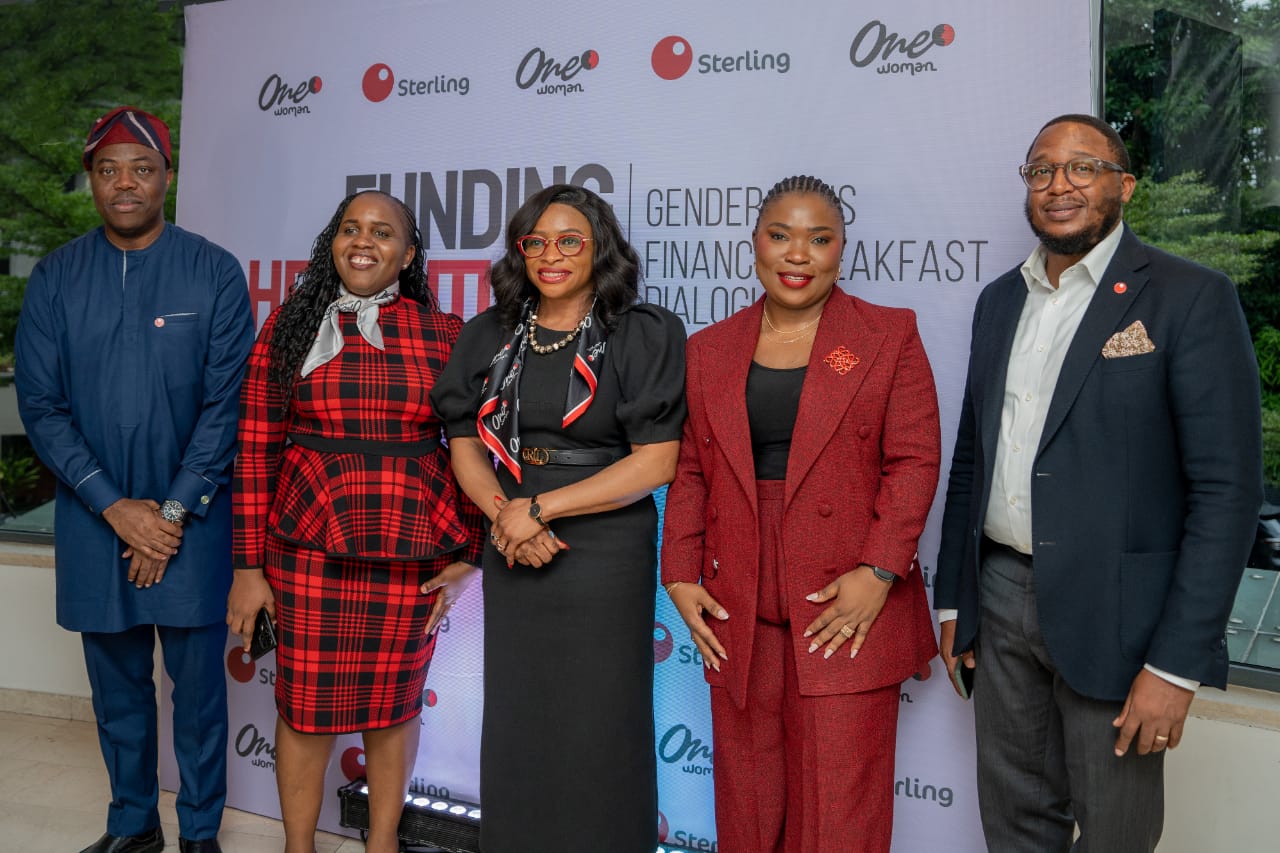
By Modupe Gbadeyanka
The women-focused initiative by Sterling Bank, OneWoman, is already yielding positive results, especially in promoting financial inclusion and empowering female-led enterprises in Nigeria.
Business Post reports that the programme was created to support women through three key pillars of capital, capacity, and community.
In 2025, according to the Head of the OneWoman Initiative, Ms Ezinne Nwokafor, the initiative gave out N43.9 billion loans to 2,450 female entrepreneurs, trained 6,000 of them, served about 380,000 women across three sectors of career women, women in business and freshers, and their vision 2030 is to give out N500 billion loans to one million women across their three sectors.
She noted that a significant majority of Nigerian women remain excluded from formal credit, with only a small percentage able to access structured financing. Despite improvements in financial inclusion, women continue to face systemic barriers that limit their ability to secure funding.
Ms Nwokafor pointed out that women account for a substantial share of micro, small, and medium enterprises and contribute meaningfully to the economy, yet face a financing gap estimated at $42 billion annually, according to the International Finance Corporation.
She also referenced data showing that more than half of women-led businesses identify access to finance as a major constraint, while rejection rates for loan applications remain significantly higher for women than for men.
According to her, these challenges are often linked to structural issues such as gaps in asset ownership, social norms, and limited access to financial data and visibility.
“Sterling’s OneWoman initiative is positioned to bridge this gap by combining financial solutions, mentorship, capacity building, and community support for women across different stages of their journey,” she said at the Funding Her Future Breakfast Dialogue in Lagos.
The session brought together voices from across sectors for a focused and necessary conversation on how to unlock more inclusive and effective financing pathways for women-led businesses in Nigeria.
On his part, the chief executive of Sterling Bank, Mr Abubakar Suleiman, said, “Women-led businesses need the right support systems, the right networks, and the right ecosystem to grow with confidence and scale with resilience.”
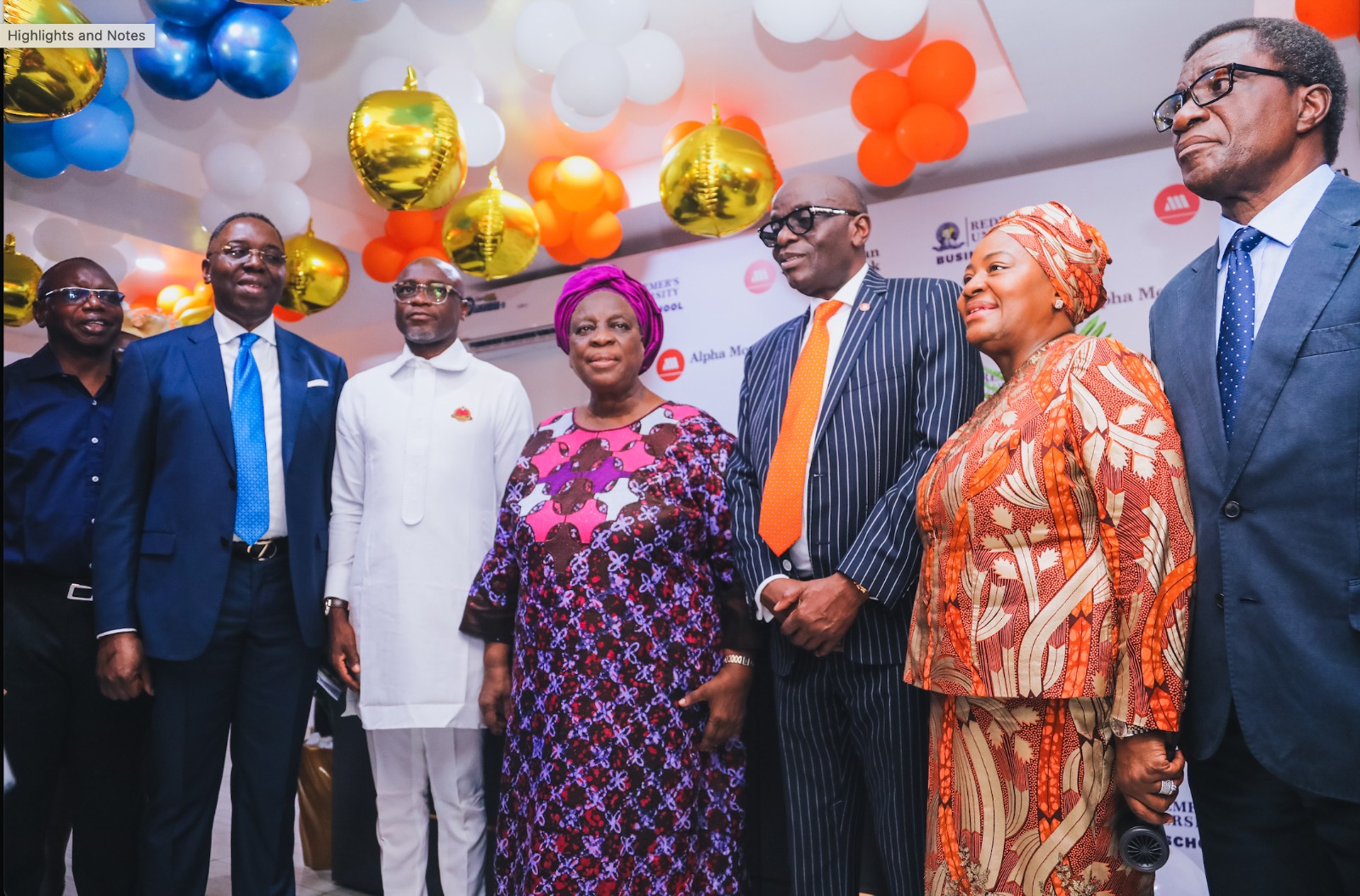
By Modupe Gbadeyanka
Alpha Morgan Bank has reaffirmed its commitment to supporting institutions that drive intellectual growth and national development.
The lender gave this reassurance at the commissioning of the Redeemer’s University Business School by Pastor (Mrs) Folu Adeboye, the wife of the General Overseer of the Redeemed Christian Church of God (RCCG), Pastor Enoch Adeboye.
Speaking at the event, the Managing Director of Alpha Morgan Bank, Mr Ade Buraimo, said the company was proud to be associated with the school, noting its commitment to education and institutional development.
As part of its broader focus on knowledge sharing and thought leadership, Alpha Morgan Bank will host its Economic Review Webinar in May 2026, bringing together experts to share insights on key economic trends and opportunities.
The commissioning of the business school was witnessed by distinguished guests, including the Pro-Chancellor and Chairman of the Governing Council of Redeemers University, Professor Oluwatoyin Ogundipe; the Vice Chancellor, Professor Shadrach Olufemi Akindele; Mrs Bola Obasanjo; and other notable dignitaries.
-
 Feature/OPED6 years ago
Davos was Different this year
-
Travel/Tourism10 years ago
Lagos Seals Western Lodge Hotel In Ikorodu
-

 Showbiz3 years ago
Estranged Lover Releases Videos of Empress Njamah Bathing
-
 Banking8 years ago
Sort Codes of GTBank Branches in Nigeria
-

 Economy3 years ago
Subsidy Removal: CNG at N130 Per Litre Cheaper Than Petrol—IPMAN
-

 Banking3 years ago
Sort Codes of UBA Branches in Nigeria
-

 Banking3 years ago
First Bank Announces Planned Downtime
-

 Sports3 years ago
Highest Paid Nigerian Footballer – How Much Do Nigerian Footballers Earn
4 Comments