
Banking
How Tokunbo Abiru Transformed Polaris Bank in Nearly Two Years

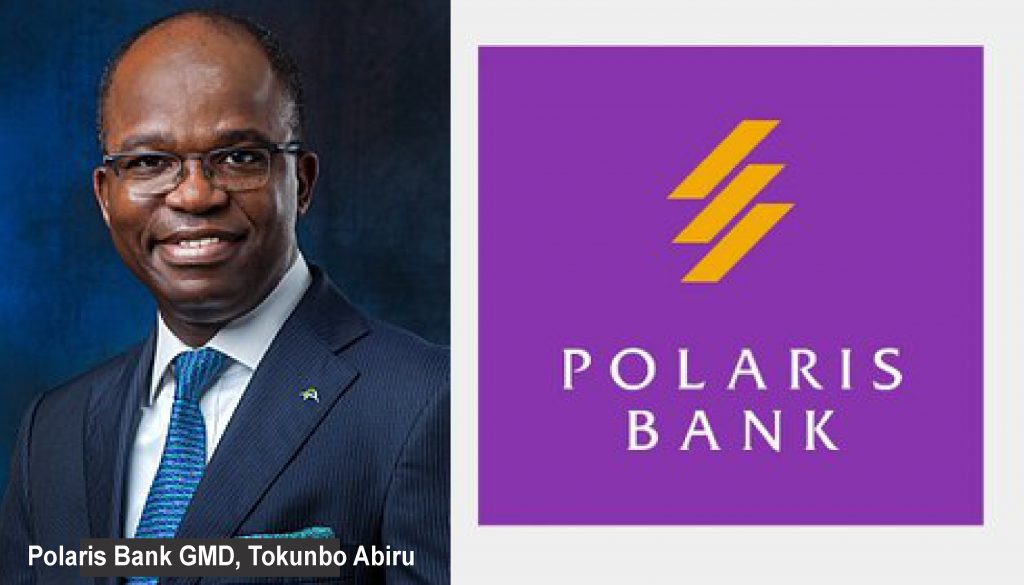
There are bankers and there are bankers, but the group managing director and chief executive officer of Polaris Bank Limited, Mr Adetokunbo Mukhail Abiru, is arguably one of the most successful bankers Nigeria has produced in recent times.
Mr Abiru is a rare breed. We are familiar with individuals who take over bourgeoning establishments and further increase their worth on face value along the line. But it sounds like a fairy tale to have a professional who takes over a near-comatose organization and almost makes a corporate giant out of it. This has been the lot of the former Skye Bank Plc, now rechristened Polaris Bank Limited.
In just a little time after the Central Bank of Nigeria (CBN), and the Assets Management Corporation of Nigeria, AMCON took over Skye Bank and renamed it Polaris Bank which saw the emergence of Mr Abiru as its managing director cum chief executive officer, Polaris Bank’s narrative changed to a financial institution to reckon with.
Recall that on July 4, 2016, the Central Bank of Nigeria intervened in the management of the Skye Bank Plc by reconstituting the board of directors, shoring up the bank with N100 billion capital injection. The regulatory action on the bank led to the resignation of its chairman, all non-executive directors on the board, as well as the managing director, deputy managing director, and the two longest-serving executive directors on the management team.
Two years down the line, (precisely, September 22, 2018), the CBN again intervened in the ailing Skye Bank and the operating licence of the bank was revoked to give way to Polaris Bank Limited, a bridge bank former created in consultation with the Nigerian Deposit Insurance Corporation (NDIC) to assume the ownership of the assets, all deposit liabilities and some other liabilities of distressed and defunct Skye Bank. The bank’s share capital had run into negative territory due to bad loan deals. It was also in urgent need of recapitalisation which its shareholders could not enable.
Accordingly, the apex bank gave the board a clear mandate to turn the institution around positively. Expectedly, the Tokunbo Abiru-led team has not disappointed.
Under his leadership, the bank has witnessed significant transformation in market competitiveness. The financial institution has roared into the limelight, with the many brilliant strides and policies executed since he took over.
He is easily one of the best banking brains and business leaders on the continent – evident in his immense contribution to the African banking industry. Mr Abiru’s story is a remarkable one and his journey up to this point is enough blue print for anyone looking to achieve success in their path.
This is a man who has used his Midas touch to turn things around for the financial institution within a very short space of time.
On assumption of office in 2016, Mr Abiru drew up a holistic and integrated approach to business modernization which elevated the bank to deliver a superior customer-centric experience. The impact of this change has been reflecting positively on the bank’s report card, which restored customers’ trust and confidence in the system.
Since becoming the managing director of the lender, the game-changer has spearheaded several growth initiatives which have placed the bank on upward trajectory. The Abiru-led Polaris team has continued to implement the July 2016 regulatory intervention to include entrenching sound corporate governance and risk management practices and transforming Polaris into fully fledged retail and commercial bank with strong digital backing.
The miraculous transformation experienced by Polaris Bank which was almost a dying entity a few years ago is a testimony of the leadership and managerial qualities of Mr Abiru.
The bank has invested significantly in technology with copiously integrated service models enabling customers enjoy banking services through a wide range of channels.
Today, Polaris Bank can boast of a strong market share going by several transformative business initiatives.
Mr Abiru has successfully implemented cost management initiatives which have enhanced liquidity and efficient service delivery to the bank’s customers.
Through his aggressive recovery initiatives, the bank has been able to recover over N200 billion of outstanding bad loans within a shortest period.
Under his watch, the bank has been able to reach settlement and restructuring agreements with many of the chronic bad debtors resulting in substantially improved payments and prospects of future recoveries.
In line with the bank’s broad mandate which includes cost management and optimisation, as well as divestments to improve the institution’s financial position, Mr Tokunbo Abiru has embarked on several initiatives aimed at restructuring and repositioning the bank.
Some of the initiatives embarked upon by Mr Abiru include: branch rationalisation, review of service contracts and cash management operations which have resulted in hundreds of millions of financial savings. Also, through some of the initiatives, the bank has successfully settled many matured trade and bilateral obligations and restructured outstanding balances with the relevant institutions and counterparties.
Under Mr Abiru’s watch, the bank has divested from four local subsidiaries releasing total cash value of N6.2 billion.
Mr Abiru is also known for his no-nonsense approach to service delivery which keeps members of staff on their toes always, but doesn’t hesitate in wielding the big stick when necessary in order to achieve the desired growth goals of the brand, while rewarding outstanding members of staff.
Polaris Bank under Abiru has also continued to promote the CBN’s National Financial Inclusion Strategy aimed at reducing the number of eligible adult Nigerians that are excluded from the formal financial system from 46.3 per cent to 20 per cent by the year 2020. The lender has been remarkable, strutting the length and breadth of Nigeria to promote financial inclusion.
Polaris Bank has also made available different credit and funding options to small scale entrepreneurs and business owners, operating in the informal sector, in order to bring them into mainstream financial system.
The bank has also employed interactive financial literacy sessions as a platform to empower students with money management skills in schools across the country. So far, the bank has organised interactive sessions on financial literacy in schools across seven states namely; Cross River, Akwa Ibom, Ebonyi, Zamfara, Oyo, Bauchi and Benue. The sessions were facilitated by 155 employees of the bank led by the managing director/CEO. At Offot Ukwa Secondary School, Calabar, Cross River State and four other schools in Akwa Ibom State namely; Uyo High School, Bright Future International School, Nigerian Christian Institute and Redemption Academy, the students took lessons on managing and saving money.
To underscore the importance of the initiative, Abiru taught the students ways to be thrifty and start saving for the future, urging them not to spend all monetary gifts they get buying things, but rather learn to keep a part of it in the bank and watch it grow.
Overall, about 6,000 students have benefited from the training.
Similarly, in its bid to ease access to banking services and to reach the unbanked, Polaris Bank recently entered into a strategic partnership with the Niger State government by ensuring participants in the supply value chain of the National Home-Grown School Feeding Programme (NHGSFP) open bank accounts with less hassle.
The NHGSFP is an initiative of the Federal Government designed as a deliberate act to encourage mass education among the underprivileged and the most vulnerable.
Since the feeding programme commenced in 2016, over 7,500 people across supply value chain had been engaged in Niger State while Polaris Bank has opened bank accounts for 1,500 cooks.
The bank has also launched its revamped mobile banking application upgraded with new and exciting user-friendly features for a more convenient banking experience. Customers can now enjoy many benefits and access self-service options, such as, easy account opening, convenient self- booking and liquidation of fixed deposits, an expanded list of bill-payment options and easy activation of standing instructions & recurrent future payments.
These and many other moves leveraging technology and building a culture of innovation is fast repositioning the bank.
Today, Polaris Bank’s branches are fast becoming a hub for transactional activities witnessing a huge footfall of customers trooping in to carry out transactions, open bank accounts and experience the innovative trends that the bank has introduced to its business. This overall experience has also been boosted by the enhancement of staff morale which inherently drives the commitment to serve their customers better.
Not resting on his oars, the seasoned banker has said that he would love to leave with a sense of satisfaction that he delivered on the mandate the CBN by taking Polaris to the top.
Abiru, is an alumnus of Harvard Business School (Advanced Management Programme) and Lagos Business School (Senior Management Programme). He holds a B.Sc. (Economics) from Lagos State University and is a Fellow of The Institute of Chartered Accountants of Nigeria (ICAN) and an Honorary Senior Member of The Chartered Institute of Bankers of Nigeria (CIBN).
The seasoned banker has had a distinguished career in banking spanning about 30 years, ten of which were spent in the formative years of Guaranty Trust Bank Plc. He thereafter spent about 14 years with First Bank of Nigeria Limited, where he functioned as executive director, Corporate Banking between 2013 and 2016.
During his banking career, he was at various times between 2013 and 2016 a non–executive director in the following companies: Airtel Mobile Networks Limited; FBN Capital Limited (now FBN Merchant Bank Limited); and FBN Bank Limited, Sierra Leone.
While serving as the Commissioner for Finance in Lagos State, it is to Tokunbo Abiru’s credit that the state successfully floated an N80 billion bond, earning it the EMEA Finance’s Best Local Currency Bond Award for 2012. Under his leadership, Mr. Abiru made the state’s tax efforts yield maximum results; and the discovery of over 5.5 million tax evaders in 2013 opened up the discussion regarding taxation in Lagos State. Mr. Abiru’s efforts also led to increased Land Use Charge revenue generations to the tune of N6.2 billion.
Financial experts believe the sky is the limit for Tokunbo Abiru at Polaris Bank. One of them, Tunji Omotosho said: “His achievements are eye-catching and enviable in all ramifications. He has set a pedestal for aspiring financial managers to want to beat, but it is difficult to reach it, let alone beat it.
“Tokunbo is definitely a rare gift to the financial sector, and a miracle to the country’s development goals. A lot of us are learning so much from his experiences and how he manages them successfully.”










By Dipo Olowookere
Tech enthusiasts interested in participating in the Take on Squad Hackathon, organised by Guaranty Trust Holding Company (GTCO) Plc, can now enter the contest via the official portal at https://squadco.com/hackathon.
The programme enters its third edition in 2026, and the theme for this year is Smart Systems: The Intelligent Economy, according to a statement issued by the organisers.
The hackathon brings together developers, designers and entrepreneurs across Nigeria in a collaborative environment to build practical solutions across key sectors, including financial services, healthcare, commerce and digital inclusion.
Participants are challenged to design and build intelligent, data-driven solutions that transform how communities engage with money.
It is part of the organisation’s commitment to fostering innovation, empowering talent, and supporting the development of technology-driven solutions that address real-world challenges across Africa.
“Today’s dynamic, digitally driven world demands continuous innovation, which is shaping how economies grow, how businesses scale, and how societies evolve.
“Through Take on Squad Hackathon, we are deliberately investing in the ideas and talent that will define the future.
“Our objective is not simply to encourage innovation, but to enable its translation into scalable solutions that deliver real and measurable impact.
“This reflects GTCO’s role as a financial services platform that connects capital, capability, and creativity to drive sustainable progress,” the Managing Director of HabariPay, Ms Eduofon Japhet, stated.
The social coding event remains a cornerstone of HabariPay’s mission to foster creativity and problem-solving among emerging tech talents. Competing teams will leverage Squad’s advanced APIs to create scalable digital tools that address everyday challenges faced by businesses and individuals.
Through initiatives such as this, GTCO continues to position itself at the intersection of finance, technology and enterprise, actively shaping the future of digital transformation in Africa.

By Dipo Olowookere
Banking services will not be interrupted throughout the Easter public holidays, from Friday, April 3, to Monday, April 6, 2026, for any reason, Ecobank Nigeria has assured its customers.
In a message over the weekend, the member of Africa’s leading pan-African banking group, Ecobank Transnational Incorporated, said customers would continue to enjoy quality service delivery during the period.
It noted that its secure and robust digital platforms would remain fully operational to support financial activities during the festive period.
All digital channels, including the Ecobank Mobile App, Ecobank Business App, USSD *326#, Ecobank Online, OmniPlus, Omnilite, EcobankPay, Ecobank Cards, ATMs, PoS terminals, and over 35,000 Ecobank Xpress Point agent locations nationwide, will remain accessible throughout the holiday, the financial institution further said, urging customers to conveniently conduct transactions at any time using this wide range of digital solutions.
Ecobank customers were encouraged to maximise the bank’s alternative channels for transfers, bill payments, airtime purchases, card services, and account management.
They were also advised to stay vigilant by shopping only on trusted websites; avoiding the sharing of PINs, passwords, and one-time passwords (OTPs); refraining from banking on public Wi-Fi networks; being cautious of urgent or emotionally charged messages; and regularly monitoring their account activity.
“Customers will continue to enjoy a full bouquet of services during the holiday, including local and international funds transfers, bill payments, airtime top-ups, merchant payments, balance enquiries, account statements, and cardless cash withdrawals via ATMs,” the Head of Products & Analytics, Consumer & Commercial Banking at Ecobank Nigeria, Mr Victor Yalokwu, stated.
“We understand that festive seasons come with increased financial activity, and our priority is to ensure our customers enjoy fast, reliable, and secure banking wherever they are.
“Our digital channels are designed to support uninterrupted transactions, and we have strengthened our systems to guarantee optimal performance throughout the Easter break,” he added.
Mr Yalokwu noted that, “Ecobank remains committed to providing innovative financial solutions and exceptional customer service. We wish all our customers and partners a peaceful and joyful Easter celebration.”
By Dipo Olowookere
Customers may have difficulty accessing the digital platform of Polaris Bank, known as VULTe, during the Easter holidays from Friday, April 3, to Monday, April 6, 2026.
This is because the financial institution is carrying out system maintenance on the platform in its effort to ensure users enjoy a better banking experience.
In a notice over the weekend, the lender said “access to VULTe may be limited,” but it provided an alternative, which is the PolarisXperience.
Polaris Bank, which expressed regret over “any inconvenience” this action may cause its customers, said the “scheduled system maintenance” would happen from 10 pm to 8 am daily, promising that normal service would return after the maintenance.
“In continuation of our commitment to delivering a seamless and improved banking experience, we will be conducting a scheduled system maintenance during the Easter holidays.
“During this period, access to VULTe may be limited. We have provided an alternative channel, PolarisXperience:
“Please go to our website to onboard or use it as an existing user. You can also use this link: (https://elogin.polarisbanklimited.com).
“We regret any inconvenience and appreciate your understanding. Normal service will resume after the maintenance,” parts of the notice seen by Business Post read.
-
 Feature/OPED6 years ago
Davos was Different this year
-
Travel/Tourism10 years ago
Lagos Seals Western Lodge Hotel In Ikorodu
-

 Showbiz3 years ago
Estranged Lover Releases Videos of Empress Njamah Bathing
-
 Banking8 years ago
Sort Codes of GTBank Branches in Nigeria
-

 Economy3 years ago
Subsidy Removal: CNG at N130 Per Litre Cheaper Than Petrol—IPMAN
-

 Banking3 years ago
Sort Codes of UBA Branches in Nigeria
-

 Banking3 years ago
First Bank Announces Planned Downtime
-

 Sports3 years ago
Highest Paid Nigerian Footballer – How Much Do Nigerian Footballers Earn