Banking
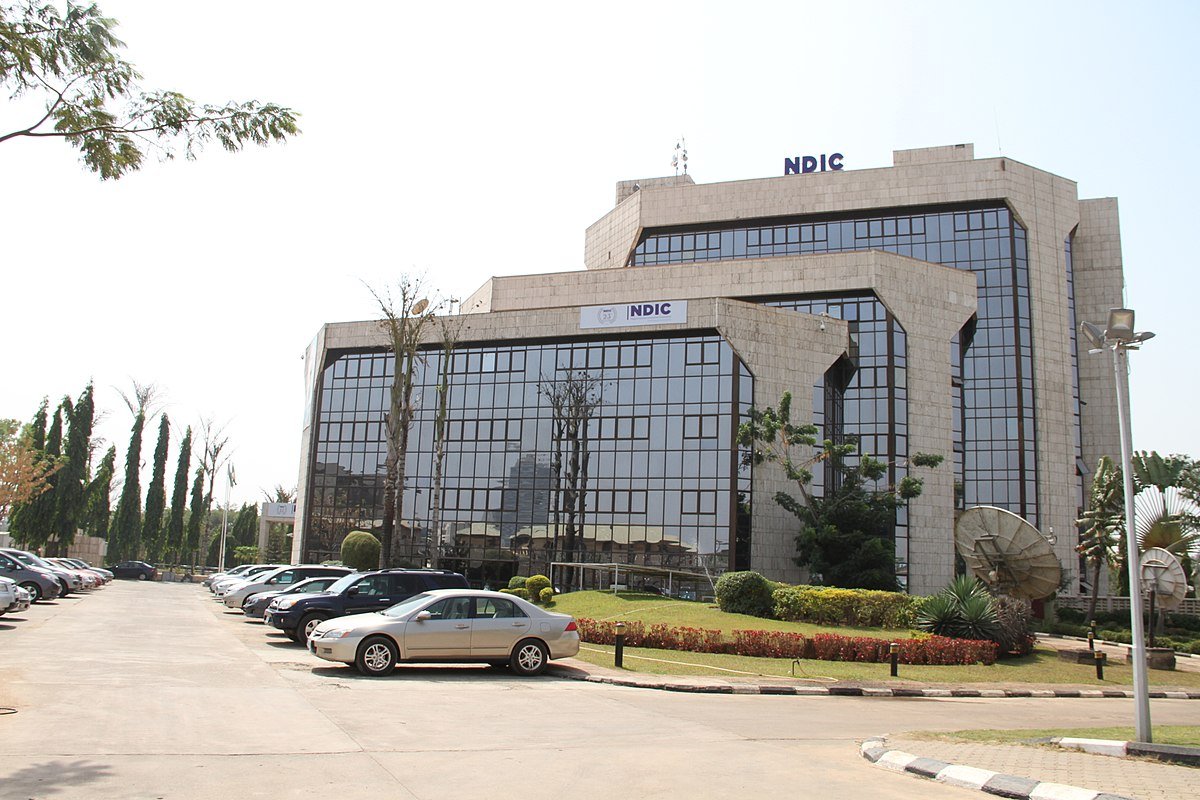
NDIC Begins Final Liquidation of 89 Microfinance Banks, Mortgage Banks
By Adedapo Adesanya
The Nigeria Deposit Insurance Corporation (NDIC) has commenced the final phase of liquidating 89 defunct Microfinance Banks (MFBs) and Primary Mortgage Banks (PMBs) nationwide after their takeover by new operators under its resolution framework.
The corporation said the action follows the revocation of licences by the Central Bank of Nigeria (CBN) in May 2023, which affected 179 microfinance banks and four primary mortgage banks.
In a statement by its Head of Communication and Public Affairs, Mrs Hawwua Gambo, the NDIC explained that under the Purchase and Assumption (P&A) model, 89 new institutions were licensed to assume the assets and liabilities of the failed banks, adding that the acquiring institutions have since commenced operations under new identities.
The agency said the transition enabled the new institutions to assume control of the assets and liabilities of the defunct banks, with operations already ongoing under new identities.
With the operational handover completed, the NDIC said it was now proceeding to formally wind up the old entities. As part of this process, the corporation, acting as liquidator, will approach various divisions of the Federal High Court to secure orders for their dissolution and to be discharged from its responsibilities.
It disclosed that the exercise is designed to conclude the resolution process, noting that “the exercise aims to bring closure to the resolution process while ensuring depositors’ interests remain protected, and the financial system remains stable.”
According to the NDIC, the P&A arrangement has ensured uninterrupted access to banking services in the affected communities, as acquiring institutions have fully taken over the operations of the defunct banks.
The Affected Lenders
A state-by-state breakdown indicates that Lagos recorded the highest number of affected institutions, with 27 banks undergoing the winding-down process. Osun followed with seven, while Anambra had six. The Federal Capital Territory accounted for five, and Akwa Ibom, Ogun, and Adamawa recorded four each.
Oyo, Kaduna, Edo, and Niger had three institutions each, while Benue, Delta, Imo, and Ondo recorded two apiece. Other states, including Abia, Ekiti, Enugu, Rivers, Plateau, Nasarawa, Kano, Kwara, Jigawa, and Katsina, had one institution each affected.
Among them are Mouau Vasmucs Microfinance Bank, Eduek Microfinance Bank, Ini Microfinance Bank, and Nsehe Microfinance Bank. Others include Zawadi Microfinance Bank, Akpo Microfinance Bank, Anya Microfinance Bank, Awka Microfinance Bank, and Enugwu-Ukwu Microfinance Bank.
The list also features Isi-Aku Microfinance Bank, Obosi Microfinance Bank, Cub Microfinance Bank, Umejei Microfinance Bank, ABC Microfinance Bank, Ehor Microfinance Bank, and Esan Microfinance Bank. Amoye Microfinance Bank, Goldenfunds Microfinance Bank, Evangel Microfinance Bank, Greenland Microfinance Bank, and Arise Microfinance Bank are also affected.
Banccorp Microfinance Bank, Bishopgate Microfinance Bank, Bridgeway Microfinance Bank, and Briyth Covenant Microfinance Bank are on the list. Credit Afrique Microfinance Bank, Echo Microfinance Bank, Eyowo Microfinance Bank, and Fiyinfolu Microfinance Bank are also included.
Other affected lenders are Hackman Microfinance Bank, Halmond Microfinance Bank, Manna Microfinance Bank, Manny Microfinance Bank, and Mayfair Microfinance Bank. Mercury Microfinance Bank, Moneywise Microfinance Bank, Network Microfinance Bank, Nuture Microfinance Bank, Onyx Microfinance Bank, and Oros Capital Microfinance Bank are also listed.
The list further includes Peniel Microfinance Bank, Primera Microfinance Bank, Purple Money Microfinance Bank, Stallion Microfinance Bank, Sunrise Microfinance Bank, Surbpolitan Microfinance Bank, Verdant-Capital Microfinance Bank, and Zikado Microfinance Bank.
Also affected are Aiyepe Microfinance Bank, Interland Microfinance Bank, Star Microfinance Bank, Zigate Microfinance Bank, Fasilidapo Microfinance Bank, and Newage Microfinance Bank. Boluwaduro Microfinance Bank, Iba Microfinance Bank, Idese Microfinance Bank, Ola Microfinance Bank, Olofin Microfinance Bank, and Olofin-Owena Microfinance Bank are included.
Osogbo Microfinance Bank, Firstindex Microfinance Bank, Joint Farmers Microfinance Bank, Ologbon Microfinance Bank, and Iwoama Microfinance Bank also made the list. Adamawa Homes & Savings, Mautech Microfinance Bank, Michika Microfinance Bank, Biyama Microfinance Bank, and Musharaka Microfinance Bank are affected as well.
The remaining institutions include Dangizhi Microfinance Bank, Edumana Microfinance Bank, Mainsail Microfinance Bank, Ally Microfinance Bank, and Business Support Microfinance Bank. Daniels Global Microfinance Bank, First Multiple Microfinance Bank, Grassroots Microfinance Bank, Bluewhales Microfinance Bank, and Josad Microfinance Bank are also listed.
Others are BIPC Microfinance Bank, Jamis Microfinance Bank, Narict Microfinance Bank, Fahimta Microfinance Bank, Mabinas Microfinance Bank, New World Microfinance Bank, Northbridge Microfinance Bank, Omu-Aran Microfinance Bank, and Cherish Microfinance Bank.
Banking
Redtech, MTN, UBA Launch Cardless Payment Integration in Rare Fintech-Telco-Bank Alliance
By Adedapo Adesanya
Redtech Limited, a Nigerian financial-technology company backed by Nigerian businessman, Mr Tony Elumelu, has partnered with MTN Nigeria’s MoMo PSB and the United Bank for Africa (UBA) to expand cardless payment access for consumers and merchants across Nigeria.
The payment interoperability partnership by these three organisations seeks to address a critical gap in Nigeria’s payments market: connecting banking-led merchant acceptance with telco-led mobile money wallets.
This means customers of MTN’s fintech subsidiary can now make payments directly from their MoMo wallets at participating UBA merchant locations using the Pay with MoMo feature on RedPay POS terminals. In addition, they can also visit any UBA branch to make withdrawals and deposits from and into their MoMo accounts.
For online shoppers, e-commerce merchants can now receive payments directly from MoMo PSB customers through Redtech’s payment gateway infrastructure.
According to a statement, the partnership brings together Redtech’s payment technology and enablement capability, UBA’s merchant acquiring and distribution layer, and MoMo PSB’s mobile money wallet ecosystem and customer base.
Redtech holds licences as a Payment Terminal Service Provider (PTSP) and Payment Solution Service Provider (PSSP) from the Central Bank of Nigeria, authorising it to provide both POS and payment gateway services.
For MoMo PSB customers, Pay with MoMo increases the number of places where their wallets can be used for everyday payments. For merchants, it opens access to a wider pool of customers and provides an additional payment option at the point of sale.
Speaking on this milestone, Mr Emmanuel Ojo, CEO of Redtech, said: “By integrating our RedPay technology with MoMo PSB’s wallets through the UBA network, we will offer merchants and customers greater choice. Our goal is to build the payment infrastructure that ensures a merchant never has to turn away a customer in Nigeria or across Africa because of the payment method they prefer.”
On her part, Mrs Omolara Michael-Nwadu, acting chief executive of MoMo PSB, said this partnership marks a significant step toward true interoperability in Nigeria’s payments ecosystem.
“By integrating MoMo wallets into UBA’s merchant network through Redtech’s infrastructure, we are removing barriers between bank-led and mobile money systems while unlocking access to over 55,000 merchant touchpoints. Our focus is on driving usage at scale—enabling more transactions, deeper engagement, and greater value for merchants. At MoMo PSB, we are building a more connected financial ecosystem—where payments are no longer defined by platforms, but by seamless customer experience.”
“Our focus is on simplifying payments, expanding access to financial services and helping more Nigerians do more every day. Pay with MoMo gives our customers more places to use their wallets, while supporting broader financial inclusion by bringing useful financial services closer to where people live, work and do business,” she added.
Adding his input, Mr Emmanuel Lamptey, Executive Director Designate, Digital Banking, UBA Group, said: “Our merchants are already serving millions of customers every day through the UBA network. By bringing Pay with MoMo into that network, we are giving those merchants a direct connection to MoMo PSB’s customer base – and giving MoMo PSB customers more places to use their wallets when they shop. That is a clear win for both sides.”
Pay with MoMo is being introduced through RedPay POS terminals already deployed within UBA’s merchant network. More than 55,000 RedPay POS terminals have been deployed across the network, with the platform having processed over N278.47 billion in transaction value and more than 12.23 million transactions to date.
Built on infrastructure already operating at scale across merchant locations in Nigeria, the collaboration supports the broader push for more practical interoperability between banks, payment technology providers and mobile money operators.
With the pilot phase in Nigeria, the partners plan to extend the model into selected African markets where MoMo PSB and UBA operate as the rollout develops.
Banking
Access Bank to Reduce Overseas Equity Exposure on CBN Directive Within 12 Months
By Adedapo Adesanya
Top Nigerian financial institution, Access Bank Plc, will reduce its equity stakes in some of its foreign subsidiaries to comply with new rules from the Central Bank of Nigeria (CBN) limiting external investments by local banks.
This was disclosed by Access Bank’s chief executive, Mr Roosevelt Ogbonna, on an investor call in Lagos on Tuesday.
The CBN has ordered banks to limit equity investments in foreign subsidiaries to no more than 10 per cent of total shareholders’ funds. This is to help contain risk and preserve capital, which are fundamental to long-term financial system stability.
Mr Ogbonna said Access Bank, which has operations in over 20 countries, has 12 months to comply.
“We are looking at divestments” to bring down our equity stake, from a current level of 19.4 per cent, the CEO said. “We will still be the controller of those banking entities, and the value creation will continue to be strong,” he said.
Nigerian banks began expanding aggressively across the continent after the country’s 2016 recession, seeking to mitigate risks from currency devaluation, rising non-performing loans, and to diversify income streams.
Access Bank has been at the forefront of that push, acquiring assets from financial groups including Standard Chartered Plc, Atlas Mara Ltd. and KCB Group Plc, helping it build a significant footprint across Africa’s banking industry.
In recent years, other Nigerian banks have boosted their external footprint, including Zenith Bank, UBA, and Guaranty Trust Holding Company (GTCO), among others.
Last year, Access Bank signalled a pause in acquisitions to focus on expanding its existing operations.
Mr Ogbonna also said the lender is considering refinancing a $500 million Eurobond due in September, not due to liquidity pressures, but to extend the maturity profile of its debt.
The executive said a final approval on that refinancing, as well as on a $500 million perpetual bond due in October, is expected this month.
Business Post reports that Access Holdings grew its 2025 financial year pre-tax profit by 16.2 per cent to N1.01 trillion while net interest income rose to N1.36 trillion, net fees and commission income recorded a particularly strong growth of 40.9 per cent to N585.1 billion, reflecting increasing diversification in revenue streams, and overall operating income after impairment grew by 23.9 per cent to N3.17 trillion.
At the same time, the firm improved its cost discipline, with its cost-to-income ratio declining to 51.7 per cent from 56.7 per cent in 2024. Returns also remained solid, with return on average equity at 18.4 per cent and return on average assets at 1.6 per cent, reinforcing the quality of earnings delivered during the year.
Banking
Zenith Bank Grows Q1 2026 Earnings by 6% as NPL Ratio Eases to 3.79%
By Aduragbemi Omiyale
Despite the challenging operating environment and tightening monetary policy stance, Zenith Bank Plc improved its gross earnings in the first quarter of 2026 by 6 per cent to N1.01 trillion from N950 billion in the corresponding period of 2025.
In the unaudited financial statements of the lender for the period ended March 31, it was revealed that the growth was driven by an increase in interest income and non-interest income.
In the results submitted to the Nigerian Exchange (NGX) Limited on Thursday, April 30, 2026, it was disclosed that the rise in interest income was primarily due to the expansion of the bank’s risk asset portfolio, supported by disciplined, risk-adjusted pricing.
It was observed that interest expense moderated by 5 per cent year-on-year in Q1 2026, underscored by a continued optimisation of the lender’s deposit mix and funding structure. This resulted in a 7 per cent growth in net interest income to N634 billion from N591 billion in Q1 2025.
Non-interest income also improved 19 per cent year on year to N106 billion from N89 billion, highlighting an improvement in fees and commissions and higher contributions from other operating income streams.
This performance reflects stronger customer activity and deeper transaction volumes across key business channels.
As a result, the profit before tax went up by 3 per cent year to N361 billion from N351 billion, and the profit after tax marginally increased by 1 per cent to N314 billion.
Profitability was further supported by a decline in cost of funds to 3.76 per cent in Q1 2026 from 3.90 per cent in Q1 2025; while cost of risk moderated to 2 per cent in Q1 2026, reflecting a prudent and proactive risk management stance in an elevated yield environment.
Gross loans increased by 9 per cent from N11.06 trillion as at full year 2025 to N12.04 trillion in Q1 2026, reflecting the continued commitment to carefully deploying credit into high-growth sectors of the economy that enhance portfolio returns.
Asset quality strengthened as the Non-Performing Loan (NPL) ratio eased to 3.79 per cent, from 3.82 per cent reported in December 2025, underpinned by disciplined credit risk management. Customer deposits rose to N24.47 trillion in Q1 2026, while total assets increased by 2 per cent to N32.01 trillion over the same period.
Return on Average Equity (ROAE) and Return on Average Assets (ROAA) stood at 24.9 per cent and 4 per cent, respectively, supported by strong top-line earnings and enhanced balance sheet efficiency.
Net interest margin (NIM) strengthened to 12.5 per cent, up from 10.3 per cent in Q1 2025, underscoring the Group’s ability to preserve its margins and deliver improved shareholder returns. Prudential ratios remained strong and comfortably above regulatory requirements.
The Group’s Capital Adequacy Ratio (CAR) and Liquidity Ratio stood at 23.5 per cent and 71 per cent, respectively, while the coverage ratio remained strong at 169 per cent, reinforcing the Bank’s resilient capital and liquidity position.
Its performance underscores its continued focus on sustaining high-quality earnings growth, further strengthening asset quality, and deepening customer engagement through continued digital innovation. The Bank remains firmly committed to delivering sustainable growth anchored on sound corporate governance, prudent risk oversight, and disciplined capital allocation.
-
Feature/OPED6 years agoDavos was Different this year
-
Travel/Tourism10 years ago
Lagos Seals Western Lodge Hotel In Ikorodu
-
Showbiz3 years agoEstranged Lover Releases Videos of Empress Njamah Bathing
-
Banking8 years agoSort Codes of GTBank Branches in Nigeria
-
Economy3 years agoSubsidy Removal: CNG at N130 Per Litre Cheaper Than Petrol—IPMAN
-
Banking3 years agoSort Codes of UBA Branches in Nigeria
-
Banking3 years agoFirst Bank Announces Planned Downtime
-
Sports3 years agoHighest Paid Nigerian Footballer – How Much Do Nigerian Footballers Earn