

Connect with us

Economy

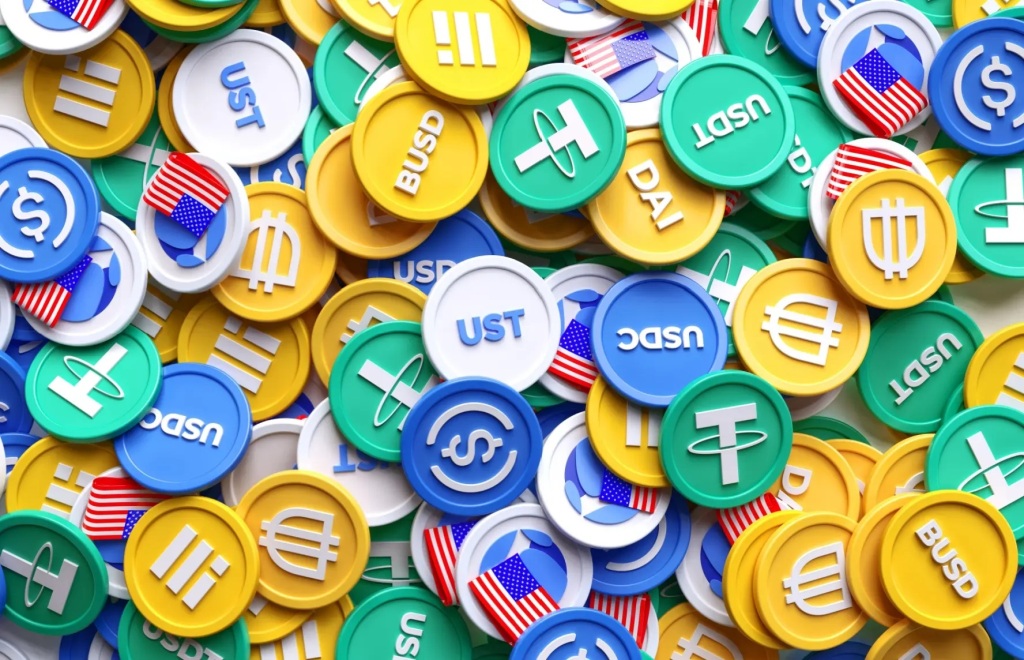
Stablecoins Bridging Crypto, Traditional Finance in Nigeria—IMF

Published

on

stablecoins

By Adedapo Adesanya

The International Monetary Fund (IMF) has said that stablecoins now form a key bridge between crypto markets and the traditional financial system in Nigeria, ranking the country top in inflows in Sub-Saharan Africa.

According to a new report from the institution, Nigeria received about $59 billion in crypto-asset inflows between July 2023 and June 2024. It ranked second globally on Chainalysis’s 2024 Global Crypto Adoption Index, and sixth in 2025.

Within sub-Saharan Africa, Nigeria accounts for roughly 60 per cent of stablecoin inflows since 2019, the report titled Stablecoins in Nigeria: A Growing Cross-Border Channel’ released on Tuesday, noted.

Nigerian households and small firms are moving money across borders in a new way: via smartphones, digital wallets, and US Dollar–pegged crypto assets known as stablecoins.

What began as a niche technology has become a meaningful cross-border payments channel. Its rapid growth is easing long-standing frictions in cross-border transactions.

It is also testing the limits of existing monetary and regulatory frameworks.

IMF noted that the appeal is straightforward, adding that stablecoins allow users with a smartphone and internet access to receive remittances or make cross-border payments in minutes, often at a lower cost than traditional channels.

“For households and small firms with limited access to formal banking services, this is a practical alternative.”

According to the report, global drivers help explain the broader uptake in Nigeria.

“Stablecoins are relatively stable in value, easy to transfer, and widely used as settlement assets within crypto markets.

“They facilitate trading between exchanges and provide a convenient store of liquidity. For remittances, they can undercut conventional channels, where the average cost of sending US$200 to sub-Saharan Africa remains around 9 per cent of transaction value, well above the global average of 6 per cent, according to the World Bank.”

Domestic conditions have amplified these effects. In 2023 and 2024, the sharp depreciation of the naira, high inflation, and constrained access to foreign exchange increased demand for dollar-linked assets.

Stablecoins offered both a hedge against currency risk and a tool for paying overseas suppliers.

After the Central Bank of Nigeria (CBN) restricted banks from servicing crypto exchanges in February 2021, IMF said activity shifted to less regulated channels, notably peer-to-peer platforms.

The rise of stablecoins in Nigeria brings clear benefits – faster, cheaper cross-border payments can support trade, remittances, and financial inclusion.

However, it said the same features raise policy concerns, including monetary sovereignty. As stablecoins are typically denominated in US Dollars, widespread use can resemble a digital form of dollarisation. By reducing demand for the local currency, the IMF said it could weaken the transmission of domestic monetary policy.

“Another concern is financial integrity. Activity that once flowed through banks is moving increasingly to digital wallets and crypto exchanges.

Monitoring systems designed for traditional intermediaries may not capture these transactions effectively, the report stated, noting that the speed and anonymity of some platforms can also increase risks of illicit finance, including money laundering.

IMF noted that these risks are not unique to Nigeria, but the scale of adoption makes them more pronounced.

The IMF also said Nigeria should adopt a balanced approach to stablecoins by supporting innovation while managing risks. It identified four priorities: maintaining a stable and credible Naira, strengthening oversight of stablecoin issuers, improving data collection on stablecoin transactions, and enhancing payment infrastructure.

The Fund noted that recent economic reforms have helped restore confidence in the naira but urged authorities to align regulations with emerging global standards and improve monitoring through better blockchain and transaction data. It also said further investment in faster and cheaper cross-border payment systems could reduce reliance on unregulated stablecoin channels.

The report noted that stablecoins are neither a passing trend nor a complete substitute for traditional finance, saying they are best seen as a response to persistent frictions in cross-border payments. In Nigeria, those frictions are real, and users have found a workaround.

“The policy challenge is to narrow the gap that made the workaround attractive, while ensuring that new risks remain contained. That requires a clear strategy: open to innovation but anchored in sound macroeconomic policy and effective regulation”, the report concluded.

Adedapo Adesanya is a journalist, polymath, and connoisseur of everything art. When he is not writing, he has his nose buried in one of the many books or articles he has bookmarked or simply listening to good music with a bottle of beer or wine. He supports the greatest club in the world, Manchester United F.C.

1 Comment

1 Comment

  1. Pingback: Stablecoins Bridging Crypto, Traditional Finance in Nigeria—IMF – PRIMA NEWS
Leave a Reply

Your email address will not be published. Required fields are marked *

Economy

Increased Household Penetration, Others Buoy PZ Cussons FY’26 Revenue Growth

Published

on

PZ Cussons

By Aduragbemi Omiyale

Leading manufacturer of personal healthcare products and consumer goods, PZ Cussons Plc, recorded a 22 per cent growth in its revenue in the 2026 fiscal year.

In its unaudited results recently submitted to the Nigerian Exchange (NGX) Limited, the company posted revenue of N260.46 billion in the period under review compared with the N212.63 billion achieved in the corresponding period in 2025.

This revenue growth was buoyed by market share gains for its major brands, increased household penetration and robust volume uplift, according to the chief executive of PZ Cussons, Mr Oghale Elueni.

It was observed that the cost of sales as a percentage of revenue was 72 per cent, 100bps lower than the prior year, driven by better mix and supply efficiencies.

Marketing and distribution expenses increased by 48.2 per cent to N26.51 billion from N17.89 billion, and administrative expenses also spiked by 43 per cent to N21.07 billion from N14.70 billion.

Also, the organisation recorded significant profitability for the year ended May 31, 2026, rising by 388 per cent to N49.10 billion from N10.07 billion.

Mr Elueni attributed this strong performance to the strength of the business, the equity of the brands, and the discipline of execution, noting that despite the complex and consistently challenging operating environment, the company pulled through to deliver growth in both revenue and profit.

He disclosed that the 22 per cent revenue growth recorded for the 2026 financial year was influenced by a healthy mix of volume and price initiatives.

“The balance sheet was further de-leveraged and strengthened through a cash-accretive P&L and efficient working capital management. The impact has been an improvement in the net asset position from N17.3 billion negative at the beginning of the year to N70.6 billion at year-end.

“The business grew volumes in both the electrical and consumer business, leveraging investment in our brands and sharpening our go-to-market capabilities. The result has been market share gains for our major brands, increased household penetration and robust volume uplift, contributing to overall revenue growth,” he stated.

Mr Elueni expressed profound appreciation to the shareholders for their unwavering support in navigating through the challenges in the last 12 months, noting that the board remains confident that, despite geopolitical uncertainties and their attendant economic shocks, the business is sufficiently resourced to deliver value to stakeholders.

“We have a business that has strong brands, an adaptive operating framework and a culture of disciplined execution that supports the consistent delivery of value to stakeholders,” he stated.

Continue Reading

Economy

Nigeria Records Higher Crude Oil Production in May, June

Published

on

crude oil 1.27 million barrels per day

By Adedapo Adesanya

Nigeria’s crude oil production increased in May and June, according to data published by the Organisation of the Petroleum Exporting Countries (OPEC).

The country’s output increased by 42,000 barrels per day to 1,530 million barrels in May, from 1,489 million barrels in April.

According to Reuters, Nigeria, whose shipments were not affected by the Iran war, also pumped ⁠more in June, based on flow data from financial group LSEG, information from other companies that track flows, such as ⁠Kpler, and data provided by sources at oil companies, OPEC, and consultants.

Output from the OPEC rose by 2.34 million barrels a day to 18.75 million a day, with the gains driven by Kuwait, Saudi Arabia and Iran, the survey showed. The rebound still leaves production considerably below prewar levels.

Kuwait posted the biggest increase among OPEC’s 11 members last month, boosting output by 870,000 barrels a day to 1.36 million a day followed by Saudi Arabia, which raised output by 550,000 barrels a day to an average of 7.2 million a day. That was followed by Iran, which hiked by 510,000 a day to pump 2.85 million a day, and has accumulated a hoard of supply on tankers at sea as it struggles to find buyers.

In the wider alliance, Russia has bolstered crude exports to record levels following Ukrainian strikes on its refineries, potentially diverting volumes that can’t be processed at home.

Even before the peace deal, Persian Gulf producers had found ways to sneak cargoes out through the strait, which was largely shuttered in the early stages of the conflict.

The uptick in supply is creating a surplus in parts of the market, erasing crude’s wartime rally and raising the question of whether OPEC nations will need to compete for customers.

The group’s June production was still 7.3 million barrels a day, or 28 per cent, below February levels, when adjusted for exit by the United Arab Emirates (UAE).

The UAE quit OPEC in May, giving it the freedom to pump at will once the strait fully stabilises. Iraq also briefly threatened it could exit unless eventually given a higher output quota by the organisation.

On Sunday, a subgroup of seven OPEC+ nations announced a 188,000 barrels a day boost in August continuing the series of small and symbolic production hikes during the war to continue a process of restoring output halted a few years ago.

Continue Reading

Economy

Shareholders Clear Path for Dangote Cement’s London Secondary Listing

Published

on

Dangote Cement AGM social investments

By Adedapo Adesanya

Shareholders of Dangote Cement Plc have approved plans that could pave the way for the company’s secondary listing on the London Stock Exchange (LSE) while also endorsing a final dividend of N45.00 per ordinary share for the 2025 financial year.

The resolutions were passed at the company’s 17th Annual General Meeting (AGM) held on Thursday at Eko Hotels & Suites in Lagos, where shareholders also approved the audited financial statements for the year ended December 31, 2025.

The approval for an international secondary listing marks a significant step in Dangote Cement’s plans to broaden its access to global capital markets and enhance its international investor base.

In May, the company’s founder Mr Aliko Dangote said the cement subsidiary was planning a London listing to sell 10 per cent stake, sixteen years after debuting on the Nigerian Exchange (NGX) Limited. This would provide the company with the much-needed boost to compete in the United Kingdom market.

Shareholders also ratified the payment of a final dividend of N45.00 per ordinary share from the company’s retained earnings as of December 31, 2025. The dividend was paid on Thursday, July 2, 2026.

At the meeting, shareholders approved the appointment of Ms Mariya Aliko-Dangote to the company’s board of directors. In recent months, the eldest daughter of the billionaire as well as her sisters Halima and Fatima, have been strategically positioned across their father’s empire in what has been touted as succession plans.

They also re-elected four directors retiring by rotation: Mr Emmanuel Ikazoboh, an Independent Non-Executive Director; Mr Olakunle Alake, a Non-Executive Director; Ms Berlina Moroole, a Non-Executive Director; and Mr Alvaro Poncioni Merian, an Independent Non-Executive Director.

In addition, shareholders authorised the board to determine the remuneration of the company’s external auditors for the 2026 financial year.

The AGM also noted the disclosure of managers’ remuneration in compliance with the provisions of the Companies and Allied Matters Act (CAMA) 2020.

Shareholders further approved the election of Mr Robert Ade-Odiachi, Mr Sheriff Yussuf Mojirola and Mr Nicholas Nyamali as shareholders’ representatives on the Statutory Audit Committee. They will serve alongside the company’s representatives, Mr Ernest Ebi and Mr Olakunle Alake, until the next AGM.

They also approved annual remuneration of N20 million for the chairman and N15 million each for the non-executive directors for the financial year ending December 31, 2026.

Continue Reading

Trending

