
Banking
Nigerian Loan Provider Lidya Closes Shop After Severe Financial Distress

By Aduragbemi Omiyale
A local financial technology (fintech), Lidya, has ceased to operate as a business entity after it raised about $16.45 million.
Lidya was established about nine years ago to provide collateral-free loans to small business owners to scale up their operations.
In the past months, the company has been struggling with internal crisis, which saw its Chief Technology Officer, Mr Cristiano Machado, leaving in September 2024, and its co-founder, Mr Tunde Kehinde, exiting the next month, with its tech team based in Portugal disbanded after failing to meet payroll obligations.
Lidya was founded by former employees of Jumia, Mr Tunde Kehinde and Mr Ercin Eksin. To remain in competitive in the Nigerian lending business, they adopted different business models.
In a report by TechPoint Africa, it was disclosed that Lidya decided to close the curtain after experiencing severe financial distress.
“Despite best efforts to restructure and sustain operations, the Company has encountered severe financial distress and is no longer able to continue in business. As a result, the Company has ceased all operations,” a part of an email to customers quoted by the publication said.
“Due to the Company’s financial status, it is unable to process funds or settle claims at this time,” another part of the message stated.
In 2020, Lidya expanded beyond Africa, setting up operations in Poland and the Czech Republic as part of its European push. The following year, it raised $8.3 million in a pre-Series B round. But by 2023, the company exited both European markets, citing a renewed focus on Nigeria.



By Adedapo Adesanya
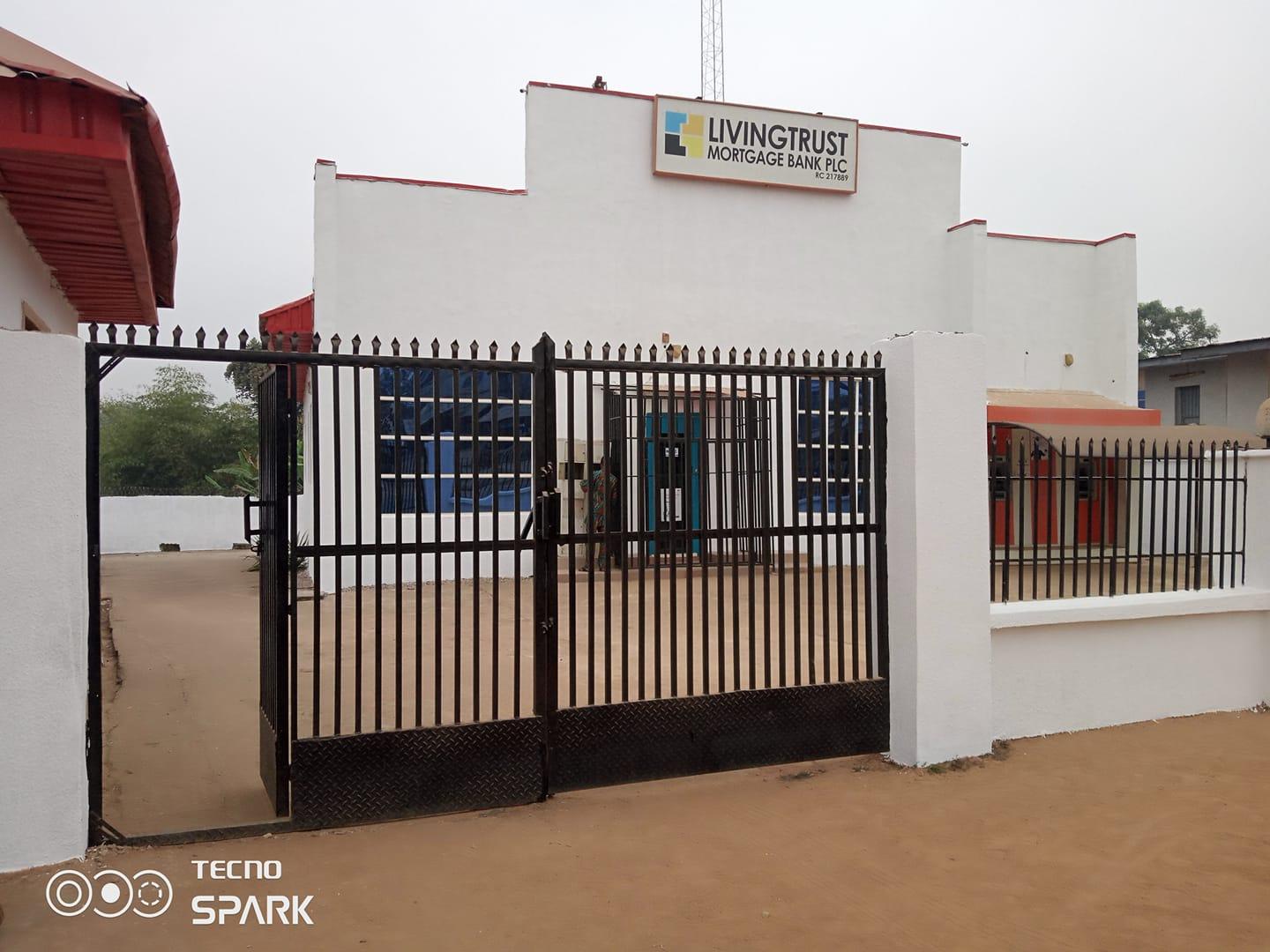
The Central Bank of Nigeria (CBN) has reaffirmed Mr Kamaldeen Adekilekun as the substantive Chairman of Living Trust Mortgage Bank Plc, easing recent uncertainty about the bank’s leadership.
In an official letter dated March 27, 2026, addressed to the Osun State Government, the banking sector regulator stated that Mr Adekilekun’s appointment remains valid and binding.
The CBN explained that once board nominations and appointments are approved by the regulator, they are tenured and guided by the Code of Corporate Governance for Primary Mortgage Banks in Nigeria, adding that such appointments cannot be withdrawn arbitrarily without clear regulatory grounds.
The CBN noted that its earlier communication (reference number OFI/DOL/CON/PLI/001/213) highlighted that the appointment was tenured in line with Sections 2.4.5 and 2.4.6 of the Code.
The apex bank also stated that there was no regulatory breach of relevant provisions of BOFIA 2020 or any CBN regulation that would disqualify him or prevent him from completing his term.
Rejecting the request for his removal, the CBN directed that the current board structure be maintained, stating, “Based on the foregoing, we therefore decline your request to withdraw Dr Adekilekun’s appointment.”
The development followed an earlier request seeking the withdrawal of the chairman’s appointment. The CBN said it had previously communicated the same position in a letter dated January 19, 2026.
The development reaffirms the central bank’s commitment to regulatory discipline, corporate governance, and institutional stability in Nigeria’s financial sector.
The clarification is expected to bring confidence to stakeholders, investors, and customers of Living Trust Mortgage Bank as operations continue under the existing leadership.
Incorporated on March 9, 1993, the bank converted from a Private Limited Liability Company to a Public Limited Liability Company on January 25, 2013 and subsequently listed on the Nigerian Exchange (NGX) on December 11, 2013, where its shares are being publicly traded.
By Adedapo Adesanya
Nigerian business-banking unicorn, Moniepoint, is eyeing a considerable foothold in East Africa as it completed the acquisition of a 78 per cent stake in Kenya’s Sumac Microfinance Bank.
The deal was finalised on Thursday and provides Moniepoint with a deposit-taking licence, an essential requirement for its credit-led expansion strategy.
The acquisition of Sumac allows Moniepoint to bypass the Central Bank of Kenya’s (CBK) policy to halt new licences to new foreign players. It will also ease worries after its move to buy payments firm Kopo Kopo failed.
By securing a majority stake in the 20-year-old institution, Moniepoint gains the regulatory infrastructure needed to deploy its high-velocity lending model to Kenya’s small and medium -sized enterprises (SMEs).
Sumac is a tier-three lender, and with its existing branch network and regulatory standing, the lender offers Moniepoint one of the ways to scale in a region increasingly shaped by digital-first credit.
The move also signals the company’s ambition to build a cross-border ecosystem that captures the entire merchant value chain, rather than solely on transaction fees.
Moniepoint’s entry into Kenya follows its acquisition of Orda, a cloud-based restaurant software provider for an undisclosed sum earlier this week, in a push to tap into the billion-dollar restaurants’ economy.
The company plans to export its business-in-a-box strategy, which integrates inventory management, payroll, and working capital by combining Orda’s vertical Software as a Service (SaaS) capabilities with Sumac’s banking infrastructure.
Orda will be rebranded Moniebook for Restaurants and integrated into Moniebook, Moniepoint’s business management platform. Orda will continue to operate as a standalone business until the full integration is completed in the coming months.
Orda currently operates in Nigeria and Kenya, but the acquisition only covers its Nigerian operations. However, with its presence in Kenya, it may set the tone for the acquisition of that subsidiary.
By Adedapo Adesanya
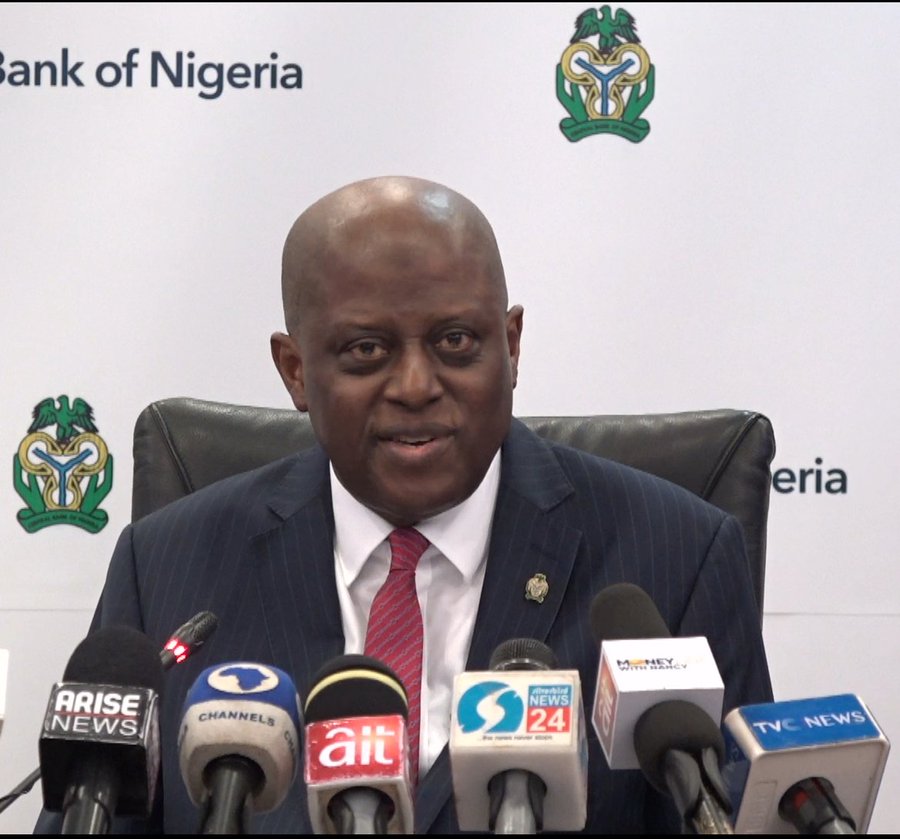
The Governor of the Central Bank of Nigeria (CBN), Mr Yemi Cardoso, said the central bank would now focus on a five-point policy agenda aimed at consolidating recent macroeconomic gains and steering the country toward sustained stability.
Mr Cardoso, while speaking at the 2026 Monetary Policy Forum held in Abuja on Thursday, set out the lender’s next phase of reforms anchored on inflation control, exchange rate stability, stronger reserves, deeper financial markets, and improved policy effectiveness.
The forum, themed Strengthening Nigeria’s Macroeconomic Stability Through Effective Monetary Policy: The Roles of Critical Stakeholders, brought together fiscal authorities, financial institutions, private sector players, and development partners.
He said the CBN will be positioning its five-point agenda as the cornerstone of the next phase of economic management.
Mr Cardoso said while recent reforms had delivered measurable improvements across key indicators, the focus had now shifted to consolidation.
He identified the five priorities as anchoring inflation firmly on a downward path to single-digit levels, sustaining exchange rate stability, strengthening external reserves through organic inflows, deepening interbank market development, and enhancing the transmission of monetary policy.
According to Mr Cardoso, the priorities reflect a deliberate strategy to entrench stability and improve the efficiency of the monetary framework. “The journey is far from complete. Our next phase is focused on consolidation,” Cardoso said, stressing that maintaining discipline and consistency would be critical to achieving durable outcomes.
He noted that the bank’s tightening measures and foreign exchange reforms had already begun to yield results, with inflation moderating, reserves strengthening, and market confidence improving.
However, he cautioned that sustaining these gains would require strong coordination between monetary and fiscal authorities.
Mr Cardoso emphasised that macroeconomic stability could not be achieved in isolation, describing it as a shared responsibility among policymakers, financial institutions, and the broader economic system.
He said disciplined fiscal operations, aligned policy actions, and continuous stakeholder engagement would be essential in delivering on the Bank’s objectives.
The CBN governor also highlighted the importance of deepening the interbank market to improve liquidity distribution and enhance the effectiveness of policy signals across the financial system.
He added that strengthening monetary policy transmission mechanisms would ensure that policy decisions translate more efficiently into real sector outcomes, including price stability and economic growth.
On external buffers, Mr Cardoso said the bank would continue to prioritise reserve accretion through sustainable sources, including improved foreign exchange inflows and enhanced market confidence. He explained that stronger reserves would provide a critical cushion against external shocks and support exchange rate stability.
The CBN chief further stressed that the success of the consolidation phase would depend on sustained collaboration across institutions.
He reaffirmed the apex bank’s commitment to orthodox monetary policy, transparency, and institutional credibility, noting that the reforms undertaken so far were necessary to correct past distortions and lay the foundation for long-term economic resilience.









-
 Feature/OPED6 years ago
Davos was Different this year
-
Travel/Tourism10 years ago
Lagos Seals Western Lodge Hotel In Ikorodu
-

 Showbiz3 years ago
Estranged Lover Releases Videos of Empress Njamah Bathing
-
 Banking8 years ago
Sort Codes of GTBank Branches in Nigeria
-

 Economy3 years ago
Subsidy Removal: CNG at N130 Per Litre Cheaper Than Petrol—IPMAN
-

 Banking3 years ago
Sort Codes of UBA Branches in Nigeria
-

 Banking3 years ago
First Bank Announces Planned Downtime
-

 Sports3 years ago
Highest Paid Nigerian Footballer – How Much Do Nigerian Footballers Earn