Banking
Q3-17: Union Bank Suffers Profit Loss Despite 16% Rise in Earnings
By Modupe Gbadeyanka
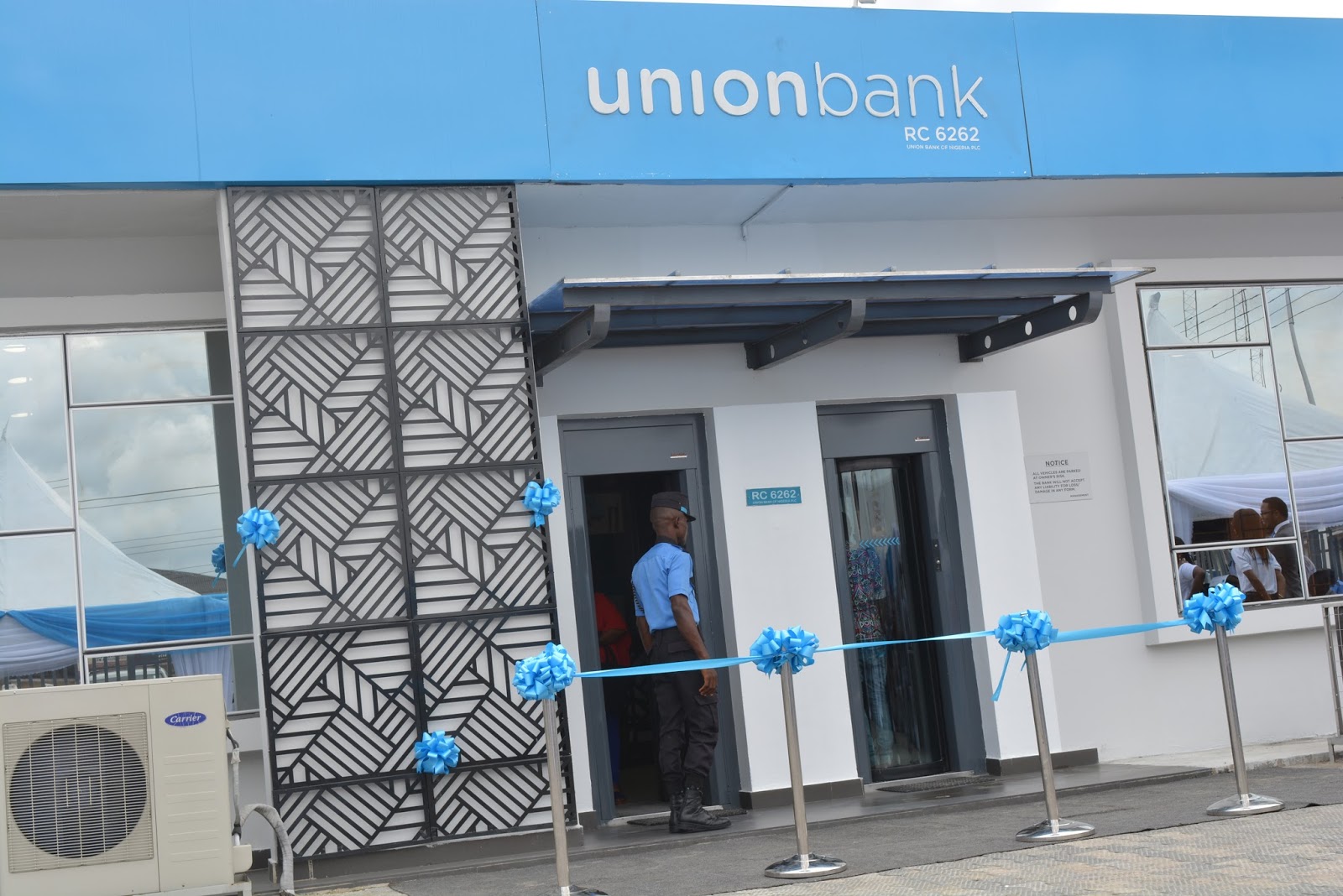
One of Nigeria’s long-standing and most respected financial institutions, Union Bank Plc yesterday announced its unaudited results for the nine months ended September 30, 2017.
However, the lender suffered a profit loss during the period, posting N12.4 billion profit after tax in the period under review compared with N13 billion in the same period of last year.
Also, its profit before tax went down by 2 percent to N13 billion from N13.3 billion a year ago, while the net Income is appreciated by 7 percent and the operating expenses increased by 10 percent.
In addition, the interest income rose by 22 percent to N88.5 billion from N72.3 billion in the first nine months of 2016). This was driven mostly by the 23 percent growth in average gross loans from N412 billion for 9M 2016 to N507 billion for 9M 2017.
Furthermore, the net interest income after impairment appreciated by 16 percent to N40.9 billion from N35.2 billion in 9M 2016.
Impairment went down by 53 percent to N6 billion from N12.9 billion recorded 12 months ago with the coverage ratio strengthened to 203 percent as at September 30, 2017, from 182 percent as at December 2016.
Non-interest revenue declined by 6 percent to N21 billion from N22.5 billion in 9M 2016; excluding nonrecurring Naira devaluation gain of N4.7 billion in 9M 2016, 9M 2017 improved by 18 percent.
Operating expenses went up by 10 percent at N49 billion from N44.6 billion in 9M 2016; with the increase driven largely by double-digit inflation amid continued capital investments in technology and Naira devaluation.
Also, the gross loans went down by 5 percent to N508.6 billion from N535.8 billion in Dec 2016, while customer deposits increased by 17 percent to N767.9 billion from N658.4 billion in December 2016).
These initiatives boosted its gross earnings, which went up by 16 percent to N109.5 billion N94.8 billion in 9M 2016).
According to the lender, this was driven by a customer-centric product suite, a revamped digital platform and the launch of a new advertising campaign, which delivered 63 percent YTD increase in new-to-bank customers in 2017.
Union Bank said it remains on course to deliver on its key objectives in 2017.
As previously announced, the bank’s plans to raise N50 billion in tier 1 capital through a rights issue formally opened on September 20 and closed on October 30.
The capital increase supports the Bank’s short to medium term growth objectives as it looks to re-position itself as one of Nigeria’s leading commercial banks. The new capital will also ensure the bank maintains a strong buffer above regulatory capital adequacy requirements.
Commenting on the results, the Chief Executive Officer (CEO) of Union Bank, Mr Emeka Emuwa, remarked that, “We remain encouraged by the results of our customer acquisition strategy, as customers continue to respond to our targeted market offerings and increased brand awareness, following the debut of a new advertising campaign to support the launch of Union Bank’s new digital platform, including our revamped mobile banking app and *826#, our SMS banking platform.
“Customer deposits are up 17 percent from December 2016 to close the period at N767.9 billion. Group Gross Earnings, at N109.5bn, reflect a 16 percent growth compared to the period ended September 30, 2016.
“However, a challenging macro-operating environment, characterised by double-digit inflation, continues to create headwinds for businesses, constrict consumer purchasing power and pressure operating expenses as well as portfolio quality.
“Consequently, core pre-tax earnings for the period were marginally lower at N13 billion compared to N13.3 billion in 9M 2016.
“With the N50 billion capital raise underway, we remain focused on our strategic priorities and expect this new capital to deliver the momentum needed to accelerate the pace of our business growth.”
Speaking further on the numbers, Chief Financial Officer of the bank, Oyinkan Adewale said, “The Group’s net interest income after impairments improved significantly by 16 percent from N35.2 billion to N40.9 billion compared to the period ended September 30, 2016.
“Non-interest income is down by 6 percent compared to 9M 2016, which included one-time revaluation gains.
“With our continued focus on early problem recognition and prudent provisioning, our coverage ratio has strengthened to 203 percent as at September 30, 2017, from 182 percent as at December 2016.
“The impact of Naira devaluation, coupled with the inflationary environment, has pressured our cost-to-income ratio, especially as we continue to make investments in technology critical to our long-term business strategy.
“We are confident that these investments will deliver the expected cost benefits in the medium term. We also expect improved capital adequacy and higher revenues, fuelled by N50 billion of new capital.
Banking
We’re Well Capitalised Within our Regulatory Category—Providus Bank
By Modupe Gbadeyanka
Providus Bank has dismissed insinuations that it failed to meet the new minimum capital requirements of the Central Bank of Nigeria (CBN).
The banking sector regulators gave financial institutions in the country a deadline of March 31, 2026, to shore up their capital base.
Before the deadline, there were speculations that Providus Bank, which plans a merger with Unity Bank Plc, would miss out because the deal had not concluded.
Unity Bank had to inform the public that it was only waiting for court authorisation to complete the merger, which may happen before March 31.
The Chief Financial Officer of Providus Bank, Mr Deoye Ojuroye, speaking at the opening of a new branch of the company in Ekiti State, reaffirmed the capital strength of the financial institution.
He emphasised that Providus Bank remains on a strong footing, with a disciplined approach to capital and risk management underpinning its growth.
“We are well capitalised within our regulatory category, and that gives us the confidence to continue expanding responsibly while supporting businesses and communities,” he stated at the commissioning of the new branch in Ado-Ekiti, the state capital.
The new branch marked another step in the steady expansion of the organisation across key growth markets in Nigeria.
The next item on the lender’s agenda is expanding its footprint to support local enterprise, deepen financial inclusion, and bring banking services closer to individuals and businesses nationwide over the next 12 months.
“Our approach is deliberate—we are growing in the right places, supporting real economic activity, and building a bank that is both resilient and responsive to the needs of our customers,” Mr Ojuroye stated.
According to him, the bank plans to open additional branches in strategic locations over the coming year, reinforcing its commitment to scale, accessibility, and long-term value creation, and positioning itself as a reliable partner to businesses and individuals, combining financial strength with a clear focus on sustainable growth.
Banking
Zenith Bank Launches Côte d’Ivoire Subsidiary
By Aduragbemi Omiyale
A Côte d’Ivoire subsidiary of Zenith Bank Plc will be launched on Wednesday, April 29, 2026, after obtaining an operating licence in December 2025 from the country’s Ministry of Finance and Budget.
The country’s subsidiary will operate from its headquarters at SCI Wall Street, Avenue Noguès, Plateau, Abidjan.
Zenith Bank is in Côte d’Ivoire to deepen its presence in Francophone West Africa and strengthen financial intermediation within the West African Economic and Monetary Union (WAEMU).
Positioned as a gateway for cross-border trade and investment, Zenith Bank Côte d’Ivoire will focus on corporate banking, trade finance, local and offshore banking services, and structured financial solutions tailored to businesses operating across Africa and internationally.
Expected at the official opening ceremony tomorrow are senior government officials and regulators from Nigeria and Côte d’Ivoire, continental business leaders, and members of the diplomatic community, highlighting the strategic economic ties and investment opportunities between the two markets.
The Côte d’Ivoire launch forms part of Zenith Bank’s broader continental growth strategy. In addition to the Anglophone countries where it currently operates, and in line with the expansion into the Francophone market, the bank has commenced its entry process into the CEMAC (Central African Economic and Monetary Community) region, with Cameroon as the focal point.
It was gathered that the new subsidiary will be headed by Mr Cédric Tano, a seasoned banking executive with over two decades of experience.
“We are proud to establish Zenith Bank’s presence in Côte d’Ivoire at a time of strong economic growth in the country and increasing regional integration.
“Our focus is to showcase the Zenith brand as a customer-centric institution that combines global best practices with deep local insight.
“We are well-positioned to support businesses with innovative financing solutions, facilitate cross-border trade, and contribute meaningfully to the growth of the Ivorian economy and the wider WAEMU region,” Mr Tano commented.
Also speaking, the chief executive of Zenith Bank, Ms Adaora Umeoji, said, “From the very beginning, our founder and chairman, Mr Jim Ovia, set out to build a truly global brand with a strong presence across Africa and key international markets.
“The launch of Zenith Bank Côte d’Ivoire is a bold step in realising that vision; opening a strategic corridor into Francophone West Africa and reinforcing our commitment to facilitating trade, investment, and enterprise growth across the continent.
“As we continue to expand thoughtfully and strategically, we remain focused on delivering world-class banking solutions that connect African businesses to global opportunities.”
Banking
Ecobank, DHL Organise Programme to Unlock Fresh Possibilities for SMEs
By Modupe Gbadeyanka
Some entrepreneurs across diverse sectors recently completed a three‑week intensive capacity‑building programme organised by Ecobank Nigeria, in partnership with DHL.
The event was put together to equip Small and Medium Enterprises (SMEs) with the skills, tools, and insights required to scale beyond local markets and compete globally.
The focus was on critical growth enablers such as cross‑border trade, e‑commerce opportunities, logistics, customs procedures, and international shipping—key pillars for sustainable expansion in today’s increasingly connected global marketplace.
In one of the sessions, titled Trade and Grow Beyond Borders: Welcome to E‑commerce, the Relationship Channel Manager for DHL Customers/Global Express, Mr Charles Eke, underscored logistics as a critical success factor for SMEs, identifying key challenges such as access to finance, markets, and efficient logistics.
He also provided practical guidance on customs processes, international shipping, documentation, and shipment tracking, while emphasising the immense opportunities e‑commerce presents for cross‑border expansion.
According to him, international markets often offer greater growth potential than domestic markets for well‑positioned SMEs.
The Head of SMEs, Partnerships and Collaborations at Ecobank Nigeria, Mrs Omoboye Odu, described the programme as a catalyst for meaningful growth and mindset change.
“Over the past three weeks, something truly powerful has taken place. This programme has gone far beyond knowledge sharing—it has inspired new thinking and unlocked fresh possibilities for our SMEs. The message is clear: no business should be limited by geography,” she said.
Mrs Odu reiterated Ecobank’s deliberate focus on SMEs as key drivers of Africa’s economic development, saying, “Beyond building capacity, we are intentionally opening doors by connecting businesses to new markets and opportunities. With our presence in over 30 African countries, coupled with integrated payment, trade finance, and e‑commerce solutions, Ecobank is uniquely positioned as the Pan‑African bank enabling seamless cross‑border trade.”
One of the participants, Ms Dolapo Fatoki of Debsfray, a Lagos-based fashion brand, described the initiative as impactful, practical, and transformative.
“The sessions were highly informative. I gained a deeper understanding of documentation and pricing, two areas that previously posed major challenges for me. The collaboration between DHL and Ecobank has been exceptional and truly beneficial,” she noted.
Similarly, the Creative Director of FC Accessories, Mr Tosin Olukuade, described the programme as “an eye‑opener,” adding that it reshaped his approach to business growth.
“The insights I gained will help me scale my business exponentially. I am grateful to Ecobank and DHL for creating this opportunity,” he said.
Reflecting on the programme’s digital focus, the chief executive of Needle Point, Mrs Theresa Onwuka, highlighted how the sessions broadened her outlook on growth and innovation.
“The class was so good—it got my mind thinking of possibilities. My main takeaway is clear: digitalisation is the way forward,” she remarked.
-
Feature/OPED6 years agoDavos was Different this year
-
Travel/Tourism10 years ago
Lagos Seals Western Lodge Hotel In Ikorodu
-
Showbiz3 years agoEstranged Lover Releases Videos of Empress Njamah Bathing
-
Banking8 years agoSort Codes of GTBank Branches in Nigeria
-
Economy3 years agoSubsidy Removal: CNG at N130 Per Litre Cheaper Than Petrol—IPMAN
-
Banking3 years agoSort Codes of UBA Branches in Nigeria
-
Banking3 years agoFirst Bank Announces Planned Downtime
-
Sports3 years agoHighest Paid Nigerian Footballer – How Much Do Nigerian Footballers Earn