Connect with us

Banking

See Nigerian Banks That Have Secured Their Licences

Published

on

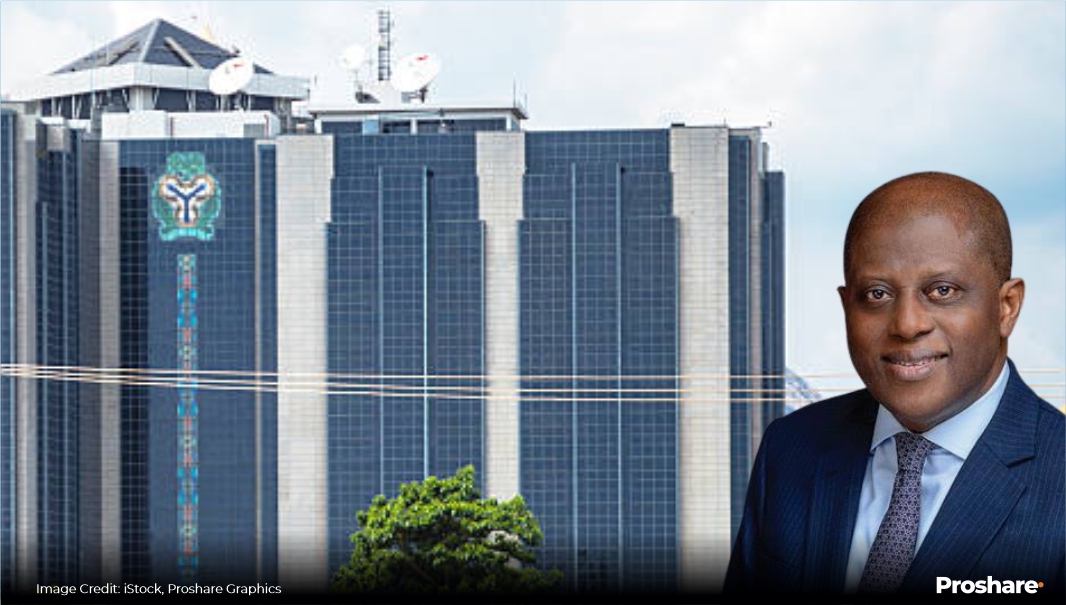
CBN Building Governor Yemi Cardoso

Nigeria’s banking sector is in the midst of one of its most transformative periods in decades. In March 2024, the Central Bank of Nigeria (CBN) announced a new minimum capital requirement for banks, prompting them to raise additional capital by 31 March 2026. The goal? Create larger, more resilient banks that can support big projects, strengthen the financial system, and help drive Nigeria toward a $1 trillion economy.

It is important for everyday customers, investors, and businesses to understand that the new capital requirement is at different levels: International, National, and Regional.

Banks That Have Secured International Licences

An international banking licence allows banks to operate beyond Nigeria’s borders and engage in cross-border transactions. To qualify, banks must meet a higher capital threshold — ₦500 billion in paid-up capital.

As of early 2026, the following banks met this requirement and secured their international licences:

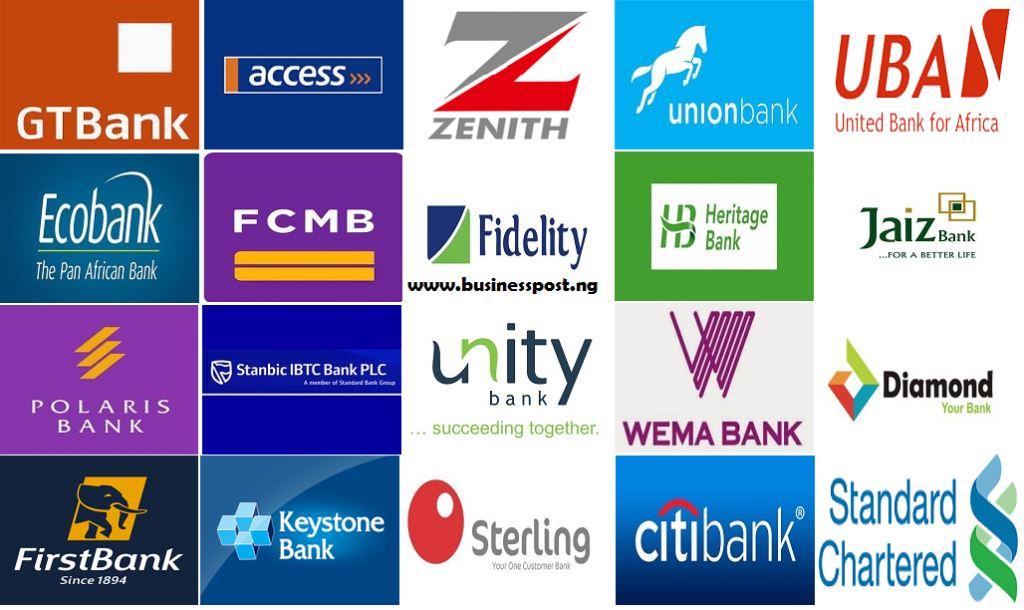
  • Access Bank Plc
  • Fidelity Bank Plc
  • First Bank of Nigeria Ltd
  • Guaranty Trust Bank (GTBank)
  • United Bank for Africa (UBA)
  • Zenith Bank Plc

Banks That Have Secured National Licences

A national banking licence allows operations across Nigeria but restricts international expansion. Banks need ₦200 billion in paid-up capital to secure this licence.

  • FCMB (First City Monument Bank) – currently pushing to raise additional capital to secure its international licence.
  • Wema Bank
  • Standard Chartered Bank (Nigeria)
  • Citibank Nigeria
  • Stanbic IBTC Bank
  • Sterling Bank
  • Globus Bank
  • Premium Trust Bank
Advertisement
Click to comment

Leave a Reply

Your email address will not be published. Required fields are marked *

Banking

Fidelity Bank Plans Webinar on Fiscal Solutions for Public Sector

Published

on

fidelity bank

By Aduragbemi Omiyale

A high-level virtual webinar focused on helping public institutions to strengthen revenue systems, improve fiscal transparency, and build smarter digital structures for collections, oversight, and accountability is being planned by Fidelity Bank Plc.

This event is slated for Tuesday, March 24, 2026, under the theme Digital Fiscal Transparency: Unlocking Sub-national Opportunities for International Partners.

The programme will bring together a cross-section of public sector leaders, development institutions, heads of parastatals and agencies, as well as financial experts, to explore practical solutions for stronger public finance management.

It is expected to offer timely insights into how modern revenue infrastructure can help institutions improve efficiency, drive accountability, and support better fiscal outcomes.

The webinar will address key issues facing many public institutions today, including revenue leakages, fragmented collection channels, weak visibility into revenue performance, poor reconciliation processes, and the growing need for more transparent and technology-driven systems.

“As public institutions seek ways to improve internally generated revenue and strengthen public trust, there has been a renewed focus on fiscal transparency.

“This is particularly important in the face of recent macro and micro economic developments with many public sector agencies under pressure to do more with limited resources,” the Divisional Head of Public Sector at Fidelity Bank, Mr Richard Madiebo, said.

“It is against this background that we have conceptualised this session with a particular focus on how digital platforms can support structured invoicing, seamless collections, payment automation, contractor disbursement transparency, real-time revenue oversight, amongst other pertinent areas of revenue mobilisation and administration in Nigeria,” he added.

“The webinar forms part of our commitment to provide practical solutions that support public sector transformation and stronger sub-national development. This is in line with Fidelity Bank’s mandate to help individuals to grow, businesses to thrive, and economies to prosper,” Mr Madiebo further disclosed.

Continue Reading

Banking

UBA to Expand Access to Trade Finance for African Businesses

Published

on

UBA UK BII

By Aduragbemi Omiyale

Access to trade finance remains one of the most significant structural constraints on African trade. Businesses, particularly small and medium-sized enterprises (SMEs), are frequently unable to secure letters of credit, guarantees, and supply chain finance on commercially viable terms, limiting their capacity to export and import competitively.

This trade finance gap is estimated by the African Development Bank (AfDB) to be over $80 billion annually.

Worried by the impact this has had on African businesses, the United Bank for Africa (UK) Limited has partnered with the British International Investment (BII) Plc to address this issue.

Both organisations have signed a letter of intent to develop trade finance collaboration opportunities. The proposed initiative aims to expand access to trade and working capital facilities for businesses operating across Africa.

The lender will leverage its deep relationships across the UBA Group’s 20-country African network to originate and structure trade finance transactions. While BII, with a mandate to support productive, sustainable, and inclusive growth across Africa, can support transactions that might otherwise fall outside conventional commercial appetite.

This partnership builds on growing momentum around intra-African trade facilitated by the African Continental Free Trade Area (AfCFTA), which entered into force in 2021 and represents one of the world’s most significant trade integration initiatives.

Both institutions have identified the operationalisation of AfCFTA as a priority catalyst for a trade finance facility, with UBA UK’s network across major AfCFTA economies offering a basis for supporting businesses navigating the emerging continental market.

“The signing of this letter with BII represents a landmark moment for UBA UK and for the UBA Group’s global ambitions. As the Group’s hub for Trade Operations, UBA UK is uniquely positioned to connect African businesses with the international financial system.

“Working alongside BII, we can extend that capability further — mobilising capital where it matters most and helping to close the trade finance gap that holds back so much African potential,” the chief executive of UBA UK, Mr Lok Mishra, said.

Also commenting, the Managing Director and Head of Africa for BII, Mr Chris Chijiuitomi, said his organisation “is committed to catalysing private sector growth across Africa, and trade finance is a critical enabler of that growth.”

“We welcome the opportunity to collaborate with UBA Group, whose pan-African network and deep institutional relationships can help advance our ambition to expand access to trade and working capital finance, particularly in frontier markets,” he added.

Continue Reading

Banking

CBN’s AML Rule a Strategic Leap for Digital Trade—Brad Levy

Published

on

ThetaRay CEO Brad Levy

By Adedapo Adesanya

The chief executive of ThetaRay, a fintech software and big data analytics company, Mr Brad Levy, says the recent directive by the Central Bank of Nigeria (CBN) requiring financial institutions to deploy automated anti-money laundering (AML) systems is a strategic leap towards building a modern financial system optimised for digital trade.

The central bank issued a circular on March 10 requiring banks, mobile money operators and other regulated institutions to deploy automated AML solutions within 18 to 24 months. The move signals a shift by the regulator to tighten oversight and reduce financial crime risks in Nigeria’s banking system, as digital transactions continue to grow.

Mr Levy, whose ThetaRay works with financial institutions and fintechs across Africa, including in Nigeria, to implement AI-powered AML transaction monitoring solutions capable of detecting complex financial crime patterns in real time, noted that Nigeria is applying revolutionary methods in financial regulation—skipping older, manual compliance systems and going straight to advanced, AI-driven ones.

“The CBN’s mandate is Nigeria’s ‘mobile phone’ moment for financial integrity. Just as Africa bypassed landlines for mobile and the U.S. lagged on chip-and-pin tech, Nigeria is now leapfrogging the failing, manual ‘landline’ era of compliance. By mandating AI, Nigeria is skipping decades of Western technical debt to build a 21st-century infrastructure of trust that moves at the speed of modern trade,” he told Business Post.

Automation and AI in AML have shifted from a competitive advantage to a regulatory requirement, and the new CBN mandate will help Nigerian banks and fintechs in several areas, including achieving transparency, as transactions are continuously monitored and recorded in real time. This allows for the immediate detection of irregularities such as fraud or money laundering, significantly reducing the window for illicit activities to go unnoticed.

The new rules could drive significant investment in compliance technology, as institutions move away from manual processes that are slower and more prone to errors.

The requirements cover key areas such as transaction monitoring, customer due diligence, risk profiling, case management and regulatory reporting, all of which must now be automated.

The CBN’s directive comes amid intensifying global regulatory pressure on financial institutions to strengthen AML controls, particularly within rapidly expanding digital economies. For Nigeria, these new requirements are poised to significantly transform how banks approach compliance while also opening up new opportunities for startups to deliver specialised compliance and regulatory technology solutions.

Continue Reading

Trending