Banking
Stakeholders Want Sound Corporate Governance in Fintech Ecosystem to Attract Investors
By Modupe Gbadeyanka
If the financial technology (fintech) industry intends to attract investors, then the sector must endeavour to put in place sound corporate governance principles.
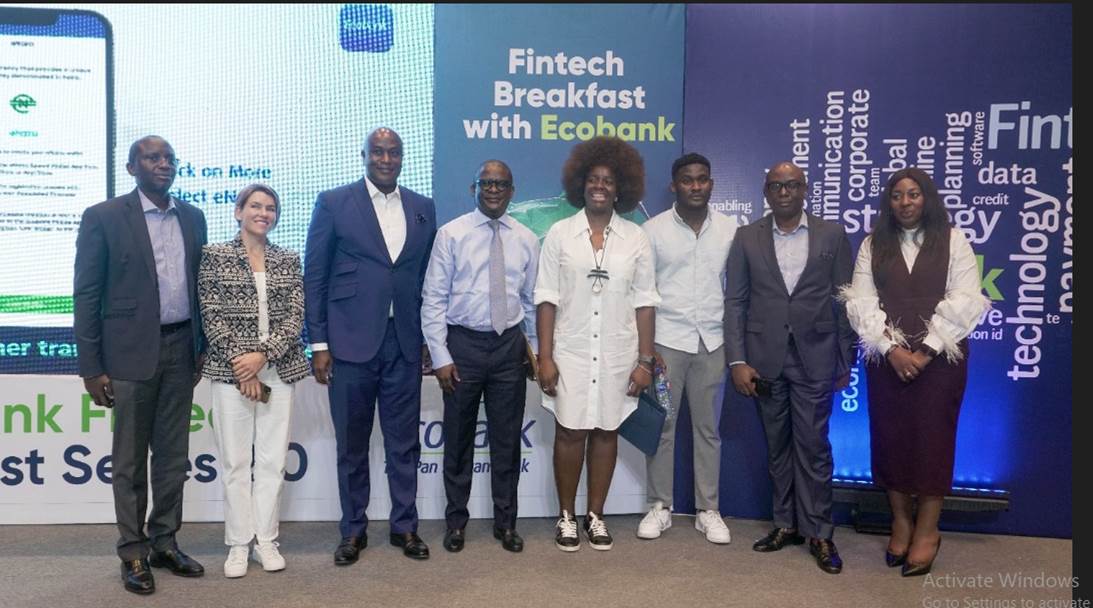
This was the submission of participants at the second edition of the Ecobank Fintech Breakfast Series held recently at Ecobank Pan African Centre (EPAC) in Lagos.
One of the speakers at the event themed Strengthening the Ecosystem, a Partner at Aluko & Oyebode, Ms Tosin Iyayi, stated that to entrench sound corporate governance, an organization must put in place a well-constituted board of directors who will oversee and perform the roles of strategic planning and keeping oversight of the company’s affairs.
“The board will ensure an organization that is well run in line with laid down ethics, rules and regulations. It should be able to add value to the organisation, review the operations at every given point and offer helpful advice on the growth of such an organization.
“Members should have sound business acumen; they must have experience in running a successful business and be able to steer the direction of the company. There should be gender diversity in constituting the board.
“Members should have good knowledge of environmental, social, and corporate governance (ESG), which refers to a set of standards for a company’s behaviour used by socially conscious investors to screen potential investments,” she said.
Others also agreed with Ms Iyayi, stressing that sound corporate governance strengthens organisations, while good value proposition and structure determine and attract potential investors.
The Managing Director of Mzuri Solutions Limited, Mr Chinedu Onuoha, while speaking on Fintech and Fundraisers: What fintechs need to know about securing investments, advised fintech startups to have a clear insight on the need and purpose for raising funds, stressing that they should ensure such funds are deployed for the purpose.
“Fintech startups should raise funds they actually need. Sometimes you don’t need funds but goodwill. Know when to raise funds and when not to, and where not to raise funds.
“You should have a clear insight on what you need the funds for and meet your payment schedule to avoid a breach of corporate governance and your ethics. Don’t outrun yourself in order not to lose control, thereby questioning your ability to drive the business,” he stated.
Also speaking, the co-founder of Rising Tide Africa, Ms Yemi Keri, who spoke on how to secure funds, stated that investors look at the product, passion and structure of organizations.
“Investors are looking for good deals. You can get investors from networking events such as this breakfast meeting. Visit platforms such as LinkedIn. Check out profiles. There are genuine investors out there looking out for profitable businesses they can invest in,” adding that “on our part, we look at your product, your passion, motivation. We also look at how you will leverage technology for ease of operation and meet the needs of the customers. We look at your team, scalability, value proposition and structure to ensure business continuity.”
Earlier, the Group Head of Consumer Payments at Ecobank, Mr Osahon Akpata, stated that the pan-African bank pays a high premium on the growth of African fintechs, stating that the fintech space is attractive.
He said Ecobank was providing a platform for banks and fintechs to explore areas of mutual interests and opportunities with a view to building a stronger ecosystem.
Other speakers at the event included Lexi Novitske, General Partner, Norrsken22 and Yele Oyekola, co-founder & CEO of Duplo, amongst several others.
The Ecobank Fintech Breakfast Series, which holds in partnership with Tech Cabal, a digital media and publishing firm based in Nigeria, is designed to hold quarterly and aims to gather fintech leaders across the continent to share business insights, as well as discuss pertinent topics in the fintech ecosystem such as regulatory guidelines, funding, and other topics of interest to support both established and fintech startups at different stages of their journey.
Ecobank Nigeria Limited is a subsidiary of the Ecobank Group, the leading pan-African banking group with operations in 33 African countries and an international presence in four locations (London, Paris, Beijing, and Dubai).
Ecobank Nigeria is a full-service bank providing wholesale, retail, investment and transaction banking services and products to governments, financial institutions, multinationals, international organizations, medium, small, and micro businesses, and individuals.
Ecobank is a major player in the distribution of financial services in Nigeria, leveraging digital platforms including Ecobank Mobile App and USSD *326#, Ecobank Online, Ecobank OmniPlus, Ecobank Omnilite, EcobankPay, Ecobank RapidTransfer, ATMs, POSs and an extensive distribution network of over 250 branches and over 50,000 agency banking locations.
Banking
NDIC Now With Stronger Legal Backing for Liquidation Mandate
By Adedapo Adesanya
The Nigeria Deposit Insurance Corporation (NDIC), says its laws are now stronger and more effective to carry out its bank liquidation mandate.
The agency disclosed this in a statement issued on Sunday in Abuja by its Head of Communication and Public Affairs Department, Mrs Hawwau Gambo.
The statement quoted the NDIC chief executive, Mr Thompson Sunday, as saying the powers in liquidation of failed insured institutions had been enhanced with the enactment of the NDIC Act No. 30 of 2023.
Mr Sunday said that the Banks and Other Financial Institutions Act (BOFIA) 2020, also empowered the Corporation.
According to him, the NDIC is now better positioned to prosecute parties at fault in bank failures, unlike in the past when insufficient legal provisions allowed such individuals to evade accountability, commending the National Assembly for addressing the long-standing challenge of a weak legal framework which had constrained the corporation’s operations.
He also commended the judiciary for its growing expertise in deposit insurance law and practice, as demonstrated by the effective adjudication of failed bank cases through judgments that had brought relief to depositors.
“With stronger legal backing, individuals now approach the corporation to settle out of court, not necessarily because the law has caught up with them, but because they can see that the noose is tightening around those responsible for bank failures.
”The corporation’s ability to realise sufficient assets to declare a first round of liquidation dividends to the uninsured depositors of defunct Heritage bank Limited within one year of the revocation of its licence is due to the positive impact of the new legal framework,” Mr Sunday said.
He reiterated that the NDIC would continue to leverage the strengthened laws while collaborating with stakeholders to enhance the effective discharge of its mandate.
Banking
Summit Bank Commences Non-Interest Banking Operations in Nigeria
By Faridat Yusuf
Nigeria’s new non-interest bank, Summit Bank Limited, has started full operations, promising to give Nigerians honest, clear, and fair banking services.
The Central Bank of Nigeria (CBN) listed Summit Bank as a regional non-interest bank with its head office in Abuja. It joins other non-interest banks in Nigeria like Jaiz Bank, Taj Bank, and Lotus Bank.
The Managing Director, Mr Sirajo Salisu, during a press briefing in Abuja, said that the bank was seeking to serve Nigerians very well.
“We are live, well-regulated, fully operational, and ready to serve Nigerians with clarity, integrity, and purpose.”
He also talked about people thinking the bank was linked to a big bank, saying, “We have followed the conversations with interest and gratitude, and the curiosity we have carefully observed tells us that people care about us and about ethical finance, now is the time for clarification, as Summit Bank’s establishment and operation have gone beyond speculation,” he stated.
On his part, the bank’s Executive Director, Mr Mukhtar Adam, said, “While some of our directors have built accomplished careers at frontline financial institutions such as Zenith Bank, Summit Bank is an independent financial entity governed by a professional board and fully compliant with Central Bank of Nigeria regulations.”
He added, “Our offerings promise no hidden costs or complicated banking for both banked and unbanked Nigerians, with clear, compliant banking services backed by robust technology, sophisticated banking infrastructure, and tested human resources.”
The bank was started in July 2024 and got its CBN licence in February 2025.
Banking
BoI Reaffirms Commitment to Economic Transformation in Tech, Creative Sectors
By Adedapo Adesanya
The Bank of Industry (BoI) has reaffirmed the federal government’s commitment to boosting Nigeria’s tech and creative sectors through strategic investments.
This comes as Nigeria, through its Investment in Digital and Creative Enterprises (iDICE) programme, made its first investment in a venture capital fund in Ventures Platform $64 million raise.
The iDICE program, managed by the bank and co-financed by the African Development Bank (AfDB), the Islamic Development Bank (ISDB) and Agence Française de Développement (AFD), was established to channel public and private capital into Nigeria’s digital and creative sectors.
The Managing Director of the bank, Mr Olasupo Olusi, said the investment is part of Nigeria’s drive to transform its economy through innovation in high-growth tech and creative enterprises.
“By investing in Ventures Platform’s Fund II, which serves as iDICE’s Technology Equity Fund for Nigerian startups, we are deepening the Federal Government’s objective of upscaling the Nigerian technology and creative sectors by catalyzing strategic investments in high-growth, technology-enabled enterprises and the innovation ecosystem,“ adding, Thereby contributing meaningfully to the nation’s broader economic transformation agenda, with a goal to create jobs at scale, but also empower high-growth entrepreneurs across the country.”
At its core, the iDICE programme seeks to equip Nigerians aged 15-35 with the skills to thrive in emerging digital and creative industries, to heighten their employability, spark innovation, and support entrepreneurs.
Under the iDICE programme, three broad components were established: Skills and Enterprise Development, Expanding Access to Finance, and Enabling Environment. The first pillar focuses on training youths in in-demand creative and technology skills, building a community of talent, and linking these young people either to employment or to the opportunity to launch their own ventures.
The second component which covers the investment in Ventures Platform, is Expanding Access to Finance, which addresses the persistent financing gap in Nigeria’s technology and creative sectors. The programme intends to provide equity or quasi-equity funding to startups, while also offering capacity-building support and grants to prepare enterprises for success.
Meanwhile, the Enabling Environment arm of the initiative focuses on regulatory, policy, and institutional reforms, putting in place the laws, programmes and business-environment enhancements necessary to make it easier for technology and creative firms to operate and flourish.
By combining training, funding access, and policy support within a five-year programme timeframe, the federal government aims to generate sustainable jobs, promote innovation, and create a more vibrant creative and technology sector.
-
Feature/OPED6 years agoDavos was Different this year
-
Travel/Tourism9 years ago
Lagos Seals Western Lodge Hotel In Ikorodu
-
Showbiz3 years agoEstranged Lover Releases Videos of Empress Njamah Bathing
-
Banking7 years agoSort Codes of GTBank Branches in Nigeria
-
Economy2 years agoSubsidy Removal: CNG at N130 Per Litre Cheaper Than Petrol—IPMAN
-
Banking3 years agoFirst Bank Announces Planned Downtime
-
Sports3 years agoHighest Paid Nigerian Footballer – How Much Do Nigerian Footballers Earn
-
Banking3 years agoSort Codes of UBA Branches in Nigeria