
Banking
Stanbic IBTC Begins Youth Leadership Series to Deepen Financial Literacy


By Modupe Gbadeyanka
In order to deepen financial and entrepreneurial knowledge among Nigeria’s younger generations, Nigeria’s leading one-stop financial services provider, Stanbic IBTC, a member of Standard Bank Group, has come up with an initiative called the ‘Youth Leadership Series.’
A statement issued by the lender in Lagos recently quoted Chief Executive of Stanbic IBTC Holdings Plc, Mr Yinka Sanni, as saying that the organization has finalized plans to host the inaugural edition of its youth empowerment motivational series, the Youth Leadership Series dubbed, Against The Odds on Thursday, January 25, 2018.
It will feature three remarkable Nigerians as lead speakers, Kechi Okwuchi, a survivor of the ill-fated Sosoliso plane crash of December 2005, who later went on to bag a First Class Degree from the University of Thomas Houston, Texas and emerged a finalist at America’s Got Talent; Member Feese, survivor of the United Nations Building bomb blast in Abuja and Cobhams Asuquo, renowned music producer who was born blind.
“Through the travails, experiences and achievements of these exceptional young individuals, in spite of the hard-knock life and the odds, we hope to inspire, motivate and provoke the can-do spirit of our youth community and imbibe in them the strength of character, and tenacity to never give up but to constantly aspire to attain their full potential in life,” Mr Sanni said.
According to the Stanbic IBTC boss, the organization is constantly exploring innovative ways of expanding the scope of its coverage and focus on the youth segment, otherwise known as the millennials, given the importance of the demography to national development, entrepreneurship drive and economic growth and development of the nation.
“The Youth Leadership Series is tailored after the annual Stanbic IBTC Business Leadership Series, an annual event that facilitates the sharing of knowledge and information among local and international participants who are drawn from key sectors of the economy.
“The overarching objective is to stimulate deeper engagements and outcomes for the sectors as well as unlock investment opportunities in the country,” Mr Sanni said.
He said further that the Group decided it had become imperative for it to retool and re-strategize its efforts geared towards building the next generation of Nigerian leaders – the youths, in line with its commitment to growing that very important segment of the society.
“The popular saying that children are the leaders of tomorrow, as cliché as it may sound, for us at Stanbic IBTC, we believe that the youths are the leaders for today and because we understand just how easily one can get distracted or discouraged by the different challenges we face in our lives; our youths therefore need to be aptly and constantly guided, mentored, inspired and motivated, not just to attain their goals but in order for them to actualize their full potential,” Mr Sanni added.
Stanbic IBTC, Mr Sanni said, will in line with its brand promise of enabling people and businesses make real progress – “Moving Forward” demonstrate using real life examples, experiences, and moving stories of three distinctively different but very remarkable young Nigerians showcase why notwithstanding whatever curve life throws at us, giving up should never be an option.
Stanbic IBTC Holdings Plc, a full service financial services group with a clear focus on three main business pillars – Corporate and Investment Banking, Personal and Business Banking and Wealth Management.
Standard Bank Group, to which Stanbic IBTC Holdings belongs, is the largest African bank by assets and market capitalization. It is rooted in Africa with strategic representation in 20 countries on the African continent.
The bank has been in operation for over 154 years and is focused on building first-class, on-the-ground financial services institutions in chosen countries in Africa; and connecting selected emerging markets to Africa by applying sector expertise, particularly in natural resources, power and infrastructure.












By Adedapo Adesanya
The Central Bank of Nigeria (CBN) has said 33 banks have met new minimum capital requirements under its now-closed recapitalisation programme, raising a combined N4.65 trillion to strengthen the Nigerian financial system.
The apex bank disclosed this in a statement on Wednesday, marking the end of the exercise, which commenced in March 2024 and drew participation from domestic and foreign investors.
The statement was jointly signed by the Director of Banking Supervision, Mrs Olubukola Akinwunmi, and the Acting Director of Corporate Communications, Mrs Hakama Sidi-Ali.
“Over the 24 months, Nigerian banks raised a total of N4.65 trillion in new capital, strengthening the resilience of the financial system and enhancing its capacity to support the economy,” the statement said.
The chief lender said local investors accounted for 72.55 per cent of the funds, while international investors contributed 27.45 per cent, reflecting continued confidence in the sector.
According to the statement, the Governor of the apex bank, Mr Yemi Cardoso, said, “The recapitalisation programme has strengthened the capital base of Nigerian banks, reinforcing the resilience of the financial system and ensuring it is well-positioned to support economic growth and withstand domestic and external shocks.”
It added that while 33 banks have complied with the new thresholds, a few others are still undergoing regulatory and legal processes.
The statement noted, “The CBN confirms that 33 banks have met the revised minimum capital requirements established under the programme.
“A limited number of institutions remain subject to ongoing regulatory and judicial processes, which are being addressed through established supervisory and legal frameworks.
“All banks remain fully operational, ensuring continued access to banking services for customers.”
The apex bank stressed that the exercise was executed without disrupting banking operations, ensuring uninterrupted access to services nationwide.
The lender further stated that key prudential indicators have improved, particularly capital adequacy ratios, which remain above global Basel benchmarks.
The minimum ratios were set at 10 per cent for regional and national banks and 15 per cent for banks with international licences.
The bank also said the recapitalisation coincided with a gradual exit from regulatory forbearance, a move it said improved asset quality, strengthened balance sheet transparency, and enhanced overall stability.
The CBN said it has reinforced its risk-based supervision framework, mandating periodic stress tests and adequate capital buffers for banks.
It added that supervisory and prudential guidelines would be reviewed regularly to strengthen governance, risk management, and resilience across the sector.
“The successful completion of the programme establishes a stronger and more resilient banking system, better positioned to support lending, mobilise savings, and withstand domestic and global shocks,” the statement said.
By Modupe Gbadeyanka
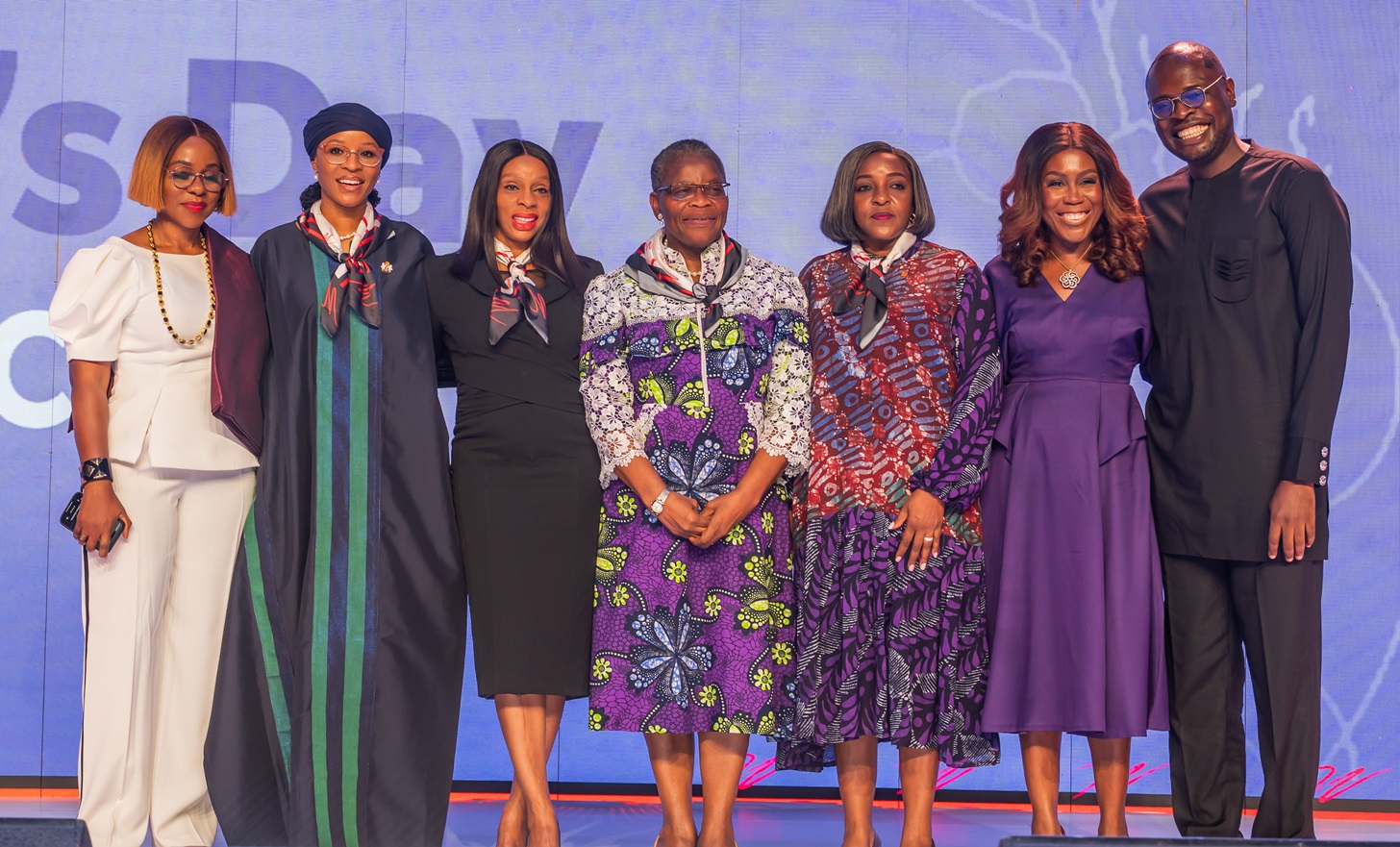
The chairman of Access Bank Plc, Mrs Ifeyinwa Osime, has called for deliberate and strategic investment in women as a catalyst for sustainable economic growth.
According to her, empowering women should be seen as a strategic economic decision rather than charity.
“When we speak of giving, it is about expanding access to finance, markets, knowledge and platforms that enable women to build sustainable businesses,” she said at an International Women’s Day Conference organised by Access Bank.
At the event, which attracted over 5,000 participants both physically and virtually, and attended by stakeholders across the public and private sectors, she noted that women own about 39 per cent of businesses in Nigeria and drive nearly
40 per cent of new enterprises, while small and medium enterprises contribute about 48 per cent of Gross Domestic Product (GDP) and over 80 per cent of employment.
Mrs Osime, however, decried the persistent financing gap facing women, describing it as a major constraint on productivity and economic growth.
“No economy can optimise its potential while underinvesting in half of its population,” she said, highlighting the bank’s interventions through its W Initiative and Womenpreneur Pitch-a-ton programme, which provides financing, training and healthcare support to thousands of women.
Also speaking at the programme, the Minister of Art, Culture, Tourism and the Creative Economy, Ms Hannatu Musawa, reiterated the government’s commitment to empowering women as key drivers of the nation’s creative economy, with a focus on expanding access to finance, skills development and leadership opportunities.
The Minister, represented by the Director-General of the Centre for Black and African Arts and Civilisation (CBAAC), Mrs Aisha Adamu, said women were increasingly taking the lead in building businesses, driving innovation and shaping society.
“Across Nigeria, women have always been the invisible architects of our culture, yet their contributions have been underrepresented and undervalued,” she said.
The Minister said the ministry was repositioning culture as a structured economic sector through creative hubs, skills development and enterprise support programmes targeting women in film, fashion, digital media and tourism.
On financing, Ms Musawa noted that women-owned businesses account for about 40 per cent of small and medium enterprises but continue to face significant funding gaps.
“Too many ideas remain small not because they lack potential, but because they lack access to capital,” she said, adding that the government was working to unlock targeted funding for women, strengthen market access and improve data systems to support women entrepreneurs, while also promoting their inclusion in leadership and policy-making processes.
Also, former Minister of Education, Mrs Oby Ezekwesili, stressed the need to prioritise women’s inclusion in development processes, noting that societies transform when critical issues such as women’s inclusion are deliberately prioritised.
“There is no other way societies have transformed than when people who care make an issue a priority,” she said, stressing that removing structural barriers limiting women’s participation would unlock significant economic potential, adding that agricultural output could increase by up to 30 per cent if women had equal access to inputs as men.
In the same vein, the Group Head for Women Banking at Access Bank, Mrs Nene Kunle-Ogunlusi, said the bank remained committed to supporting women across all segments.
She said the bank recently organised a special Women’s Day programme for market women in Oyingbo, Lagos, offering free health checks, beauty services and financial education.

By Adedapo Adesanya
The Central Bank of Nigeria (CBN) has directed banks to complete a mandatory cybersecurity self-assessment within three weeks.
In a letter dated March 30, 2026, and published on its website on Tuesday, the apex bank said, “Institutions are required to submit their completed CSAT within the following timelines: i. Three (3) weeks – Deposit Money Banks (DMBs); ii. Five (5) weeks – All other regulated institutions.”
The directive, addressed to banks, selected other financial institutions, and payment service providers, introduced a Cybersecurity Self-Assessment Tool to evaluate the cyber risk exposure of regulated entities.
The CBN stated that the move was in line with its statutory mandate under the Banks and Other Financial Institutions Act 2020 and its broader commitment to improving cybersecurity standards in the sector.
“The Central Bank of Nigeria, in furtherance of its statutory mandate under the Banks and Other Financial Institutions Act (BOFIA) 2020 and consistent with its commitment to strengthening cybersecurity resilience across the financial sector, hereby notifies all Deposit Money Banks, Payment Service Banks, Microfinance Banks, Payment Service Providers, Finance Companies, and Development Finance Institutions of the deployment of its Cybersecurity Self-Assessment Tool,” the letter read.
The apex bank explained that the CSAT is designed as a supervisory instrument to provide a comprehensive view of financial institutions’ cybersecurity posture.
It explained that the tool would assess critical areas, including governance structures, risk management frameworks, technology systems, third-party risk exposure, incident response capacity, and overall operational resilience.
“The CSAT is a structured supervisory instrument designed to obtain comprehensive information on the cybersecurity posture of regulated institutions,” the CBN said.
The bank added that insights generated from the exercise would support risk-based supervision and enhance regulatory oversight of cybersecurity threats within Nigeria’s financial ecosystem.
Earlier in December 2025, banks in Nigeria were urged to strengthen their cybersecurity systems as rising digital fraud continued to erode customer trust and slow the growth of the country’s digital banking sector.
In the latest update, the CBN told banks to ensure compliance, adding that all affected institutions must complete and submit the assessment through a dedicated portal, with access credentials to be communicated to their Chief Information Security Officers and other relevant officials.
“All submissions must be fully completed and accompanied by relevant supporting documentation, where applicable,” it stated, noting that the data to be provided must reflect institutions’ positions as of December 31, 2025.
The CBN also issued a warning against false or incomplete disclosures, stressing that accuracy and transparency would be strictly enforced.
“Supervised institutions are reminded that all information submitted to the CBN must be accurate, complete, and verifiable. Submission of false, misleading, or inaccurate information constitutes a regulatory breach and will attract appropriate sanctions,” the letter added.
It also disclosed plans to validate submissions through off-site reviews and supervisory engagements to confirm the data’s reliability.
The directive, which takes immediate effect, signals tighter regulatory scrutiny of cyber risks in the banking sector amid rising digital transactions and increasing exposure to cyber threats.












-
 Feature/OPED6 years ago
Davos was Different this year
-
Travel/Tourism10 years ago
Lagos Seals Western Lodge Hotel In Ikorodu
-

 Showbiz3 years ago
Estranged Lover Releases Videos of Empress Njamah Bathing
-
 Banking8 years ago
Sort Codes of GTBank Branches in Nigeria
-

 Economy3 years ago
Subsidy Removal: CNG at N130 Per Litre Cheaper Than Petrol—IPMAN
-

 Banking3 years ago
Sort Codes of UBA Branches in Nigeria
-

 Banking3 years ago
First Bank Announces Planned Downtime
-

 Sports3 years ago
Highest Paid Nigerian Footballer – How Much Do Nigerian Footballers Earn