Banking
Stanbic IBTC Unveils ACAP to Assist Nigerian Importers
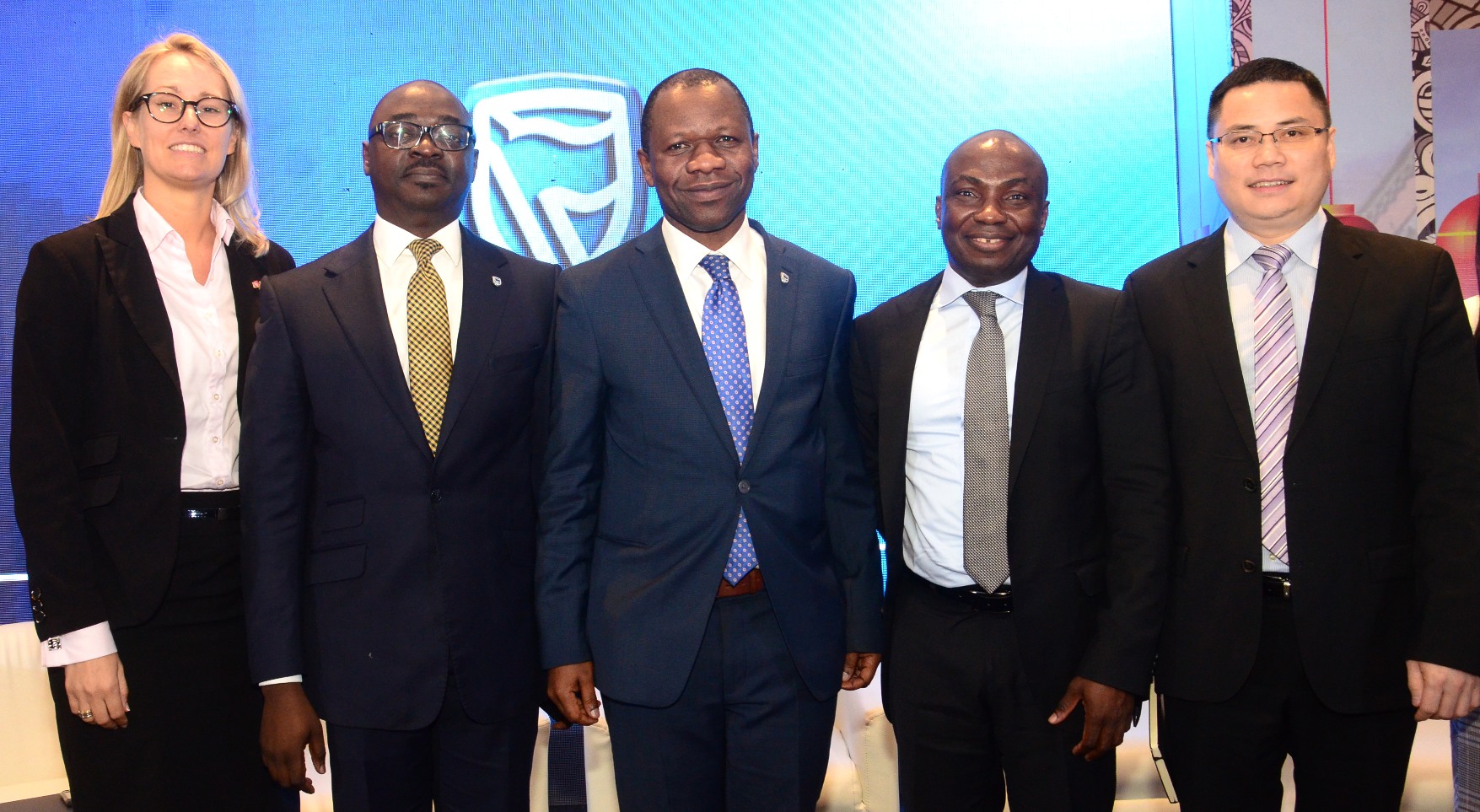
Stanbic IBTC Bank has launched an Africa-China Agent Proposition (ACAP) which aims to assist Nigerian importers source and validate quality goods, safely and efficiently, from the most competitive suppliers in China.
The ACAP offering is expected to revolutionise African importers’ view of China’s supplier universe. It will also ease the cash flow of African importers by providing access to financing while empowering importers with sight and control of the entire importing and logistics process.
The offering, which is expected to connect African importers and Chinese exporters and open China to Africa, was officially launched in Nigeria on Tuesday 21 May, 2019, and will also be launched in Ghana and South Africa with other markets in Standard Bank’s African footprint to follow before the end of 2019.
Currently, Nigerian importers order from only a handful of trusted Chinese suppliers. This limits the negotiating power of African importers while stacking the terms of trade against them. While ordering online provides access to a wider range of suppliers, online imports cannot guarantee the quality of goods. In most cases too, advance payments for goods are required. This is often demanded in cash, without reciprocal guarantees of delivery or quality. This means that Nigerian importers often carry a disproportionate burden of risk in most transactions. Language and cultural barriers are also a challenge for African importers when traveling and negotiating supplier agreements in China.
In response to these challenges, and in light of the vast opportunity that China presents as a trading partner, Standard Bank, the biggest bank in Africa, has leveraged its partnership with the Industrial and Commercial Bank of China (ICBC), the biggest bank in the world, to connect African importers with a dedicated trade agent in China.
“The ACAP offering- underpinned by a letter of credit- will deepen trust in Africa-China trade relationships, guaranteeing African importers access to the best suppliers in China, the best payment terms and the best quality,” said Dr. Manessah Alagbaoso, Head, Africa China Integration, Standard Bank. If any of the terms of the letter of credit are not met, payment will not be made. As such, the offering will, “place African importers in a much stronger negotiating position when it comes to the price, quality and efficiency of importing Chinese goods,” stated Dr. Alagbaoso. At the same time, “Chinese suppliers can be confident that once the terms of the letter of credit have been met, payment will be made in full and on time – guaranteed by Stanbic IBTC Bank or Standard Bank and ICBC,” added Dr. Alagbaoso.
In his remarks, Chief Executive, Stanbic IBTC Bank PLC, Dr. Demola Sogunle, reaffirmed the bank’s objective of constantly exploring opportunities of adding significant value to the businesses of its customers.
“Stanbic IBTC has established market leadership in several financial services segments, and our ultimate goal is to continually leverage on our connections, knowledge and experience in delivering impeccable service and value that would similarly make our customers not just get ahead but emerge leaders in their respective business segments and ACAP is another of such enablers”, said Sogunle.
Zhejiang International Trading Supply Chain Co. Ltd (Guomao) is the first Chinese Trade Agent nominated by ICBC to partner with Standard Bank to assist African importers trade seamlessly with China. “Guomao currently has almost 10 000 suppliers that meet the import needs of our clients,” says Dr. Alagbaoso. Where the need of a client falls outside of the supplier base that Guomao currently has, they will source new suppliers for that need after going through a process of new supplier validation and verification.
Guomao will assist Nigerian importers with services such as source the right suppliers, negotiate the best prices and trade conditions, arrange for African importers to travel to China and meet with a broad range of suppliers, provide translators to facilitate trade negotiations and discussions and source and validate the quality of goods. Other functions the agent would offer are to provide quality guarantees on goods from those Chinese suppliers recommended by the trade agent, ensuring that quality meets the expectations of African importers, rectify any quality issues on behalf of the African importer, finance imports based on a letter of credit from Standard Bank and ICBC as required and handle shipping logistics.
With over 20 years’ experience in foreign trade procurement services, Guomao provides a one-stop foreign trade supply chain, supply chain finance, and cross-border e-commerce supply chain service, “able to help Standard Bank’s clients navigate China’s foreign trade supply chain and trade seamlessly,” he added. In time, Standard bank’s ACAP offering will include other Chinese trade agents in other key international trade hubs of China, deepening access to China’s supplier universe.
Importantly, the ACAP offering will ease the cash flow of African importers. “Since Chinese suppliers will be secure in their possession of an ICBC-underwritten letter of credit, African importers will be able to receive goods before payment is made,” said Dr. Alagbaoso. This will allow African importers to keep cash in the business for growth.
Banking
Why Technology-Enabled Banking is a Multiplier for Nigeria’s 2036 Goal
By Henry Obiekea
Nigeria is at a defining moment in 2026. After several years of bold macroeconomic adjustments, including foreign exchange unification and structural reforms, the country is moving from stabilization into expansion. With the Central Bank of Nigeria restoring confidence in the Naira and foreign reserves reaching a five-year high of over 45 billion dollars, the next phase of growth will be shaped by how effectively Nigerians can participate in the formal financial system.
Technology-enabled banking is playing a critical role in this transition. Commercial banks remain the backbone of the system, providing balance sheet strength, regulatory depth, and long-term capital essential for national development. Yet in a country of over 220 million people, physical access alone cannot deliver financial inclusion at scale.
Mobile-first and digitally delivered financial services are bridging this gap. By extending regulated banking beyond physical locations into everyday devices, licensed microfinance banks and other regulated institutions are bringing millions of Nigerians into the formal economy. This approach helped push formal financial inclusion to over 64 percent in 2025, ensuring the last mile is no longer excluded.
Achieving the Federal Government’s target of a one trillion dollar GDP by 2036 requires efficient capital flow. In the first quarter of 2025 alone, Nigeria recorded over 295 trillion naira in electronic payment transactions. Faster, secure financial infrastructure supports modern commerce, strengthens trade, and improves overall economic productivity.
Micro, small, and medium-scale enterprises, which contribute nearly 48 percent of GDP, are central to this growth. Technology-driven banking models are helping to close long-standing credit gaps. By responsibly using alternative data to assess risk, small-ticket working capital loans provide the “pocket capital” businesses need to grow. This builds a pipeline of enterprises that can mature into larger corporate clients within the broader banking ecosystem.
Digitally delivered financial services also strengthen public revenue mobilisation. Increased transaction transparency supports a broader tax net and contributes directly to government revenues through stamp duty, reinforcing fiscal sustainability.
This evolution is supported by a maturing regulatory environment. The Central Bank of Nigeria’s Open Banking framework, rolling out in phases from early 2026, ensures that all regulated institutions operate under consistent oversight. Secure data sharing standards mean customers’ financial histories can move with them across institutions, strengthening trust and accountability.
At FairMoney Microfinance Bank, we see this framework as a social contract. Knowing that deposits are protected by NDIC insurance and supported by clear dispute resolution mechanisms gives customers the confidence to participate actively in the economy.
The future of Nigerian banking is defined by structural harmony. Traditional banks provide depth and stability, while technology-enabled institutions provide reach, speed, and accessibility. Together, they turn financial access into economic resilience.
By working in alignment, we can ensure every Nigerian, from the Lagos professional to the rural trader, is equipped to contribute meaningfully to our shared one trillion dollar future.
Henry Obiekea is the Managing Director of FairMoney Microfinance Bank
Banking
NDIC Pays Fresh N24.3bn to Defunct Heritage Bank Depositors
By Adedapo Adesanya
The Nigeria Deposit Insurance Corporation (NDIC) has declared the second liquidation dividend payment of N24.3 billion for depositors of the defunct Heritage Bank Limited.
The payment will be made to customers whose account balances exceeded the statutory insured limit of N5 million at the time the bank was closed on June 3, 2024.
This was disclosed in a statement signed by the Head of Communication and Public Affairs Department, Mrs Hawwau Gambo, noting that the new payment, eligible for uninsured depositors, will receive 5.2 Kobo per N1 on their outstanding balances, bringing the cumulative liquidation dividend to 14.4 Kobo per N1 when combined with the first tranche paid earlier.
According to the corporation, it first paid insured deposits of up to N5 million per depositor from its Deposit Insurance Fund, ensuring that small depositors had prompt access to their funds despite the bank’s failure.
NDIC said that in April 2025, it declared and paid a first liquidation dividend of N46.6 billion, equivalent to 9.2 kobo per N1, to depositors with balances above the insured limit, setting the stage for further recoveries as assets were realised.
This latest payout follows the revocation of Heritage Bank’s operating license by the Central Bank of Nigeria (CBN) on June 3, 2024, after which the NDIC was appointed as liquidator in line with the Banks and Other Financial Institutions Act (BOFIA) 2020 and the NDIC Act 2023.
According to the NDIC, the second liquidation dividend of N24.3 billion was made possible through sustained recovery of debts owed to the defunct bank, disposal of physical assets, and realisation of investments.
The corporation said the payment was effected in line with Section 72 of the NDIC Act 2023, which governs the distribution of liquidation proceeds.
The NDIC noted that these recoveries reflect ongoing efforts to maximise value from Heritage Bank’s assets, assuring depositors that the liquidation process remains active and focused on full reimbursement where possible.
The corporation disclosed that payments will be credited automatically to eligible depositors’ alternative bank accounts already captured in NDIC records using their Bank Verification Numbers (BVN).
Depositors who have received their insured deposits and the first liquidation dividend have been advised to check their accounts for confirmation of the latest payment, while those yet to receive any payout are encouraged to regularise their status.
For depositors without alternative bank accounts or BVNs, or those who have not claimed their insured deposits or first liquidation dividend, the NDIC advised them to visit the nearest NDIC office nationwide or submit an e-claim via the Corporation’s website for prompt processing.
It added that further liquidation dividends will be paid as more assets are realised and outstanding debts recovered.
Banking
BVN Enrolments Stood at 67.8 million in 2025—NIBSS
By Adedapo Adesanya
The Nigeria Inter-Bank Settlement System (NIBSS) has disclosed that Bank Verification Number (BVN) enrolments rose by 6.8 per cent year-on-year to 67.8 million as at December 2025 from 63.5 million in the corresponding period of 2024.
In a statement published on its website, NIBSS attributed the growth to stronger policy enforcement by the Central Bank of Nigeria (CBN) and the expansion of diaspora enrolment initiatives.
According to the data, more than 4.3 million new BVNs were issued within the one-year period, underscoring the growing adoption of biometric identification as a prerequisite for accessing financial services in Nigeria.
NIBSS noted that the expansion reinforces the BVN system’s central role in Nigeria’s financial inclusion drive and digital identity framework.
The growth can largely be attributed to regulatory measures by the CBN, particularly the directive to restrict or freeze bank accounts without both a BVN and National Identification Number (NIN), which took effect from April 2024. The policy compelled many customers to regularise their biometric records to retain access to banking services.
Another major driver was the rollout of the Non-Resident Bank Verification Number (NRBVN) initiative, which allows Nigerians in the diaspora to obtain a BVN remotely without physical presence in the country. The programme has been widely regarded as a milestone in integrating the diaspora into Nigeria’s formal financial system.
A five-year analysis by NIBSS showed consistent growth in BVN enrolments, rising from 51.9 million in 2021 to 56.0 million in 2022, 60.1 million in 2023, 63.5 million in 2024 and 67.8 million by December 2025. The steady increase reflects stronger compliance with biometric identity requirements and improved coverage of the national banking identity system.
However, NIBSS noted that BVN enrolments still lag the total number of active bank accounts, which exceeded 320 million as of March 2025.
It explained that this is largely due to multiple bank accounts linked to single BVNs, as well as customers yet to complete enrolment, despite the progress recorded.
Business Post reports that BVN, launched in 2014, was introduced to establish a single, unique identity for every bank customer in Nigeria and to strengthen the overall financial system. By linking each customer’s biometric data to one verified number, it helps to curb financial fraud, identity theft, and impersonation, while improving customer identification and eliminating the practice of operating multiple bank accounts under different identities.
Beyond security, BVN improves oversight, reduces loan defaults, protects customers, and supports financial inclusion.
-
Feature/OPED6 years agoDavos was Different this year
-
Travel/Tourism9 years ago
Lagos Seals Western Lodge Hotel In Ikorodu
-
Showbiz3 years agoEstranged Lover Releases Videos of Empress Njamah Bathing
-
Banking8 years agoSort Codes of GTBank Branches in Nigeria
-
Economy3 years agoSubsidy Removal: CNG at N130 Per Litre Cheaper Than Petrol—IPMAN
-
Banking3 years agoFirst Bank Announces Planned Downtime
-
Banking3 years agoSort Codes of UBA Branches in Nigeria
-
Sports3 years agoHighest Paid Nigerian Footballer – How Much Do Nigerian Footballers Earn