
Banking
Standard Chartered Opens More Digital-only Retail Banks

By Dipo Olowookere
Standard Chartered has announced the start of the second phase of its digital-only retail bank across Africa.
In response to growing consumer demand for innovative banking services on the continent, the lender will launch its digital solution in four key markets during the first quarter of 2019 starting in Uganda in January, followed by Tanzania in February, with Ghana and Kenya to follow.
Following the successful launch of Standard Chartered’s first digital retail bank in Côte d’Ivoire last year, the second phase builds on the original CDI platform that onboards clients in under 15 minutes and provides 70 of the most common service requests.
The updated digital bank provides enhanced services including QR code and P2P payments, loan and overdraft facilities, and instant fixed deposits. Clients will be able to enjoy the convenience of banking on the go, anytime and anywhere, along with a consistent online experience.
The roll out will also see the Bank engage in strategic local alliances to create an appealing lifestyle banking proposition to provide clients offers across shopping, travel and dining.
Commenting on the second phase of the launch, Sunil Kaushal, Regional CEO, Africa and Middle East said, “We are thrilled to launch the second phase of our digital-only retail banks across other African markets. The Bank continues to make strategic and sustainable investments in technology – this complements our innovation agenda, as well as enhances our digital offerings and client experiences. Digitising Africa and facilitating access to financial services remains at the heart of our business strategy for the region.”
Africa’s banking market is the second-fastest-growing and second-most profitable globally. The retail banking sector is a locus of new business models which are emerging in response to low levels of banking penetration and heavy use of cash in the Sub-Saharan continent.
Commenting on the launch of the digital bank in Uganda, Governor, Central Bank Governor Prof. Emmanuel Mutebile said, “There will continue to be disruption in the Banking sector. Institutions that fail to keep up might lose out and at the very worst be pushed out of business in the long run, however, this disruption to bank business models works in the interest of customers and the general populace. I therefore congratulate Standard Chartered Bank on unveiling this revolutionary digital initiative as I believe that with such innovations, we are making significant progress in embracing technological changes and digitization to help us achieve stable and long-term growth.”
To support the digital bank roll out across the four markets, aimed at driving digital adoption amongst new and existing clients focusing on young digital natives, the bank will also launch a marketing campaign dubbed ‘//BEUNSTOPPABLE’, Bank on the go! The campaign will run across traditional and social media to remind consumers that banking should not stop them from doing what they love to do, and when they want to do them.
In Uganda, Standard Chartered has also partnered with popular Ugandan entertainer and comedian Anne Kansiime to drive awareness of the new digital bank in the market. As part of her role, Anne will be promoting the bank’s digital banking capabilities and will lend her voice and image rights through a series of Marketing and Community engagement activities over the next 12 months.
The bank’s digital services are available by downloading the Standard Chartered mobile application via the Google play store or Apple store.



By Adedapo Adesanya
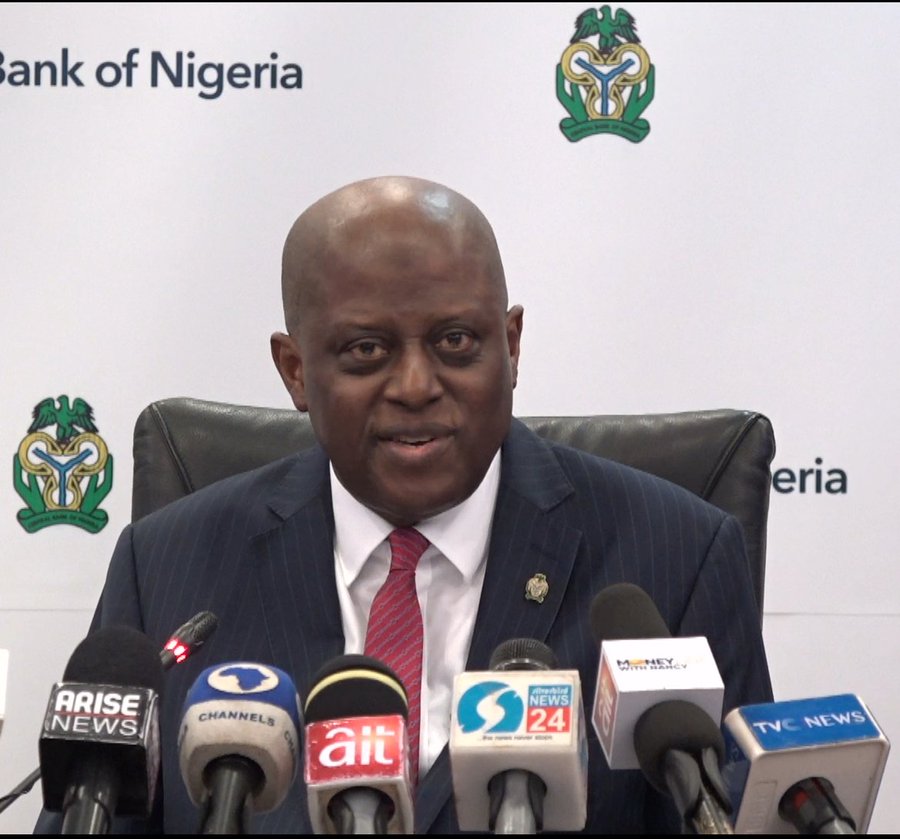
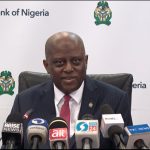
The Governor of the Central Bank of Nigeria (CBN), Mr Yemi Cardoso, said the central bank would now focus on a five-point policy agenda aimed at consolidating recent macroeconomic gains and steering the country toward sustained stability.
Mr Cardoso, while speaking at the 2026 Monetary Policy Forum held in Abuja on Thursday, set out the lender’s next phase of reforms anchored on inflation control, exchange rate stability, stronger reserves, deeper financial markets, and improved policy effectiveness.
The forum, themed Strengthening Nigeria’s Macroeconomic Stability Through Effective Monetary Policy: The Roles of Critical Stakeholders, brought together fiscal authorities, financial institutions, private sector players, and development partners.
He said the CBN will be positioning its five-point agenda as the cornerstone of the next phase of economic management.
Mr Cardoso said while recent reforms had delivered measurable improvements across key indicators, the focus had now shifted to consolidation.
He identified the five priorities as anchoring inflation firmly on a downward path to single-digit levels, sustaining exchange rate stability, strengthening external reserves through organic inflows, deepening interbank market development, and enhancing the transmission of monetary policy.
According to Mr Cardoso, the priorities reflect a deliberate strategy to entrench stability and improve the efficiency of the monetary framework. “The journey is far from complete. Our next phase is focused on consolidation,” Cardoso said, stressing that maintaining discipline and consistency would be critical to achieving durable outcomes.
He noted that the bank’s tightening measures and foreign exchange reforms had already begun to yield results, with inflation moderating, reserves strengthening, and market confidence improving.
However, he cautioned that sustaining these gains would require strong coordination between monetary and fiscal authorities.
Mr Cardoso emphasised that macroeconomic stability could not be achieved in isolation, describing it as a shared responsibility among policymakers, financial institutions, and the broader economic system.
He said disciplined fiscal operations, aligned policy actions, and continuous stakeholder engagement would be essential in delivering on the Bank’s objectives.
The CBN governor also highlighted the importance of deepening the interbank market to improve liquidity distribution and enhance the effectiveness of policy signals across the financial system.
He added that strengthening monetary policy transmission mechanisms would ensure that policy decisions translate more efficiently into real sector outcomes, including price stability and economic growth.
On external buffers, Mr Cardoso said the bank would continue to prioritise reserve accretion through sustainable sources, including improved foreign exchange inflows and enhanced market confidence. He explained that stronger reserves would provide a critical cushion against external shocks and support exchange rate stability.
The CBN chief further stressed that the success of the consolidation phase would depend on sustained collaboration across institutions.
He reaffirmed the apex bank’s commitment to orthodox monetary policy, transparency, and institutional credibility, noting that the reforms undertaken so far were necessary to correct past distortions and lay the foundation for long-term economic resilience.

By Modupe Gbadeyanka
In a bid to strengthen the Naira and ensure transparency, traceability, and effective monitoring of all transactions, the Central Bank of Nigeria (CBN) has directed all International Money Transfer Operators (IMTOs) in the country to open Naira settlement accounts for all transactions.
In a circular dated Tuesday, March 24, 2026, the apex bank said IMTOs have till May 1, 2026, to fully adhere to this directive and others.
It noted that transactions must be “routed strictly through their designated settlement accounts, maintained with Authorised Dealer Banks (ADBs) in Nigeria.”
With this development, diaspora remittances must be paid to beneficiaries in the local currency.
“All transactions arising from international money transfer operations, including disbursements to beneficiaries and any related settlements, must be processed exclusively through the IMTO’s settlement account(s) held with any ADB of their choice.
“IMTOs may use their discretion to designate their existing accounts or open new settlement accounts and may operate accounts with multiple ADBs in line with their business strategy,” the central bank emphasised.
“Settlement accounts shall only be credited with remittance flows and proceeds of foreign exchange conversions by licensed IMTOs (or their agents) with authorised market participants in the Nigerian Foreign Exchange Market (NFEM),” the notice also declared.
It stressed further that, “IMTOs shall ensure that their settlement accounts are properly designated for this purpose and operated in accordance with existing regulatory guidelines. A list of designated settlement accounts shall be advised by each licensed 1MTO to the Director, Trade and Exchange Department, and updated regularly as necessary.”
The CBN said to “support market efficiency and enhance pricing outcomes for 1MTO transactions, ADBs may process foreign currency transfers from 1MTO settlement accounts to other ADBs and approved market participants, including licensed BDCs.”
“IMTOs shall observe real-time market prices from the Bloomberg BMATCH and utilise this as guidance for pricing transactions with their customers and Authorised Dealers.
“This will improve price discovery, reduce information asymmetry between 1MTOs and banks, and encourage increased participation in the official FX market,” the disclosure stated.
Concluding, the apex bank said, “All IMTOs are required to ensure full compliance with this directive and maintain adequate records of related transactions for regulatory review and audit purposes,” reminding them to “maintain acceptable standards and comply with AML/CFT/CPF requirements.”

By Aduragbemi Omiyale
The dissolution of the board of Union Bank of Nigeria (CBN) by the Central Bank of Nigeria (CBN) in January 2024 has been nullified by a Federal High Court in Lagos.
In a judgment on Wednesday, Justice Chukwujekwu Aneke ordered the immediate reinstatement of the affected board members.
This ruling has now invalidated all actions taken by the central bank regarding the lender’s leadership change.
Justice Aneke held that the apex bank had no authority to remove the board members, declaring the CBN’s action as “ultra vires.”
Over two years ago, the central bank changed the boards of Union Bank, Polaris Bank, and Keystone Bank, accusing them of violating “sections of the Banks and Other Financial Institutions Act (BOFIA) 2020.”
The sacking of the Union Bank board happened after it was speculated that its acquisition by Titan Trust Bank was suspicious, with some alleging that the embattled former Governor of the CBN, Mr Godwin Emefiele, sold the lender to a proxy.
“This action became necessary due to the non-compliance of these banks and their respective boards with the provisions of Section 12(c), (f), (g), (h) of the Banks and Other Financial Institutions Act, 2020. The Bank’s infractions vary from regulatory non-compliance, corporate governance failure, disregarding the conditions under which their licenses were granted, and involvement in activities that pose a threat to financial stability, among others,” a part of the statement issued by the Acting Director for Corporate Communications at the CBN, Mrs Sidi Ali Hakama, said.
Later, the apex bank appointed Ms Yetunde Oni as the chief executive of Union Bank, with Mannir Ubali Ringim appointed as an executive director.
After the CBN’s action, Titan Trust Bank, Luxis International, and Magna International, which are the core shareholders of Union Bank, challenged the legality of the action in court.
They asked the court to restrain the CBN, Union Bank and the appointed directors from taking further steps pending the determination of the suit.
At today’s judgment, Justice Aneke granted this prayer, restraining the central bank, its agents and appointees from taking any further steps concerning the financial institution, including actions relating to its proposed recapitalisation or any associated measures.










-
 Feature/OPED6 years ago
Davos was Different this year
-
Travel/Tourism10 years ago
Lagos Seals Western Lodge Hotel In Ikorodu
-

 Showbiz3 years ago
Estranged Lover Releases Videos of Empress Njamah Bathing
-
 Banking8 years ago
Sort Codes of GTBank Branches in Nigeria
-

 Economy3 years ago
Subsidy Removal: CNG at N130 Per Litre Cheaper Than Petrol—IPMAN
-

 Banking3 years ago
Sort Codes of UBA Branches in Nigeria
-

 Banking3 years ago
First Bank Announces Planned Downtime
-

 Sports3 years ago
Highest Paid Nigerian Footballer – How Much Do Nigerian Footballers Earn