
Banking
Union Bank Supports Junior Achievement Nigeria to Empower Girls


By Modupe Gbadeyanka
Over 300 girls will participate in the 2022 edition of the annual Leadership, Empowerment, Achievement and Development (LEAD) Camp for girls organised by Junior Achievement Nigeria (JAN) in partnership with Union Bank of Nigeria Plc.
The week-long event, which commences today, Monday, July 25, 2022, is designed to empower young girls to be high-achieving leaders in line with the United Nations Sustainable Development Goal – Gender Equality.
Union Bank, which has been supporting the programme for eight years, said it aligns with its corporate sustainability impact strategy.
“Union Bank is pleased to extend our long-standing partnership with Junior Achievement Nigeria for their LEAD Camp.
“As a bank, we are committed to enabling success for the communities we serve and this partnership reinforces our commitment to the push for gender equality and our focus on supporting the girl child.
“We are proud to see the impact of the programme on the young girls across the country and we commend the efforts of the JAN team who work tirelessly to impact them,” the Chief Brand and Marketing Officer of Union Bank, Ms Ogochukwu Ekezie-Ekaidem, said.
On her part, the Executive Director of JAN, Ms Foluso Gbadamosi, stated that “The Junior Achievement Nigeria LEAD Camp is a transforming experience for girls.
“Having top women from different organisations impact our girls is not only inspiring but reassuring and a clear indication that young girls can aspire to be all they were created to be.
“Regardless of the career path they choose to take, they can be successful with the right guidance, mindset, skill sets and networks – this is what this program offers.
“We appreciate Union Bank for their continuous support in partnering with us for the LEAD Camp and we look forward to more years of inspiring girls and enabling a world of possibilities for them to thrive excellently.”
It was gathered that this year’s edition, which is the 21st anniversary, is the first time the camp will be held in a hybrid mode, with the participants to be taken through activities like leadership workshops, empowerment/panel sessions covering: financial literacy, entrepreneurship, technology, creative arts and entertainment, and development sessions such as coding, understanding sexual abuse, and personal hygiene with leading women from the private and public sectors in Nigeria and project group mentors.











By Adedapo Adesanya
The Central Bank of Nigeria (CBN) is considering the recapitalisation and restructuring of Development Finance Institutions (DFIs) to address the significant financing gap facing micro, small, and medium-sized enterprises (MSMEs).
The Deputy Governor of the apex bank in charge of Economic Policy, Mr Muhammad Abdullahi, disclosed this during a panel session at the launch of the Nigeria Development Update by the World Bank in Abuja on Tuesday.
He explained that a recent review by the apex bank found that existing DFIs were too small to meet the credit needs of businesses.
DFIs are specialised, government-backed financial entities designed to promote economic growth by funding critical sectors like agriculture, infrastructure, and SMEs. Key institutions include the Bank of Industry (BOI), Development Bank of Nigeria (DBN), Nigeria Export Import Bank (NEXIM Bank), Bank of Agriculture (BOA), National Credit Guarantee Company Limited, and Nigerian Consumer Credit Corporation, among others.
“We conducted a review last year of the development finance space. Across all the DFIs in Nigeria, the total asset base is slightly above N8 trillion, whereas what is required in development finance for MSMEs is over N130 trillion,” he said.
He said that simply injecting capital would not solve the problem.
“The only way to address this is not only through public sector capital injections into these institutions, but also by making them bankable and investable,” he said.
Abdullahi said the CBN and the Ministry of Finance are reviewing DFI structures to improve their efficiency and risk appetite.
“We are reviewing the entire sector to ensure that we can correct the incentives, improve risk appetite, and also strengthen capital levels,” the deputy governor added.
He also said the reforms aim to introduce stronger market-based principles.
“We are looking at the structure to see how more market fundamentals can be incorporated, because the way it has been done in the past has not delivered the desired results,” Mr Abdullahi said.
On the persistent financing challenge for MSMEs, he said lending to the real sector has always been one of the structural challenges “Nigeria’s economy faces in terms of ensuring that credit reaches businesses that require it”.
Business Post reports that the CBN recently concluded the recapitalisation of the Nigerian banking sector, while the insurance sector is ongoing.
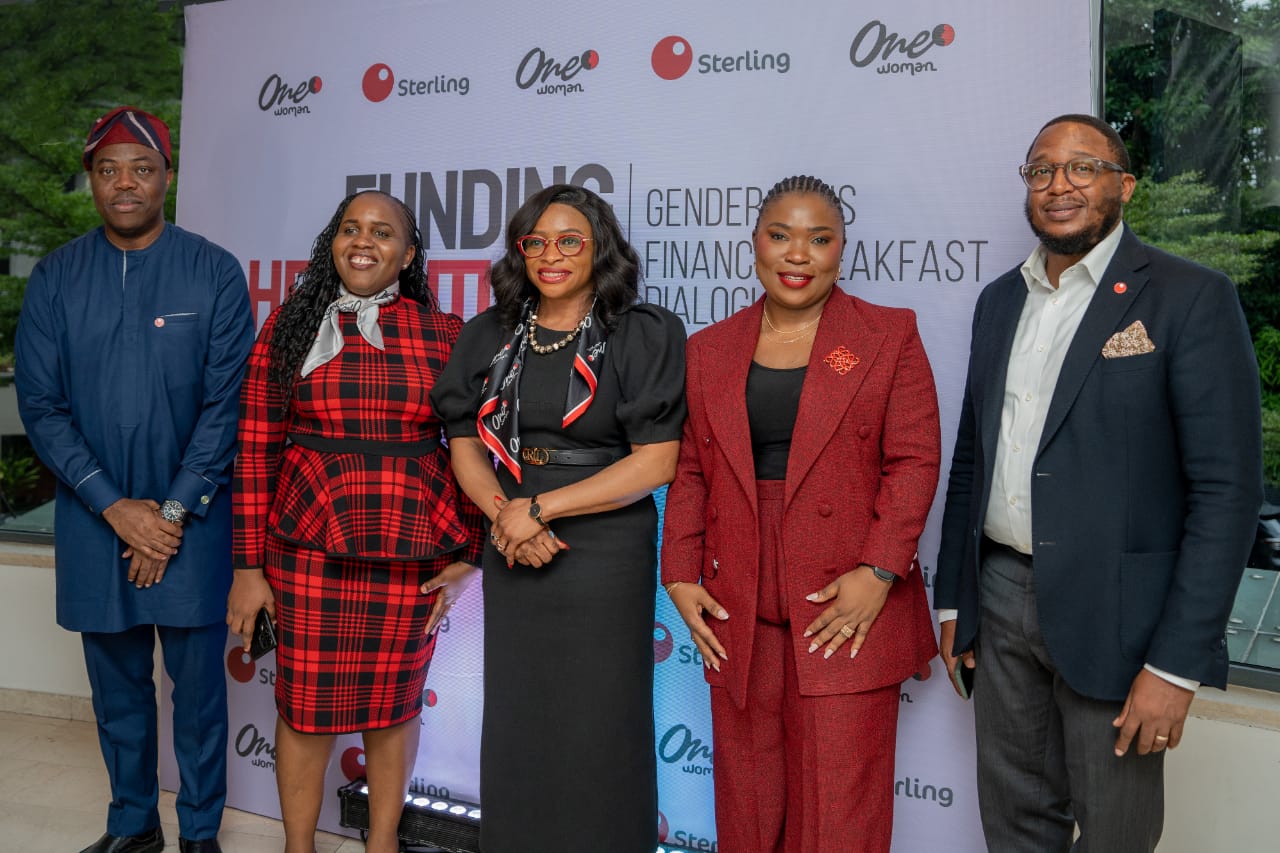
By Modupe Gbadeyanka
The women-focused initiative by Sterling Bank, OneWoman, is already yielding positive results, especially in promoting financial inclusion and empowering female-led enterprises in Nigeria.
Business Post reports that the programme was created to support women through three key pillars of capital, capacity, and community.
In 2025, according to the Head of the OneWoman Initiative, Ms Ezinne Nwokafor, the initiative gave out N43.9 billion loans to 2,450 female entrepreneurs, trained 6,000 of them, served about 380,000 women across three sectors of career women, women in business and freshers, and their vision 2030 is to give out N500 billion loans to one million women across their three sectors.
She noted that a significant majority of Nigerian women remain excluded from formal credit, with only a small percentage able to access structured financing. Despite improvements in financial inclusion, women continue to face systemic barriers that limit their ability to secure funding.
Ms Nwokafor pointed out that women account for a substantial share of micro, small, and medium enterprises and contribute meaningfully to the economy, yet face a financing gap estimated at $42 billion annually, according to the International Finance Corporation.
She also referenced data showing that more than half of women-led businesses identify access to finance as a major constraint, while rejection rates for loan applications remain significantly higher for women than for men.
According to her, these challenges are often linked to structural issues such as gaps in asset ownership, social norms, and limited access to financial data and visibility.
“Sterling’s OneWoman initiative is positioned to bridge this gap by combining financial solutions, mentorship, capacity building, and community support for women across different stages of their journey,” she said at the Funding Her Future Breakfast Dialogue in Lagos.
The session brought together voices from across sectors for a focused and necessary conversation on how to unlock more inclusive and effective financing pathways for women-led businesses in Nigeria.
On his part, the chief executive of Sterling Bank, Mr Abubakar Suleiman, said, “Women-led businesses need the right support systems, the right networks, and the right ecosystem to grow with confidence and scale with resilience.”

By Modupe Gbadeyanka
Alpha Morgan Bank has reaffirmed its commitment to supporting institutions that drive intellectual growth and national development.
The lender gave this reassurance at the commissioning of the Redeemer’s University Business School by Pastor (Mrs) Folu Adeboye, the wife of the General Overseer of the Redeemed Christian Church of God (RCCG), Pastor Enoch Adeboye.
Speaking at the event, the Managing Director of Alpha Morgan Bank, Mr Ade Buraimo, said the company was proud to be associated with the school, noting its commitment to education and institutional development.
As part of its broader focus on knowledge sharing and thought leadership, Alpha Morgan Bank will host its Economic Review Webinar in May 2026, bringing together experts to share insights on key economic trends and opportunities.
The commissioning of the business school was witnessed by distinguished guests, including the Pro-Chancellor and Chairman of the Governing Council of Redeemers University, Professor Oluwatoyin Ogundipe; the Vice Chancellor, Professor Shadrach Olufemi Akindele; Mrs Bola Obasanjo; and other notable dignitaries.
-
 Feature/OPED6 years ago
Davos was Different this year
-
Travel/Tourism10 years ago
Lagos Seals Western Lodge Hotel In Ikorodu
-

 Showbiz3 years ago
Estranged Lover Releases Videos of Empress Njamah Bathing
-
 Banking8 years ago
Sort Codes of GTBank Branches in Nigeria
-

 Economy3 years ago
Subsidy Removal: CNG at N130 Per Litre Cheaper Than Petrol—IPMAN
-

 Banking3 years ago
Sort Codes of UBA Branches in Nigeria
-

 Banking3 years ago
First Bank Announces Planned Downtime
-

 Sports3 years ago
Highest Paid Nigerian Footballer – How Much Do Nigerian Footballers Earn