
Banking
Western Lotto out to Make Nigerians Millionaires—MD



By Dipo Olowookere
Managing Director of Western Lotto Nigeria, Mr Elvis Krivokuca, has disclosed that the newly launched company was entering the Nigerian gaming industry to ensure Nigerians make money while having fun and playing the games.
Mr Krivokuca noted that this would be done by infusing fun and excitement into the lottery experience.
“Our explanation is centred on the nature of lottery as entertainment. Lotteries are number-based games of chance used mainly for entertainment, winning of prize and redistribution of wealth.
“Western Lotto Nigeria offers Nigerians the opportunity to experience and play the famous Power Ball, Euro millions, Euro Jackpot, UK Lotto and Mega Millions games, with a chance of winning a jackpot of N15 million.
“With these brand ambassadors, we are telling Nigerians that lottery is fun and they should enjoy themselves while playing the games,” the lottery firm’s boss said.
Speaking during the launch of Western Lotto Nigeria and the unveiling of its chain of brand ambassadors in Lagos recently, Mr Krivokuca said the choice of entertainers as brand ambassadors affirmed that lottery is entertainment.
The list of ambassadors for the Western Lotto Nigeria brand are Olu Jacobs, Zack Orji, Ramsey Nouah, Alex Usifo, Jide Kosoko, Osita Iheme, 2Face, Olamide and AY.
Added to the entertainment touch, Western Lotto also launched with a mobile application which is a disruption in the Nigerian lottery market.
The company further disclosed that plans were ongoing to add an African and Nigerian- centric game to its offering.
The new game which would be unveiled soon, will add a Nigerian touch to the Western Lotto lottery experience, while the society would benefit from the proceeds.
“Western Lotto is about you. It’s about that boy in Mushin, that girl in Maiduguri, about that madam in Yenagoa. It is 100 percent Nigerian. It’s a Nigerian initiative through and through. Your payments are in Naira. You can play and win in Naira. Western Lotto was set up mainly for two reasons: we want to offer Nigerians the opportunity to win big and also contribute towards good causes.
“We are partnering with organisations that cater for women who have been victims of ràpe. We are going to partner with people that have problem furthering their education.
“Western Lotto will partner with government on health care and sporting foundations. Western Lotto is about Nigeria: it’s our game. Let’s embrace it,” said Director of Western Lotto Nigeria, Mr Biodun Akintaju.
”We have decided to start from the known to the unknown: Power Ball, Euro millions, Euro Jackpot, UK Lotto, Mega Millions are all established games.
“We will allow Nigerians the opportunity of playing and winning in Naira. In the not too distant future, we are going to have a pan-African wholly run, played and payment made in Naira,” he added.
Speaking on the impact of lottery in a modern society, Veteran actor, Olu Jacobs, pointed out that it would help correct some social ills in Nigeria.
“Many things have gone wrong in Nigeria. It’s nice to have Lotto ease the pressure. Most of us have played lotto all over the world.
“I have some friends who play in London: at times with 10 to 20 pounds. I myself used to play when I was there. We didn’t kill ourselves doing it. Some people win because you have a good chance of winning. It is a delightful one with a surprise. I’m glad we have it here,” he said.
Powerball is an American lottery game played every Wednesday and Saturday night. Euro Millions is a transnational lottery. Its draws are held every Tuesday and Friday night. Euro Jackpot is a transnational European lottery launched in 2012.
The goal is to match 5 correct numbers out of 50 plus another 2 supplementary numbers out of another 10.
UK Lotto also known as the National Lottery was launched in 1994. UK Lotto is played every Wednesday and Saturday, while Mega Million draws are held every Tuesday and Friday.




By Adedapo Adesanya
The Central Bank of Nigeria (CBN) has rolled out fresh technology-driven rules compelling banks and other financial institutions to deploy automated anti-money laundering systems capable of detecting suspicious transactions in real time.
The directive, contained in a circular issued on March 10, 2026, applies to deposit money banks, mobile money operators, international money transfer operators, payment service providers, and other institutions under the apex bank’s supervision.
According to the regulator, the new framework sets minimum standards for automated anti-money laundering solutions designed to strengthen the detection and reporting of financial crimes within Nigeria’s rapidly digitising financial ecosystem.
In the circular, the CBN explained that the guidelines establish a baseline structure for financial institutions to deploy advanced monitoring tools capable of flagging suspicious financial activities instantly.
“The baseline standards provide a framework for implementing automated solutions that strengthen the detection and reporting of suspicious transactions in real time and enhance compliance with applicable AML/CFT/CPF laws and regulations, while also supporting the use of emerging technologies to improve overall financial crime risk management,” it stated.
The circular was jointly signed by the Director of Banking Supervision, Mrs Akinwunmi A. Olubukola, and Mrs Olubunmi Ayodele-Oni, acting for the Director of the Compliance Department.
Under the new policy, financial institutions must deploy automated anti-money laundering platforms that combine customer identification systems, transaction monitoring, sanctions screening, and risk assessment tools into a single integrated framework.
The CBN said the guidelines apply to all institutions operating within the financial system under its regulatory authority, including banks, payment companies, and other licensed financial service providers.
While the new rules take effect immediately, institutions have been given specific timelines to fully implement the required technology infrastructure.
Deposit money banks are expected to achieve full compliance within 18 months, while other financial institutions have 24 months to meet the regulatory requirements.
In addition, all institutions are required to submit detailed implementation roadmaps within three months of the issuance of the circular.
“The implementation of these guidelines shall start from the date of issuance, while full compliance shall be 18 months (for Deposit Money Banks) and 24-months (for Other Financial Institutions) from the date of issuance,” the apex bank added.
A major highlight of the framework is the emphasis on advanced technology tools such as artificial intelligence, machine learning, predictive analytics, and behavioural monitoring to identify unusual financial patterns that may indicate criminal activity.
Under the guidelines, institutions must deploy systems capable of conducting risk-based customer due diligence, monitoring transactions across multiple financial channels, and screening customers against sanctions databases and lists of politically exposed persons.
The CBN also directed that these automated systems must integrate seamlessly with core banking infrastructure and customer identity databases, enabling continuous real-time analysis of transaction flows and behavioural patterns.
According to the apex bank, traditional manual monitoring processes are increasingly inadequate in a financial environment that is becoming more complex and heavily driven by digital payments, fintech platforms, and mobile banking.
The regulator said automated surveillance systems would enable institutions to identify potential financial crimes earlier and report suspicious transactions promptly to authorities such as the CBN and the Nigerian Financial Intelligence Unit (NFIU).
The guidelines further require financial institutions to establish governance structures to oversee the performance of automated systems, validate artificial intelligence models, and ensure that data protection safeguards comply with Nigeria’s privacy regulations.
Beyond technology deployment, institutions must maintain detailed audit trails and case management systems that document investigations into suspicious financial activity and track regulatory reporting obligations.
The central bank warned that institutions that fail to comply with the new standards or operate ineffective anti-money laundering frameworks could face regulatory penalties.
Compliance will be monitored through a combination of off-site regulatory surveillance, on-site examinations, and targeted thematic reviews conducted by the banking regulator.
The CBN emphasised that the newly issued standards represent only the minimum compliance benchmark, adding that institutions may be required to implement stronger controls depending on their operational scale, transaction volumes, and risk exposure.

By Aduragbemi Omiyale
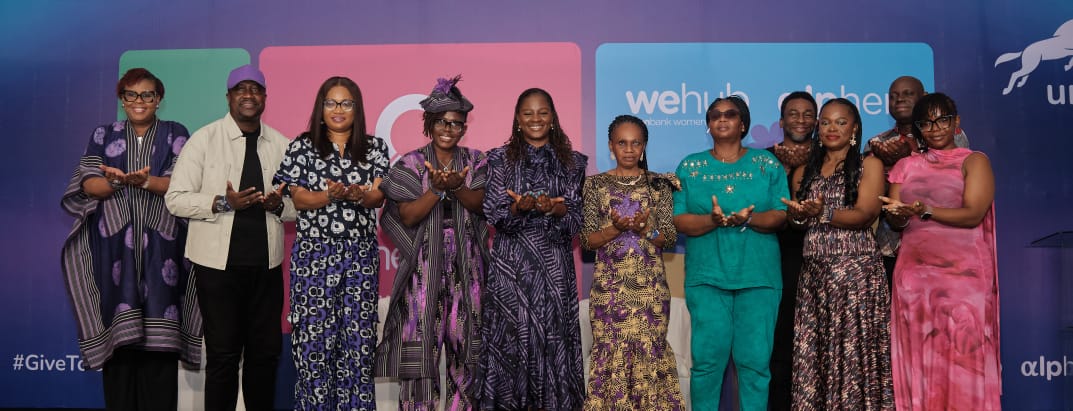
Union Bank of Nigeria is commemorating International Women’s Month 2026 with an initiative centred on women living with disabilities and women raising children with disabilities.
Throughout March, Union Bank will implement targeted initiatives to expand access, foster inclusion, and unlock sustainable opportunities.
Activities include a flagship event slated for The Stable, its multipurpose venue in Surulere, Lagos, on Saturday. The event convened women with disabilities, caregivers, supporting organisations, and advocates for dialogue, mentorship, and resource sharing.
Complementary efforts include outreach to disability support facilities and collaboration with educational institutions to distribute learning materials to female students with disabilities.
Tailored mentorship programmes will build confidence and capability in education, entrepreneurship, and careers.
Through its women’s banking proposition alpher and strategic partnerships, the bank will also deliver business sustainability training specifically designed for women living with disabilities and women raising children with disabilities.
Aligned with the global theme Give to Gain, the lender’s campaign Give to Gain: Creating Pathways for Inclusion and Endless Opportunities centres the lived experiences of women living with disabilities and underscores the need for intentional systems of support for social and economic advancement.
Internally, Union Bank will activate WeHub — its employee-led women’s network — to strengthen inclusive culture and support professional growth across the organisation.
“At Union Bank, inclusion is not an abstract ideal; it is a deliberate choice. While many conversations around women’s empowerment are important and necessary, women living with disabilities and women raising children with disabilities are too often left out entirely.
“This year’s theme, Give to Gain, reflects exactly what we believe: that when we intentionally open access, support, and opportunity to these women, the value created extends to families, communities, and society at large,” the Chief Brand and Marketing Officer for Union Bank, Ms Olufunmilola Aluko, stated.


By Modupe Gbadeyanka
A Federal High Court sitting in Ikoyi, Lagos, has ordered the final forfeiture of N81.1 million to the Federal Government of Nigeria in favour of Sterling Bank.
The money was part of the N2.5 billion stolen by some customers of Sterling Bank and transferred to their own use as well as to the use of some third-party beneficiaries, owing to a system glitch experienced by the bank.
On October 2, 2025, the court granted an interim forfeiture order of the fund and also directed the publication of the same in a national newspaper for any interested party to show cause why the money should not be finally forfeited to the federal government.
When no one came forward to claim the money, Justice Yelim Bogoro on Monday, March 9, 2026, ordered the final forfeiture of the funds.
The matter was brought before the court by the Economic and Financial Crimes Commission (EFCC) after a petition from the financial institution on July 18, 2022.
The anti-graft agency, in its investigations, traced the stolen funds to various accounts, including that of a customer, Sulaiman Kehinde Ojora, who was one of the major beneficiaries of the monumental fraud.
Investigation further revealed that Sulaiman Kehinde Ojora fraudulently concealed the sum of N43.0 million in the account of his friend, Taiwo Oluwaseyi Alawode (Account No. 1233126860), domiciled in Access Bank, and the sum of N122.2 million in the account of his wife, Aminat Olatanwa Ojora (Account No. 0072889319), domiciled in Sterling Bank.











-
 Feature/OPED6 years ago
Davos was Different this year
-
Travel/Tourism10 years ago
Lagos Seals Western Lodge Hotel In Ikorodu
-

 Showbiz3 years ago
Estranged Lover Releases Videos of Empress Njamah Bathing
-
 Banking8 years ago
Sort Codes of GTBank Branches in Nigeria
-

 Economy3 years ago
Subsidy Removal: CNG at N130 Per Litre Cheaper Than Petrol—IPMAN
-

 Banking3 years ago
Sort Codes of UBA Branches in Nigeria
-

 Banking3 years ago
First Bank Announces Planned Downtime
-

 Sports3 years ago
Highest Paid Nigerian Footballer – How Much Do Nigerian Footballers Earn