Connect with us

Brands/Products

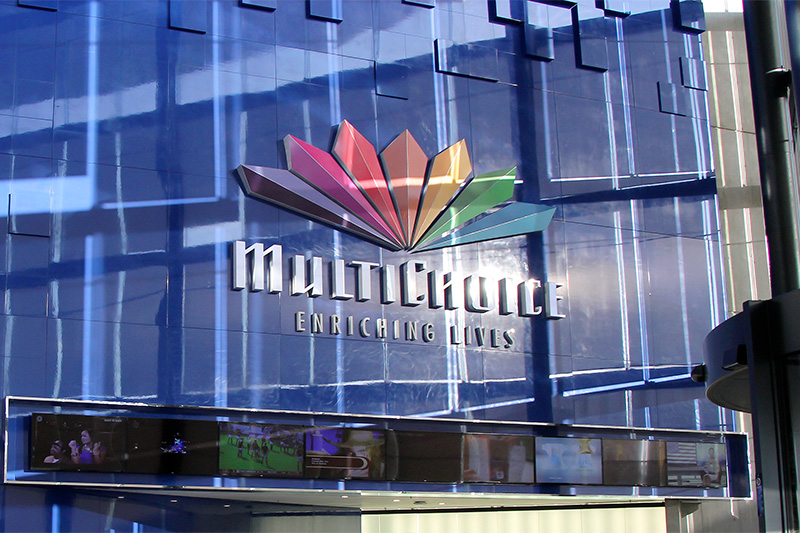
Group Tackles Multichoice Nigeria Over Price Reduction in South Africa

Published

on

multichoice Creative Investment

By Adedapo Adesanya

A Non-Governmental Organisation (NGO) known as Save the Consumers has condemned the 21 per cent subscription price hike by MultiChoice Nigeria on its DStv and GOtv services in the country.

Recall that Multichoice noted that its decision to increase the tariff was to save its operations which was heavily impacted by challenges brought about by the weakening Naira.

However, in South Africa, its home country, the reduced its price by about 38 per cent, which Save the Consumers, in a statement signed by its Executive Director, Mr Aliyu Ilias, said it is not happy about.

Mr Ilias said in Abuja on Sunday that the action was not only insensitive and exploitative but also discriminatory coming less than one year after the company’s May 2024 price hike in Nigeria.

The group called for the immediate reversal of the price hike while compensation be paid to subscribers affected by repeated, unjustified price increases and service deficiencies.

He also called for full compliance with the directives of the Federal Competition and Consumer Protection Commission (FCCPC) which had asked the company to halt any price increase.

“In South Africa, MultiChoice has lowered fees on various products, added new channels, and introduced features that improve the user experience, while acknowledging the financial pressures faced by South African households.

“This double standard, lowering prices at home while increasing them in Nigeria, amounts to economic discrimination and reinforces long-standing concerns about MultiChoice’s exploitative approach toward the Nigerian market.

“It is indefensible for MultiChoice to cite inflation in Nigeria as justification for the hike while offering consumer-friendly pricing in South Africa,” he argued.

Mr Ilias noted, “This reflects a disturbing double standard, with Nigerian consumers continuing to suffer under a near-monopolistic market structure.”

The executive director alleged that while MultiChoice claimed the price hike was necessary to deliver ‘world-class content’, Nigerian subscribers still faced persistent challenges that remained unaddressed in spite repeated complaints.

He also alleged that South African subscribers benefitted from reduced pricing, such as the “Add Movies” bolt-on slashed by 38 per cent to 49 Rand, alongside additional channels and enhanced streaming features.

Mr llias called on the National Broadcasting Commission (NBC) to take decisive steps to foster genuine competition in the pay-TV sector.

“We call on Nigerian consumers to explore alternative platforms and consider boycotting DStv and GOtv until MultiChoice demonstrates genuine respect for their rights.

“The Nigerian market deserves dignity, not exploitation, no company should be allowed to operate above the law or treat Nigerian consumers as second-class subscribers,” he said.

Recall that MultiChoice Nigeria had in a notice, notified its customers of its new price adjustment which took effect from March 1.

MultiChoice Nigeria had cited inflation and the rising costs of operations in Nigeria for a similar subscription price increase effected in May 2024.

With the hike, DStv Premium subscribers now pay N44,500 instead of N37,000 monthly, while the Compact Plus pay N30,000 monthly . The DStv Compact bouquet increased from N15,700 to N19,000 monthly.

The new price for the Confam package is N1,000 monthly, while Yanga is pegged at N6,000 as against initial price of N5,000, DStv-Padi, now cost N4,400 monthly.

Meanwhile, GOtv customers, who formally paid N3,600 now pay N3,900 monthly, while subscribers of GOtv Plus now pay N5,800 instead of the initial N4,850 monthly.

The move led the FCCPC to direct MultiChoice Nigeria to maintain its initial subscription prices until an ongoing investigation into its proposed price adjustment was concluded.

However, it proceeded with the price adjustment which made the FCCPC to institute legal charges against it and its Chief Executive Officer (CEO), Mr John Ugbe, for allegedly defying regulatory directives on subscription price adjustments.


Adedapo Adesanya is a journalist, polymath, and connoisseur of everything art. When he is not writing, he has his nose buried in one of the many books or articles he has bookmarked or simply listening to good music with a bottle of beer or wine. He supports the greatest club in the world, Manchester United F.C.

Brands/Products

Investors Inject $9.2m into AI Dating App Ditto for Yacht Blind Dates

Published

on

AI Dating App Ditto

By Dipo Olowookere

About 9.2 million funding round has been secured by an AI-dating app, Ditto, for the expansion of its iMessage-based matchmaker, with the participation of Peak XV Partners, Gradient, Scribble Ventures, Alumni Ventures, and Llama Venture.

The iMessage-based matchmaker plans real dates for users, handling everything from the match to logistics, so students can focus on showing up and connecting in real-life. Users grow tired of endless swiping and stalled conversations.

College students swipe endlessly, juggle multiple chats, and still struggle to turn matches into actual dates. Ditto was created to remove that friction entirely.

The business was established by two Berkeley undergraduates, Mr Allen Wang and Mr Eric Liu, who saw friends spend hours on dating apps without forming meaningful connections.

The platform initially launched at UC San Diego and went viral across sorority group chats before quickly expanding to UC Berkeley, USC, UCLA, and UC Davis.

It operates entirely over iMessage, where users already communicate daily. Users tell Ditto their preference for a date, such as ‘a 6 ‘2 hot nerd that brings me flowers’ or ‘an ABG who mastered leetcode’. After sharing their preferences and availability, users receive a text with a complete date plan, including the time, place, and details of their match, all centred around the campus they are near.

After each date, Ditto collects feedback and incorporates these feedbacks into the user’s profile to improve future matches. The result is a system that feels personal, efficient, and low-pressure, while removing much of the anxiety and inefficiency associated with modern dating apps.

“Our goal was to build something that actually helps people go on dates, not stay stuck in an app. When you remove swiping and chatting, you remove a lot of the toxicity and anxiety that people associate with online dating.

“We plan the date, people show up, and real connections have a chance to form. About 20 per cent of our matches turned into actual dates,” Mr Wang stated.

With this funding, Ditto is kicking off 2026 by hosting 10 yacht parties across the US, starting in Los Angeles on Valentine’s Day.

Each yacht will host 100 college singles, matched into 50 couples. This will be the biggest yacht party in college history. Ditto is co-hosting these parties with the hottest school clubs and Greek life organisations in Los Angeles, New York, Boston, and more.

A Partner at Gradient, Vig Sachidananda, while commenting on the new funding package, said, “Ditto is leveraging AI in a creative way to build a novel online dating experience — one which resembles a true matchmaking service.

“We’ve seen a great early response from users to this approach, and we’re excited to continue to work with Ditto as they expand to college campuses across the US.”

Since launching, Ditto has grown to more than 42,000 users across four college campuses, with over 25 per cent of users coming through referrals.

Looking ahead, Ditto plans to expand beyond college campuses and eventually support other forms of connection, including professional networking and group social experiences. The long-term vision is to become a matchmaker for modern life, helping people turn intent into meaningful, real-world interactions, one plan at a time.

Continue Reading

Brands/Products

Odekina Leaves UBA for AEDC to Head Corporate Communications Department

Published

on

omede odekina AEDC UBA

By Aduragbemi Omiyale

One of the foremost Public Relations practitioners in Nigeria, Mr Omede Odekina, has joined the Abuja Electric Distribution Company (AEDC).

He is now on the payroll of the energy firm as the Head of Brand Marketing and Corporate Communications Department after leaving the United Bank for Africa (UBA) Plc.

The Kogi State University graduate will use his experience as a media relations expert to sell the image of the electricity organization.

In an announcement via his LinkedIn page, Mr Odekina described his movement from the banking space to the energy industry as the “beginning of an exciting new chapter and a unique opportunity to help shape how one of Nigeria’s most critical service organisations engages with its customers and communities.”

He thanked UBA for providing him with the platform to grow his career, describing the lender as “truly one of the best places to work.”

According to him, “UBA was more than a workplace; it was a family. The culture, leadership, and people created an environment of excellence, trust, and continuous growth. I leave deeply appreciative of the journey, the friendships, and the values that will remain with me always.”

The Associate of the Nigerian Institute of Public Relations (NIPR) disclosed that in his new role, “my focus is firmly on positioning Abuja Electricity Distribution Plc as Nigeria’s number one electricity distribution company, one that delivers reliable service with professionalism, respect, transparency, and a strong sense of community partnership.”

“It is a responsibility I embrace with enthusiasm, purpose, and optimism for what lies ahead,” he said further.

Continue Reading

Brands/Products

Reputation Economy: How Nigerian Brands Won and Lost Public Trust in 2025

Published

on

Reputation Economy

Nigeria’s leading independent media intelligence consultancy, P+ Measurement Services, has released its 2025 Industry Media Reputation Report, revealing that corporate reputation has emerged as one of the most decisive assets for Nigerian companies, rivaling financial performance and market share in shaping public trust.

The report analysed and audited thousands of print and online news reports published in 2025 across the banking, insurance, telecommunications, and e-hailing sectors. In total, coverage of 29 commercial banks, 13 insurance companies, five e-hailing platforms, and four telecommunications operators was examined to determine how corporate actions translated into public perception.

According to the findings, rising operational costs, currency pressures, regulatory scrutiny, labour relations, and service reliability now directly influence how brands are judged in the media and by stakeholders.

“Reputation is no longer a soft outcome of publicity. It is a measurable business asset shaped by corporate behaviour, governance quality, customer experience, and crisis response,” said a Senior Analyst at P+ Measurement Services, Ms Tumininu Balogun.

She added, “For more than a decade, we have been at the forefront of media intelligence in Nigeria. Our commitment to the PR and communications industry is to ensure that reliable media data and actionable insight are always available, so professionals can move beyond intuition and make truly data-driven decisions.”

E-Hailing Industry: Driver Relations Reshaped Corporate Reputation

The e-hailing sector recorded one of the clearest shifts in reputation dynamics in 2025, driven largely by labour policies and platform economics.

inDrive Nigeria led the sector with 39% of positive reputation share, following extensive media coverage of its decision to reduce driver commission to 0.1% during peak hours in Abuja. Bolt Nigeria followed with 32%, supported by reports on its electric tricycle deployment in Lagos. LagRide recorded 17%, driven by coverage of its electric vehicle infrastructure partnership, while Uber Nigeria accounted for 11% and Rida 1%.

On the negative reputation scale, Bolt recorded the highest share at 40%, linked to driver protests following fare reduction policies. Uber accounted for 29%, inDrive 20%, LagRide 8%, and Rida 3%, largely associated with reports on strike threats, platform reliability concerns, and driver earnings disputes.

The report notes that how platforms treat drivers has become as influential to reputation as rider experience.

Banking Industry: Profitability Confronted by Governance Risk

Among commercial banks, Stanbic IBTC recorded the strongest positive reputation position at 26%, driven by recognition as KPMG’s top retail bank. Zenith Bank followed with 22%, supported by dividend payout coverage. Fidelity Bank (19%), UBA (17%), and FirstBank (16%) gained positive reputation visibility through education initiatives, digital service upgrades, and branch automation projects.

However, reputational exposure remained significant. GTCO recorded the highest negative reputation share at 28%, followed by FirstBank at 26%, FCMB at 18%, and both UBA and Ecobank at 14%, mainly due to media reports concerning legal disputes, fraud investigations, and customer-related controversies.

The report highlights that in the banking sector, strong earnings and digital innovation strengthen reputation, but governance failures can rapidly undermine it.

Insurance Industry: Financial Stability and Data Protection Define Trust

In the insurance sector, AXA Mansard led positive reputation share with 36%, followed by Leadway Assurance (29%), AIICO (16%), NEM Insurance (11%), and SanlamAllianz (8%).

AXA Mansard also accounted for the highest negative reputation exposure at 68%, driven by reports of a significant decline in pre-tax profit. AIICO recorded 18%, Leadway 12%, and NEM 2%, largely connected to regulatory matters and data protection concerns, including coverage of customer data breaches.

The findings indicate that insurers are now judged as much by financial resilience and cybersecurity posture as by product offerings.

Telecommunications Industry: Infrastructure Investment Meets Rising Public Expectations

MTN Nigeria led positive reputation share with 47%, driven by infrastructure expansion narratives and innovation campaigns. Glo followed with 28%, Airtel Nigeria with 16%, and T2 (formerly 9mobile) with 9%, largely supported by its rebranding coverage.

On the negative reputation side, MTN recorded 44%, T2 31%, Glo 13%, and Airtel 12%, influenced by reports on service quality challenges and the Nigeria Labour Congress boycott directive targeting telecommunications operators.

The sector’s results suggest that while capital investment enhances visibility, network reliability and customer experience increasingly determine long-term reputation.

Reputation Has Become a Strategic Business Asset

Across all four industries, the report finds a consistent pattern: reputation in 2025 closely followed corporate behaviour.

Brands that demonstrated transparency, operational fairness, financial discipline, digital reliability, and customer focus were more likely to build positive public trust. Companies facing labour unrest, legal disputes, regulatory sanctions, data breaches, or service disruptions saw these issues rapidly reflected in their reputation profile.

For brand owners, investors, regulators, and communication professionals, the implication is clear: reputation is no longer managed only through messaging, but through measurable actions that are permanently recorded in the media ecosystem and searchable online.

Continue Reading

Trending