Connect with us

Economy

$2.4bn Stolen Crude: Reps Invite Finance Minister, SGF

Published

on

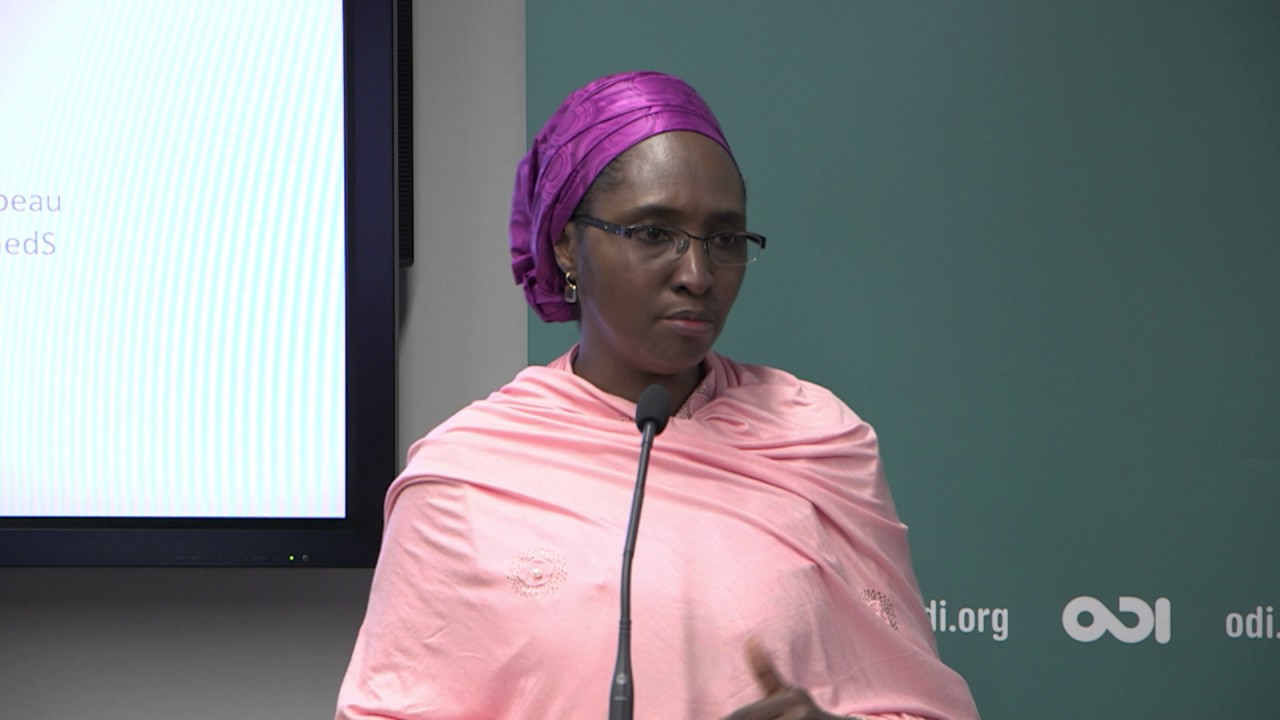
zainab ahmed finance minister

By Adedapo Adesanya

The House of Representatives Ad Hoc Committee on Oil Theft has invited Minister of Finance, Mrs Zainab Ahmed, and the Secretary General of the Federation, Mr Boss Mustapha, as part of an investigation into the alleged loss of over $2.4 billion in revenue from the illegal sale of 48 million barrels of crude oil export in 2015.

Also summoned are the acting Accountant General of the Federation, Mr Sylva Okolieaboh, and the management of the Nigerian National Petroleum Company (NNPC) Limited, among others.

The committee is also concerned about the disparity in figures from crude oil sales from  2011 to 2014 and is accusing the Finance Minister of approving payments to whistle-blowers at variance with the whistle-blower policy.

The Ad Hoc House committee was charged with investigating the whistle-blower’s allegation of illegal sale of 48 million barrels of Nigeria’s bonny light crude in China in 2015, valued at $2.4 billion.

The committee, in February, had accused the Attorney General of the Federation (AGF), Mr Abubakar Malami, as well as Interpol, of what it described as interference in the committee’s investigation.

The panel questioned why a whistle-blower would be invited by Interpol at the request of the Ministry of Justice just after the commencement of the investigation of the House.

However, the Head of the National Central Bureau of Interpol Nigeria, Mr Garba Umar, said the Bureau only acted on the request of the AGF.

The Chairman of the House’s Ad hoc Committee on Oil Theft, Mr Mark Gbillah, said, “There is a group called Advocacy for Good Governance and Free Nigeria.

“That is the so-called Civil Society Organisation that wrote to the Attorney General claiming there was this international gang of blackmailers trying to blackmail senior officials of the government.

“How come the Attorney General responded to allegations by a faceless body? That means the Attorney General himself did not ascertain the veracity of any organisation.”

The Committee, dissatisfied with the submission of Interpol, accused the AGF of interfering with the investigation of the House.

It also feared for the safety of the whistleblower and insisted that the Ministry of Justice should not be making direct requests to Interpol but should go through the police, as Interpol, by law, is only expected to respond to requests by local law enforcement agencies.


Adedapo Adesanya is a journalist, polymath, and connoisseur of everything art. When he is not writing, he has his nose buried in one of the many books or articles he has bookmarked or simply listening to good music with a bottle of beer or wine. He supports the greatest club in the world, Manchester United F.C.

Economy

Helios to Acquire Frigoglass’ Stake in Beta Glass for Up to €100m

Published

on

beta glass

By Adedapo Adesanya

Beta Glass Plc, a leading manufacturer of glass packaging solutions in West and Central Africa, will soon have a new major shareholder as Frigoglass Group has agreed to sell its entire stake in the company to Helios Investment Partners for up to €100 million.

The agreement covers the sale of Frigoglass’ shareholding in Frigoinvest Nigeria Holdings B.V., the parent company of Beta Glass Plc and Frigoglass Industries Nigeria Limited. The business units include glass container manufacturing, plastic crates, and metal crown production.

The deal is subject to regulatory approval and is expected to conclude in the first quarter of 2026.

According to a statement, during the transition period, Beta Glass will continue to work closely with its current owners and partners to ensure smooth operations.

Speaking on this, Mr Gagik Apkarian, founder and Managing Director of Tetrad Capital Partners and Chairman of the Frigoglass Group, described the transaction as the culmination of a three-year transformation programme for the company.

According to him, Beta Glass’ strong financial performance and growth potential attracted “significant interest from domestic and international buyers,” with Helios ultimately emerging as the preferred investor.

Mr Apkarian noted that Helios’ investment is expected to accelerate the company’s future growth, adding that Beta Glass’ 50-year legacy makes it an attractive platform for further value creation.

Also, speaking on the development, Mr Alex Gendis, the chief executive of Beta Glass, welcomed Helios Investment Partners, saying the move aligns with the long-term strategic vision for the business.

He said the transaction “is testament to the underlying growth potential” of Beta Glass and credited Frigoglass for its guidance and support during the company’s transformative years.

Mr Gendis also assured customers, suppliers, and stakeholders that business operations will continue uninterrupted throughout the transition.

The transaction marks a significant shift for Frigoglass, which is divesting from its Nigerian glass operations after a period of intensive restructuring and growth optimisation. It comes a few months after Beta Glass completed the revamp of its DF1 Furnace at Ughelli Plant in 48 days.

Continue Reading

Economy

FG Prohibits Cash Transactions at MDAs, Adopts Electronic Payments

Published

on

cashless transactions

By Adedapo Adesanya

The federal government has banned the use of physical cash for revenue payments and directed all Ministries, Departments, and Agencies (MDAs) to deploy Point of Sale (PoS) terminals within 45 days, as part of a sweeping shift toward full electronic revenue collection.

The directive was contained in four separate treasury circulars issued by the Office of the Accountant-General of the Federation (OAGF) late last month.

In the documents, the Accountant-General, Mr Shamseldeen Ogunjimi, ordered that all payments to the federal government must now be made electronically and routed through platforms approved by the treasury.

According to the first circular, dated November 24, 2025, the government expressed concern over the persistent acceptance of physical cash at MDA revenue points, noting that it contradicts existing policies on e-payment and the Treasury Single Account (TSA). It warned that continued cash collection undermines the integrity of federal electronic payment systems.

The OAGF therefore prohibited the receipt of cash “in Naira or any other currency” for government revenues and mandated MDAs to immediately sensitise staff and the public. Revenue points are to display notices such as “NO PHYSICAL CASH RECEIPT” and “NO CASH PAYMENT.”

It added that MDAs still collecting cash must install functional POS machines or other approved electronic tools within 45 days, with accounting officers held accountable for breaches.

A second circular, dated November 25, 2025, addressed the Treasury’s concern over widespread unauthorised deductions carried out through customised MDA payment platforms. It noted that some MDAs were using front-end applications linked to Payment Solution Service Providers (PSSPs) that deducted charges before remitting balances to the TSA. The OAGF said this has resulted in significant revenue leakages.

The circular ordered MDAs to stop all direct deductions at source and remit revenues in full to designated TSA or Sub-TSA accounts. Any service-related fees must be paid directly by the Treasury rather than through automated deductions.

It also directed that all MDA portals and PSSPs be regularised with the OAGF by December 31, 2025, warning that non-compliance could lead to suspension from GIFMIS and TSA access.

A third circular, issued on November 26, 2025, announced the introduction of a unified Federal Treasury e-Receipt (FTe-R), which will serve as the only valid proof of payment for federal transactions from January 1, 2026. The receipt will be issued via the Revenue Optimisation platform and delivered electronically through channels selected by each MDA.

The fourth circular, dated November 27, 2025, outlined guidelines for the rollout of the new Revenue Optimisation (RevOP) platform, which the government has adopted as the central system for automating billing, reconciliation, and monitoring of MDA accounts.

The platform will integrate with TSA, GIFMIS, the Central Bank of Nigeria, NIBSS, FIRS, and collecting banks, ensuring real-time visibility over government revenues.

MDAs are required to nominate three officers as RevOP focal persons within seven working days, integrate their existing financial systems, and ensure that only CBN-licensed and NITDA-recommended PSSPs approved by the OAGF are used. All PSSPs currently engaged by MDAs must connect to RevOP for immediate harmonisation of federal collections. The Treasury also directed MDAs to submit details of all local and foreign currency accounts within 60 days.

These reforms represent some of the most significant changes to federal revenue administration since the introduction of the TSA. Earlier in March 2025, The PUNCH reported the launch of the Treasury Management & Revenue Assurance System, aimed at streamlining federal revenue and payment processes. The system’s first phase covers naira-denominated transactions, while the second phase—scheduled for June 1, 2025—will expand to foreign currency transactions and integration with MDA enterprise resource platforms.

The Treasury maintained that the new measures are designed to strengthen transparency, curb leakages, and modernise Nigeria’s public financial management framework.

Continue Reading

Economy

Four Stocks Lift Unlisted Securities Bourse by 6.06%

Published

on

unlisted securities bourse

By Adedapo Adesanya

The NASD Over-the-Counter (OTC) Securities Exchange was lifted by 6.06 per cent on Monday, December 8 by four stocks led by Central Securities Clearing System (CSCS) Plc, which gained N3.20 to close at N43.00 per share compared with the previous price of N39.80 per share.

FrieslandCampina Wamco Nigeria Plc appreciated during the first trading day of the week by N1.88 to sell at N58.45 per unit versus N56.57 per unit, Food Concepts Plc improved by 25 Kobo to N3.40 per share from N3.15 per share, and Acorn Petroleum Plc expanded by 3 Kobo to close at N1.20 per unit, in contrast to last Friday’s N1.17 per unit..

As a result, the NASD Unlisted Security Index (NSI) jumped by 206.15 points to 3,607.52 points from 3,401.37 points and the market capitalisation chalked up N123.34 billion to settle at N2.158 billion compared with the N2.035 trillion it ended in the preceding session.

The volume of securities traded at the session plunged by 99.7 per cent to 58,300 units from the previous 18.2 million units, the value of securities went down by 99.5 per cent to N1.9 million from N389.7 million, and the number of deals decreased by 46.2 per cent to 14 deals from 26 deals recorded in the previous trading session.

When trading activities ended for the day, Infrastructure Credit Guarantee Company (InfraCredit) Plc remained the most traded stock by value with a year-to-date sale of 5.8 billion units worth N16.4 billion, followed by Okitipupa Plc with 171.8 million units transacted for N8.3 billion, and Air Liquide Plc with 507.6 million units valued at N4.2 billion.

InfraCredit Plc also finished the trading session as the most traded stock by volume on a year-to-date basis with 5.8 billion units traded for N16.4 billion, trailed by Industrial and General Insurance (IGI) Plc with 1.2 billion units sold for N420.3 million, and Impresit Bakolori Plc with a turnover of 537.0 million units worth N524.9 million.

Continue Reading

Trending