Connect with us

Economy

20 Worst Performing and Best Performing Nigerian Stocks in 2021

Published

on

Nigerian Stocks1

By Dipo Olowookere

The year 2021 on the floor of the Nigerian Exchange (NGX) Limited was interesting because of some intrigues that occurred, especially towards the end.

The year closed with a shocker when it was announced that a two-year-old bank, Titan Trust Bank, was acquiring a 104-year-old Union Bank of Nigeria.

This was not a transaction that was expected by observers when the likes of Zenith Bank and Access Bank were thought to be in the best position to shoot the shot.

Another was the crisis at the oldest bank in the country, First Bank, which led to the sacking of the board and that of its parent company, FBN Holdings, leading to the acquisition of a substantial stake by Mr Femi Otedola.

This sparked a boardroom leadership tussle between Mr Otedola and Mr Tunde Hassan-Odukale, chairman of FBN Holdings.

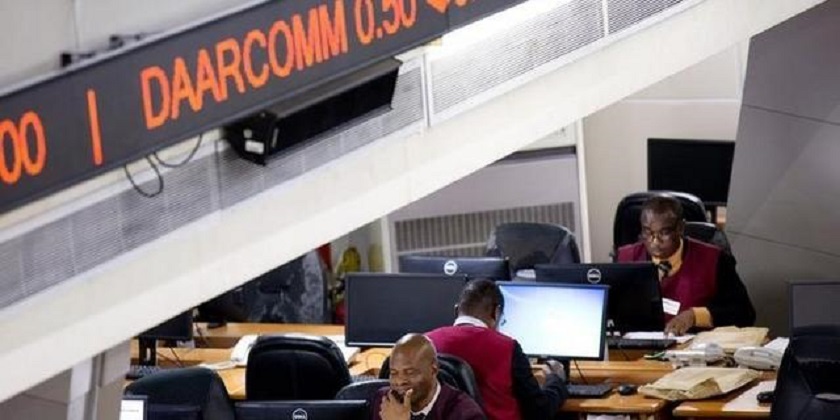
These and others affected the prices of shares on the NGX trading platform and Business Post is bringing the 10 worst performing stocks and 10 best performing stocks in the outgone year, where the exchange grew by 6.07 per cent.

The worst performing stock last year was SCOA Nigeria as its value went down by 64.51 per cent to settle at N1.04 compared with the previous year’s N2.93.

CWG dropped 55.91 per cent to N1.12 from N2.54, Sunu Assuances depreciated by 55.00 per cent to trade at 45 kobo compared with its value in 2020 at N1.00, FTN Cocoa lost 40.91 per cent to sell for 39 kobo versus 66 kobo, while AIICO Insurance declined by 38.05 per cent to 70 kobo from N1.13.

In addition, Japaul fell by 37.10 per cent to 39 kobo from 62 kobo, Vanleer lost 33.54 per cent to sell for N5.45 in contrast to N8.20 it closed 2020, DAAR Communications shed 33.33 per cent in the year to 20 kobo from 30 kobo, Enamelware decreased by 26.70 per cent to N16.20 from N22.10, while Sterling Bank depreciated by 25.98 per cent to N1.51 from N2.04.

On the flip side, Morison Industries finished the year as the best performing stock with a price appreciation of 306.12 per cent to N1.99 from 49 kobo.

Royal Exchange grew by 238.46 per cent to 88 kobo from 26 kobo, Lasaco Assurance rose by 200.00 per cent to N1.05 from 35 kobo, Vitafoam improved by 188.46 per cent to N22.50 from N7.80, while Honeywell Flour jumped by 183.33 per cent to N3.40 from N1.20.

Further, Champion Breweries chalked up 173.26 per cent to trade at N2.35 versus 86 kobo it closed 2020. NEM Insurance gained 151.40 to sell for N4.50 in contrast to the preceding year’s N1.79, Consolidated Hallmark Insurance grew by 146.88 per cent to 79 kobo from 32 kobo, Regency Assurance appreciated by 131.82 per cent to 51 kobo from 22 kobo, while University Press rose by 129.69 per cent to N2.94 from N1.28.


Economy

Stanbic IBTC Insurance Triumphs at 2025 Risk Analyst Awards

Published

on

Stanbic IBTC Insurance Risk Analyst Awards

By Modupe Gbadeyanka

A subsidiary of Stanbic IBTC Holdings Plc, Stanbic IBTC Insurance, has continued to showcase institutional excellence, becoming one of Nigeria’s top-performing insurers.

At the 2025 Risk Analyst Insurance Brokers Performance Review Awards, the underwriting firm won the Life Insurance category for its operational discipline, prompt claims settlement, and partnership-driven approach that fosters long-term confidence with clients and brokers.

The organisers were impressed with the company’s performance in life insurance, which reflects the broader institutional direction of Stanbic IBTC Holdings, which is building resilient, trusted, and high-performing financial institutions that contribute to Nigeria’s economic growth and the development of the insurance sector.

“At Stanbic IBTC Insurance, trust is built through reliable performance, timely claims settlement, and service that supports customers when it matters most. This recognition reflects the quality of service we provide for our clients and partners.

“We are honoured to receive this accolade and will continue to raise standards across the industry,” the chief executive of Stanbic IBTC Insurance, Akinjide Orimolade, stated.

Also commenting, the chief executive of Stanbic IBTC Holdings, Mr Chuma Nwokocha, said, “We are proud of this achievement, which highlights the strength of our insurance business and the broader Stanbic IBTC Group’s focus on building strong, enduring institutions.

“Stanbic IBTC Insurance continues to set benchmarks in professionalism, client service, and operational excellence; reinforcing our role as a trusted partner to individuals and businesses across Nigeria.”

Every year, Risk Analyst Insurance Brokers Limited, which organises the event, carries out an annual assessment of insurance underwriters by evaluating partners based on key criteria, including claims settlement efficiency, service delivery, responsiveness, and broker–underwriter collaboration.

The initiative aims to promote accountability, raise service standards, and strengthen trust across Nigeria’s insurance ecosystem.

The 2025 performance of Stanbic IBTC Insurance highlights its role as a dependable and credible underwriting partner in the market.

Continue Reading

Economy

Lagos Unveils Roadmap to Establish West Africa’s International Financial Hub

Published

on

Lagos International Financial Hub

By Adedapo Adesanya

Nigeria’s commercial nerve centre, Lagos State, has announced plans to establish West Africa’s premier International Financial Centre to unlock international investment, innovation, and sustainable growth.

TheCityUK, in partnership with the UK Government, Lagos State Government, Lagos International Financial Centre Council (LIFCC), and EnterpriseNGR, on Monday unveiled a landmark report, Establishing an International Financial Centre in Lagos (LIFC), Nigeria, outlining a strategic roadmap to achieve the goal.

The establishment of a Lagos International Financial Centre aligns with Nigeria’s Agenda 2050 and the Lagos State Development Plan 2052 to deliver long-term economic prosperity, deepen financial markets, and attract productive global investment.

According to a statement, the project is hinged on a public-private partnership bringing visionary leadership from the government together with private sector companies seeking to tap into Nigeria’s young, dynamic market to deliver economic growth.

The unveiling was done at the State House Marina with guests including Lagos State Governor, Mr Babajide Sanwo-Olu, British Deputy High Commissioner Mr Jonny Baxter, and EnterpriseNGR Board Chairman and CEO, Mr Aigboje Aig-Imoukhuede and Mr Obi Ibekwe.

Lagos International Financial Centre Council will support Nigeria’s ambition to become an upper-middle-income country by 2050, driving inclusive growth, reducing poverty, and creating high-value jobs, especially for Nigeria’s talented youth, as per the report, adding that it will benefit from the strong UK-Nigerian co-operation, building on best practices and global benchmarks to align the LIFC with international standards.

The report proposes creating an independent International Financial Centre in Lagos to enhance regulatory clarity, simplify tax and policy frameworks, and boost investor confidence. It recommends an initial focus on Green and Sustainable Finance, FinTech and Innovation, and Commodities and Capital Markets, supported by strong governance, legal reforms, stakeholder collaboration, and targeted talent development.

Speaking on this, Governor Sanwo-Olu said, “Lagos is fully committed to the birth of the International Financial Centre. We know that it is a veritable means of supporting seamless trading and to enhance competitiveness of financial markets.

“As Nigeria’s largest economic and financial centre, Lagos plays a critical role in driving the nation’s capital markets. We need to create an ecosystem that will help to facilitate investment flows, enhance market liquidity, and promote financial literacy.

“The LIFC initiative will not only strengthen our market infrastructure but also unlock new opportunities for public-private partnerships in technology and capital market development. It will support seamless trading, attract foreign investment and enhance the competitiveness of financial markets.”

On his part, Mr Jonny Baxter, British Deputy High Commissioner, commented, “The launch of the Lagos International Financial Centre report reflects the deepening of the UK-Nigeria partnership, combining Lagos’s comparative strengths with UK expertise. Anchored in clear, evidence‑based analysis and launched at a pivotal moment in Nigeria’s reform journey, the LIFC has the potential to unlock major domestic and international investment, deepen capital markets, create jobs, and drive sustainable economic growth across the country, not just in Lagos State.”

Mrs Nicola Watkinson, Managing Director, International, TheCityUK, said, “Nigeria is a high-growth, dynamic and large market and the Lagos International Financial Centre could be vital to its future. By building a modern, integrated business and regulatory environment and financial ecosystem, the LIFC will support the attraction of global and domestic capital, deepen domestic markets, facilitate innovation in FinTech and green finance, and create high‑value jobs for Nigeria’s youth.

“Supporting the development of Lagos as an international financial centre is a clear example of how the UK and Nigeria are deepening their strategic partnership.”

Continue Reading

Economy

Nigeria Now Consolidating Reforms for Economic Stability—Edun

Published

on

wale edun finance minister

By Adedapo Adesanya

The Minister of Finance and Coordinating Minister of the Economy, Mr Wale Edun, has stressed that Nigeria was now consolidating its macroeconomic reforms to sustain economic stability in an increasingly volatile global environment.

The Minister spoke at a high-level panel on Fiscal Policy in a Shock – Prone World at the ongoing Al Ula conference for Emerging Market Economies in Riyadh, Saudi Arabia.

“Nigeria’s macroeconomic and fiscal reforms are working. Momentum must be maintained, and the benefits channelled towards long-term growth and resilience,” he stated.

He said the government is also leveraging digital tools to improve revenue assurance, while deepening fiscal and monetary coordination and promoting realistic budgeting practices to ensure durable fiscal discipline.

He noted that despite accounting for a significant share of global growth, population and natural resources, emerging economies remain under-represented in global financial decision-making.

Mr Edun also highlighted the growing strategic importance of Gulf nations in the evolving global economic landscape.

He said countries in the Gulf are increasingly shaping global trade routes, investment flows and sources of capital, making them critical partners for emerging economies such as Nigeria.

The finance minister stressed Nigeria’s commitment to building stronger partnerships that promote a more inclusive and equitable global financial system.

He said Nigeria was positioning itself to engage constructively with global partners to support reforms that unlock growth, stability and shared prosperity.

Mr Edun’s call comes amid mounting global economic pressures. Many emerging economies are grappling with high debt levels, elevated inflation, volatile capital flows and tightening global financial conditions.

Rising interest rates in advanced economies have increased debt-servicing costs, while currency volatility has strained fiscal and external balances across Africa and other developing regions.

Global trade is also facing increased fragmentation due to geopolitical tensions, supply chain disruptions and protectionist tendencies.

These trends have disproportionately affected emerging markets that depend heavily on trade, foreign investment and access to international finance.

For Nigeria, the push for a global economic reset aligns with ongoing domestic reforms aimed at stabilising the macroeconomic environment.

The country has embarked on exchange rate reforms, fiscal consolidation and efforts to attract long-term investment to support growth and job creation.

Mr Edun has repeatedly argued that without reforms to the global financial system, domestic policy efforts in emerging economies risk being undermined by external shocks.

At the Al Ula conference, he reiterated that a more balanced global system would enhance resilience, improve access to finance and support sustainable development.

He said Nigeria would continue to engage in global policy conversations to ensure that emerging economies are not only rule-takers but active shapers of the new global economic order.

Continue Reading

Trending