Economy
A Digital Revolution: Bitcoin’s Genesis
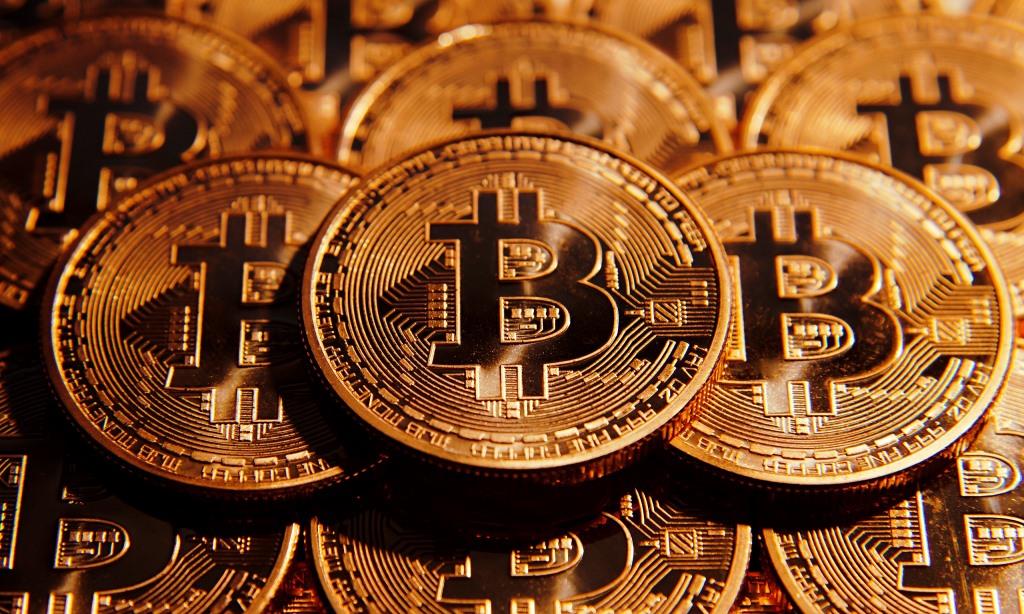
In the dynamic landscape of modern finance, few phenomena have captured the world’s attention as profoundly as Bitcoin Era which is an Online trading platform. As the pioneer of cryptocurrencies, Bitcoin has not only revolutionized the way we perceive money and transactions but has also sparked a global wave of interest, investment, and innovation. In this article, we delve into the fascinating journey of Bitcoin’s, exploring its meteoric rise, its enduring dominance, and the factors that have contributed to its unparalleled reign in the realm of cryptocurrencies. If you want to invest in Bitcoin then you can visit online trading platforms like Bitcode Method Site.
The Birth of a New Era: Bitcoin’s Creation and Genesis Block
The Genesis Block: A Cryptographic Foundation
At the heart of Bitcoin’s genesis lies the concept of the genesis block. This foundational block, also known as block 0, was mined by Bitcoin’s elusive creator, Satoshi Nakamoto. The genesis block not only marked the birth of Bitcoin but also embedded a powerful message into its code: The Times Chancellor on brink of second bailout for banks.This phrase, referencing a headline from The Times, holds symbolic significance as it subtly hints at the motivation behind Bitcoin’s creation as a decentralized alternative to traditional financial systems.
Decentralization and Digital Scarcity
Bitcoin’s genesis introduced the concept of decentralization, eliminating the need for intermediaries like banks to facilitate transactions. Instead, transactions are verified and recorded on a public ledger known as the blockchain, which is maintained by a distributed network of nodes. This peer-to-peer network ensures transparency, security, and censorship resistance. Furthermore, Bitcoin’s supply is capped at 21 million coins, introducing digital scarcity that contrasts with traditional fiat currencies subject to inflationary pressures.
The Evolution and Impact of Bitcoin
Rise to Prominence: Early Adoption and Challenges
Following its genesis, Bitcoin gained gradual recognition within the tech community. Its initial use cases were centered around tech-savvy individuals who saw its potential as an alternative form of money. However, the journey was not without hurdles. Skepticism and concerns over its association with illicit activities hindered broader adoption.
Mainstream Acceptance and Financial Innovation
Over time, Bitcoin’s reputation improved, leading to its integration into mainstream financial markets. Major companies and institutions began to accept Bitcoin as a legitimate form of payment, bolstering its credibility. Additionally, the underlying blockchain technology gained attention beyond cryptocurrencies, sparking innovation in various industries, from supply chain management to healthcare.
Factors Driving Bitcoin’s Success
Global Accessibility and Financial Inclusion
One of the driving forces behind Bitcoin’s success is its potential to bridge gaps in financial inclusion. With traditional banking services often inaccessible to a significant portion of the global population, Bitcoin offers a decentralized and borderless alternative. Individuals without access to traditional banking can participate in the global economy through Bitcoin, provided they have an internet connection.
Hedging Against Economic Uncertainty
Bitcoin’s emergence as a store of value has attracted investors seeking to diversify their portfolios and protect against economic uncertainty. With a fixed supply and a decentralized nature, Bitcoin is positioned as a hedge against traditional financial assets that can be affected by government policies and economic fluctuations.
Looking Ahead: The Future of Bitcoin and Beyond
Continued Technological Advancements
As the digital landscape evolves, Bitcoin continues to evolve as well. The development of second-layer solutions like the Lightning Network aims to address scalability concerns and enhance transaction speeds. These advancements could potentially pave the way for broader adoption and use in everyday transactions.
Regulatory Challenges and Adaptation
Bitcoin’s journey forward is not without challenges, particularly in the realm of regulation. Governments around the world are grappling with how to classify and regulate cryptocurrencies. Striking a balance between innovation and consumer protection will play a crucial role in shaping Bitcoin’s future trajectory.
Conclusion
In the midst of an ever-accelerating digital revolution, Bitcoin stands as a testament to the potential of innovation and decentralized technology. Its creation marked the initiation of a new era, challenging traditional financial systems and giving rise to a global community of enthusiasts, investors, and developers. From the enigmatic Satoshi Nakamoto’s inception to its current status as a transformative force, Bitcoin’s journey has been nothing short of remarkable. As the world progressively embraces the possibilities presented by cryptocurrencies, the impact of Bitcoin is poised to resonate across generations.This revolutionary currency’s emergence has ignited discussions and actions that extend beyond its monetary value. Beyond financial implications, Bitcoin’s underlying blockchain technology has sparked explorations into various sectors like supply chain management, digital identity verification, and more. As innovation continues to interlace with the realms of finance and technology, Bitcoin’s influence paves the way for a reimagined global financial landscape and underscores the potential for further decentralized advancements.
Economy
Naira Slips to N1,343/$ at NAFEX
By Adedapo Adesanya
The Naira sold at N1,343.64/$1 Nigerian Autonomous Foreign Exchange Market (NAFEX) on Friday, April 17, after shedding N1.34 or 0.10 per cent against the greenback from the previous day’s rate of N1,342.30/$1.
In the same vein, the Nigerian currency depreciated against the Pound Sterling in the same market window during the session by N5.03 to quote at N1,824.39/£1 versus the previous rate of N1,819.36/£1, and lost N10.05 against the Euro to sell at N1,591.14/€1 versus N1,581.09/€1.
At the GTBank FX desk, the exchange rate of the Naira to the Dollar remained unchanged at N1,355/$1, and it also maintained stability in the parallel market at N1,375/$1.
Interbank liquidity increased to N124.34 million from N74.255 million the previous day, data from the Central Bank of Nigeria (CBN) showed.
Meanwhile, external reserves remain at $48.70 billion, down from the 2009 peak of $50 billion amidst uncertainties in the global commodities market.
Global oil prices dropped sharply on Friday after Iran signalled that the Strait of Hormuz would remain open to commercial shipping during a temporary ceasefire in the Middle East.
Crypt assets also gained on the news from Iran’s foreign minister, who declared the Strait of Hormuz open, drawing a positive response from President Donald Trump. The development helped ease worry around risky assets like crypto.
Meanwhile, the cryptocurrency market was bullish, as traders weighed possible scenarios ahead of next week’s US-Iran cease-fire deadline.
Ethereum (ETH) appreciated by 3.2 per cent to $2,410.53, Bitcoin (BTC) jumped by 2.8 per cent to $77,124.22, Ripple (XRP) rose by 2.7 per cent to $1.47, Binance Coin (BNB) expanded by 2.5 per cent to $643.97, Dogecoin (DOGE) added 1.0 per cent to close at $0.0988, Cardano (ADA) improved by 0.9 per cent to $0.2578, Solana (SOL) soared by 0.4 per cent to $88.53, and TRON (TRX) gained 0.4 per cent to sell at $0.3275, while the US Dollar Tether (USDT) and the US Dollar Coin (USDC) traded flat at $1.00 apiece.
Economy
Brent, WTI Tumble Over 9% on Hormuz Reopening Signal
By Adedapo Adesanya
Oil prices plunged by 9 per cent on Friday after Iran said passage for all commercial vessels through the Strait of Hormuz was open for the remaining ceasefire period.
Brent crude futures lost $9.01 or 9.07 per cent to trade at $90.38 a barrel, while the US West Texas Intermediate (WTI) crude futures depreciated by $10.48 or 11.45 per cent to finish at $83.85 a barrel.
Iran said Friday that the Strait of Hormuz is “completely open” for the remainder of the Israel-Lebanon ceasefire, bolstering hopes of a breakthrough in the weeks-long crisis over the crucial oil route.
Iran had maintained its blockade of the strait despite a two-week ceasefire with the US, which expires on Tuesday, and previously said it would not open the key waterway while Israel continued to strike Lebanon.
Business Post had reported that oil prices weakened to around $88 per barrel after Iranian Foreign Minister Seyed Abbas Araghchi posted on X that “all commercial vessels” would be allowed to pass through the strait throughout the remainder of the ten-day ceasefire in Lebanon.
US President Donald Trump thanked Iran on Truth Social, but stressed that the US naval blockade of the regime’s ports would remain “in full force and effect” until a peace deal was completed. “This process should go very quickly in that most of the points are already negotiated,” he added.
A second round of truce talks between the US and Iran is expected to take place as oil tankers are beginning to test the waters at the Strait of Hormuz.
Despite the fact that all ships can sail through the Strait of Hormuz, this passage needs to be coordinated with Iran’s Islamic Revolutionary Guard Corps (IRGC).
Market analysts noted that if these initial tankers make it through, flows will begin to partially normalise. However, a handful of vessels does not equal restored capacity. The backlog alone will take significant time to clear, and producers across the region are still dealing with disrupted output and logistics.
Prices had already fallen earlier in the Friday session as possible further talks between the US and Iran over the weekend and a 10-day ceasefire between Lebanon and Israel raised investors’ hopes that the war in the Middle East could be nearing an end.
The American President also said on Friday that the US has banned Israel from further bombing in Lebanon, using a harsher tone than usual with the longtime US ally.
Economy
Nigerian Exchange Extends Stock Trading Hours to 4:00 pm
By Dipo Olowookere
The daily stock trading hours on the floor of the Nigerian Exchange (NGX) have been expanded by an hour to 4.00 pm after extensive stakeholder engagement, ensuring alignment and operational readiness ahead of the go-live date.
A statement from the bourse on Friday said the extension was approved by the Securities and Exchange Commission (SEC).
Before now, trading activity on Customs Street resumed from 9.30 am to 2:30 pm, but from Monday, April 27, 2026, the resumption time would be 9.00 am, and the closing gong would be struck by 4.00 pm from Monday to Friday.
It was explained that this action was taken “to deepen market liquidity, enhance price discovery, and broaden investor access.”
The NGX has witnessed renewed investor interest due to increased awareness of equities lately, especially as the nation and the global community await the much-anticipated listing of Dangote Refinery shares later in the year, all things being equal.
The statement also noted that this extended trading window would provide greater flexibility for investors, improve responsiveness to market-moving information, and support broader participation across the market.
The development builds on the momentum of Nigeria’s recent reclassification to Frontier Market status by FTSE Russell, reinforcing NGX’s global positioning and enhancing its attractiveness to a broader pool of domestic and international investors.
It further stated that this reform reflects strong regulatory collaboration and underscores the SEC’s continued commitment to advancing market development initiatives. Alongside Nigeria’s Frontier Market reclassification, it signals a deliberate shift towards a more accessible, liquid, and globally competitive market.
With this development, NGX reinforces its position as a leading multi-asset exchange, deepening liquidity, improving market access, and supporting efficient capital formation within Nigeria’s financial markets.
-
Feature/OPED6 years agoDavos was Different this year
-
Travel/Tourism10 years ago
Lagos Seals Western Lodge Hotel In Ikorodu
-
Showbiz3 years agoEstranged Lover Releases Videos of Empress Njamah Bathing
-
Banking8 years agoSort Codes of GTBank Branches in Nigeria
-
Economy3 years agoSubsidy Removal: CNG at N130 Per Litre Cheaper Than Petrol—IPMAN
-
Banking3 years agoSort Codes of UBA Branches in Nigeria
-
Banking3 years agoFirst Bank Announces Planned Downtime
-
Sports3 years agoHighest Paid Nigerian Footballer – How Much Do Nigerian Footballers Earn