Economy
An In-depth Look into Best CFD Trading Platforms in South Africa by Traders Union
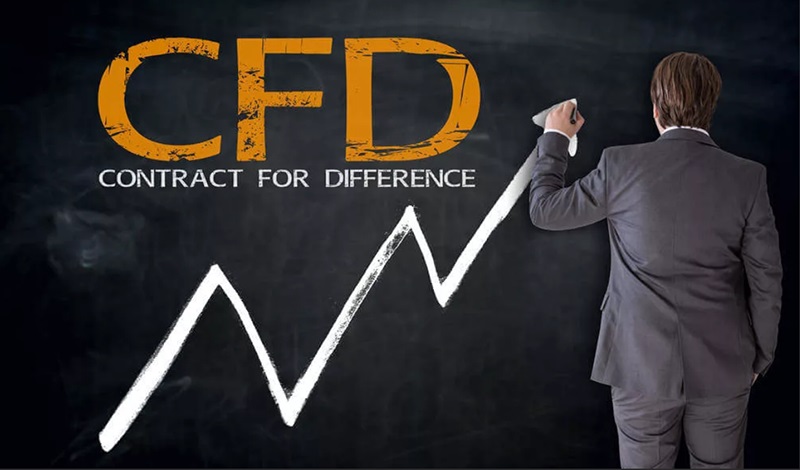
Recent years have witnessed a significant surge in the popularity of Contract for Difference (CFD) trading in South Africa. In light of this evolving market dynamic, Traders Union experts conducted a meticulous examination of the top CFD trading platforms catering to the South African market. Their insightful findings aim to assist novice and experienced traders in navigating through various platforms, each boasting unique offerings and services.
The experts considered numerous best CFD trading platforms in South Africa to ensure an unbiased assessment, eventually identifying a select few that demonstrated outstanding performance across all assessment criteria. A multifaceted approach, including comprehensive evaluations of regulatory compliance, asset variety, trading features, and overall user experience, underpinned the TU expert analysis.
The forthcoming sections present a detailed summary of their findings. Read and learn about the top platforms to trade CFDs in South Africa for novice and experienced traders.
Pioneering CFD Trading Platforms in South Africa
The Traders Union team, having scrutinized the market, has delineated several trading platforms. Learn about their features and tools.
RoboForex
Regulated by IFSC, RoboForex provides traders with an extensive array of 9 asset types for CFD trading, including Forex, stocks, indices, ETFs, commodities, metals, energies, and cryptocurrencies. With a low minimum deposit of $10, the platform offers multiple account types, catering to different trading styles and risk appetites. Their platform is easy to navigate, allowing traders to maximize their trading efficiency.
XM Group
XM Group stands out with its impressive regulatory portfolio, which includes ASIC and CySEC. They offer various CFDs on asset classes such as Forex, stocks, commodities, indices, and cryptocurrencies. Traders can enjoy competitive spreads, rapid execution of orders, and dedicated support for MT4 and MT5 trading platforms.
Tickmill MT4
Tickmill offers an assortment of CFDs, including Forex, stock indices, bonds, and commodities, on its MT4 platform. The platform, regulated by the FCA, CySEC, and FSA, requires a minimum deposit of $100. Key features include low spreads, high-speed order execution, and no requotes, contributing to a seamless trading experience.
IC Markets cTrader
IC Markets facilitates trading in Forex, indices, commodities, bonds, futures, and cryptocurrencies CFDs on its sophisticated cTrader platform. It boasts high-speed order execution, level II pricing, and detachable charts. Furthermore, it is regulated by ASIC, a globally recognized financial regulator.
Understanding CFDs
CFDs are complex financial instruments that enable traders to speculate on the price movements of various global financial markets. In CFD trading, traders do not directly own the underlying asset. Rather, they enter into a contract with the broker to exchange the difference in the price of an asset from the time the contract is opened to when it is closed. TU team discussed key steps in CFD trading:
- Checking the regulatory status of the platform.
- See the available markets.
- Verify the availability of direct share CFDs from the broker.
- Check the features and tools of the platform.
- Check commissions and fees, including spread and withdrawal costs.
- Confirm the minimum deposit amount.
- Learn about available software.
- Check the customer support service availability via email, phone or live chat.
- Sign up to start trading CFDs.
Evaluating the Legality of CFD Trading in South Africa
CFD trading is legal in South Africa and is regulated by various entities. The Financial Sector Conduct Authority (FSCA) is South Africa’s main financial regulator, ensuring fairness and integrity in the financial markets. The Australian Securities and Investments Commission (ASIC) and Cyprus Securities and Exchange Commission (CySEC) are well-recognized global regulators that oversee Forex and CFD brokers. The UK’s Financial Conduct Authority (FCA) and Germany’s Federal Financial Supervisory Authority (BaFin) are further assurances of regulatory oversight, providing robust investor protection.
Assessing Tax Implications for CFD Traders in South Africa
Traders engaging in CFD trading are subject to South African tax laws. Income from CFD trading falls under gross income as per the Income Tax Act and must be reported to the South African Revenue Service (SARS). Capital Gains Tax (CGT) also applies to the profits earned from CFD trading. Traders Unions’ experts explain that traders must consider these tax implications when calculating their potential returns.
Identifying Ideal CFD Platforms for Beginners in South Africa
For novice traders, platforms that offer copy trading or PAMM accounts present an excellent starting point. Some of these platforms include XM Group and RoboForex. These features allow beginners to learn from experienced traders, gaining insights into successful trading strategies.
Conclusion
For a more exhaustive understanding of the CFD trading landscape in South Africa, readers are advised to visit the TU website. This rich repository hosts a plethora of detailed reviews, guides, and invaluable resources to equip traders with the knowledge they need for successful trading.
Economy
Nigerian Exchange YtD Gain Crosses 60% After 2.33% Surge
By Dipo Olowookere
A 2.33 per cent surge recorded by the Nigerian Exchange (NGX) Limited on Monday pushed its year-to-date (YtD) gain to 60.97 per cent.
This means that the local stock market has gained over 60 per cent this year. This performance has been triggered by a strong appetite for domestic equities, especially from investors with hot money.
Yesterday, the All-Share Index (ASI) rose by 5,705.59 points to 250,481.42 points from 244,775.83 points, and the market capitalisation expanded by N3.160 trillion to N160.254 trillion from N157.094 trillion.
Business Post observed that all the key sectors of the bourse ended in green, with the banking index growing by 4.67 per cent. The industrial goods space increased by 4.32 per cent, the consumer goods counter improved by 0.74 per cent, the insurance sector advanced by 0.59 per cent, and the energy segment soared by 0.03 per cent.
Investor sentiment was bullish as Customs Street ended with 57 price gainers and 21 price losers, implying a positive market breadth index.
The quintet of Livestock Feeds, Integrated Energy Insurance, RT Briscoe, FTN Cocoa, and Union Homes REIT chalked up 10.00 per cent each to sell for N8.80, N2.86, N16.50, N9.13, and N77.00, respectively.
On the flip side, Prestige Assurance lost 10.00 per cent to quite at N1.44, University Press declined by 9.09 per cent to N4.00, Tantalizers slumped by 7.69 per cent to N4.20, NPF Microfinance Bank crashed by 6.25 per cent to N6.00, and Mutual Benefits went down by 5.72 per cent to N4.12.
During the session, market participants traded 1.5 billion equities worth N68.5 billion in 94,834 deals versus the 1.1 billion equities valued at N55.0 billion transacted in 69,996 deals last Friday, indicating a rise in the trading volume, value, and number of deals by 36.36 per cent, 24.55 per cent, and 35.49 per cent, respectively.
At the close of transactions, Veritas Kapital was the busiest stock with a turnover of 194.6 million units valued at N299.1 million. Access Holdings sold 172.1 million units for N4.2 billion, First Holdco exchanged 132.0 million units worth N9.8 billion, FCMB traded 123.9 million units valued at N1.4 billion, and Champion Breweries transacted 83.0 million units worth N1.3 billion.
Economy
Weak Investor Participation Shrinks NAFEM Inflows to $2.86bn in April
By Adedapo Adesanya
Total inflows into the Nigerian Autonomous Foreign Exchange Market (NAFEM) fell sharply in April 2026 as geopolitical tensions and weaker participation from both domestic and foreign investors impacted liquidity in the FX market.
Data from the FMDQ Securities Exchange showed that total foreign exchange inflows declined by 30.1 per cent month-on-month to $2.86 billion in April, down from $4.09 billion recorded in March.
The decline was driven by reduced inflows from the Central Bank of Nigeria (CBN), exporters, importers, foreign portfolio investors and non-bank corporates, reflecting growing investor caution amid rising tensions in the Middle East and uncertainty surrounding the US-Iran conflict.
Local inflows, which accounted for 42.8 per cent of total market inflows, dropped by 38.7 per cent to $1.22 billion from $2.00 billion in March.
The steepest decline came from the CBN, whose interventions in the market fell by 83 per cent month-on-month. Inflows from exporters and importers declined by 19.3 per cent, non-bank corporates by 18.2 per cent, while inflows from individuals fell by 33.3 per cent.
Foreign inflows, which contributed 57.2 per cent of the total, also weakened by 21.9 per cent to $1.63 billion compared to $2.09 billion in March.
A breakdown of the foreign component showed that foreign portfolio investment (FPI) inflows dropped by 17.8 per cent, foreign direct investment (FDI) plunged by 78.9 per cent, while inflows from other corporates declined by 54.6 per cent.
Despite the drop in inflows, the local currency posted a modest gain against the US Dollar during the week, appreciating by 1.2 per cent to close at N1,360/$1, supported largely by offshore investor inflows that helped offset domestic demand pressures.
However, the local currency ended the week slightly weaker at the official market, depreciating by 0.22 per cent to N,361.40 per Dollar while gaining 44 basis points at the parallel market to close at N1,363.15/$1.
In the forwards market, the Naira strengthened across all tenors, with the one-month contract appreciating by 1.2 per cent to N1,384.53 to the Dollar, the three-month contract by 1.2 per cent to N1,424.08/$1, the six-month contract by 1.3 per cent to N1,478.39/$1, and the one-year contract by 1.5 per cent to N1,586.56/$1.
Nigeria’s gross external reserves continued their downward trend, declining by $40 million to $48.33 billion as of May 7, 2026. This marked the eighth consecutive week of decline, attributed to sustained CBN interventions, debt service obligations, subdued oil receipts and foreign capital outflows.
Meanwhile, crude oil prices rose in the international market as renewed hostilities between the US and Iran in the Strait of Hormuz raised concerns over potential supply disruptions.
Brent Crude gained 1.2 per cent to $101.30 per barrel while the US West Texas Intermediate (WTI) rose 0.5 per cent to $95.28 per barrel.
Economy
Renaissance Targets 500,000bpd Crude Oil Output by 2030
By Adedapo Adesanya
Renaissance Africa Energy Company Limited has unveiled plans to increase crude oil production to 500,000 barrels per day by 2030, while simultaneously expanding healthcare investments across its host communities in Rivers State.
The company, which operates the NNPC/Renaissance/TotalEnergies/AENR Joint Venture, disclosed this during the launch of its four-day Vision First Plus healthcare outreach programme in B-Dere community, Gokana Local Government Area in Rivers State, where thousands of residents received free eye surgeries, cancer screening, dental care, and treatment for chronic ailments.
Vice President, Relations and Sustainable Development, Renaissance Africa Energy Company Limited, Mr Igo Weli, said the company’s growth strategy combines energy production with sustained investment in community wellbeing.
“Renaissance is helping Nigeria reclaim production momentum, boosting national crude output by over 200,000 barrels per day and delivering 1.9 billion cubic feet of gas daily to Bonny NLNG within our first year of operations,” Weli stated.
“Our ambition to reach 500,000 barrels per day by 2030 is anchored not just in volume but in value; value for the economy, value for people, and value for the planet.”
Last year, Renaissance acquired the joint venture onshore assets under Shell Petroleum Development Company (SPDC), making it Nigeria’s biggest upstream operator by asset portfolio and installed capacity.
Mr Weli, represented by the General Manager, Health Renaissance, Mr Akinwumi Fajola, noted that the healthcare outreach reflects Renaissance’s commitment to sustainable development in host communities, stressing that access to quality healthcare should not be treated as a privilege.
“At Renaissance, our purpose is clear; to stand with our communities, invest in people, and create opportunities for healthy and thriving lives,” he said.
“Vision First Plus reflects our belief that access to quality and affordable healthcare is not a privilege, but a shared responsibility.”
According to Mr Weli, the programme was designed to take healthcare directly to underserved communities rather than waiting for residents to visit hospitals and clinics.
“We have designed Health in Motion to take essential healthcare services beyond the walls of hospitals and clinics, delivering care directly to the communities where and when it is most needed,” he said.
The outreach includes eye surgeries, eye screening and consultation, distribution of reading glasses, dental services, mammography, cryotherapy for cancer screening, cardiovascular checks, laboratory services, treatment of chronic and minor ailments, deworming, and insecticide-treated mosquito nets.
Mr Weli disclosed that the company also trained community-based health volunteers known as “Vision Finders” to identify people suffering from visual impairments and connect them to treatment.
“This is not just a health intervention. It is an act of empowerment; investing in people, building local capacity, and ensuring that the work we started together does not end when we leave,” he added.
Representing the Chief Upstream Investment Officer of NNPC Upstream Investment Management Services (NUIMS), Mrs Nkechi Anaedobe, said the joint venture remained focused on improving living conditions in host communities.
“Even though we do exploration and production, it’s important for us as companies that we work on the sustainability path of our lives in the host community,” she said.
Mrs Anaedobe revealed that the programme is expected to exceed its initial target of 5,000 beneficiaries.
“We had over 5,000 as our target, and we’re on track to not only meet that but surpass it as well,” she added.
-
Feature/OPED6 years agoDavos was Different this year
-
Travel/Tourism10 years ago
Lagos Seals Western Lodge Hotel In Ikorodu
-
Showbiz3 years agoEstranged Lover Releases Videos of Empress Njamah Bathing
-
Banking8 years agoSort Codes of GTBank Branches in Nigeria
-
Economy3 years agoSubsidy Removal: CNG at N130 Per Litre Cheaper Than Petrol—IPMAN
-
Banking3 years agoSort Codes of UBA Branches in Nigeria
-
Banking3 years agoFirst Bank Announces Planned Downtime
-
Sports3 years agoHighest Paid Nigerian Footballer – How Much Do Nigerian Footballers Earn