Economy
Asian Stock Markets Crash Amidst Heavy Selling Pressure
By Investors Hub
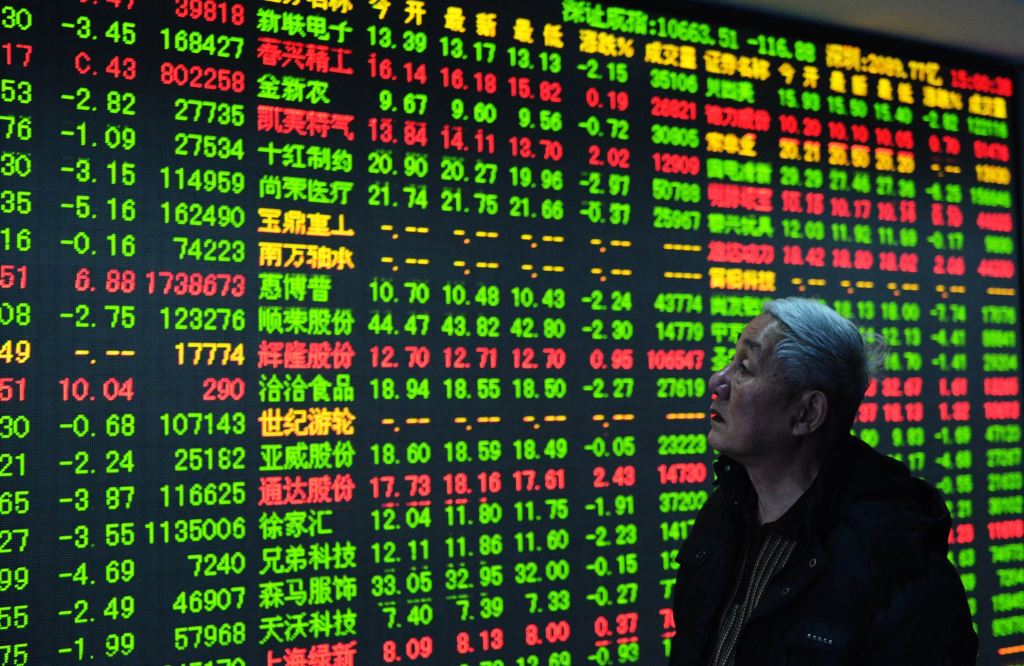
Asian stocks succumbed to heavy selling pressure on Friday after U.S. President Donald Trump escalated his trade war with China, saying that progress on a trade deal was moving too slowly.
Chinese shares fell as Trump’s fresh salvo in the yearlong trade spat extended tariffs to nearly all Chinese imports into the United States.
The benchmark Shanghai Composite Index tumbled 40.93 points or 1.4 percent to 2,867.84, while Hong Kong’s Hang Seng Index plummeted 647.12 points or 2.4 percent at 26,918.58. The Chinese yuan hit its lowest level since November 2018 before paring some losses.
Japanese shares hit a six-week low as U.S.-China trade tensions flared up once again, raising fresh concerns about the outlook for the global economy.
The Nikkei 225 Index ended down 453.83 points or 2.1 percent at 21,087.16 after falling as low as 20,960.09, its weakest level since June 18. The broader Topix ended 2.2 percent lower at 1,533.46 amid selling across the board.
Shares with exposure to China were among the worst hit. Komatsu, Fanuc and Hitachi Construction Machinery gave up 2-5 percent. Market heavyweight SoftBank declined 2.5 percent and Fast Retailing shed 0.9 percent.
Exporters Canon, Toyota Motor, Honda Motor, Sony and Panasonic lost 2-4 percent as the yen hit a more than one-month high against the dollar and multi-year peaks against antipodean currencies.
Apple supplier Sharp Corp. tumbled 13.7 percent after reporting a lower than expected quarterly operating profit, while Casio Computer jumped 8 percent on solid quarterly results.
On the data front, Bank of Japan policymakers discussed further easing as most members shared the view that it was appropriate to continue with the powerful monetary easing, the minutes of the monetary policy meeting held on June 19 and 20 showed.
“The key to overcoming deflation was for the Bank to maintain its stance of taking some kind of policy response if any changes emerged in the baseline scenario of the outlook for prices,” the minutes said.
Australian markets fell modestly as miners were rattled by a fresh threat from Trump to extend trade tariffs to nearly all Chinese imports. Gold mining companies surged on safe-haven buying, helping limit overall losses in the broader market.
The benchmark S&P/ASX 200 Index dropped 20.30 points or 0.3 percent to 6,768.60, while the broader All Ordinaries Index ended down 25.80 points or 0.4 percent at 6,846.10.
Rio Tinto tumbled 3.1 percent despite delivering a record dividend payout and announcing its highest margins in a decade. BHP lost 3.7 percent and Fortescue Metals Group slumped 6.1 percent amid heightened trade war fears.
Gold miners Evolution, Newcrest and Resolute Mining soared 7-11 percent. GrainCorp, Australia’s largest bulk grain handler, plunged 5.4 percent after the company warned that it was likely to post a loss this year.
Lender ANZ shed 0.8 percent and NAB eased half a percent. Oil Search, Origin Energy, Santos and Woodside Petroleum declined 2-3 percent after crude oil prices plunged almost 8 percent overnight. Dairy processor Bega Cheese gave up 4.3 percent after cutting its full-year earnings outlook.
In economic news, Australian retail sales advanced 0.4 percent month-on-month in June, following a 0.1 percent rise in May, a government report showed. This was the fastest growth since February and better than the expected increase of 0.3 percent.
Seoul stocks fell sharply as Japan’s cabinet approved a plan to remove South Korea from a list of countries that enjoy minimum export controls. The benchmark Kospi ended down 19.21 points or 1 percent at 1,998.13.
SK Telecom rallied 3.3 percent. The telecommunications operator said its sales jumped 6.8 percent year-on-year to 4.4 trillion won in the April-June period, led by solid growth from its media business
Economy
DMO Allots N929.3bn to Investors in July FGN Bond Sales
By Aduragbemi Omiyale
The Debt Management Office (DMO) on Monday allotted bonds worth N929.3 billion to investors from the N1.7 trillion bids it received from subscribers.
The exercise, which took place on Monday, July 20, 2026, was oversubscribed by market participants, reflecting the confidence investors have in the government’s ability to redeem the debt instrument on maturity.
On offer for sale for the July auction was N1.2 trillion worth of the FGN bonds, but the DMO allotted below this, despite receiving bids above the offer.
The papers were offered in 10-year, 15-year, and 20-year tenors, at N400 billion each.
For the decade-old note, investors staked N444.47 billion, but the debt office sold N245.73 billion at an 18.34 per cent coupon rate. For the one and a half-decade-old paper, bids valued at N518.00 billion were received by the DMO, with a non-competitive bid of N50.00 billion, with N302.13 billion allotted to investors at 18.40 per cent, and for the two-decade paper, the DMO got competitive bids of N665.19 billion and N381.46 billion was sold to bondholders at 18.35 per cent.
Economy
Nigeria’s External Reserves Hit $52.5bn, Cover Nine Months of Imports
By Adedapo Adesanya
The Governor of the Central Bank of Nigeria (CBN), Mr Yemi Cardoso, disclosed that Nigeria’s external reserves had risen to $52.5 billion, enough to finance about nine months of imports.
He disclosed this on Tuesday at the end of the 306th meeting of the Monetary Policy Committee (MPC) held in Abuja, where the Monetary Policy Committee (MPC) retained the benchmark interest rate at 26.50 per cent as well as the standing facilities corridor at +50/-450 basis points around the MPR.
Similarly, the Cash Reserve Requirement (CRR) was maintained at 45 per cent for Deposit Money Banks, 16 per cent for Merchant Banks, and 75 per cent for non-Treasury Single Account (TSA) public sector deposits.
Speaking on FX developments, the central banker said at the $52 billion level, the country’s external reserves were significantly above the internationally recommended threshold of three months of import cover.
On the Naira exchange rate, Mr Cardoso said the foreign exchange market had deepened and was now operating on a transparent willing-buyer, willing-seller basis.
He said the apex bank remained committed to maintaining a liquid and functional foreign exchange market, adding that daily market turnover sometimes exceeded $1 billion.
According to him, the long-term stability of the naira would depend on key economic fundamentals, including increased oil exports, foreign direct investment, and improved domestic productivity to reduce dependence on imports.
He also added that the MPC welcomed the federal government’s renewed commitment to stronger policy coordination, particularly collaboration between fiscal and monetary authorities, which he said had helped reduce the impact of the Middle East crisis on the Nigerian economy.
Mr Cardoso said members of the committee also commended efforts to improve crude oil production and urged relevant agencies to intensify reforms in other sectors, including solid minerals, to boost government revenue.
On the regulatory forbearance granted to banks during the COVID-19 period, he reiterated that this had been discontinued because it had served its purpose.
According to him, the policy had “outlived its time” and was no longer necessary in assessing the health of the banking sector.
“Forbearance, we felt, had outlived its time. Many of you will recall this is something that came as a result of COVID. And now we are in 2026; we did not see the reason why that should continue to form part of the analysis of the banking system,” he said.
Mr Cardoso explained that banks had begun recalibrating their portfolios following the end of the policy, leading to a temporary reduction in outstanding risk assets.
He, however, assured that the development was part of a transition towards a stronger and more sustainable credit environment.
“It reflects a transition to a more sustainable and better quality credit environment, which is what we all want. We don’t want unanticipated shocks that come in a boom-and-bust fashion,” he said.
Economy
FrieslandCampina Leads to NASD OTC Exchange to 1.17% Growth
By Adedapo Adesanya
The NASD Over-the-Counter (OTC) Securities Exchange extended its recent positive run by 1.17 per cent on Tuesday, July 21, triggered by appreciation seen in four bellwethers.
Leading the pack was FrieslandCampina Wamco Nigeria Plc, which added N12.00 to its value to close at N153.15 per share compared with the previous day’s N141.15 per share. NASD Plc appreciated by N1.90 to N36.00 per unit from N34.10 per unit, Food Concepts Plc improved by 23 Kobo to N2.48 per share from N2.25 per share, and Afriland Properties Plc grew by a marginal 1 Kobo to N15.01 per unit from N15.00 per unit.
As a result, the market capitalisation of the bourse increased by N30.40 billion to N2.637 trillion from Monday’s N2.606 trillion, and the NASD Security Index (NSI) gained 50.70 points to finish at 4,393.97 points, in contrast to the 4,343.27 points it ended a day earlier.
The unlisted securities exchange recorded a price loser yesterday, and it was Geo-Fluids Plc, which shed 1 Kobo to settle at N2.30 per share versus N2.31 per share.
During the trading day, the volume of securities traded by market participants on Tuesday dropped 99.4 per cent to 322,147 units from the previous day’s 52.6 million units, the value of securities dipped by 89.8 per cent to N19.4 million from the preceding session’s N191.2 million, and the number of deals contracted by 3.6 per cent to 27 deals from 28 deals.
Great Nigeria Insurance (GNI) Plc ended the day as the most traded stock by value on a year-to-date basis, with 3.4 billion units traded for N8.4 billion, followed by Infrastructure Credit Guarantee (Infracredit) Plc with 2.3 billion units transacted for N6.5 billion, and Central Securities Clearing System (CSCS) Plc with 75.4 million units exchanged for N5.3 billion.
GNI Plc also closed the day as the most traded stock by volume on a year-to-date basis, with 3.4 billion units worth N8.4 billion, followed by Infracredit Plc with 2.3 billion units valued at N6.5 billion, and Resourcery Plc with 1.1 billion units sold for N415.7 million.