

Economy
CBN May Change Monetary Policy Stance—FSDH

By Dipo Olowookere
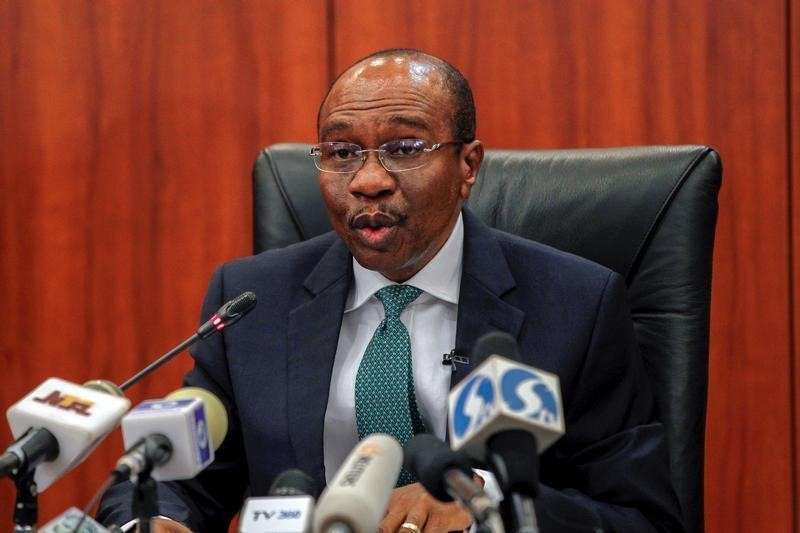
According to FSDH Research, the Central Bank of Nigeria (CBN) may soon change its monetary policy stance if it follows the opinion of the International Monetary Fund (IMF).
The IMF, in its World Economic Outlook (WEO) October 2017 edition, noted that it expects the inflation rate in Nigeria in 2017 and 2018 to remain elevated at double-digit levels. This is based on its assumption of the persistent effects of past inflationary shocks coming from sharp currency depreciations (including the parallel market exchange rate), higher electricity and fuel prices, and an accommodative monetary policy going forward.
The Fund expects an average inflation rate of 16.3% in 2017 and 14.8% in 2018. At the moment, the CBN adopts a restrictive monetary policy in order to curb the high inflation rate and maintain stability in the foreign exchange market.
The inflation rate in Nigeria declined for seven consecutive months to stand at 16.01% in August 2017.
FSDH Research forecasts that it will drop marginally to 15.96% in September 2017.
The IMF projects a growth in Gross Domestic Product (GDP) of 0.8% and 1.9% in Nigeria in 2017 and 2018 respectively. The growth is based on improved oil production and a strengthened agricultural sector.
The IMF expects an average Real GDP growth of 1.6% between 2017 and 2021 while it expects an average population growth of 2.75% between the periods. The GDP growth will not be sufficient to improve the wellbeing of the populace.
According to the IMF, the medium term risks to growth in Nigeria include concerns about policy implementation, market segmentation in the foreign exchange (FX) market and banking system fragilities.
The Fund also predicts a 42% increase in public debt from N18.06trn in 2016 to N25.59trn in 2017 and a further increase to N54.96trn in 2021.
The faster growth in public debt than the growth in GDP (at current prices) will result in a consistent increase in the public debt-to-GDP ratio between 2017 and 2021.
According to the IMF, the public debt-to-GDP ratio will increase to 25% in 2021 from 18% in 2016.
FSDH Research, in its Weekly Insights, said although this is below the target of 40% the Federal Government of Nigeria (FGN) sets for Nigeria, the burden of the interest payments on the loan may retard Nigeria’s growth potential except there are concentrated efforts to grow revenue.
On the global scene, the global upswing in economic activities that started in the second half of 2016 continues to strengthen. The IMF forecasts global economic growth of 3.6% in 2017 and 3.7% in 2018.
Notable increases in investments, trade and industrial production, as well as strengthening business and consumers’ confidence should support the global growth. The IMF identified the medium term risks to global growth to include a more rapid and sizeable tightening of global financial conditions; financial turmoil in emerging market economies; and geopolitical tensions.
The IMF expects oil prices (a simple average of prices of UK Brent, Dubai Fateh, and West Texas Intermediate crude oil) to average US$50.3 per barrel in 2017, an increase from the US$43 per barrel in 2016. The expected increases in global activity and higher oil prices will have a positive effect on the Nigerian economy going forward.
Although FSDH Research believes the IMF growth forecast for the Nigerian economy is conservative, the FGN must intensify efforts to implement policies that will stimulate investments in the Nigerian economy. This is necessary to accelerate inclusive growth.
Friendly policies in agro-allied industries, agriculture, telecommunications, power, solid minerals, real estate and manufacturing are important to jumpstart the economy.












By Dipo Olowookere
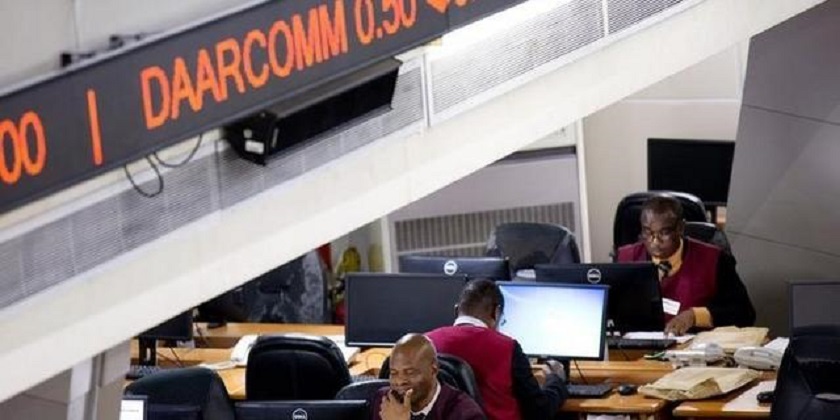
The local stock market firmed up by 1.13 per cent on Friday as appetite for Nigerian stocks remained strong.
Investors reacted well to the 2026 budget presentation of President Bola Tinubu to the National Assembly yesterday, especially because of the more realistic crude oil benchmark of $64 per barrel compared with the ambitious $75 per barrel for 2025. This year, prices have been between $60 and $65 per barrel.
Business Post observed profit-taking in the commodity and energy sectors as they respectively shed 0.14 per cent and 0.03 per cent.
But, bargain-hunting in the others sustained the positive run, with the consumer goods index up by 3.82 per cent.
Further, the industrial goods space appreciated by 1.46 per cent, the banking counter improved by 0.08 per cent, and the insurance industry gained 0.04 per cent.
As a result, the All-Share Index (ASI) increased by 1,694.33 points to 152,057.38 points from 150,363.05 points and the market capitalisation chalked up N1.080 trillion to finish at N96.937 trillion compared with Thursday’s closing value of N95.857 trillion.
A total of 34 shares ended on the advancers’ chart, while 24 were on the laggards’ log, representing a positive market breadth index and bullish investor sentiment.
Austin Laz gained 10.00 per cent to close at N2.42, Union Dicon also jumped 10.00 per cent to N6.60, Tantalizers increased by 9.80 per cent to N2.69, Aluminium Extrusion improved by 9.78 per cent to N12.35, and Champion Breweries grew by 9.71 per cent to N16.95.
Conversely, Sovereign Trust Insurance dipped by 7.42 per cent to N3.87, Royal Exchange lost 6.84 per cent to trade at N1.77, Omatek slipped by 6.84 per cent to N1.09, Eunisell depreciated by 5.88 per cent to N80.00, and Eterna dropped 5.63 per cent to close at N28.50.
Yesterday, traders transacted 1.5 billion units worth N21.8 billion in 25,667 deals compared with the 839.8 million units sold for N32.8 billion in 23,211 deals in the preceding session, showing a surge in the trading volume by 76.61 per cent, an uptick in the number of deals by 10.58 per cent, and a shrink in the trading value by 33.54 per cent.


By Adedapo Adesanya
Three stocks stretched the bearish run of the NASD Over-the-Counter (OTC) Securities Exchange by 1.21 per cent on Friday, December 19, with the market capitalisation giving up N26.01 billion to close at N2.121 billion compared with the N2.147 trillion it ended a day earlier, and the NASD Unlisted Security Index (NSI) dropping 43.47 points to 3,546.41 points from 3,589.88 points.
The trio of FrieslandCampina Wamco Nigeria Plc, Central Securities Clearing System (CSCS) Plc, and NASD Plc overpowered the gains printed by four other securities.
FrieslandCampina Wamco Nigeria Plc lost N6.00 to sell at N54.00 per unit versus N60.00 per unit, NASD Plc shrank by N3.50 to N58.50 per share from N55.00 per share, and CSCS Plc depleted by N2.91 to N33.87 per unit from N36.78 per unit.
On the flip side, Air Liquide Plc gained N1.01 to close at N13.00 per share versus N11.99 per share, Golden Capital Plc appreciated by 70 Kobo to N7.68 per unit from N6.98 per unit, Geo-Fluids Plc added 39 Kobo to sell at N5.50 per share versus N5.11 per share, and IPWA Plc rose by 8 Kobo to 85 Kobo per unit from 77 Kobo per unit.
During the trading day, market participants traded 1.9 million securities versus the previous day’s 30.5 million securities showing a decline of 49.3 per cent. The value of trades went down by 64.3 per cent to N80.3 million from N225.1 million, but the number of deals jumped by 32.1 per cent to 37 deals from 28 deals.
Infrastructure Credit Guarantee Company (InfraCredit) Plc finished the session as the most active stock by value on a year-to-date basis with 5.8 billion units valued at N16.4 billion, followed by Okitipupa Plc with 178.9 million units transacted for N9.5 billion, and MRS Oil Plc with 36.1 million units traded for N4.9 billion.
The most active stock by volume on a year-to-date basis was still InfraCredit Plc with 5.8 billion units worth N16.4 billion, trailed by Industrial and General Insurance (IGI) Plc with 1.2 billion units sold for N420.7 million, and Impresit Bakolori Plc with 536.9 million units traded for N524.9 million.
By Adedapo Adesanya
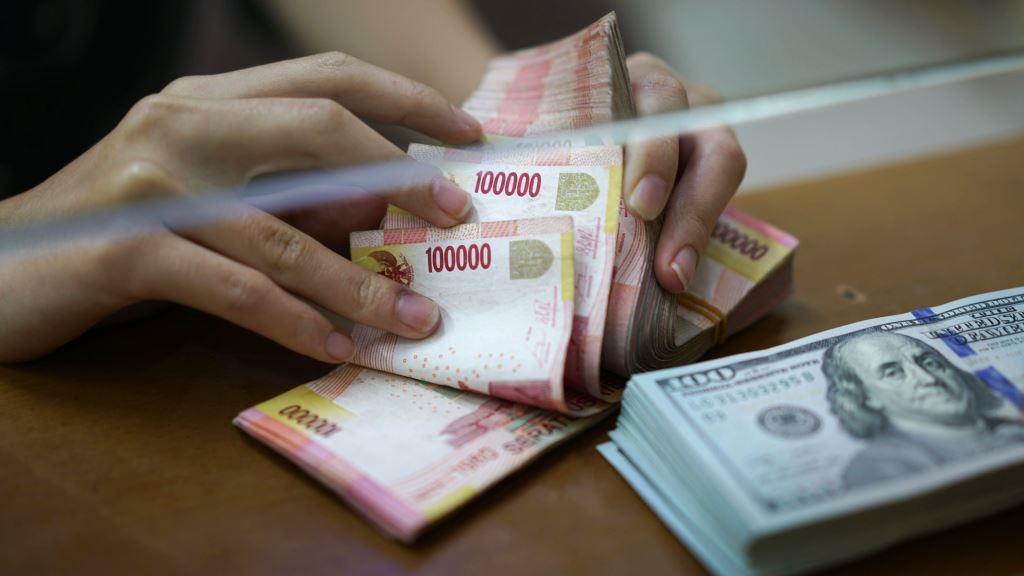
It was not a good day for the Nigerian Naira at the two major foreign exchange (FX) market on Friday as it suffered a heavy loss against the United States Dollar at the close of transactions.
In the black market segment, the Naira weakened against its American counterpart yesterday by N10 to quote at N1,485/$1, in contrast to the N1,475/$1 it was traded a day earlier, and at the GTBank forex counter, it depreciated by N2 to settle at N1,467/$1 versus Thursday’s closing price of N1,465/$1.
In the Nigerian Autonomous Foreign Exchange Market (NAFEX) window, which is also the official market, the nation’s legal tender crashed against the greenback by N6.65 or 0.46 per cent to close at N1,464.49/$1 compared with the preceding session’s rate of N1,457.84/$1.
In the same vein, the local currency tumbled against the Euro in the spot market by N2.25 to sell for N1,714.63/€1 compared with the previous day’s N1,712.38/€1, but appreciated against the Pound Sterling by 73 Kobo to finish at N1,957.30/£1 compared with the N1,958.03/£1 it was traded in the preceding session.
The market continues to face seasonal pressure even as the Central Bank of Nigeria (CBN) is still conducting FX intervention sales, which have significantly reduced but not remove pressure from the Naira. Also, there seems to be reduced supply from exporters, foreign portfolio investors and non-bank corporate inflows.
President Bola Tinubu on Friday presented the government’s N58.47 trillion budget plan aimed at consolidating economic reforms and boosting growth.
The budget is based on a projected crude oil price of $64.85 a barrel and includes a target oil output of 1.84 million barrels a day. It also projects an exchange rate of N1,400 to the Dollar.
President Tinubu said inflation had plunged to an annual rate of 14.45 per cent in November from 24.23 per cent in March, while foreign reserves had surged to a seven-year high of $47 billion.
Meanwhile, the cryptocurrency market was dominated by the bulls but it continues to face increased pressure after million in liquidations in previous session over accelerating declines, with Dogecoin (DOGE) recovering 4.2 per cent to trade at $0.1309.
Further, Ripple (XRP) appreciated by 3.9 per cent to $1.90, Cardano (ADA) rose by 3.5 per cent to $0.3728, Solana (SOL) jumped by 3.4 per cent to $126.23, Ethereum (ETH) climbed by 2.9 per cent to $2,982.42, Binance Coin (BNB) gained 2.0 per cent to sell for $853.06, Bitcoin (BTC) improved by 1.7 per cent to $88,281.21, and Litecoin (LTC) soared by 1.2 per cent to $76.50, while the US Dollar Tether (USDT) and the US Dollar Coin (USDC) traded flat at $1.00 each.









-
 Feature/OPED6 years ago
Davos was Different this year
-
Travel/Tourism9 years ago
Lagos Seals Western Lodge Hotel In Ikorodu
-

 Showbiz3 years ago
Estranged Lover Releases Videos of Empress Njamah Bathing
-
 Banking7 years ago
Sort Codes of GTBank Branches in Nigeria
-

 Economy3 years ago
Subsidy Removal: CNG at N130 Per Litre Cheaper Than Petrol—IPMAN
-

 Banking3 years ago
First Bank Announces Planned Downtime
-

 Banking3 years ago
Sort Codes of UBA Branches in Nigeria
-

 Sports3 years ago
Highest Paid Nigerian Footballer – How Much Do Nigerian Footballers Earn