Economy
CBN Rate Hike Will Disrupt Economic Growth, Investment—CPPE
By Aduragbemi Omiyale
The hike in the Monetary Policy Rate (MPR) by 4.00 per cent by the Central Bank of Nigeria (CBN) on Tuesday will not bring down inflation as believed, the Centre for the Promotion of Private Enterprise (CPPE) has declared.
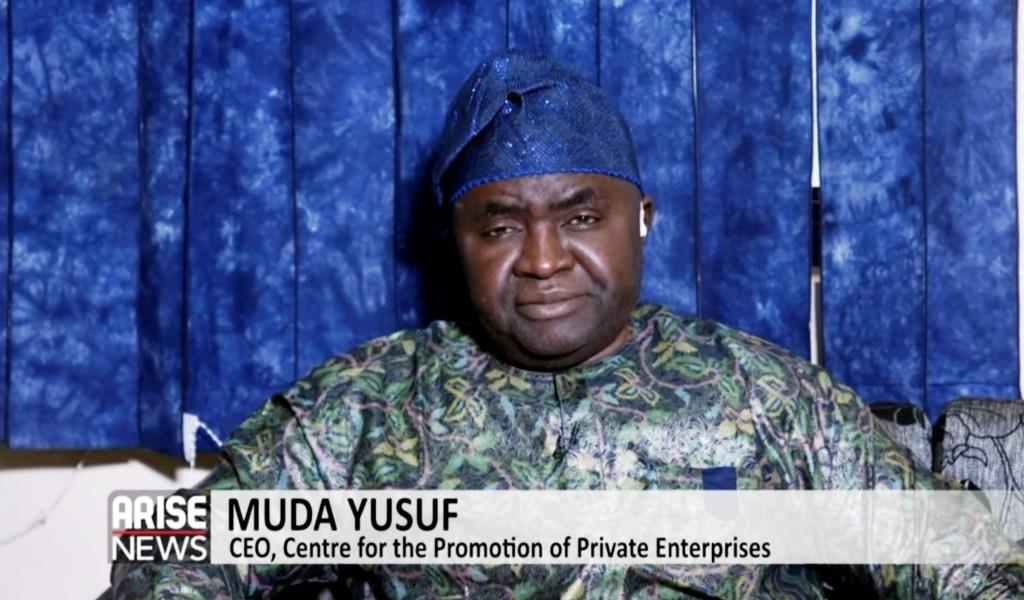
The chief executive of the organisation, Mr Muda Yusuf, said this is so because the Monetary Policy Committee (MPC) of the apex bank failed to take into consideration the country’s peculiarities before deciding to jerk the benchmark interest rate to 22.75 per cent from 18.75 per cent.
The CBN, through its governor, Mr Yemi Cardoso, while briefing journalists yesterday in Abuja, explained that it decided to further tighten its monetary policy to rein in inflation, which rose by 29.90 per cent last month, according to the National Bureau of Statistics (NBS).
The central bank, at the end of its two-day MPC meeting on Tuesday, also pushed the Cash Reserve Ratio (CRR) higher to 45.0 per cent from 32.5 per cent to soak excess liquidity from its intervention funds, loans to the federal government through ways and means, and others.
Reacting to this, Mr Yusuf said while it is true that central banks globally always tighten monetary policies to tame inflation, the situation in Nigeria was purely caused by a shortfall in the supply of food to the market due to insecurity in the northern part of the country, where most of the items come from.
He submitted that drying up funds would hurt the economy as banks would not be able to perform their statutory function of lending to the real sector of the economy.
“The increase of Monetary Policy Rate(MPR) from 18.75 per cent to 22.5 per cent; and Cash Reserve Ratio (CRR) from 32.5 per cent to 45 per cent pose a major risk to the financial intermediation role of banks in the Nigerian economy.
“The increase would constrain the capacity of banks to support economic growth and investment, especially in the real sector of the economy because the increases are quite significant.
“Although the decision was consistent with the typical policy response of the Central Banks globally, it failed to reckon with domestic peculiarities.
“The key drivers of Nigeria inflation are largely supply-side variables, and the CBN ways and means financing.
“Over the last two years, there had been persistent monetary policy tightening, yet there has not been any significant impact on the inflationary pressures. If anything, the general price level had been continuously on the increase,” he stated.
The economic analyst noted “the credit situation in the economy is already very tight, with lending rates ranging between 25 per cent and 30 per cent. The Nigerian banks are yet to live up to their financial intermediation role because of these constraining factors.”
Economy
Oando Reports Windfall as Buyers Shift from Middle East Oil
By Adedapo Adesanya
Nigerian energy giant, Oando Plc, says it is reporting rising revenues as global crude buyers increasingly turn away from the volatile Middle East in search of safer supply sources.
According to the chief executive of Oando, Mr Wale Tinubu, the crisis around the Strait of Hormuz has damaged the Gulf region’s long-standing reputation as the world’s safest and most reliable oil-producing hub, leading to demand elsewhere.
Speaking in a recent interview on the sidelines of the Africa CEO Forum in Kigali, Rwanda, Mr Tinubu disclosed that Oando is already benefiting financially from the geopolitical tensions.
“We are certainly getting a windfall increase in our revenues,” Mr Tinubu said.
According to him, mounting security concerns around the Strait of Hormuz have forced buyers to reconsider their dependence on Middle Eastern crude. The waterway accounts for around 20 per cent of global crude and liquified natural gas (LNG) flows, mostly to Asian markets.
“The Middle Eastern premium you got from being a stable environment to produce hydrocarbons has been shattered,” he added.
The conflict is rapidly reshaping global energy trade flows, with African producers, particularly Nigeria, emerging as alternative suppliers at a time of heightened uncertainty in the Gulf.
Indonesia recently took in some Nigeria crude to cushion against the impact that disruptions are having on fuel supplies.
Mr Tinubu said Oando is rolling out a seven-well drilling campaign aiming to add 10,000 barrels per day by the end of the year.
Oando is also looking to raise up to $750 million to execute a 100-well onshore drilling campaign, aiming to triple its oil and gas output from 32,000 barrels of oil equivalent per day to nearly 100,000 barrels of oil equivalent per day.
According to Mr Tinubu, global supply shocks have created highly favourable conditions for securing financing and expanding operations to meet supply gaps.
Economy
Otedola Plans $100m Stake in Dangote Refinery Private Placement
By Adedapo Adesanya
Nigerian billionaire investor, Mr Femi Otedola, has announced plans to invest $100 million in the Dangote Refinery, which plans to list later this year.
Mr Otedola disclosed this on Wednesday after leading a delegation of top executives from First HoldCo on a visit to the Dangote refinery.
“On a personal note, I’ve appealed to him (Aliko Dangote). I’ve been here with him 25 times, so my compensation is he’s going to allocate to me shares worth $100 million in the private placement,” the billionaire said.
Mr Otedola had previously denied that he had any stake or funded the construction of a 650,000 barrels per day facility.
The announcement marks his next big move after increasing his stake in First Holdco as well as buying a $10 million property in London.
Mr Dangote last year said the refinery could sell up to 10 per cent stake in the listing, which is valued at about $5 billion. It is aiming for a valuation of up to $50 billion for Dangote refinery.
The billionaire is planning to make the IPO a cross-border listing to enable the refinery to draw investments from domestic and international investors.
Mr Dangote, this week, said the IPO is designed to democratise wealth creation and give Africans direct access to participate in the continent’s industrial transformation.
On his part, Mr Dangote, president of the Dangote Group, says the company is targeting a private placement of about $2 billion for the refinery.
While the actual date for the IPO is yet to be announced, Mr Otedola’s early investment indicates value and could spur other high-net-worth individuals to show interest.
Mr Otedola, an ally of Mr Dangote, led top executives of First HoldCo on a tour of the refinery and the fertiliser plants in the Lekki free trade zone area.
The team also visited key project sites such as the jetty, a facility built by Dangote industries to receive large vessels.
Economy
11 Plc, CSCS Drive NASD Market Higher by 0.32%
By Adedapo Adesanya
The NASD Over-the-Counter (OTC) Securities Exchange further chalked up 0.32 per cent on Wednesday, May 20, spurred by price appreciation in 11 Plc, and Central Securities and Clearing System (CSCS) Plc.
11 Plc, which used to be known as Mobil, added N22.11 to sell at N243.21 per unit compared with the previous day’s N221.10 per unit, and CSCS Plc gained N1.19 to trade at N71.81 per share versus Tuesday’s N70.62 per share.
The growth posted by the duo raised the market capitalisation by N8.04 billion to N2.495 trillion from N2.487 trillion, and lifted the NASD Unlisted Security Index (NSI) by 13.44 points to 4,171.19 points from 4,157.75 points.
Yesterday, there were two price losers, led by Nipco Plc, which shed N22.60 to close at N287.00 per unit compared with the preceding day’s N309.60 per unit, and FrieslandCampina Wamco, which lost 84 Kobo to sell for N150.95 per share, in contrast to the N151.79 per share it was traded a day earlier.
The volume of trades recorded at midweek dipped by 99.9 per cent to 2.3 million units from 1.9 billion units, the value of transactions fell by 93.7 per cent to N334.2 million from the preceding session’s N5.3 billion, and the number of deals went down by 43.3 per cent to 34 deals from 60 deals.
Great Nigeria Insurance (GNI) Plc remained the most active stock by value on a year-to-date basis, with 3.4 billion units worth N8.4 billion, trailed by Infrastructure Credit Guarantee (Infracredit) Plc with 2.3 billion sold for N6.5 billion, and CSCS Plc with 60.9 million units exchanged for N4.1 billion.
GNI Plc also closed the session as the most traded stock by volume on a year-to-date basis, with 3.4 billion units worth N8.4 billion, followed by Infracredit Plc with 2.3 billion units valued at N6.5 billion, and Resourcery Plc with 1.1 billion units traded for N415.7 million.
-
Feature/OPED6 years agoDavos was Different this year
-
Travel/Tourism10 years ago
Lagos Seals Western Lodge Hotel In Ikorodu
-
Showbiz3 years agoEstranged Lover Releases Videos of Empress Njamah Bathing
-
Banking8 years agoSort Codes of GTBank Branches in Nigeria
-
Economy3 years agoSubsidy Removal: CNG at N130 Per Litre Cheaper Than Petrol—IPMAN
-
Banking3 years agoSort Codes of UBA Branches in Nigeria
-
Banking3 years agoFirst Bank Announces Planned Downtime
-
Sports3 years agoHighest Paid Nigerian Footballer – How Much Do Nigerian Footballers Earn