Economy
Chevron, NNPC Seal $1.7b Deal to Boost Oil, Gas Output
By Dipo Olowookere
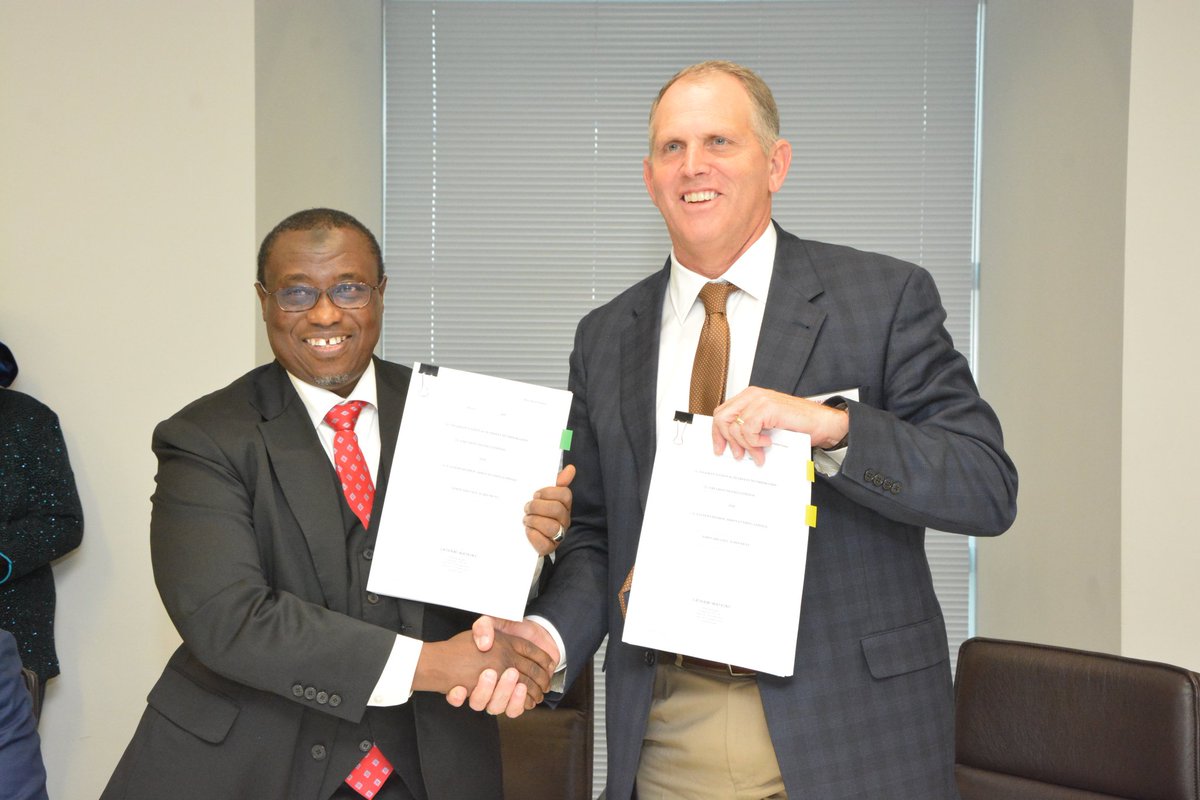
A deal worth $1.7 billion that would increase crude oil production in the country by about 39,000 barrels per day has been completed by Chevron Nigeria Limited (CNL) and Nigerian National Petroleum Corporation (NNPC).
It was gathered that the agreement, which is also expected to achieve an incremental peak production of about 283mmscfd of gas, was signed in London at the weekend.
It is the second and final phase of an Alternative Financing Agreement between both parties.
Group Managing Director of the NNPC, Mr Maikanti Baru, who signed on behalf of his corporation, said the increment to be achieved by the agreement would spread “over the remaining life of the asset (until 2045).”
According to him, the project, which is about 92 percent completed, will cost about $1.7 billion, with $780 million expected to be funded by third-party, while it will produce natural gas liquids and condensate extracted from the Sonam and Okan fields located in OML 90 and 91 in the Niger Delta.
Mr Baru described the deal as a step in the right direction which would grow the nation’s daily production and support the Federal Government’s strategic domestic gas-to-power aspirations, while aligning with NNPC’s 12 Business Focus Areas (BUFAs).
He said the project would also include the completion of the Sonam non-associated gas (NAG) well platform and Sonam living quarters platform; drilling of seven wells in the Sonam field and the Okan 30E NAG well; as well as the completion of the 20“ x 32Km Sonam pipeline and Okan pig receiver platform and development of the associated facilities.
“As we speak now, the facilities are 100 percent completed while wells are 40 percent executed,” Mr Baru stated.
In carrying out the project, the NNPC/CNL JV adopted a 2-staged financing approach. While Stage 1 which provided $400 million sourced from Nigerian Commercial Banks (NCBs) achieved financial close on 1st August 2017, Stage 2, (signed today), is set to provide $380mn from International Commercial Banks (ICBs).
Out of the $780 million total financing for both stages, Chevron’s Co-lending totals $312 million while NNPC’s portion of the total facility stands at is $468 million.
Speaking further on the Alternative Financing approach, Mr Baru explained that it was aimed at plugging NNPC’s shortfall in funding JV cash call obligations including settlement of pre-2016 cash call arrears.
It will also enable full funding of NNPC’s JV obligations to restore investors’ confidence and stimulate further Foreign Direct Investments (FDIs) as we are beginning to witness, he noted.
Earlier in his remarks, the Managing Director of CNL, Mr Jeff Ewing said his company supported the Federal Government’s aspirations to sustain oil and gas production.
“We know the important role gas supply to the domestic market plays in growing power generation. We also understand government’s need to seek alternative sources to fund profitable and bankable JV Projects,” Mr Ewing added.
He commended Mr Baru and other partners for backing the third party financing arrangement, which he said, would lessen cash call burden on the federation account.
He expressed Chevron’s commitment to execute the programme safely, timely and deliver its expected values for all stakeholders.
It would be recalled that in August this year, two sets of alternative financing agreements on JV projects were executed between the NNPC/CNL JV (project Falcon) and the NNPC/SPDC JV (Project Santolina).
Both are aimed at boosting reserves and production in line with parts of the federal government’s aspirations for the oil and gas industry.
Economy
e-Invoicing: NRS Begins Compliance Monitoring for Large Taxpayers
By Modupe Gbadeyanka
The Nigeria Revenue Service (NRS) has announced the commencement of compliance monitoring activities for large taxpayers under the National e-Invoicing and Electronic Fiscal System (EFS) regime.
A statement issued on Monday and signed by the agency’s chairman, Mr Zacch Adedeji, advised corporate organisations that have yet to adopt this system to do so on or before July 31, 2026.
Recall that on February 17, 2026, NRS issued an implementation timeline for the mandatory adoption of the EFS, also known as the Merchant Buyer Solution (MBS), by large taxpayers.
They were asked to complete the process of onboarding, integration, testing, and commence invoice transmission to the NRS e-invoicing platform in accordance with the prescribed implementation framework.
The compliances include the completion of onboarding on the NRS MBS; the successful integration of taxpayer systems through approved Access Point Providers (APPs) and/or Systems Integrators (SIS); the completion of all required validation and testing activities; the active transmission of invoices to the NRS e-invoicing platform in line with approved standards and guidelines; and the receipt of only compliant e-invoices with a valid Invoice Reference Number (IRN) from suppliers.
Ahead of the deadline, the NRS has commenced compliance monitoring activities to assess the level of adherence to the e-invoicing mandate across the large taxpayer segment.
Those that have not completed the process have been asked to conclude all outstanding onboarding and integration activities and commence invoice transmission before the compliance deadline.
The organisation warned that failure to comply would trigger regulatory and enforcement actions in accordance with the provisions of the relevant tax laws and regulations.
Economy
Operational Challenges Shrink Transcorp Power H1 2026 Earnings, Profit
By Aduragbemi Omiyale
Transcorp Power Plc suffered declines in its revenue and profit in the first half of this year; details of the company’s financial statements for the period ended June 30, 2026, have revealed.
The losses were attributed to recurring transmission line vandalism, which materially constrained the organisation’s ability to evacuate available generation capacity.
Business Post reports that earnings contracted in the first six months of this year to N181.97 billion from the N205.81 billion recorded in the same period of last year, while profit before tax moderated to N54.99 billion from N58.73 billion.
However, on a year-to-date basis, total assets went up to N619.02 billion from N563.48 billion in December 2025, as shareholders’ funds grew to N189.34 billion from N183.40 billion in FY 2025, while retained earnings soared to N140.90 billion from N123.41 billion in FY 2025.
It was observed that the increase in receivables and borrowings largely drove the expansion in the balance sheet during the period.
Also, the firm’s gross margin expanded to 38.4 per cent from 34.7 per cent in H1 2025, operating margin increased to 30.6 per cent from 28.5 per cent, and PBT margin rose to 30.2 per cent from 28.5 per cent, reflecting cost optimisation efforts and disciplined financial management, positioning the company to continue delivering sustainable value for shareholders.
“Our H1 2026 performance is a reflection of the resilience of our business operations despite significant sector-wide existential challenges.
“Regrettably, recurring transmission line vandalisation materially constrained our ability to evacuate available generation capacity.
“Nonetheless, we continued to deliver strong profitability, maintain operational efficiency, and strengthen our balance sheet,” the chief executive of Transcorp Power, Mr Peter Ikenga, stated.
“We remain committed to working with relevant stakeholders to put an end to transmission line vandalisation and to further improving operational performance, power generation supply reliability, and creating sustainable value for our shareholders. We remain highly confident that we will recover lost ground in H1 2026 and finish FY 2026 stronger than FY 2025,” he added.
Economy
Market Participants Transact 2.819 billion Stocks Worth N182.5bn in Five Days
By Dipo Olowookere
A total of 2.819 billion stocks worth N182.499 billion exchanged hands in 226,729 deals on the floor of the Nigerian Exchange (NGX) Limited last week, in contrast to the 3.648 billion stocks valued at N220.568 billion transacted in 251,861 deals a week earlier.
From this, financial shares accounted for 2.006 billion units sold for N99.697 billion in 96,171 deals, contributing 71.17 per cent and 54.63 per cent to the total trading volume and value, respectively.
Consumer goods equities traded 178.863 million units worth N7.872 billion in 26,637 deals, and energy stocks recorded a turnover of 151.237 million units valued at N38.309 billion in 16,879 deals.
First Holdco, FCMB, and Access Holdings accounted for 939.402 million units worth N57.673 billion in 19,051 deals, contributing 33.33 per cent and 31.60 per cent to the total trading volume and value, respectively.
Business Post reports that the performance indicators were mixed in the five-day trading week, as the All-Share Index (ASI) depreciated by 0.14 per cent to 243,462.13 points, while the market capitalisation appreciated by 0.39 per cent to N157.057 trillion.
All other indices finished higher except the main board, consumer goods, energy, Lotus II, industrial goods, growth, and sovereign bond indices, which fell by 1.54 per cent, 0.15 per cent, 0.11 per cent, 0.40 per cent, 6.26 per cent, 0.09 per cent, and 0.33 per cent, respectively, while the commodity index closed flat.
Forty-four shares gained weight in the week versus 60 shares of the preceding week, 35 equities depreciated versus 28 equities in the previous week, and 67 stocks closed flat versus 58 stocks of the earlier week.
The best-performing stock was First Holdco, which gained 38.66 per cent to trade at N95.95. Thomas Wyatt expanded by 27.16 per cent to N3.09, Fidelity Bank grew by 15.00 per cent to N21.85, Learn Africa grew by 14.44 per cent to N10.30, and UBA chalked up 10.98 per cent to close at N45.50.
The worst-performing stock was BUA Cement after giving up 18.99 per cent to quote at N275.60, Red Star Express shed 18.53 per cent to end at N20.00, International Energy Insurance declined by 15.27 per cent to N4.66, C&I Leasing dropped 13.28 per cent to N5.55, and PZ Cussons crashed by 10.06 per cent to N80.95.