Economy
Conoil Ships First Cargo of Obodo Crude from Nigeria to Germany
By Adedapo Adesanya
The Nigerian Upstream Petroleum Regulatory Commission (NUPRC) says the first cargo of the new Obodo crude blend has been shipped.
Business Post gathered that the first cargo could be headed for the North Sea port of Wilhelmshaven, Germany.
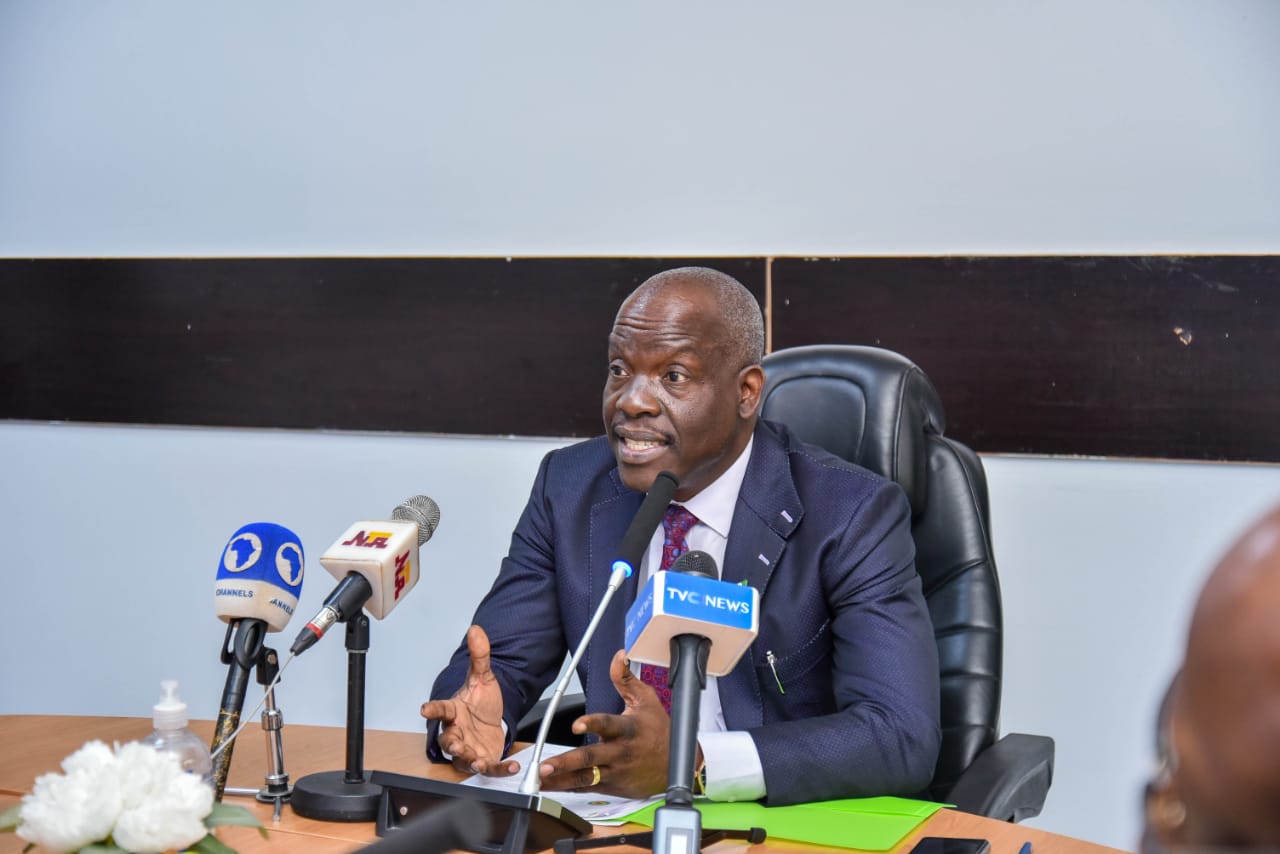
In a statement by the chief executive of NUPRC, Mr Gbenga Komolafe, Conoil Producing Limited was congratulated on the successful shipment of the first cargo of the Obodo crude blend.
Mr Komolafe said this development marks a significant milestone for Nigeria’s upstream sector, demonstrating the growing capacity of indigenous operators to contribute meaningfully to national crude oil production and exports.
“The introduction of the Obodo crude blend further diversifies Nigeria’s export portfolio and aligns with the commission’s strategic objectives to enhance production output, maximise hydrocarbon resources, and attract investment through operational efficiency and innovation,” he said.
Mr Komolafe maintained that this achievement by Conoil, under the production sharing contract framework with the Nigerian National Petroleum Company Limited, also reflects the positive outcomes of collaborative regulatory support, enabling indigenous players to thrive.
“As the regulator of Nigeria’s upstream petroleum industry, the NUPRC remains committed to providing a transparent, predictable, and investment-friendly environment that encourages the development of new crude streams and ensures optimal value for the Nigerian people.
“We look forward to more milestones of this nature that advance national energy security and economic resilience,” he said.
According to tracking data from Kpler, the Suezmax Atlanta Spirit loaded on April 25 from the floating production, storage and offloading vessel Tamara Tokoni.
Obodo has a gravity of 27.65°API and a very low sulphur content of 0.05pc, according to Argus.
Obodo joins the list of crude grades launched by Nigeria in the last year.
The Nigerian National Petroleum Company (NNPC) restarted production of similar-quality Utapate in 2024 and launched Nembe a year earlier.
Obodo could find favour with European refineries, as Nigerian medium sweet grades — including Forcados, Escravos and Bonga — have gone predominantly to Europe, the largest market for the country’s crude.
Economy
Ripple Invests in Flutterwave to Accelerate African Stablecoin Payments
By Aduragbemi Omiyale
Leading provider of blockchain-based enterprise solutions, Ripple, has participated in Flutterwave’s Series E fundraising, which values the company at $3.2 billion.
Ripple’s strategic investment marks the definitive next phase of Flutterwave’s long-term stablecoin strategy, seamlessly connecting its existing cross-border settlement capabilities with enterprise-grade digital liquidity.
This will enable African businesses to bypass legacy frictions, ultimately bolstering Nigeria’s role as the primary hub for global digital asset trade and driving sustained economic resilience across the African continent.
This is because it will accelerate the adoption of digital asset infrastructure, bringing unprecedented speed, liquidity, and cost-efficiency to cross-border commerce throughout Africa.
The partnership is built on three core pillars: embedding RLUSD into Flutterwave’s payment rails and Send App remittance corridors as a primary settlement asset for high-volume channels; leveraging the XRP Ledger (XRPL) for faster transaction clearing; and deploying a unified API to seamlessly bridge Flutterwave’s domestic network with Ripple Payments, Ripple’s global payments network.
By merging traditional fiat payment methods, including local cards, mobile wallets, and bank transfers, with Ripple’s enterprise blockchain technology, the partnership eliminates the historical friction points of African cross-border payments, such as multi-day delays and inflated FX margins. Instead, businesses will experience guaranteed liquidity, predictable pricing, and real-time settlement.
By embedding RLUSD into its core ecosystem, the company is finalising a ‘stablecoin-first’ payment architecture that eliminates traditional bottlenecks. This unified approach delivers a consistent, scalable, and compliant liquidity stack that transforms how African enterprises interact with global markets, effectively cementing a new way for digital money acceptance that is both borderless and locally grounded.
Commenting on the development, the Managing Director of MEA at Ripple, Reece Merrick, said, “Flutterwave has built one of the most advanced payments networks in Africa, and as its infrastructure evolves, stablecoins are becoming central to that story.
“Our investment will establish RLUSD within that infrastructure, with Flutterwave driving stablecoin flows over the XRPL and deepening its role as a settlement layer for real-world payments across the continent.
“Together we also plan to bring Ripple Payments’ speed and efficiency to cross-border transactions in the region, opening up faster, lower-cost financial services to businesses and consumers at scale.”
On his part, the chief executive of Flutterwave, Mr Olugbenga ‘GB’ Agboola, said, “This investment marks a pivotal moment in our journey, enabling us to significantly scale our infrastructure and expand our stablecoin-enabled payments roadmap. By unlocking faster settlement and lower-cost cross-border payments, we are building a payment superhighway that connects African commerce directly to the global economy.
“This partnership is a catalyst for Nigerian and African sovereignty in the digital financial age, ensuring our markets are primary participants in the global digital asset revolution.”
With this capital and a deepened product alliance, Flutterwave will accelerate its goal to bridge traditional financial systems with next-generation digital asset infrastructure.
Building on its established scale – having raised over $500 million and processed over a billion transactions worth over $50 billion – Flutterwave is positioned to unlock massive economic potential for small-to-medium enterprises (SMEs) and global enterprises operating across Africa.
Economy
FG Blames FX Volatility, Logistics Costs for Rising Cooking Gas Prices
By Adedapo Adesanya
The federal government has blamed the rising prices of cooking gas, also known as Liquefied Petroleum Gas (LPG), on market pressures from foreign exchange volatility and rising logistics costs.
In a statement, the Minister of State for Petroleum Resources (Gas), Mr Ekperikpe Ekpo, expressed the government’s concerns about the pain caused by rising cooking gas prices, announcing moves to ensure adequate, reliable and affordable gas for households, industry and power generation.
To remedy the situation, the FG said it has ordered the Nigerian Midstream and Downstream Petroleum Regulatory Authority (NMDPRA) to engage with cooking gas producers, marketers and other stakeholders to sustain supply and enhance market stability of the product.
“The recent price adjustments are driven largely by prevailing market realities such as foreign exchange volatility, rising logistics costs, infrastructure constraints and fluctuations in international LPG prices. These factors should not be misinterpreted as evidence of policy failure,” he stated.
According to him, the government’s commitment is reflected in the interventions designed to stabilise the domestic LPG market, including the directive that all LPG produced in Nigeria be prioritised for local consumption.
“This policy has already strengthened domestic supply, reduced dependence on imports and improved market resilience,” the statement said.
Business Post reports that residents in Lagos and Ogun States continue to face scarcity and high cost of LPG. For a few vendors with the product, the price ranged between N2,000 and N2,400. In early May, it was sold at N1,200.
Mr Ekpo said the commencement of LPG deliveries from the new Seplat gas facility in July will significantly boost national supply.
“The minister also confirms that no producer is exporting LPG volumes designated for the domestic market, as regulatory measures remain firmly in place to prioritise local needs.
“The outlook for LPG supply remains positive, and the Federal Government will continue to pursue measures that enhance availability, affordability and long-term energy security for Nigerian consumers,” the statement.
Economy
Stablecoins Bridging Crypto, Traditional Finance in Nigeria—IMF
By Adedapo Adesanya
The International Monetary Fund (IMF) has said that stablecoins now form a key bridge between crypto markets and the traditional financial system in Nigeria, ranking the country top in inflows in Sub-Saharan Africa.
According to a new report from the institution, Nigeria received about $59 billion in crypto-asset inflows between July 2023 and June 2024. It ranked second globally on Chainalysis’s 2024 Global Crypto Adoption Index, and sixth in 2025.
Within sub-Saharan Africa, Nigeria accounts for roughly 60 per cent of stablecoin inflows since 2019, the report titled Stablecoins in Nigeria: A Growing Cross-Border Channel’ released on Tuesday, noted.
Nigerian households and small firms are moving money across borders in a new way: via smartphones, digital wallets, and US Dollar–pegged crypto assets known as stablecoins.
What began as a niche technology has become a meaningful cross-border payments channel. Its rapid growth is easing long-standing frictions in cross-border transactions.
It is also testing the limits of existing monetary and regulatory frameworks.
IMF noted that the appeal is straightforward, adding that stablecoins allow users with a smartphone and internet access to receive remittances or make cross-border payments in minutes, often at a lower cost than traditional channels.
“For households and small firms with limited access to formal banking services, this is a practical alternative.”
According to the report, global drivers help explain the broader uptake in Nigeria.
“Stablecoins are relatively stable in value, easy to transfer, and widely used as settlement assets within crypto markets.
“They facilitate trading between exchanges and provide a convenient store of liquidity. For remittances, they can undercut conventional channels, where the average cost of sending US$200 to sub-Saharan Africa remains around 9 per cent of transaction value, well above the global average of 6 per cent, according to the World Bank.”
Domestic conditions have amplified these effects. In 2023 and 2024, the sharp depreciation of the naira, high inflation, and constrained access to foreign exchange increased demand for dollar-linked assets.
Stablecoins offered both a hedge against currency risk and a tool for paying overseas suppliers.
After the Central Bank of Nigeria (CBN) restricted banks from servicing crypto exchanges in February 2021, IMF said activity shifted to less regulated channels, notably peer-to-peer platforms.
The rise of stablecoins in Nigeria brings clear benefits – faster, cheaper cross-border payments can support trade, remittances, and financial inclusion.
However, it said the same features raise policy concerns, including monetary sovereignty. As stablecoins are typically denominated in US Dollars, widespread use can resemble a digital form of dollarisation. By reducing demand for the local currency, the IMF said it could weaken the transmission of domestic monetary policy.
“Another concern is financial integrity. Activity that once flowed through banks is moving increasingly to digital wallets and crypto exchanges.
Monitoring systems designed for traditional intermediaries may not capture these transactions effectively, the report stated, noting that the speed and anonymity of some platforms can also increase risks of illicit finance, including money laundering.
IMF noted that these risks are not unique to Nigeria, but the scale of adoption makes them more pronounced.
The IMF also said Nigeria should adopt a balanced approach to stablecoins by supporting innovation while managing risks. It identified four priorities: maintaining a stable and credible Naira, strengthening oversight of stablecoin issuers, improving data collection on stablecoin transactions, and enhancing payment infrastructure.
The Fund noted that recent economic reforms have helped restore confidence in the naira but urged authorities to align regulations with emerging global standards and improve monitoring through better blockchain and transaction data. It also said further investment in faster and cheaper cross-border payment systems could reduce reliance on unregulated stablecoin channels.
The report noted that stablecoins are neither a passing trend nor a complete substitute for traditional finance, saying they are best seen as a response to persistent frictions in cross-border payments. In Nigeria, those frictions are real, and users have found a workaround.
“The policy challenge is to narrow the gap that made the workaround attractive, while ensuring that new risks remain contained. That requires a clear strategy: open to innovation but anchored in sound macroeconomic policy and effective regulation”, the report concluded.
-
Feature/OPED6 years agoDavos was Different this year
-
Travel/Tourism10 years ago
Lagos Seals Western Lodge Hotel In Ikorodu
-
Showbiz3 years agoEstranged Lover Releases Videos of Empress Njamah Bathing
-
Banking8 years agoSort Codes of GTBank Branches in Nigeria
-
Economy3 years agoSubsidy Removal: CNG at N130 Per Litre Cheaper Than Petrol—IPMAN
-
Banking3 years agoSort Codes of UBA Branches in Nigeria
-
Banking3 years agoFirst Bank Announces Planned Downtime
-
Sports3 years agoHighest Paid Nigerian Footballer – How Much Do Nigerian Footballers Earn