Connect with us

Economy

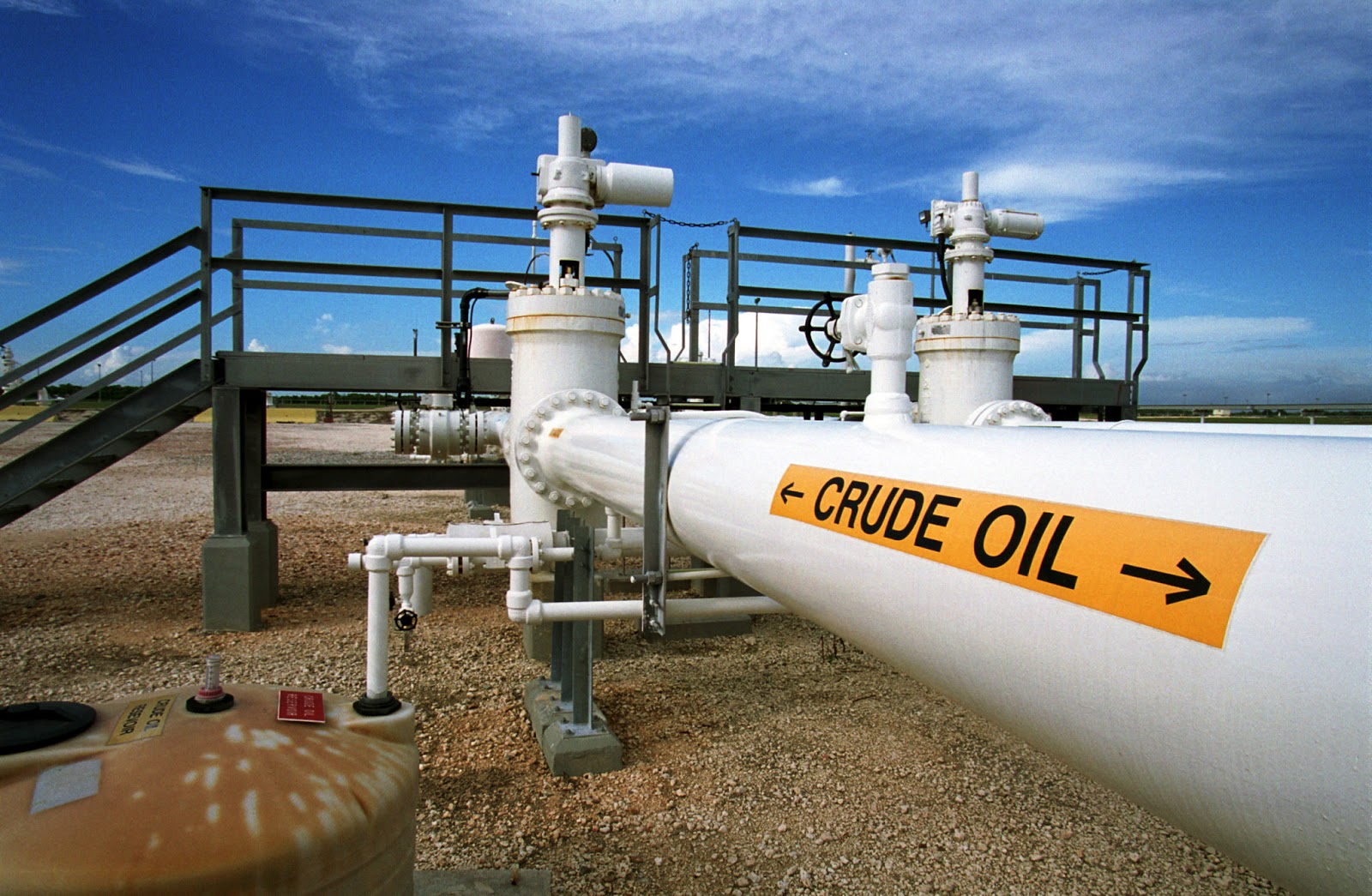
Crude Oil Prices Sustain Recovery as Iran Threatens US

Published

on

crude oil prices

By Adedapo Adesanya

Prices of crude oil continued a recovery for the second day following news of escalating tensions between the United States and Iran.

On Wednesday, President Donald Trump authorised American military to gun down any Iranian gunboat making any attempt to harass their ship.

A day after, the leader of Iran’s elite Islamic Revolutionary Guard Corps (IRGC) retaliated and promised a “crushing response” to any American military attacks in the Gulf.

It is believed that the market, starved of a positive disruptive news, latched onto the wave of geopolitical dispute to start moving up, after falling more than 20 percent so far this week.

On Thursday night, the Brent crude oil gained $1.51 or 7.4 percent to settle at $21.88 per barrel, while the West Texas Intermediate crude oil rose 23.2 percent or $3.20 to settle at $16.98 per barrel.

A possible attack by the US translates to reductions in the region’s production and exports if things escalate, and this will lead to rise in the prices of oil.

Earlier this year, on January 3, US military, following President Donald Trump’s orders, killed a top Iranian general and the news raised oil prices by more than 20 percent.

After that subsided, the market didn’t face any other geopolitical tensions, but was badly hit by the duo of coronavirus pandemic and oil price war between Saudi Arabia and Russia. These led to falling demand and increasing oil production.

The virus and oil war have since plunged prices, but when the US President threatened to destroy Iranian gunboats if they harass US navy ships, it boosted the possibility of renewed tensions in the Middle East.

Analysts believe that this news will do nothing to save crude’s enormous loss this year as the coronavirus pandemic continues to shatter global demand.

Oil has been under enormous pressure as a historic deal by the Organization of the Petroleum Exporting Countries (OPEC) and other major oil producers failed to halt a slump in the value of the commodity immediately.

OPEC+’s deal to slash production by nearly 10 million barrels a day in May won’t be enough to offset the demand destruction from the COVID-19 virus in the short-term, which has been projected as high as 30 million barrels a day.

In the US, the world’s biggest oil producer, operators have started shutting wells and halting drilling — steps that could cut output by 20 percent and leave thousands of workers unemployed.

Reports show that as much as 1.75 million barrels a day are at immediate risk of shutting down, while the number of new wells being brought online is forecast to plunge almost 90 percent by the end of the year.


Adedapo Adesanya is a journalist, polymath, and connoisseur of everything art. When he is not writing, he has his nose buried in one of the many books or articles he has bookmarked or simply listening to good music with a bottle of beer or wine. He supports the greatest club in the world, Manchester United F.C.

Click to comment

Leave a Reply

Your email address will not be published. Required fields are marked *

Economy

Oil Prices Surge 5% as Iran Sets Conditions for Hormuz Reopening

Published

on

oil prices cancel iran deal

By Adedapo Adesanya

Oil prices traded 5 per cent higher on Monday after Iran and the United States ‌argued about demands for compensation, further stalling a possible deal to reopen the Strait of Hormuz.

Brent crude futures chalked up $4.17 or 4.99 per cent to sell at $87.72 a barrel, while the US West Texas Intermediate (WTI) ​crude futures surged $3.95 or 5.05 per cent to $82.13 per barrel.

Iran said the US must lift sanctions on it and meet other conditions for reopening the vital waterway, which carried a fifth of the world’s oil and liquefied natural gas before the start of the Middle ​East conflict in late February.

Meanwhile, US President Donald Trump said Iran must pay compensation for “all of the people that ​they have killed and gravely wounded.”

This comes as the Middle East country said it was nearing a final pact with Oman to define new shipping lanes through the strait but repeated that the US must meet other conditions, including compensation and an end to sanctions and military threats before the strategic waterway is reopened.

In a further threat to supply, the Iran-aligned Houthis said they had struck Saudi Aramco’s Jazan refinery on Sunday. Saudi Aramco has postponed the restart of the 400,000-barrel-per-day ​refinery to August 30 after ​two Houthi attacks in recent ⁠weeks.

ADNOC, a state-owned oil company in the ​United Arab Emirates, said ⁠on Friday that 15 of its vessels had been attacked while transiting the Strait of Hormuz since the beginning of the conflict.

Meanwhile, Ukraine’s military continued to attack Russia’s energy infrastructure, hitting the Taneco oil refinery in Tatarstan and the ZapSibNeftekhim petrochemical plant in Russia’s Tyumen ⁠region.

On the ​US supply side, stocks of crude oil in the Strategic Petroleum Reserve ​(SPR) fell by about 6.1 million barrels to 298.7 million barrels last week, the lowest level since January 1983.

Bank of America (BoFA) warned that oil prices could continue climbing into the winter if the US and Iran fail to reach an agreement reopening the Strait of Hormuz, with severe shortages already emerging in diesel, petrol, and global natural gas markets.

Mr Francisco Blanch, Bank of America’s head of commodities and derivatives research, told CNBC on Monday that only around 5 to 10 ships per day are currently passing through Hormuz, compared with roughly 140 before the war. With some crude now being rerouted through Saudi Arabia and the UAE, traffic would need to recover to around 80 to 100 ships per day just to stabilise energy markets.

Continue Reading

Economy

Senate Seeks Stronger Financial Sector Collaboration for Economic Stability

Published

on

Godswill akpabio Senate President

By Adedapo Adesanya

The Senate Committee on Banking, Insurance and Other Financial Institutions has called for stronger collaboration among financial sector regulators and other stakeholders to strengthen Nigeria’s financial system and support sustainable economic growth.

The committee made the call during an expanded stakeholders’ engagement in Lagos, attended by the leadership of the Central Bank of Nigeria (CBN), Nigeria Deposit Insurance Corporation (NDIC), Asset Management Corporation of Nigeria (AMCON), National Insurance Commission (NAICOM) and Nigeria Export-Import Bank (NEXIM), among other industry stakeholders and financial experts.

Chairman of the committee, Mr Adetokunbo Abiru (Lagos East), who was represented by Mr Osita Izunaso (Imo West), said stronger legislative reforms and regulatory collaboration were necessary to reposition Nigeria’s financial architecture for long-term economic prosperity.

Mr Abiru said the financial sector remained critical to investment, job creation, business expansion and macroeconomic stability, stressing that its ability to mobilise savings, channel credit to productive sectors, facilitate investment and manage risks was fundamental to sustainable economic growth.

He said the current economic realities required closer collaboration between the legislature and financial regulators, noting that challenges confronting the sector were interconnected and could not be effectively addressed through isolated interventions.

The lawmaker identified inflationary pressures, global economic uncertainties, cybersecurity threats, low insurance penetration and the need to diversify Nigeria’s export base as some of the challenges requiring coordinated policy responses.

He said the engagement was aimed at generating practical solutions to strengthen the country’s financial architecture and support sustainable economic growth.

According to him, monetary policy, financial safety nets, banking institutions, the insurance industry and export finance were interdependent components of a stable financial system and must therefore be strengthened collectively.

The Commissioner for Insurance and Chief Executive Officer of the National Insurance Commission (NAICOM), Mr Olusegun Ayo Omosehin, said the Nigeria Insurance Industry Reform Act (NIIRA) 2025 had contributed significantly to stabilising and repositioning the insurance sector.

Mr Omosehin disclosed that 43 insurance companies had successfully recapitalised, describing the development as a major milestone for the industry.

He commended Abiru and members of the committee for their role in advancing insurance sector reforms and urged the House of Representatives to expedite action on the relevant insurance reform bill to enable it to receive presidential assent and become operational.

Representatives of the CBN Governor and the Managing Directors of AMCON, NEXIM and NDIC also commended the Senate committee for its oversight and legislative support, saying its interventions had strengthened the agencies’ capacity to discharge their statutory mandates.

The engagement, held under the theme, Strengthening Financial System Architecture for Sustainable Economic Growth and Stability in Nigeria, also featured presentations by Professor Uche Uwaleke, President of Capital Market Academics of Nigeria (CMAN); Professor Biodun Adedipe, Chief Consultant, B. Adedipe Associates Limited; and Dr Tilewa Adebajo, Chief Executive Officer of CFG Advisory.

The experts presented policy recommendations on key issues affecting Nigeria’s financial system, with emphasis on financial stability, investment and sustainable economic growth.

Mr Abiru said the Senate would continue to engage financial regulators and other stakeholders to deepen financial inclusion, strengthen public confidence in financial institutions and improve regulatory effectiveness.

He said the broader objective was to position Nigeria’s financial system to compete more effectively in the global economy while remaining resilient and responsive to the country’s economic transformation agenda.

Continue Reading

Economy

Caverton Declares N8.7bn Half-Year Loss Amid 10.9% Shrink in Revenue

Published

on

Caverton

By Aduragbemi Omiyale

The first six months of 2026 were not too good for Caverton Offshore Support Group Plc, as it suffered an N8.7 billion loss compared with the N2.1 billion net profit it recorded in the same period of 2025.

This occurred as the company posted a 10.91 per cent decline in earnings between January and June 2026, according to its financial statements for the period ended June 30, 2026.

Analysis of the results showed that the revenue generated in the period under review stood at N14.7 billion versus the N16.5 billion printed in the corresponding period of last year.

Business Post observed that the revenue was negatively impacted by a decline in earnings from helicopter charter and helicopter/airplane contract.

Further analysis of the financial results indicated that operating profit went down by 22.34 per cent to N7.3 billion from N9.4 billion, with administrative expenses jumping to N7.9 billion from N4.7 billion.

But Caverton believes things will get better, noting that the clearest driver of the recovery is Caverton Marine.

Through its relationship with Stena Bulk, one of the world’s leading tanker operators, the organisation now participates in three Suezmax tankers trading a rare source of foreign-currency revenue for a Nigerian-listed company.

It noted that the relationship is being deepened through Unity Shipping Worldwide, a joint venture with the Nigerian National Petroleum Company (NNPC) Limited and Stena Bulk that pairs the state-owned oil firm’s national position and Stena Bulk’s fleet with Caverton’s indigenous operating platform

Closer to home, the firm’s OMIBUS platform, developed with Shanghai-based electric-propulsion OEM Explomar, is bringing battery-electric passenger ferries to Lagos waterways. A prototype is already in service, and Caverton holds a firm order from Lagos State for ten vessels, an early-mover position in clean inland-water transport that the group believes can be replicated across other states as the fleet enters service and ferry operations mature into steady, recurring revenue.

In aviation, the institution said the recovery is anchored on its partnership with NHV, a Belgium-based international helicopter operator, with the restructuring of charter operations targeted for the second half of 2026.

“The first half of the year tested us, but the direction of travel is now visible in the numbers.

“Quarter on quarter, we are working to build up our revenue to narrow losses. Our marine business units, from international tankers to electric ferries, are scaling.

“Meanwhile, our aviation relaunch is on track for the second half, and our cost base is tighter than it has been in years. There is distance still to travel, but Caverton is moving from stabilisation to recovery, and we intend to finish 2026 with that momentum intact,” the chief executive of Caverton, Mr Olabode Makanjuola, stated.

Continue Reading