
Economy
Dangote Cement Targets 29% Carbon Emissions Reduction

By Aduragbemi Omiyale
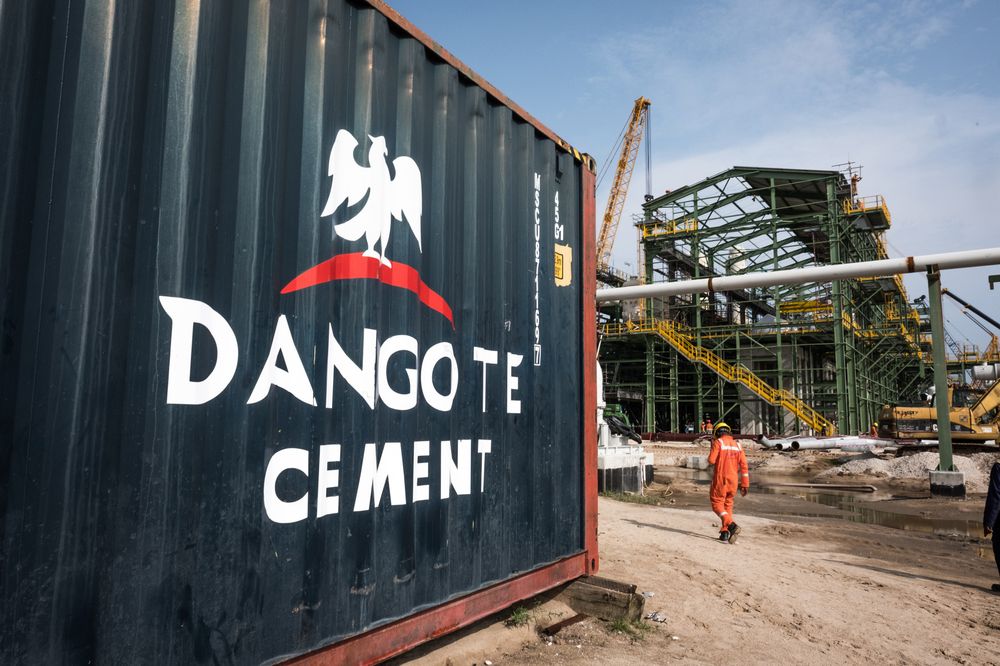
Efforts are being made by the management of Dangote Cement Plc to reduce the company’s carbon emissions by 29 per cent in the coming years.
Within four years, the cement maker has co-processed over 1.5 million tonnes of alternative fuels, significantly lowering its carbon footprint, underscoring its commitment to cutting carbon emissions, enhancing energy security, and setting a benchmark for sustainable industrialization across Africa.
The chief executive of Dangote Cement, Mr Arvind Pathak, said the company has been converting industrial, agricultural, and municipal wastes into energy as part of its strategies to shift to alternative fuel.
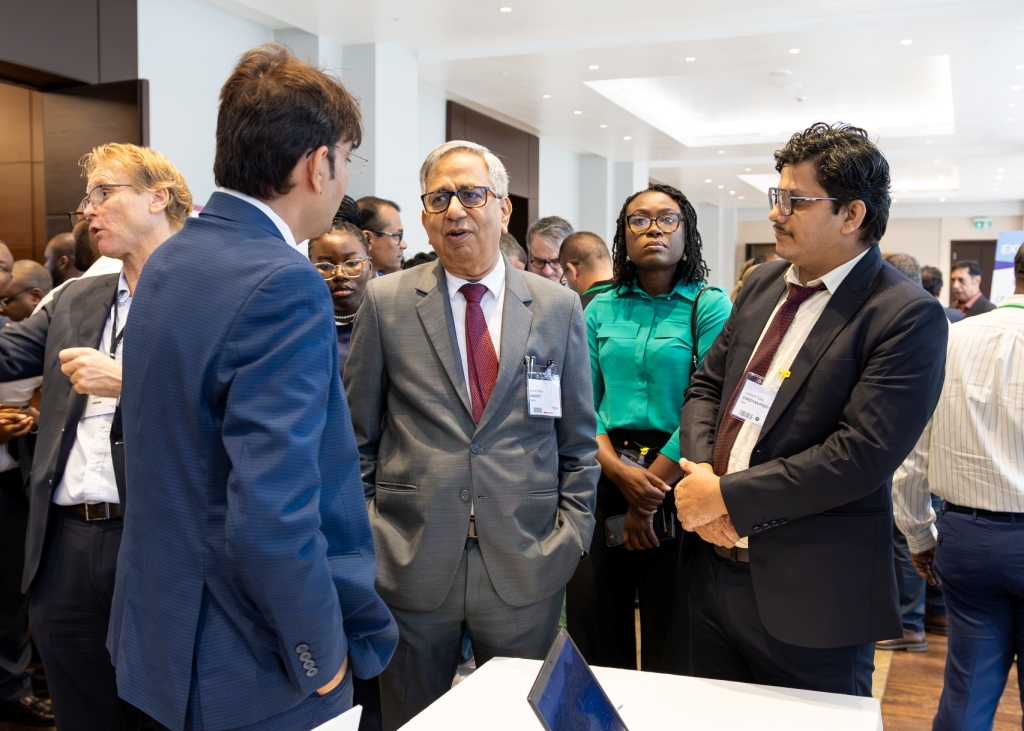
Speaking at the Africa CemTrade Summit in Ghana, he said since 2021 when the firm embarked on energy diversification, it has successfully deployed 15 alternative fuel systems across its plants, achieving up to 40 per cent thermal substitution in operations across its plants in sub-Saharan Africa especially in Senegal, Zambia, and South Africa.
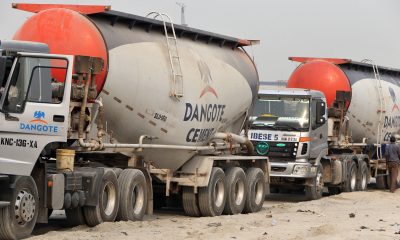
He noted that central to the green transition programme was the investment in compressed natural gas (CNG) logistics, which have seen company acquired over 3,000 CNG trucks and 1,000 dual-fuel vehicles deployed, significantly reducing emissions and transport costs, as it aims for a fully CNG-powered fleet in Nigeria by 2026.
According to him, Dangote Cement’s sustainability strategy is further supported by its digital transformation drive, which has introduced systems such as the Distributor Management System (DMS), Transport Management System (TMS), and Electronic Proof of Delivery (e-POD), enhancing transparency, route optimisation, and supply chain efficiency.
At the programme themed Sustainable Innovation in the Sub-Saharan Africa Cement Distribution Value Chain, Mr Pathak emphasised that Dangote Cement which has expanded its footprint across eleven countries, with a production capacity of 55 million tonnes annually, is leading a transformative shift towards sustainability in Africa’s cement distribution sector, combining environmental stewardship with profitability pointing out that sustainability sits at the core of the company’s business model, influencing every aspect from production to logistics.
According to him, the company has mapped more than 65,000 retail outlets in Nigeria and continues to expand across key regional trade corridors. Through its Customer Truck Empowerment Scheme (CTES), Dangote Cement has distributed over 4,000 trucks to transport partners, creating jobs and improving reliability in cement delivery.
In 2024 alone, the company invested over N12.4 billion in community development projects across its host countries, a fourfold increase from the previous year, covering education, healthcare, infrastructure, and youth empowerment.
“Dangote Cement Plc has taken the lead in driving sustainable transformation across the Sub-Saharan Africa’s cement value chain. We are reaffirming our commitment to innovation and responsible growth.
“Sustainability has never been an afterthought for us; it is central to how we grow, innovate, and operate,” he stated. For Africa’s industrial future to remain viable, sustainability must make economic sense. Our strategy ensures profitability while protecting the planet,” Mr Pathak stated.
The Dangote Cement CEO said the Company has over the past two decades, Dangote Cement expanded from a local producer into a continental leader, operating in eleven countries with an installed capacity of 55 million tonnes per annum. Beyond scale, Pathak said, the company’s distinction lies in its deliberate shift towards lower-carbon operations, contributing to Africa’s sustainable industrialisation.
“We recognised early on that sustainability would shape the future of manufacturing. Our investments in process optimisation, cleaner fuels, and advanced energy systems are helping us reduce waste, improve efficiency, and build stronger competitiveness. We are proving that economic performance and climate responsibility can move together,” he disclosed.






By Dipo Olowookere
The Economic and Financial Crimes Commission (EFCC) has frowned on the use of foreign currencies for financial transactions in Nigeria, saying this could disrupt the nation’s stability.
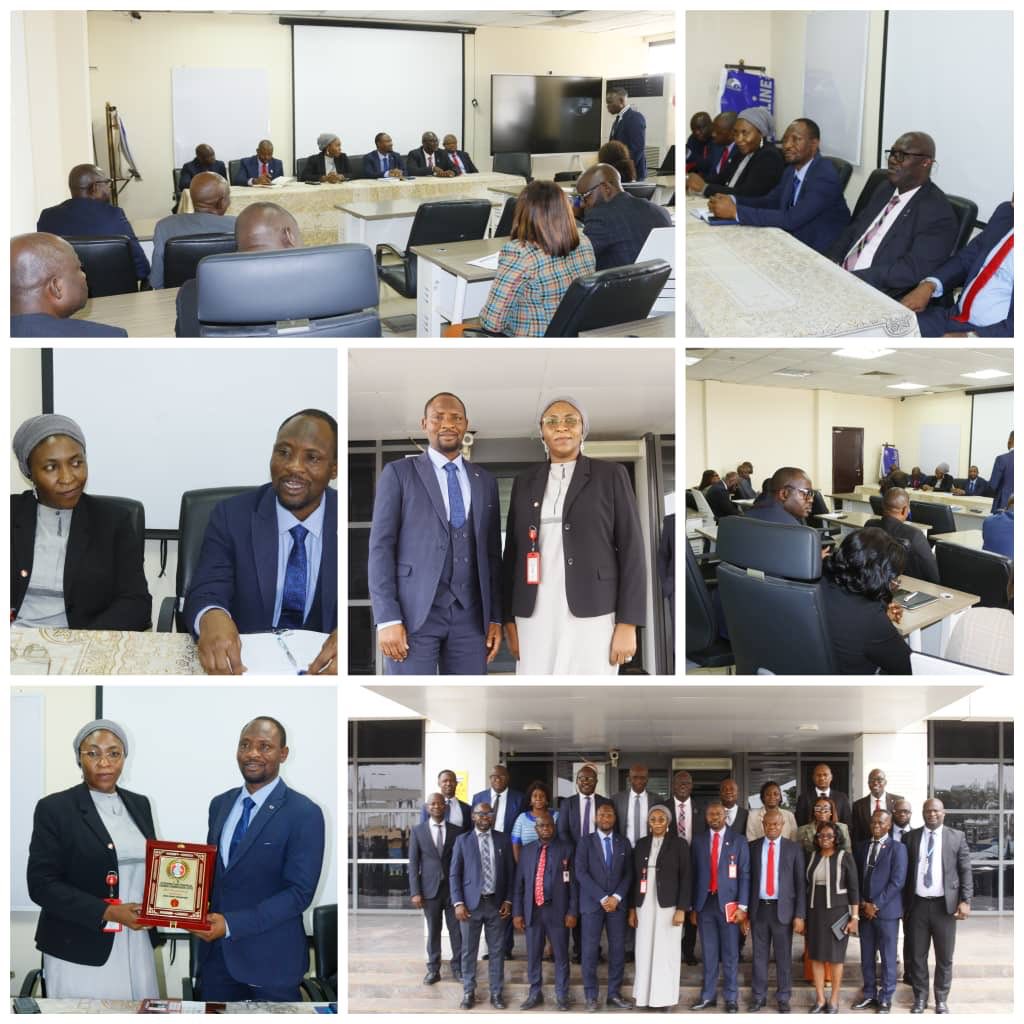
The acting Zonal Director of the agency in Ilorin, Mrs Victoria Ugo-Ali, informed the Central Bank of Nigeria (CBN) that the EFCC chairman, Mr Ola Olukoyede, is determined to curb the increasing preference for foreign currencies in domestic transactions, describing the practice “as a serious threat to the stability of the nation’s financial system.”
Speaking during a courtesy visit to the Branch Controller of the Ilorin Branch of the central bank, Mr Monga Muhammed, on Tuesday, Mrs Ugo-Ali noted that “many economic and financial crimes are perpetrated through financial institutions,” stressing the importance of timely intelligence and reports on suspicious transactions.
She called on the apex bank to continue providing the commission with relevant financial intelligence that would aid investigations and help curb money laundering and other financial crimes.
She also reiterated that the growing preference for foreign currencies in local transactions undermines the value of the naira and weakens public confidence in the national currency.
In his response, Mr Muhammed commended the Zonal Director and the management team of the EFCC for the visit, promising to sustain and deepen the already cordial relationship between the two organisations.
He described the engagement as the first of its kind and expressed optimism that it would further strengthen the cooperation between both institutions.
“At our end here, we will continue to partner with you because we carry out complementary functions. While your duty is to tackle economic and financial crimes, our responsibility, primarily as the apex bank, is to stabilise the economy and regulate financial institutions. We will not fail in that regard,” he said.
The CBN Branch Controller further disclosed that the apex bank had put several measures in place to address naira abuse and the dollarisation of the economy.
According to him, the CBN has the capacity to track currency in circulation and would not hesitate to apply appropriate sanctions against individuals or organisations found trading illegally in the nation’s currency.


By Adedapo Adesanya
SUNU Assurances Nigeria Plc has taken steps to raise N9.3 billion through a rights issue by offering 2,075,285,714 ordinary shares of 50 Kobo each at the price of N4.50.
The new shares would be allotted to shareholders in the ratio of five new ordinary shares for every 14 ordinary shares held as of February 12, 2026.
Proceeds from the exercise would be used by the company to meet the new minimum capital requirements of the National Insurance Commission (NAICOM).
The non-life insurer is preparing to raise fresh equity capital from the capital market to meet the N15 billion minimum capital requirement introduced under the Nigerian Insurance Industry Reform Act (NIIRA) 2025, with a July 2026 compliance deadline.
According to the company’s chairman, Mr Kyari Abba Bukar, the capital plan is a proactive move to strengthen solvency, expand underwriting capacity and maintain competitive positioning in a tightening regulatory environment.
“This is a growth initiative. We are positioning early to meet the new benchmark and enhance our capacity to underwrite larger and more complex risks,” he said.
On his part, the chief executive, Mr Samuel Ogbodu, underscored the company’s dividend track record, noting that SUNU has paid dividends consistently over the past three to four years.
“We have maintained steady growth in premium income, profitability and governance standards over the last decade. Our shareholders have been rewarded, and we project continuity in value delivery,” Mr Ogbodu said.
The SUNU Group, as the majority shareholder with approximately 83 per cent equity interest, has decided to reduce its stake to comply with the free float requirements of the Nigerian Exchange (NGX) Limited. The exchange’s rule book said listed firms must float 20 per cent for the general investing public.
This strategic review of the company’s ownership structure aligns with the group’s long-term growth objectives and its commitment to supporting market development.
He said that while the parent company possesses the financial capacity to fully recapitalise the business, the board has determined that existing shareholders and new Nigerian investors shall be afforded the opportunity to participate in the next phase of the company’s growth.
This decision underscores SUNU’s commitment to broadening Nigerian participation in the ownership structure of the Company, Mr Ogbodu added.
By Adedapo Adesanya
The NASD Over-the-Counter (OTC) Securities Exchange further lost 0.28 per cent on Wednesday, March 11, cutting down the market capitalisation by N7.21 billion to N2.533 trillion from the preceding session’s N2.540 trillion.
In the same vein, the NASD Unlisted Security Index (NSI) was down during the session by 12.06 points to finish at 4,233.91 points compared with the 4,245.97 points it ended on Tuesday.
The midweek session experienced a decline in the volume of securities by 91.3 per cent to 1.3 million units from 14.9 million units, as the value of securities decreased by 75.9 per cent to N31.9 million from the N132.7 million recorded on Tuesday, and the number of deals fell 37.9 per cent to 36 deals from the preceding session’s 58 deals.
The session ended with Central Securities Clearing System (CSCS) Plc as the most traded stock by value on a year-to-date basis with 38.1 million units valued at N2.4 billion. Okitipupa Plc followed with 6.3 million units traded at N1.1 billion, and FrieslandCampina Wamco Nigeria Plc recorded the sale of 5.8 million units worth N529.9 million.
Resourcery Plc remained as the most traded stock by volume on a year-to-date basis with 1.05 billion units sold for N408.7 million, trailed by Geo-Fluids Plc with 130.6 million units exchanged for N503.8 million, and CSCS Plc with 38.1 million units worth N2.4 billion.
The alternative stock market closed the day with three price decliners and three price gainers led by IPWA Plc, which added 41 Kobo to sell at N4.56 per unit versus the previous day’s N4.15 per unit, MRS Oil Plc appreciated by 10 Kobo to N210.10 per share from N210.00 per share, and Lighthouse Financial Services Plc increased its value by 5 Kobo to 55 Kobo per unit from 50 Kobo per unit.
Conversely, FrieslandCampina Wamco Nigeria Plc lost N3.92 to quote at N132.78 per share versus N136.70 per share, UBN Property Plc dropped 20 Kobo to settle at N2.38 per unit from N2.18 per unit, and First Trust Mortgage Bank Plc declined by 1 Kobo to N1.90 per share from N1.91 per share.









-
 Feature/OPED6 years ago
Davos was Different this year
-
Travel/Tourism10 years ago
Lagos Seals Western Lodge Hotel In Ikorodu
-

 Showbiz3 years ago
Estranged Lover Releases Videos of Empress Njamah Bathing
-
 Banking8 years ago
Sort Codes of GTBank Branches in Nigeria
-

 Economy3 years ago
Subsidy Removal: CNG at N130 Per Litre Cheaper Than Petrol—IPMAN
-

 Banking3 years ago
Sort Codes of UBA Branches in Nigeria
-

 Banking3 years ago
First Bank Announces Planned Downtime
-

 Sports3 years ago
Highest Paid Nigerian Footballer – How Much Do Nigerian Footballers Earn