
Economy
Dangote Sugar: Price Hikes Sweeten Earnings

By ARM Securities
Over 2016, Dangote Sugar Refinery Plc (DSR) reported an upsurge in earnings despite lingering pressures: currency weakness, elevated raw sugar prices and higher energy cost.
Solid earnings reflected the steep hike in refined sugar prices as well as volumes resilience hinged on the largely non-discretionary nature of DSR’s product.
In addition, the company improved its financial efficiency by refinancing its expensive debt with CBN’s concessionary borrowings which, together with support from higher revaluation gains on biological assets, capped an impressive year for the company. In view of this, the company raised its DPS to N0.60 (2015: N0.50).
Going forward, whilst we expect volumes to track lower as corporate institutional clients seek cheaper alternatives, revenue should maintain its upswing on the back of higher prices.
Aided by the impact of stronger naira (at the parallel market) on COGS, cheaper borrowings, as well as improved cash position, we expect earnings to rise for the second consecutive year in 2017.
Over 2016, DSR faced sizable input cost pressures as steep naira depreciation combined with bullish raw sugar prices (+40% YoY) to drive cost of raw materials nearly two-fold higher YoY. To add, energy cost surged as lower gas supply compelled the company to rely on increased utilisation of more expensive alternative (LPFO).
Furthermore, OPEX tracked higher (+12% YoY) following upswing in S&D cost which mirrored movement in PMS prices.
Faced with sizable input cost pressure, DSR responded by hiking refined sugar prices 68% YoY (9M 16: +36.3% YoY) to N10,900/50kg bag on average.
Though volume growth consequently suffered in the final quarter of the year (YoY: 9M 16: +16%, Q4 16: -33%), overall sales in the year was flat at 778.5KMT to leave DSR’s topline printing at a record high of N169.7 billion over FY 16
In a bid to minimize margin compression, DSR substituted its more expensive intercompany loan (interest rate at 13.5% per annum) with concessionary CBN financing (9% per annum). Aided by improved cash position, stemming from efficient working capital management, the company reported net finance income of N302 million vs. net interest charge of N653 million in FY 2015.
In addition, the company reported a more than two-fold YoY rise in fair value adjustments on biological asset reflecting improved yield and longer tenor life.
Consequently, mainly riding on pass-through from strong top-line growth, DSR reported its fastest earnings growth in four years.
Going forward, we expect the latest round of price hike to N17,000/50kg bag to keep average refined sugar prices 56% higher relative to 2016.
That said, amidst increasing desire for cheaper substitutes by DSR’s corporate institutional clients (30% of overall revenue) as well as potential cutback in indirect exports, on the back of recent naira gains at the parallel market, we expect some volume contraction in the current year (FY 17E: -13% YoY to 674KMT).
Nonetheless, largely reflecting higher prices, we project revenue growth of 34% over FY 17 to N227.6billion.
On cost, whilst higher raw sugar prices should ordinarily stoke COGS pressures, we are now more sanguine on input cost in view of increased gas supply and currency appreciation at the parallel market which we believe should temper pressures from global raw sugar prices.
Specifically, we project a 1.5pps YoY decline in COGSSales ratio to 85% with COGS at N193.5billion (+32% YoY). In addition, we think the company’s sizable cash position and debt refinancing bode positively for net finance income, which we project to climb 14% YoY. Overall, reflecting higher pricing and financial efficiency, we expect earnings to print at N16.3billion, which translates to 13% increase from FY 16 level.
DSR trades at a current P/E of 6.4x vs. 16.4x for Bloomberg Middle East & Africa peers. The stock has gained 0.16% YTD (Food: -7.3% YTD, NGSE: -4.6%) with last trading price of N6.12 at a 32% discount to our FVE of (N8.08). We have a BUY rating
Source: www.armsecurities.com.ng.
All rights reserved. This publication or any portion thereof may not be reproduced or used in any manner whatsoever without the express written permission of ARM Securities Limited




By Adedapo Adesanya
The NASD Over-the-Counter (OTC) Securities Exchange extended its stay in the south territory with a decline of 0.56 per cent on Wednesday, April 2.
This brought down the market capitalisation by N13 billion to N2.417 trillion from N2.430 trillion, and downed the NASD Unlisted Security Index (NSI) by 22.57 points to 4,062.87 points from the previous session’s 4,062.87 points.
It was observed that the NASD exchange ended with three price gainers and three price losers during the trading day.
MRS Oil Plc depreciated by N19.00 to close at N171.00 per unit compared with the previous price of N190.00 per unit, NASD Plc lost N4.14 to trade at N37.36 per share compared with Wednesday’s N41.50 per share, and Central Securities Clearing System (CSCS) Plc gave up N2.00 to sell at N78.00 per unit versus N80.00 per unit.
On the flip side, FrieslandCampina Wamco Nigeria Plc appreciated by 19 Kobo to N93.00 per share from N92.81 per share, Food Concepts Plc expanded by 15 Kobo to N2.87 per unit from N2.72 per unit, and Great Nigeria Insurance (GNI) Plc improved by 2 Kobo to 52 Kobo per share from 50 Kobo per share.
Yesterday, the volume of securities dipped by 91.8 per cent to 260.2 million units from 3.2 billion units, the value of securities went down by 98.1 per cent to N154.2 million from N8.3 billion, while the number of deals soared by 53.3 per cent to 46 deals from 30 deals.
GNI Plc was the most active stock by value on a year-to-date basis with 3.4 billion units worth N8.4 billion, followed by CSCS Plc with 56.9 million units valued at N3.9 billion, and Okitipupa Plc with 27.5 million units traded for N1.8 billion.
The most traded stock by volume on a year-to-date basis was also GNI Plc with 3.4 billion units sold for N8.2 billion, trailed by Resourcery Plc with 1.1 billion units exchanged for N415.7 million, and Infrastructure Guarantee Credit Plc with 400 million units transacted for N1.2 billion.
By Adedapo Adesanya
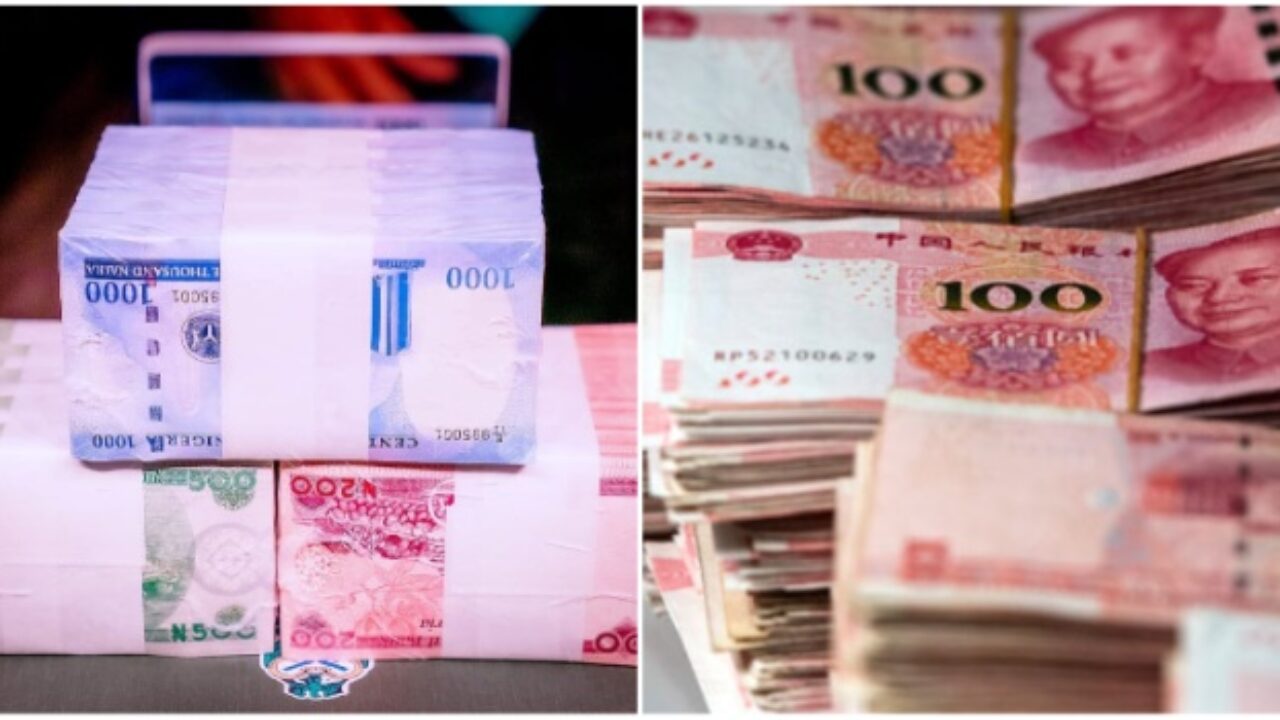
The Naira dropped N2.09 or 0.15 per cent against the United States Dollar in the Nigerian Autonomous Foreign Exchange Market (NAFEX) on Thursday, April 2, to trade at N1,380.79/$1 compared with Wednesday’s rate of N1,378.70/$1.
However, it appreciated against the Pound Sterling in the official market by N2.77 to quote at N1,824.86/£1 versus the N1,836.57/£1 it was traded at midweek, and improved its value against the Euro by N10.54 to N1,591.92/€1 from N1,602.46/€1.
Yesterday was the last trading session of the week for the local currency in the spot market, as the market will be closed on Friday and Monday for the Easter Holiday.
At the black market, the Nigerian Naira maintained stability against the greenback yesterday at N1,405/$1, but gained N8 at the GTBank FX counter to settle at N1,388/$1, in contrast to the previous session’s N1,396/$1.
Pressure eased on the domestic currency as strong policy indicators have helped calm the majority of worries within the financial systems. Particularly in the remittance segment, the apex bank has directed all International Money Transfer Operators (IMTOs) to route remittance transactions through designated Naira settlement accounts in banks, a move aimed at boosting transparency and channelling more foreign exchange into the formal market.
This helps take off pressure from the foreign reserves, which have fallen below the $50 billion mark as they are gradually decreasing rather than falling sharply.
Meanwhile, the cryptocurrency market was bullish on Thursday, as macro sentiment shifted against recent optimism after reports that Iran is drafting a protocol with Oman to manage traffic through the Strait of Hormuz, easing concerns about disruptions to a key global oil route.
The remarks came after U.S. President Trump on Wednesday night vowed to hit Iran “extremely hard” in the coming weeks and that the Strait of Hormuz would “open naturally” once the war ends.
Cardano (ADA) chalked up 1.9 per cent to trade at $0.2435, Dogecoin (DOGE) grew by 1.2 per cent to $0.0912, Ethereum (ETH) appreciated by 0.8 per cent to $2,066.37, Bitcoin (BTC) added 0.5 per cent to sell at $67,080.53, Solana (SOL) increased by 0.5 per cent to $79.91, and Ripple (XRP) jumped 0.2 per cent to $1.31.
Conversely, Binance Coin (BNB) dipped 0.7 per cent to $586.90, and TRON (TRX) depreciated by 0.3 per cent to $0.3147, while the US Dollar Tether (USDT) and the US Dollar Coin (USDC) closed flat at $1.00 each.

By Dipo Olowookere
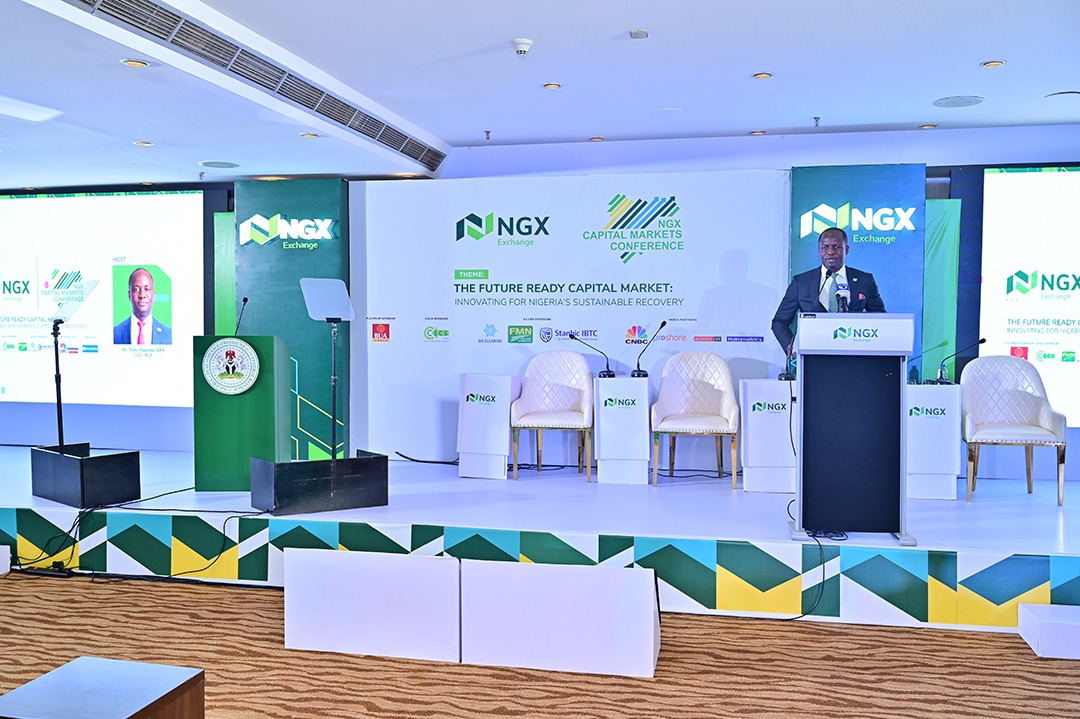
The local stock market was relatively flat on Friday, as the bears and the bulls shared the spoils of war, though investor sentiment turned bullish compared with the preceding session’s bearish posture.
Data from the Nigerian Exchange (NGX) Limited showed that the All-Share Index (ASI) was marginally down by 4.66 points as it ended at 201,698.89 points versus Wednesday’s 201,703.55 points, and the market capitalisation slightly contracted by N3 billion to N129.806 trillion from N129.809 trillion.
Customs Street was shut on Friday because of the public holidays declared by the federal government today and next Monday.
Business Post reports that John Holt declined by 9.91 per cent to N15.45, Abbey Mortgage Bank shed 9.60 per cent to trade at N8.95, International Energy Insurance slipped by 6.48 per cent to N3.32, Chams shrank by 5.30 per cent to N3.75, and Tantalizers depreciated by 5.18 per cent to N4.03.
On the flip side, Unilever Nigeria improved by 10.00 per cent to N103.40, Fortis Global Insurance gained 9.82 per cent to trade at N1.23, Multiverse appreciated 9.81 per cent to N20.15, Legend Internet advanced by 9.38 per cent to N6.30, and Zichis grew by 9.02 per cent to N14.14.
The market breadth index was positive during the trading session, as there were 35 appreciating stocks and 24 depreciating stocks.
Yesterday, investors traded 560.0 million equities valued at N19.3 billion in 49,676 deals, in contrast to the 815.5 million equities worth N33.3 billion transacted in 52,641 deals in the preceding day, representing a drop in the trading volume, value, and number of deals by 31.33 per cent, 42.04 per cent, and 5.63 per cent, respectively.
Secure Electronic Technology dominated the activity log with 59.7 million shares valued at N61.1 million, Wema Bank exchanged 52.0 million equities worth N1.4 billion, VFD Group transacted 36.0 million stocks for N410.5 million, Access Holdings sold 35.3 million shares valued at N914.8 million, and Chams traded 31.0 million equities worth N115.0 million.
-
 Feature/OPED6 years ago
Davos was Different this year
-
Travel/Tourism10 years ago
Lagos Seals Western Lodge Hotel In Ikorodu
-

 Showbiz3 years ago
Estranged Lover Releases Videos of Empress Njamah Bathing
-
 Banking8 years ago
Sort Codes of GTBank Branches in Nigeria
-

 Economy3 years ago
Subsidy Removal: CNG at N130 Per Litre Cheaper Than Petrol—IPMAN
-

 Banking3 years ago
Sort Codes of UBA Branches in Nigeria
-

 Banking3 years ago
First Bank Announces Planned Downtime
-

 Sports3 years ago
Highest Paid Nigerian Footballer – How Much Do Nigerian Footballers Earn