Economy
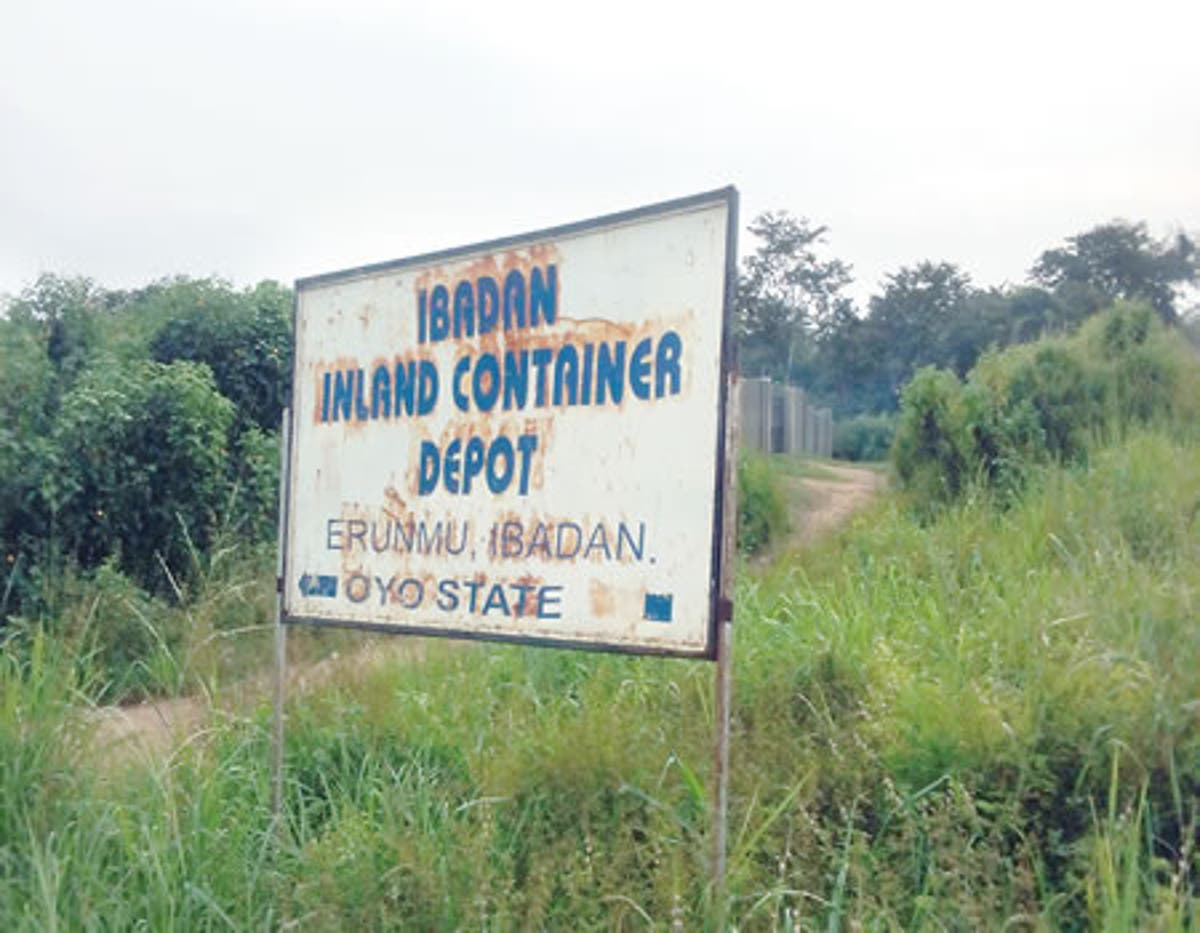
Don’t Lose Ibadan Inland Dry Port to Ogun—Lawmaker Begs Makinde
By Dipo Olowookere
The Oyo State Governor, Mr Seyi Makinde, has been urged not to lose the Ibadan Inland Dry Port to the neighbouring Ogun State.
This appeal was made by a federal lawmaker from the state, Mrs Tolulope Akande-Sadipe, via a statement issued by her media aide, Mr Olamilekan Olusada.
The lawmaker, representing Oluyole Federal Constituency at the National Assembly, said she worked hard to bring the project to the state.
Mrs Akande-Sadipe, who is Chairman of the House of Representatives Committee on Diaspora, recalled that when she served as the Special Adviser on Projects and Public-Private Partnership to late Governor of Oyo State, Mr Abiola Ajimobi, she conceived the idea of the dry port during “a visit to Lagos to see my mother.”
According to her, “the traffic from trucks queuing to get into the Apapa ports led to the brainwave that this could be another economic opportunity for Oyo State, which had an advantage based on its geographical position and the new train line from Lagos and knowing that this would further stir up the economic revival in our beloved Oyo State. I approached the Governor with the idea and he gave his consent to commence the leg work.”
“I contacted Mr Hassan Bello led Shippers Council through Mr Anifowoshe who was based in the Ibadan office in 2018 and extensive talks about decongesting Lagos by setting up an Inland Dry Port in Oyo began,” she further recalled.
The lawmaker stated further that the rationale for Olorisha Oko was based on its location as the point where the first phase of the new train line from Lagos to the north passing through Ibadan would terminate.
“That way, containers could be shipped by train from Lagos ports to Ibadan and further on with the completion of other stages of the project, as is the case in developed nations.
“I and my Bureau of Investment Promotions and Project Office team most especially Mr Kunle Olusina with the support of our principal, late Senator Abiola Ajimobi, worked tirelessly to make it a reality,” she said.
Mrs Akande-Sadipe added that, “I put so much effort into making the inland dry port a reality, my sweat and support from Ajimobi secured the federal government approval of the project during the administration of Koseleri. I, therefore, appeal to the current PDP led state government not to play politics with the socio-economic development of Oyo State.”
The lawmaker noted that the Inland Dry Port would bring about 24,000 direct new jobs and also attract new investors and big corporations to take advantage of the free trade zone. We all know what that will mean to the youths of Oyo State – job creation, both blue and white-collar
She further emphasised her worry about losing the project to Ogun State over the delays since the change of administration, urging the current administration to do more about road infrastructure to alleviate the worries of the increased traffic expected from the port operation as it has not done enough in terms of road infrastructure, unlike the neighbouring state where Governor Dapo Abiodun, has embarked on and completed many road projects.
The project had gone far with the bidding closed with a successful selection of a concessionaire developer in line with federal government laws and regulations governing Public-Private Partnership Procurement. Sequel to which the project was adjudged viable thus bankable and had been issued an OBC compliance certificate by the Infrastructure Concession and Regulatory Commission in line with the 2005 ICRC Act.
Economy
Indonesia Buys Nigerian Crude Oil to Reduce Exposure to Hormuz Disruptions
By Adedapo Adesanya
Indonesia has imported crude oil from Nigeria as Southeast Asia’s largest economy moves to reduce its dependence on Middle Eastern supplies amid rising geopolitical tensions involving the United States, Israel, and Iran.
Indonesia’s Ministry of Energy and Mineral Resources confirmed that Nigerian crude cargoes have already arrived in the country as part of efforts to diversify supply routes away from the volatile Strait of Hormuz, a key global oil transit chokepoint that handles about 20 per cent of world oil shipments.
The development positions Nigeria as an increasingly strategic alternative supplier in the global energy market as buyers seek more stable and flexible crude sources outside the Middle East.
Nigeria, which is Africa’s largest crude producer, has always sold some of its crude grades via joint ventures with international oil companies as well as to Dangote Refinery, to boost domestic production.
Indonesia’s Director General of Oil and Gas, Mr Laode Sulaeman, said the country was prioritising crude imports from suppliers whose shipping routes do not pass through the Strait of Hormuz, which has faced heightened security concerns following the ongoing conflict involving Iran, Israel, and the United States.
Apart from Nigeria, Indonesia is also considering crude supplies from Russia and the US.
The move could strengthen Nigeria’s crude export market at a time the country is seeking to boost production levels and attract new long-term buyers for its oil grades.
Speaking in March, the chief executive of the Nigerian National Petroleum Company (NNPC) Limited, Mr Bayo Ojulari, said that Nigeria could increase oil production by about 100,000 barrels per day over the next few months to realistically help the global shortfall.
Before the latest geopolitical tensions, around 20 per cent of Indonesia’s crude imports came from the Middle East. However, the country has now accelerated plans to diversify supply sources, naming Nigeria among key replacement suppliers alongside Angola, Brazil, Russia, and the US.
The development comes as Nigeria continues to gain attention in global oil markets, with its crude grades increasingly sought after because of their relatively low sulphur content and suitability for modern refineries.
Indonesia also recently opened talks with Russia for long-term crude and liquefied petroleum gas supplies, including a proposed purchase of 150 million barrels of Russian crude scheduled for delivery from late 2026.
Economy
Coronation Projects 15.95% for Nigeria’s April 2026 Inflation
By Aduragbemi Omiyale
Analysts at Coronation Research have said the inflation rate in Nigeria would be at 15.95 per cent on a year-on-year basis in April 2026 as a result of the “energy price shock stemming from the continued conflict in the Middle East, seasonal issues in regard to food prices and relative exchange rate stability.”
In a note sighted by Business Post on Friday, the research arm of the organisation further disclosed that the average price of goods and services for the month under review should rise by 2.35 per cent on a month-on-month basis versus 4.18 per cent in March 2026, reflecting continued food price firmness, offset by a cooling in the monthly inflation momentum as the March energy price shock partially unwinds.
It said the projected 2.35 per cent inflation rate signals a return toward the underlying disinflation trajectory and could be a pivotal data point in shaping Monetary Policy Committee (MPC) deliberations at the next policy meeting.
The National Bureau of Statistics (NBS) is expected to release inflation numbers for last month later today. In March 2026, the rate soared by 15.38 per cent, triggered by the war in Iran waged by the United States.
Food inflation rate in March stood at 14.31 per cent on a year-on-year basis versus 25.22 per cent in the same month of last year, but on a month-on-month basis, it slowed to 4.17 per cent from the 4.69 per cent achieved in February 2026.
This was attributed to the rate of change in the average prices of Yam, Ginger (Fresh), Cassava Tuber, Groundnuts (Shelled), Irish Potatoes, Avenger (Ogbono/Apon) – Dried Ungrinded, Tomatoes (fresh), Cassava Flour sold loose, etc, according to the stats office.
In their report, Coronation Research expects food inflation to further ease, as food and non-alcoholic beverages remain the dominant contributor to headline CPI, accounting for about 40 per cent of the CPI basket.
Economy
Unlisted Securities Market Further Suffers 0.33% Loss
By Adedapo Adesanya
The NASD Over-the-Counter (OTC) Securities Exchange further depreciated by 0.33 per cent on Wednesday, May 14, with the Unlisted Security Index (NSI) down by 13.76 points to 4,130.21 points from the previous day’s 4,143.97 points, and the market capitalisation dropping N8.23 billion to close at N2.471 trillion compared with Wednesday’s N2.479 trillion.
The unlisted securities market ended yesterday’s session with four price losers and one price gainer, led by Food Concepts Plc, which chalked up 9 Kobo to sell at N2.35 per unit, in contrast to midweek’s closing price of N2.26 per unit.
On the flip side, FrieslandCampina Wamco Plc depreciated by N1.58 to quote at N144.76 per share versus N146.34 per share, Central Securities and Clearing System (CSCS) Plc crumbled by N1.00 to trade at N71.00 per unit versus N72.00 per unit, First Trust Mortgage Bank Plc slid by 25 Kobo to N2.27 per share from N2.52 per share, and UBN Property Plc declined by 21 Kobo to N2.04 per unit from N2.25 per unit.
During the trading day, the volume of securities traded decreased by 70.2 per cent to 417,349 units from 1.4 million units, the value of securities dropped 36.9 per cent to N23.2 million from N36.8 million, and the number of deals stumbled by 13.9 per cent to 31 deals from 36 deals.
At the close of trades, Great Nigeria Insurance (GNI) Plc remained the most active stock by value on a year-to-date basis, with 3.4 billion units valued at N8.4 billion, followed by CSCS Plc with 60.7 million units exchanged for N4.1 billion, and Okitipupa Plc with 27.9 million units traded for N1.9 billion.
GNI Plc was also the most active stock by volume on a year-to-date basis, with 3.4 billion units worth N8.4 billion, followed by Resourcery Plc with 1.1 billion units sold for N415.7 million, and Infrastructure Guarantee Credit Plc with 400 million units sold for N1.2 billion.
-
Feature/OPED6 years agoDavos was Different this year
-
Travel/Tourism10 years ago
Lagos Seals Western Lodge Hotel In Ikorodu
-
Showbiz3 years agoEstranged Lover Releases Videos of Empress Njamah Bathing
-
Banking8 years agoSort Codes of GTBank Branches in Nigeria
-
Economy3 years agoSubsidy Removal: CNG at N130 Per Litre Cheaper Than Petrol—IPMAN
-
Banking3 years agoSort Codes of UBA Branches in Nigeria
-
Banking3 years agoFirst Bank Announces Planned Downtime
-
Sports3 years agoHighest Paid Nigerian Footballer – How Much Do Nigerian Footballers Earn