
Economy
Expert Insights: Selecting the Best Currency Pairs to Trade at Night

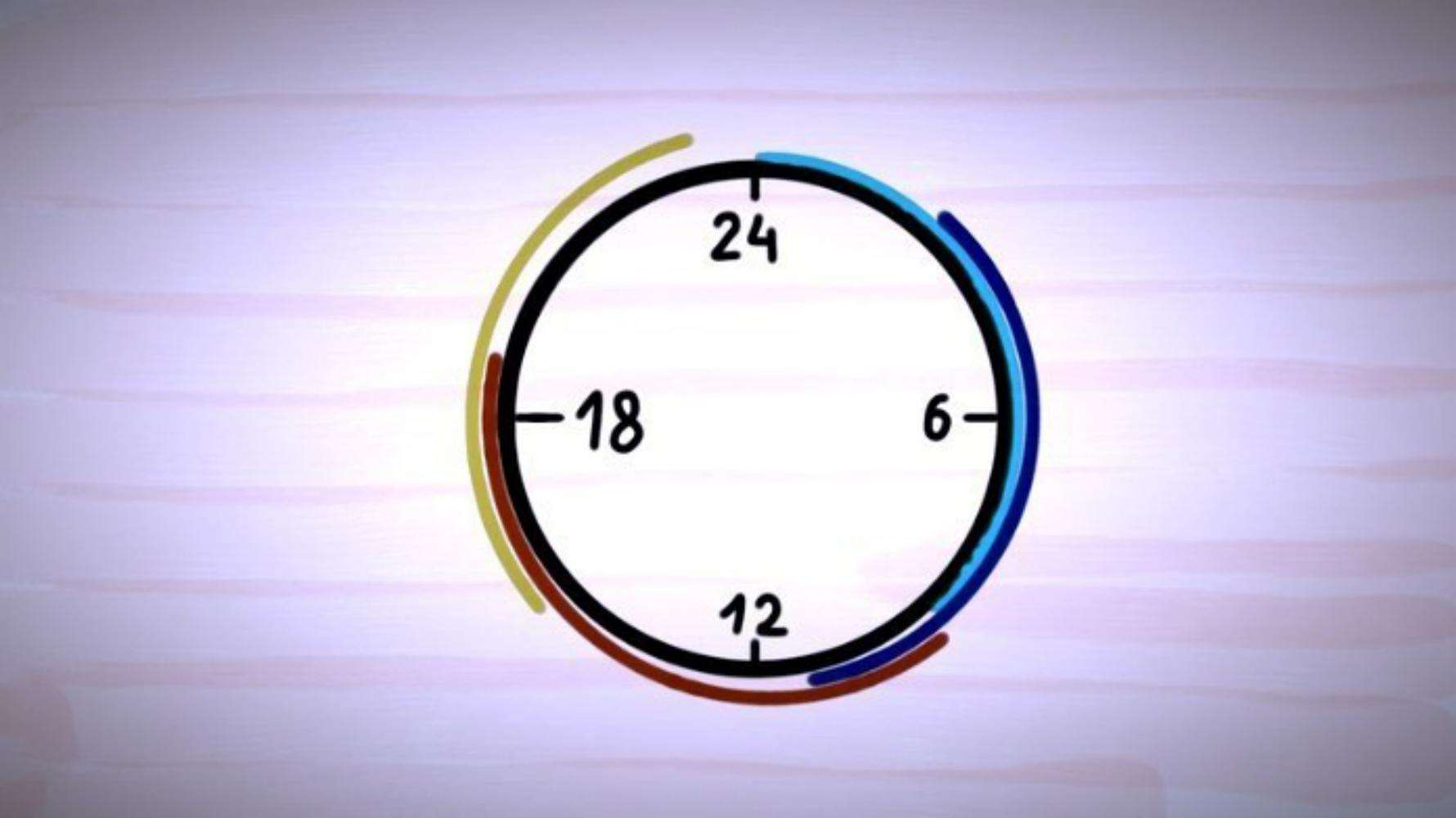
If you are a night owl and looking to maximize your Forex trading potential, you’re in luck! A group of traders from Traders Union (TU) have compiled an informative guide on the best Forex pairs to trade at night. Whether you’re a beginner or an experienced trader, this information will be of great value to you. The article covered the best currency pairs to trade at night, backed up by detailed research and expert analysis. Stay tuned!
Understanding сurrency pairs
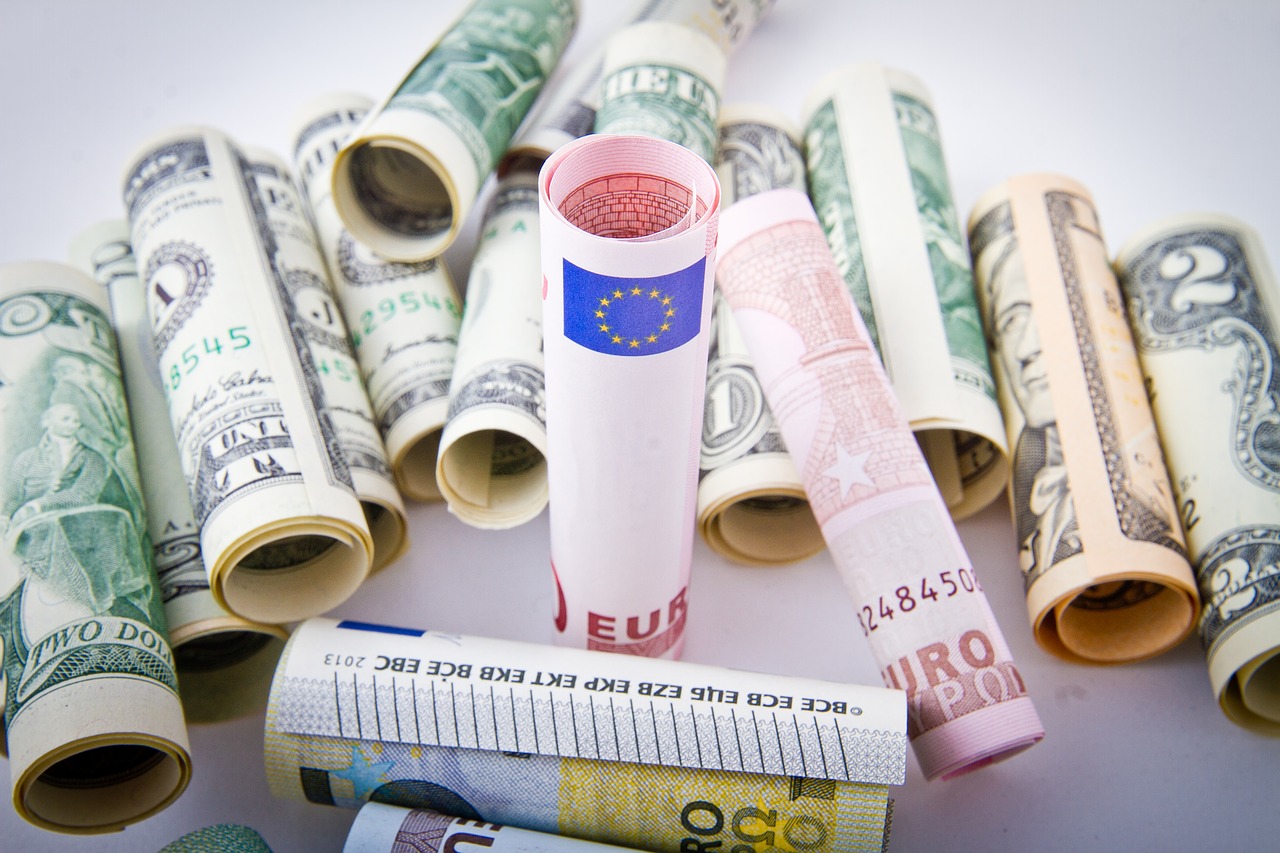
Currency pairs simply show the value of one currency compared to another. Think of it like a ratio: in the EUR/USD pair, if it’s at 1.302, 1 euro is equal to 1.302 U.S. dollars. TU’s analysts often highlight the EUR/USD pair as a popular one, where traders swap euros for U.S. dollars in their trades.
Currency pairs are grouped into three main categories.
Majors – these always involve the U.S. dollar and are frequently traded. Examples:
- EUR/USD
- USD/JPY
- GBP/USD
Crosses – these are pairs of two major currencies, but don’t include the U.S. dollar. Some of the commonly traded crosses are:
- EUR/GBP
- GBP/JPY
- EUR/CHF
Exotic Pairs – these combine a major currency with one from a smaller or emerging market. They can be riskier but also offer potential rewards. A few examples include:
- USD/SGD
- USD/HKD
- EUR/TRY
According to experts at Traders Union, while beginners might find comfort in trading majors due to their stability, seasoned traders often dabble in exotics for potentially higher returns, albeit with added risk.
Navigating night trading in Forex
Forex night trading means buying and selling currencies after regular market hours. The exact times can vary, depending on the exchange. Traders can do this because it allows them to react to global events or financial news that occur outside of normal market hours. If you’re thinking about night trading, the experts suggest keeping track of the hours for each exchange and knowing when different regions’ trading times overlap. Thanks to this, the chances of buying or selling will increase. Just remember to stay updated on worldwide news, so you can make smart trading choices even at night!
Top currency pairs for night trading
Based on the guidance of TU’s experts, here are some top pairs you might want to explore:
Night session favorites
- AUD/NZD – often shows significant price movements during the night.
- AUD/JPY and NZD/JPY – are known to provide trading opportunities during overnight sessions.
Daily trading champions
- EUR/USD (Fibre) – this pair dominates with about 23% of daily trade volume.
- USD/JPY (Gopher) – offers predictable price movements, contributing to 13.5% of daily trades.
- GBP/USD (Cable) – known for its volatility, it covers about 6% of daily trade volume.
- AUD/USD (Aussie) -influenced by commodity prices, it also accounts for 6% of daily trades.
- USD/CAD – tied closely to oil prices, it represents 5% of daily trade volumes.
- USD/CHF (Swissie) – a popular choice, contributing to around 5% of daily global trades.
With this list, both new and experienced traders can better navigate the world of Forex during the nighttime hours.
Conclusion
Navigating the 24-hour world of Forex trading presents both challenges and opportunities. For those drawn to the stillness of night trading, understanding the dynamics of specific currency pairs becomes crucial. Traders Union analysts provide invaluable insights into the most potent pairs for nighttime endeavors, from the volatility of the GBP/USD to the predictable movements of the USD/JPY. By leveraging this knowledge and staying updated on global economic shifts, traders-whether novice or seasoned — can optimize their strategies, ensuring they are well-prepared to seize opportunities, no matter the hour.







By Adedapo Adesanya
The NASD Over-the-Counter (OTC) Securities Exchange declined by 2.14 per cent on Monday, March 30, weakening the Unlisted Security Index (NSI) by 89.95 points to 4,109.74 points from 4,199.69 points.
During the session, investors lost N53.82 billion, leaving the market capitalisation of the trading platform at N2.458 trillion versus the previous session’s N2.512 trillion.
The bourse recorded four price gainers and four price losers led by 11 Plc, which shed N35.12 to close at N316.50 per share compared with last Friday’s value of N351.17 per share. MRS Oil Plc declined by N20.00 to quote at N190.00 per unit versus the previous price of N21o.00 per unit, FrieslandCampina Wamco Nigeria Plc dropped N11.00 to trade at N99.00 per share versus N110.00 per share, and Central Securities Clearing System (CSCS) Plc dipped N2.93 to N77.17 per unit from N80.10 per unit.
Conversely, IPWA Plc appreciated by 55 Kobo to N6.06 per share from N5.51 per share, Industrial and General Insurance (IGI) Plc expanded by 5 Kobo to 57 Kobo per unit from 52 Kobo per unit, Geo-Fluids Plc gained 4 Kobo to close at N3.22 per share versus N3.18 per share, and Acorn Petroleum Plc improved by 1 Kobo to N1.34 per unit from N1.33 per unit.
Trading data revealed a decline of 63.7 per cent in the volume of securities to 21.3 million units from 58.6 million units, a 59.6 per cent drop in the value of securities to N651.1 million from N1.6 billion, and a 24 per cent contraction in the number of deals to 38 deals from 50 deals.
The most active stock by value on a year-to-date basis was CSCS Plc with 56.3 million units exchanged for N3.8 billion, trailed by Okitipupa Plc with 27.5 million units traded for N1.8 billion, and Infrastructure Guarantee Credit Plc with 400 million units valued at N1.2 billion.
Resourcery Plc was the most traded stock by volume on a year-to-date basis with 1.1 billion units worth N415.7 million, followed by Infrastructure Guarantee Credit Plc with 400 million units sold for N1.2 billion, and Geo-Fluids Plc with 133.1 million units transacted for N511.2 million.
By Dipo Olowookere
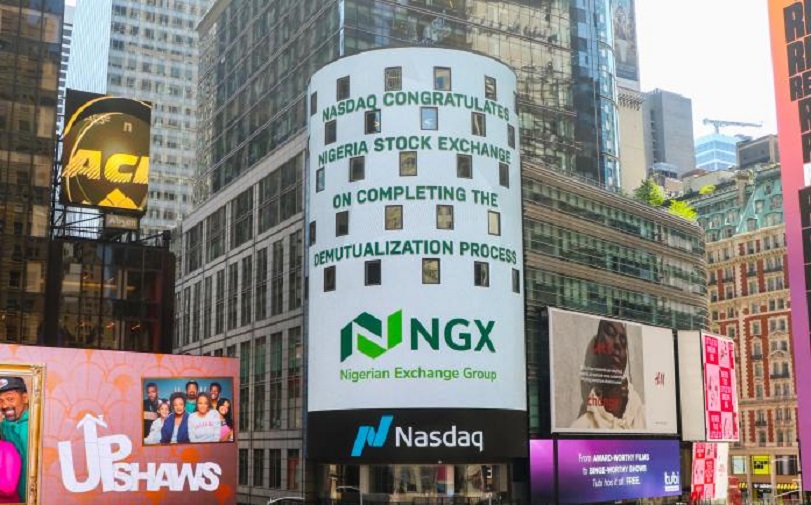
The Nigerian Exchange (NGX) Limited began the new week bearish after it shed 0.21 per cent on Monday due to profit-taking.
Business Post reports that four of the five key sectors of Customs Street tracked pointed southwards yesterday, as only the energy index gained 0.10 per cent.
The insurance counter lost 1.38 per cent, the banking space depreciated by 0.81 per cent, the industrial goods sector weakened by 0.45 per cent, and the consumer goods segment declined by 0.02 per cent.
As a result, the All-Share Index (ASI) retreated by 428.63 points to 200,484.43 points from 200,913.06 points, and the market capitalisation moderated by N275 billion to N128.694 trillion from N128.969 trillion.
The market breadth index was negative during the session, as there were 27 price gainers and 34 price losers, representing weak investor sentiment.
Secure Electronic Technology depreciated by 10.00 per cent to N1.17, May and Baker slumped by 9.42 per cent to N38.00, Legend Internet tumbled by 8.67 per cent to N6.85, Cutix shrank by 8.29 per cent to N3.21, and Fortis Global Insurance lost 7.97 per cent to trade at N1.27.
On the flip side, Austin Laz appreciated by 9.98 per cent to N4.41, Zichis gained 9.93 per cent to quote at N15.16, Trans Nationwide Express soared by 9.65 per cent to N2.84, The Initiates advanced by 9.60 per cent to N21.70, and Learn Africa improved by 9.41 per cent to N9.30.
The bourse closed with a turnover of 593.3 million shares valued at N25.7 billion executed in 60,311 deals compared with the 595.2 million shares worth N24.5 billion traded in 43,440 deals in the previous trading day.
This showed that the value of transactions went up by 4.90 per cent, the number of deals increased by 38.84 per cent, and the volume of trades decreased by 0.32 per cent.
Access Holdings finished the session as the most active with 86.6 million units sold for N2.3 billion, First Holdco exchanged 84.6 million units worth N4.3 billion, Secure Electronic Technology traded 31.1 million units valued at N37.4 million, Fidelity Bank transacted 26.7 million units worth N512.4 million, and Zenith Bank traded 26.1 million units valued at N2.6 billion.
By Adedapo Adesanya
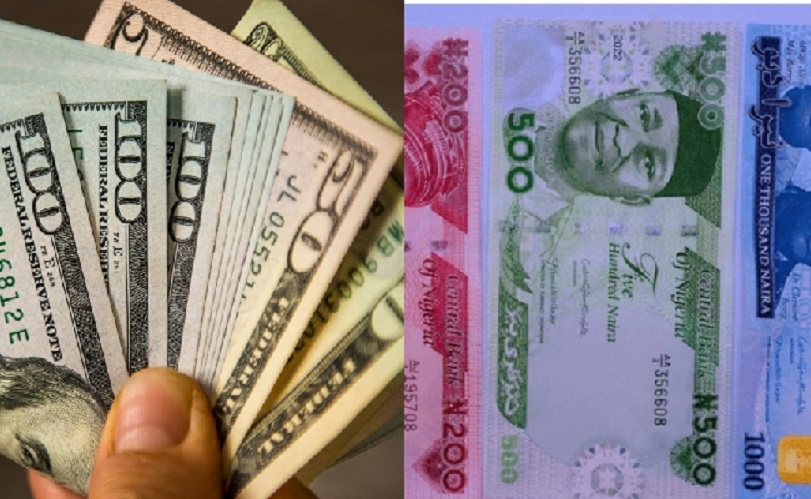
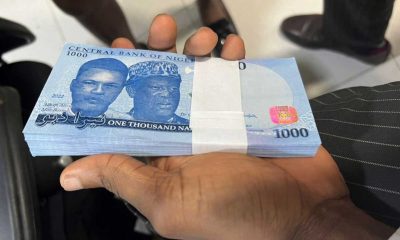
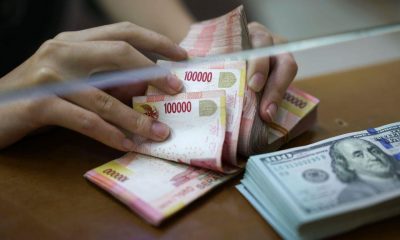
The first trading session for the Naira in the Nigerian Autonomous Foreign Exchange Market (NAFEX) ended on a negative note, as it lost N3.00 or 0.22 per cent against the Dollar on Monday, March 30, to trade at N1,383.58/$1 compared with last Friday’s closing price of N1,380.58/$1.
The local currency remains under pressure as increased demand for forex for international settlements and import-related obligations continue t0 strain available FX supply.
Last week, the Central Bank of Nigeria (CBN) shed the policy requiring International Oil Companies (IOCs) to keep half of their export proceeds in Nigeria and allowed them to fully access their funds. Market analysts noted that this could reduce the dollar supply, putting pressure on the nation’s legal tender whenever outflows exceed inflows.
The country’s external reserves recorded a marginal decline, falling by 0.7 per cent to $49.48 billion, reflecting a depletion of about $350 million and signalling continued pressure on Nigeria’s FX buffer.
However, the Nigerian currency further appreciated against the Pound Sterling in the official market during the session by N12.05 to N1,824.94/£1 from N1,836.99/£1, and gained N5.80 against the Euro to sell at N1,586.28/€1 versus N1,592.08/€1.
Equally, at the GTBank forex desk, the Naira improved its value against the greenback yesterday by N7 to N1,394/$1 from N1,401/$1, and remained unchanged at the parallel market at N1,410/$1.
As for the cryptocurrency market, it was mixed even as Federal Reserve Chairman Jerome Powell eased any concerns about imminent rate hikes.
The central banker said the lender is inclined to look past the Iran-related energy shock for now and hold rates steady, adding that the US central bank — for the moment — is looking past short-term oil price shocks and focusing on inflation expectations that remain “well anchored.” As a result, bond yields fell, but oil continued its rise, ultimately pressuring the stock market and crypto.
Solana (SOL) gained 1.1 per cent to sell at $82.68, Ethereum (ETH) appreciated by 1.0 per cent to $2,021.66, Cardano (ADA) grew by 1.0 per cent to $0.2431, Ripple (XRP) jumped 0.2 per cent to $1.32, and Bitcoin (BTC) added 0.1 per cent to settle at $66,568.25.
However, TRON (TRX) dipped 1.0 per cent to $0.3199, Dogecoin (DOGE) went down by 0.2 per cent to $0.0909, and Binance Coin (BNB) dropped 0.1 per cent to $609.25, while the US Dollar Tether (USDT) and the US Dollar Coin (USDC) closed flat at $1.00 each.









-
 Feature/OPED6 years ago
Davos was Different this year
-
Travel/Tourism10 years ago
Lagos Seals Western Lodge Hotel In Ikorodu
-

 Showbiz3 years ago
Estranged Lover Releases Videos of Empress Njamah Bathing
-
 Banking8 years ago
Sort Codes of GTBank Branches in Nigeria
-

 Economy3 years ago
Subsidy Removal: CNG at N130 Per Litre Cheaper Than Petrol—IPMAN
-

 Banking3 years ago
Sort Codes of UBA Branches in Nigeria
-

 Banking3 years ago
First Bank Announces Planned Downtime
-

 Sports3 years ago
Highest Paid Nigerian Footballer – How Much Do Nigerian Footballers Earn