Connect with us

Economy

FG Discloses Plan to Borrow $6.9bn to Boost Economy

Published

on

borrow $22.7bn

By Adedapo Adesanya

As part of measures to lessen the effect of the global coronavirus pandemic on the local economy, the federal government has disclosed plans to borrow the sum of $6.9 billion.

The planned loan facilities will be got from the World Bank, the International Monetary Fund (IMF), and the African Development Bank (AfDB).

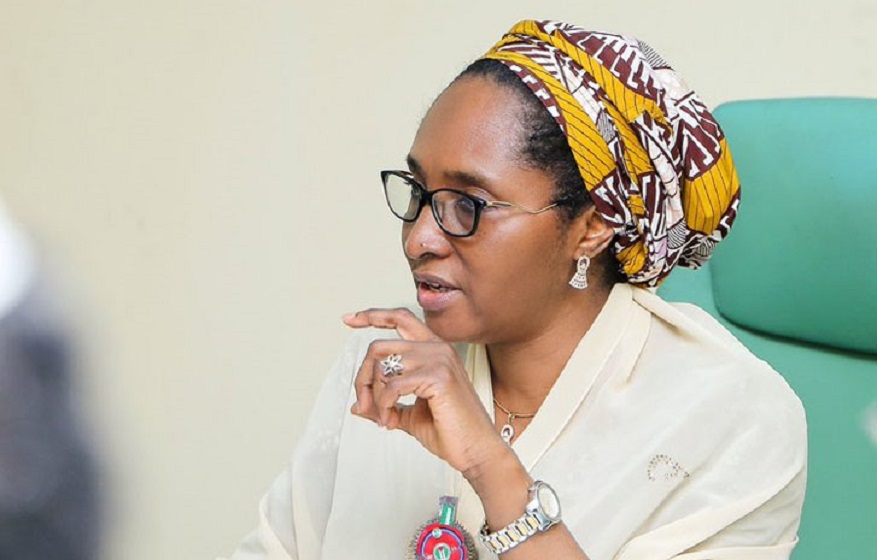
Minister of Finance, Budget and National Planning, Mrs Zainab Ahmed, made this disclosure on Monday in Abuja during a media briefing on the fiscal policy measures to tackle the impact of the COVID-19 pandemic on the economy.

Explaining the reason for the loan, Mrs Ahmed noted that the amount, when approved, will help finance the 2020 national budget which was affected by current realities.

Most economies were hit by the coronavirus pandemic which grounded activities to a halt in most sectors, as government and work places were disrupted, further telling on economic activities.

And as an oil dependent nation, the country also felt the impact of a drop in global crude prices which led to a review of the budget last month.

According to the minister, the $6.9 billion will see $3.4 billion borrowed from the IMF, $2.5 billion from the World Bank, while the remaining $1 billion will be sourced from the AfDB.

Giving a further breakdown of the World Bank facility of $2.5 billion, Mrs Ahmed noted that the sum of $1.5 billion would go to the federal government, while the balance of $1 billion would go to the 36 state governments.

The funds, according to the finance minister, is expected to come into the country within the next six to 12 weeks.

On the part of the $3.4 billion expected from the IMF, the finance minister said that it would not be tied to any conditionality, adding that so far, about 80 countries had applied for such funding facility as requested by the Bretton Woods institution.

“We are continuing our engagements with the World Bank, the AfDB, the IDB and the IMF to access concessional funding to support the implementation of the 2020 budget.

“We have also applied for funding from the IMF’s COVID-19 Rapid Credit Facility to draw from our existing holdings with the World Bank Group/IMF. This loan will not be tied to any conditionality.

“However, it is important to clarify that Nigeria does not intend to negotiate or enter into a formal programme with the IMF at this time or in the foreseeable future,” she said.

She added, “Nigeria has a contribution of $3.4 billion with the IMF and we are entitled to draw up to the whole of that $3.4 billion. We have in the first instance applied for that maximum amount.

“We have requested from the World Bank $2.5 billion from the AfDB, $1 billion.

“Let me state that the requests are for the nation, both for the FG and the states.”

Adedapo Adesanya is a journalist, polymath, and connoisseur of everything art. When he is not writing, he has his nose buried in one of the many books or articles he has bookmarked or simply listening to good music with a bottle of beer or wine. He supports the greatest club in the world, Manchester United F.C.

Advertisement
Click to comment

Leave a Reply

Your email address will not be published. Required fields are marked *

Economy

MTN Nigeria Ignites Yuletide Spirit With VibeTide Campaign

Published

on

MTN Nigeria VibeTide

By Modupe Gbadeyanka

A festive campaign designed to blend culture, lifestyle, music, generosity, and digital engagement into one connected celebration that brings millions of Nigerians together across cities and communities has been launched by MTN Nigeria.

Known as VibeTide, this initiative will continue throughout the festive months with a rich mix of activities designed to meet Nigerians wherever they gather.

The campaign came alive this morning with Y’ello Santa, a multi-city activation that lit up Lagos, Abuja, Port Harcourt, Kano, Ibadan, and Enugu with surprises, gifts, entertainment, and heartwarming interactions.

Thousands of Nigerians were celebrated and rewarded as MTN teams visited high traffic locations to create spontaneous festive moments. The turnout and excitement across the cities reflected the early momentum that the season typically brings.

To support the influx of returnees and tourists arriving for the holidays, MTN would introduce integrated bundles designed with the I Just Got Back (IJGB) community in mind.

Many travellers rely on mobile data the moment they land, using it to navigate busy cities, book rides, find events, make cashless payments, and stay connected to family and friends.

These affordable and reliable options ensure that visitors can settle in quickly and enjoy the festive experience without connectivity barriers. The bundles would be available through the yellotide portal, regular channels and the MyMTN app.

The dedicated portal for the initiative serves as the digital gateway for the entire campaign. It provides customers with access to exclusive event tickets, curated experiences, giveaways, and up to date information on all VibeTide activities, giving Nigerians an easy and personal way to stay plugged into the celebration.

YelloTide will run across November and December and extend into early 2026. It combines on ground activations, digital engagement, talent showcases, and community focused surprises that reinforce MTN’s commitment to celebrating Nigerians and powering shared experiences. Whether in bustling cities or in hometowns with family, MTN is placing itself at the heart of the celebrations, giving Nigerians more to enjoy and more to remember this festive season.

The Chief Marketing Officer of MTN Nigeria, Ms Onyinye Ikenna Emeka, said VibeTide was created to elevate the energy and emotion of the season, noting that it celebrates the joy Nigerians naturally bring to this time of year.

Continue Reading

Economy

NACCIMA Backs N20bn Bond Replacement of Container Deposit System

Published

on

NACCIMA

By Adedapo Adesanya

Nigerian Association of Chambers of Commerce, Industry, Mines and Agriculture (NACCIMA) has welcomed the introduction of a N20 billion collective insurance bond backed by a consortium of insurers to replace the long-standing container deposit system in Nigeria’s maritime trade.

The container deposit system allows shipping companies to charge importers of clearing agents a refundable fee (container deposit) whenever they take delivery of a container from the port for the purpose of unpacking and returning it after use. It serves as a guarantee that the importer will return the container to the shipping line in good condition within a stipulated, agreed period.

The new scheme, designed to protect international traders and freight-forwarders, marks a major shift toward an insurance-driven framework for container and cargo risk management, with agreed standard premiums now set for container indemnity, cargo-in-transit, and public liability coverages.

Speaking at an engagement with insurance stakeholders on Wednesday in Lagos, NACCIMA’s President, Mr Jani Ibrahim, represented by the group’s Director General, Mr Sola Obadimu, emphasised the critical role of insurance in enabling business operations from maritime and oil & gas to agriculture and exports.

The two-day event, which dedicated the first day to maritime stakeholders, held at NACCIMA’s secretariat, spotlighted how Section 203 of the newly assented Nigerian Insurance Industry Reform Act (NIIRA) 2025 outlaws the traditional container-deposit fee and ushers in an insurance-based mechanism for both laden and empty shipping containers.

The reform signals “a new era” in container-risk management, NACCIMA said.

To drive implementation, NACCIMA proposed setting up an Implementation Committee representing private-sector trade groups (including manufacturers, SMEs, employers), regulators and all maritime stakeholders.

According to the association, on-boarding is slated to begin January 2026.

“The private sector will take the lead in implementing the Container Insurance Law in the maritime sector, towards the complete elimination of the deposit fee, as stipulated in law,” Mr Obadimu said.

Business-owners were urged to support the shift to an insurance-model, with NACCIMA detailing its partnership with consulting firm FRM Communications Limited to digitise container profiling, map stakeholders and integrate into national trade-facilitation systems.

Continue Reading

Economy

Nigeria to Commence T+2 Settlement Cycle November 28

Published

on

sec capital market

By Adedapo Adesanya

The Securities and Exchange Commission (SEC) has announced that Nigeria’s capital market will officially transition to a T+2 settlement cycle for equities transactions from Friday, November 28, 2025.

The reform, aimed at aligning Nigeria with global best practices, is expected to enhance market efficiency, improve liquidity, and strengthen investor confidence ahead of the traditional year-end rally.

With the T+2 transition, Nigeria is taking a significant step toward a more efficient, competitive, and investor-friendly capital market as it braces for becoming an ambitious $1 trillion economy.

In a statement issued on Thursday, the SEC said the migration from the current T+3 (trade date plus three days) cycle had reached full implementation following months of preparation and rigorous stakeholder testing.

“The migration is expected to significantly enhance the Nigerian capital market by allowing investors quicker access to funds, improving overall liquidity, and reducing counterparty risk exposure,” the Commission noted.

The Central Securities Clearing System (CSCS) Plc, which serves as the market’s central counterparty, was praised for ensuring operational and technical readiness.

“Extensive testing with market participants has been successfully conducted without any reported issues,” the SEC said, adding that the initiative represents a “landmark change” in Nigeria’s market infrastructure.

Under the new settlement framework, all trades executed on Friday, November 28, 2025, will settle on Tuesday, December 2, 2025, while earlier transactions will continue under the existing T+3 system.

The SEC also reaffirmed its commitment to building a modern, transparent, and globally competitive market that continues to attract domestic and international investors.

Continue Reading

Trending