Economy
FG Mulls New FX Window for Exporting Manufacturers
By Adedapo Adesanya
The federal government has said it will begin steps towards creating a separate and special foreign exchange (FX) window for exporting manufacturers.
The Minister of Trade and Investment, Mr Niyi Adebayo, dropped this hint during the Manufacturers Association of Nigeria Export Promotion Group’s Annual General Conference in Lagos.
The Minister was reacting to a plea by the manufacturers, asking the federal government to support the sector by allowing operators to access forex through a special segment created by the Central Bank of Nigeria (CBN).
This, according to the manufacturers, will put an end to a situation where operators go to the parallel market to source forex.
Drawing a parallel with South Africa, the pleading manufacturers called on the federal government to consider this type of proposal as a means of encouraging manufacturing activities.
In his response, Mr Adebayo said his ministry would initiate steps towards helping exporting manufacturers cushion the impact of the current forex crisis.
He said, “Manufacturing Association of Nigeria Exporting Group (MANEG) is a formidable group. Write to me. I will see how I can use that as a reference to engaging the CBN. As you know, the CBN is a monster of its own.
“I like the idea you came up with, having a different window for manufacturers. The president just set up an economic team, and we have been meeting. Write to me, and we will see what we can do.”
The shortage of FX in Nigeria has constituted a major operational nightmare facing manufacturers in the country, with exporters, aviation operators, and telecommunication companies raising worries.
This has threatened the base of operation as it has halted service delivery and driven up the cost of operation, leading to a ripple effect of high prices and unavailability for the end consumers.
At the moment, the CBN has a special FX window for Investors and Exporters (I&E). In the segment, the Naira is exchanged with the Dollar at about N440/$1 and in the parallel market, it goes for N743/$1.
Economy
Mild Profit-taking by Investors Pulls Back Customs Street by 0.09%
By Dipo Olowookere
The decision of investors to book profit after the previous session’s gains pulled back Customs Street by 0.09 per cent on Thursday.
The selling pressure was mainly on BUA Cement, which put the Nigerian Exchange (NGX) Limited off-balance during the session.
Analysis of the trading data showed that the industrial goods sector was the sole decliner, losing 2.85 per cent, as a result of the poor performance of BUA Cement at the market yesterday.
The other key sectors of the bourse were bullish, with the banking space up by 2.87 per cent. The consumer goods index appreciated by 0.30 per cent, the insurance counter improved by 0.16 per cent, and the energy segment rose by 0.08 per cent.
At the close of business, the All-Share Index (ASI) went down by 221.14 points to 242,145.61 points from 242,366.75 points, and the market capitalisation decreased by N32 billion to N156.207 trillion from N156.239 trillion.
Eunisell crashed by 10.00 per cent to N189.00, BUA Cement lost 9.99 per cent to quote at N275.60, CAP declined by 9.61 per cent to N142.45, Royal Exchange slipped by 9.55 per cent to N1.42, and Guinea Insurance tumbled by 5.38 per cent to 88 Kobo.
Conversely, First Holdco soared by 9.96 per cent to N87.25, McNichols gained 8.00 per cent to trade at N5.40, UBA appreciated by 7.93 per cent to N44.25, Veritas Kapital jumped by 6.85 per cent to N1.56, and Jaiz Bank chalked up 4.07 per cent to settle at N8.95.
It was observed that the market breadth index was positive after the exchange closed the session with 22 price losers and 27 price gainers, representing strong investor sentiment.
A total of 498.5 million shares valued at N34.9 billion were traded in 39,484 deals on Thursday, in contrast to the 476.3 million shares worth N29.6 billion transacted in 40,992 deals on Wednesday. This indicated that the trading volume grew by 4.66 per cent, the trading value increased by 17.91 per cent, and the number of deals depreciated by 3.68 per cent.
Japaul ended the day as the busiest equity after trading 77.7 million units for N231.5 million, Access Holdings sold 41.2 million units valued at N1.0 billion, First Holdco exchanged 38.8 million units worth N3.4 billion, UBA transacted 31.5 million units for N1.4 billion, and Fidelity Bank traded 23.8 million units worth N495.0 million.
Economy
Oil Prices Slip Despite Fresh Iran-Houthi Threat on Markets
By Adedapo Adesanya
Oil prices settled about 1 per cent lower on Thursday even as the Iran war escalated, with the Middle East oil producer asking Yemen’s Houthi movement to be prepared to close the Red Sea oil export route.
Brent crude futures fell by 72 cents or about 0.9 per cent to trade at $84.23 a barrel, while the US West Texas Intermediate (WTI) futures depreciated by 65 cents or 0.8 per cent to close at $78.95 a barrel.
Iran has instructed Yemen’s Houthi movement to stand ready to close the Bab el-Mandeb strait, the vital gateway to the Red Sea, if the US follows through on threats to strike Iranian power infrastructure.
Market analysts warned that with the Strait of Hormuz already closed, the latest threat raises the serious risk of both of the Middle East’s primary oil export routes being disrupted at the same time.
About 7.4 million barrels of petroleum transited Bab el-Mandeb per day in June, about 7 per cent of global oil output, according to Kpler data, up from 4.2 million barrels per day last year.
This week, US President Donald Trump repeated oft-stated threats to strike Iranian power plants and bridges.
According to senior Iranian sources, the Islamic Republic’s leadership has discussed the idea with Iran’s Houthi allies, with the rebel forces now awaiting definitive orders to begin targeting maritime traffic.
In a sign of escalating tensions in the region, the Houthis fired missiles at Saudi Arabia after accusing the kingdom of bombing an airport under their control on Monday, breaking a four-year truce in the conflict between the kingdom and the group.
This comes as Saudi Arabia is currently evaluating a massive infrastructure expansion to permanently upgrade the capacity of its western pipeline and terminal networks.
Any additional disruptions could force international shipping firms to redirect vessels around Africa, inflating transit costs and worsening the global energy crisis.
On Wednesday, the US struck Iran’s coastal defences and missile sites after reimposing a naval blockade of its ports, while the two countries exchanged intensified fire on Thursday, which kept pressure on prices upward.
However, weighing on prices was Iran’s release of a US citizen, which could point toward a path to avert the resumption of all-out war.
Economy
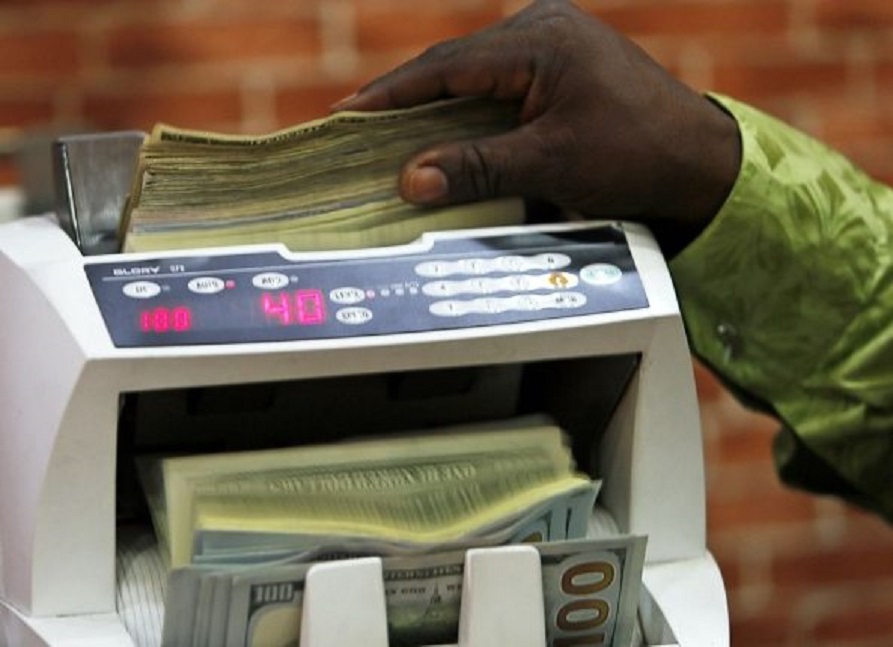
CBN Launches FX Tracker to Monitor Every BDC Dollar Purchase
By Adedapo Adesanya
The Central Bank of Nigeria (CBN) has launched a new digital platform to track every foreign exchange transaction involving Bureaux De Change (BDC) operators, marking a major step in its efforts to improve transparency and strengthen oversight of the country’s retail forex market.
In an operational guidance issued on July 15 to authorised dealer banks and licensed BDCs, the apex bank introduced the FX BDC Purchase Tracker (FXBT), a centralised electronic portal designed to monitor foreign exchange purchases by BDCs from the point of request through approval, settlement and eventual sale.
The CBN said the portal will require BDCs to upload real-time or same-day data on all FX purchases made through the Nigerian Foreign Exchange Market (NFEM), giving the regulator transaction-level visibility across the retail FX market.
According to the bank, the platform is designed to prevent abuse by making it easier to detect operators attempting to exceed the weekly purchase limit of $150,000, obtain allocations from multiple banks or divert foreign exchange outside approved channels.
The launch of the tracker builds on the CBN’s February policy that restored direct access for licensed BDCs to purchase foreign exchange from authorised dealer banks through the NFEM. While that policy improved access to official FX, the new platform provides the digital infrastructure to monitor how the funds are used.
Under the new framework, authorised dealer banks must conduct comprehensive Know-Your-Customer (KYC) and customer due diligence checks before selling foreign exchange to any BDC.
The new guideline also says banks must verify beneficial ownership information, retain incorporation documents and carry out enhanced due diligence for higher-risk operators. Any BDC that fails these checks will not be allowed to access official foreign exchange.
The guidance also requires banks to acknowledge BDC purchase requests submitted through the FXBT portal within two business hours and immediately notify operators whether their requests have been approved or rejected.
To discourage speculation, the CBN directed that any forex purchased through the NFEM but left unused must be sold back into the market within 24 hours after the expiration of the utilisation period. BDCs are also required to disclose any previously unused balances when submitting fresh requests.
In addition, all foreign exchange transactions between banks, BDCs and customers must be settled through registered accounts with licensed financial institutions. Third-party transactions are prohibited, and any transfer outside a BDC’s registered settlement account will be treated as a regulatory violation.
The apex bank also said all authorised dealer banks and licensed BDCs are expected to comply with the new regulatory guidance and operational procedures with immediate effect.