Connect with us

Economy

FG Rehabilitate TinCan, Onne Port, Others With $1.1bn

Published

on

tincan-island-port

By Adedapo Adesanya 

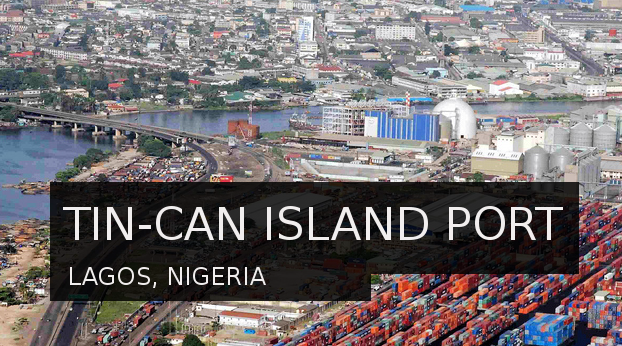
The federal government, through the Nigerian Ports Authority (NPA), has announced plans to invest $1.1 billion to fully rehabilitate decaying port infrastructure at TinCan, Apapa, Rivers, Delta, Calabar, and Onne ports as part of efforts to improve the efficiency of the nation’s existing ports.

Out of the estimated 47,000 kilometres of coastline in Africa, Nigeria makes up about 853 kilometres, creating the perfect opportunity to get access to its much-needed revenue.

This coastline and a 200 nautical mile exclusive economic zone make up Nigeria’s coastline in the Gulf of Guinea. The coastline equals a maritime area of 290 square kilometres or almost one-third of the nation’s land area of 924 square kilometres.

However, some of the country’s ports were built a century ago and haven’t been rebuilt since then, making it difficult for the country to fully tap the potential present in the infrastructure. Due to the decaying quay walls, the terminal operators are unable to deploy modern cargo handling equipment such as ship-to-shore cranes.

According to the NPA, this often results in high turnaround times of vessels and has necessitated the President Bola Tinubu administration to prioritise the rehabilitation of these key ports.

The rehabilitation will include Tin-Can Island Port Complex (TCIPC) where there will be the reconstruction of a 2,563m Quay Wall and Pavement, including other works, Lagos Port Complex (Apapa Quays) which will involve the reconstruction of 2,020m Quay wall to replace the old gravity wall (Berths 4-14) and the rehabilitation of collapsed 8.6 km Escravos Breakwaters in Warri, Delta State.

Others include the reconstruction of the 200m Quay Wall in FLT 2, Onne Port, the reconstruction of the 80m sheet pile wall structure in Warri Old Port (Terminal C) as well as the reconstruction of the 280m quay structure located in Warri Old Port (Terminal A).

In Cross River State, there will be the rehabilitation of the Calabar Dockyard, Mciver Jetty, and the Millero Jetty which fall under the Calabar Port Jetty Reconstruction project.

NPA noted that, “When this is completed, the existing ports will be operational at full capacity and with improved efficiency, thereby reducing the TAT of vessels and cargo dwell times.”


Adedapo Adesanya is a journalist, polymath, and connoisseur of everything art. When he is not writing, he has his nose buried in one of the many books or articles he has bookmarked or simply listening to good music with a bottle of beer or wine. He supports the greatest club in the world, Manchester United F.C.

Economy

FG Notes Concerns Around Capital Gains Tax by Investors

Published

on

wale edun finance minister

By Aduragbemi Omiyale

The federal government has promised to engage capital market stakeholders on the implementation of the controversial capital gains tax.

The Minister of Finance and Coordinating Minister for the Economy, Mr Wale Edun, said the government was aware of the concerns raised by capital market investors on the policy.

Speaking at the closing gong ceremony to commemorate the listing of the Ministry of Finance Incorporated (MOFI) Real Estate Investment Fund (MREIF) Series 2 at the Nigerian Exchange (NGX) Limited on Tuesday, the Minister assured of balanced capital gains tax outcomes.

“We have noted the concerns around capital gains tax and will continue to engage with the capital market to ensure any decisions deliver optimal outcomes for both Nigerians and the market,” he said.

His reaction was in response to a call by the chief executive of the NGX Group Plc, Mr Temi Popoola, for balanced outcomes in the implementation of the tax.

“The capital market is not only a platform for attracting investment but also a tool for creating wealth for Nigerians.

“Policies such as the capital gains tax must be carefully designed to balance government revenue objectives with investor confidence and market growth.

“NGX Group remains committed to supporting the Renewed Hope Agenda by channelling private capital into initiatives that deliver sustainable, long-term impact,” Mr Popoola stated.

Business Post reports that the MREIF Series 2 was listed on the exchange yesterday at N100 per unit, allowing low-income earners to participate in savings and investment, leveraging local resources to grow our economy, especially in the housing sector.

The listing took place against the backdrop of cautious trading in the equities market, as investors recalibrate portfolios in response to geopolitical tensions arising from the US–Nigeria diplomatic standoff, the proposed CGT, year-end portfolio rebalancing, and expectations of window-dressing by institutional players.

While liquidity remains robust, analysts emphasize that aligning fiscal policy with investor expectations is critical to sustaining confidence and deepening long-term market participation.

The chief executive of NGX Limited, Mr Jude Chiemeka, said MREIF demonstrates how the capital market can deliver practical solutions to national challenges:

“By channelling private capital into housing, we are creating opportunities for long-term investment and wealth creation while addressing Nigeria’s housing deficit,” he stated.

On his part, the chief executive of MOFI, Mr Armstrong Ume Takang, said, “MREIF provides long-term, low-cost mortgage financing to make homeownership a reality for millions of Nigerians, stimulating local economies across the housing value chain.”

Continue Reading

Economy

Senate Okays Tinubu’s N1.15tn Domestic Loan for 2025 Budget Deficit

Published

on

tinubu senate

By Adedapo Adesanya

The Senate has approved President Bola Tinubu’s request to raise N1.15 trillion from the domestic debt market to cover the deficit in the country’s 2025 budget.

The approval followed the adoption of a report by the Senate Committee on Local and Foreign Debt during plenary on Wednesday.

The committee noted that the 2025 Appropriation Act provides for a total expenditure of N59.99 trillion, an increase of N5.25 trillion over the initial N54.74 trillion proposed by the Executive.

This expansion created a total budget deficit of N14.10 trillion, of which N12.95 trillion had already been approved for borrowing, leaving an unfunded deficit of approximately N1.15 trillion (N1,147,462,863,321).

Last week (November 4), President Tinubu formally wrote to the lawmakers requesting a fresh N1.15 trillion in borrowing for the 2025 fiscal year, with a month left for the year to end.

He stated that it would bridge the funding gap and ensure full implementation of government programs and projects under the 2025 fiscal plan.

In a related development, a motion by Mr Abdul Ningi was adopted, directing the Senate Committee on Appropriations to intensify oversight to ensure that the borrowed funds are properly implemented and used strictly for their intended purposes.

This follows approval by the Senate and the House of Representatives approved to obtain $2.347 billion in fresh foreign loans, including a $500 million debut Sovereign Sukuk, to finance part of the 2025 budget deficit and refinance Nigeria’s maturing Eurobonds.

Last week, the $2.25 billion Eurobond was oversubscribed by 470 per cent with investors taking advantage of positive signals in the Nigerian economy.

Regardless of this, there is mounting public concern over Nigeria’s rising debt stock, which has climbed to over N152.40 trillion ($99 billion) as of mid-2025, according to figures from the Debt Management Office (DMO).

The federal government alone accounts for over 92 per cent of Nigeria’s public debt at N141.08 trillion, with N64.49 trillion as external debt and N76.59 trillion as local debt. States account for 7.4 per cent at N11.32 trillion as per the debt office.

Continue Reading

Economy

Senate Orders NNPC to Refund Unaccounted N210trn to Federation Account

Published

on

bayo ojulari nnpc

By Adedapo Adesanya

The Senate has told the Nigerian National Petroleum Company (NNPC) Limited to return N210 trillion in outstanding payments to the Federation Account, as it rejected the explanations provided by the state oil firm.

The conclusion was reached on Wednesday as a committee investigating the issue noted that the money, which had not been accounted for, must be refunded to the Federation Account by the company.

The Senate Committee on Public Accounts chaired by Mr Aliyu Wadada, which has been on the probe for months, took the decision on Tuesday after the Group Chief Executive Officer (GCEO) of the NNPC, Mr Bashir Bayo Ojulari, failed to turn up at its resumed sitting at the National Assembly.

The session was called to give the NNPC Limited the opportunity to make clarifications on the answers the company provided to the 19 questions the panel asked the firm about the N210 trillion.

Following a review of the operations of the state owned oil firm from 2017-2023, the committee sighted the unexplained transaction, totaling N103 trillion (accrued expenses) and N107 trillion (receivables) in the audited financial statements of the firm, totalling N210 trillion thereby prompting it to raise the queries.

After weeks of back-and-forth between the committee and the NNPC, the NNPC  eventually responded to the 19 questions.

However, at a resumed session, Mr Wadada frowned at the absence of Mr Ojulari, whom the committee said gave no reasons for staying away, consequently rejected the explanations.

The Chairman of the committee while speaking on the panel’s findings, said the responses were not only unsatisfactory, but were also contradictory.

“NNPC claimed N103 trillion as accrued expenses and N107 trillion as receivables -amounting to N210 trillion. On question eight, NNPC’s explanation on the N107 trillion receivables -equivalent to about $117 billion -contradicts available facts and evidence provided by NNPC itself. The committee is duty-bound to reject this,” he stated.

Mr Wadada further questioned how the firm could pay N103 trillion in Cash Calls to Joint Venture (JV) partners in 2023 alone, despite generating only N24 trillion in crude revenue between 2017 and 2022.

“Cash Call arrangements were abolished in 2016 under the President Muhammadu Buhari administration. How can NNPC claim to have paid N103 trillion in one year, when it only generated N24 trillion in revenue over five years? Where did NNPC get that money?

“As far as this committee is concerned, that figure is unjustifiable and unacceptable. The N103 trillion must be returned to the Treasury. This will be concluded when the NNPC appears before us,” he stated.

The committee said it would have been better for the current management of the NNPC to admit that it encountered challenges in explaining what happened to the funds than giving contradictory answers to the questions.

“If the present management of NNPC is finding it difficult to provide acceptable answers, it is better they say so. The committee will not hesitate to subpoena former officials of NNPC and NAPIMS,” Mr Wadada added.

Continue Reading

Trending