

Economy
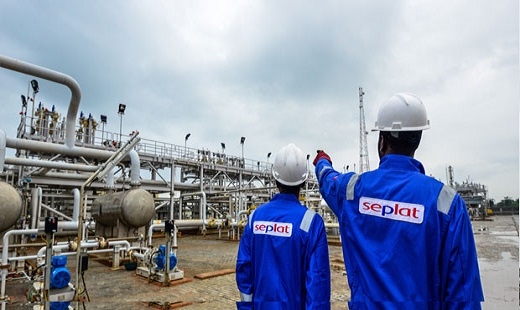
Fitch Rates Seplat Proposed Dollar-Denominated Bond Issuance

By Dipo Olowookere
Last week, one of the companies listed on the Nigerian Stock Exchange (NSE), Seplat Petroleum Development Company Plc (Seplat) announced its intention to issue five or seven-year Dollar denominated bonds to foreign investors.
The notes would be issue to refinance the company’s debts, a statement signed by the oil firm had disclosed.
With investors gearing up for the exercise, one of the renowned rating agencies in the world, Fitch Ratings, has assigned expected senior unsecured ‘B-(EXP)’/’RR4(EXP)’ ratings to the proposed bond issuance.
This information was made known in a statement issued by Fitch on Wednesday, February 28, 2018, which was obtained by Business Post.
Also in the statement, Fitch assigned an expected Long-Term Issuer Default Rating (IDR) of ‘B-(EXP)’ with a Positive Outlook to Seplat.
According to the rating firm, the expected IDR assumes a successful refinancing in 2018, i.e., issuance of USD-denominated senior notes and signing of a new long-term revolving credit facility (RCF).
The assignment of a final IDR is contingent upon the successful completion of the refinancing, with terms and conditions in line with our current assumptions.
The assignment of a final rating to the notes is contingent upon receipt of final documentation substantially in line with draft documentation reviewed.
The ‘B-(EXP)’ IDR reflects Seplat’s small scale by production and reserves, concentration of onshore exploration and production (E&P) assets in Nigeria (B+/Negative), and the cash flow volatility that has been associated with its operating environment.
Specifically, between February 2016 and June 2017, Seplat’s performance was severely impacted by a militant attack and subsequent prolonged downtime at the Forcados oil pipeline and export terminal. The company also has large, albeit declining, receivables from state-owned Nigerian Petroleum Development Company (NPDC).
The force majeure was lifted in June 2017 and Seplat has been ramping up production at its main asset.
Fitch said the Positive Outlook assigned to Seplat reflects its view that the Amukpe-Escravos oil pipeline, which Seplat anticipates to be fully commissioned and operational in Q318, will somewhat mitigate cash flow volatility by providing a viable alternative export route to Seplat.
The successful completion and start of operations of the Escravos oil pipeline coupled with continued production ramp-up across Seplat’s upstream assets could result in an upgrade of the IDR to ‘B’.
Along with the post-restructuring capital structure, the rating captures Seplat’s financial profile over 2018-2020, with forecast funds from operations (FFO) net adjusted leverage expected to remain comfortably below the 3.5x negative sensitivity.
On the key rating drivers, Fitch said Seplat, as a small E&P company with onshore oil and gas assets in Nigeria, had its full year 2017 working interest (WI) production around 37 thousand barrels of oil equivalent per day (kboepd), split nearly equally between liquids and natural gas.
Its main assets are the Oil Mining Leases (OMLs) 4, 38 and 41, production at which was severely constrained in 2016-1H17 due to the closure of the Forcados oil pipeline and export terminal following an attack.
Fitch forecasts that Seplat will continue ramping up its daily oil and gas output to 68kboepd in 2021, which incorporates our conservative estimate of a 20 percent additional downtime on the management forecasts.
It also believes that even following Seplat’s expected production ramp-up in 2018-2021 it will remain a small E&P company with a significant onshore asset concentration in one country. Its WI production and reserves (end-2016 – 241mmboe of proved or 1P reserves) remain commensurate with the ‘B’ category rating for an E&P company.
Fitch said to avoid a repetition of a prolonged downtime experienced when force majeure was declared on the Forcados oil pipeline and export terminal, Seplat and the Nigerian authorities have been working on a number of security options and alternative export routes.
The Nigerian government has prioritised the completion of the 160kbopd Amukpe-Escravos oil pipeline. Seplat currently expects the pipeline to be fully commissioned and operational in 3Q18.
In addition to the Escravos pipeline, two jetties at the domestic Warri oil refinery have been upgraded to allow exports of 30kbopd gross.
However, this is a more expensive option as barging of crude is required and Seplat plans to use Escravos as the primary crude export route, supported by Forcados and the Warri refinery routes.
“We believe that these measures when fully operational should provide adequate flexible cover for Seplat’s export transportation needs, but nonetheless conservatively model additional downtime of 20% in our forecasts for 2018-2020,” the rating agency said in its report.
It noted that following the resumption of production at OLMs 4, 38 and 41 in June 2017, Seplat’s financial profile has improved materially.
“Our 2017 base case forecasts FFO at $134 million vs. negative $11 million in 2016 and FFO net adjusted leverage of 2.5x vs. 8.5x at end-2016.
“We expect that Seplat will maintain a conservative financial profile over 2018-2020, with positive free cash flow (FCF), FFO adjusted net leverage under 2.5x and interest coverage of at least 3x,” it said.
Seplat’s 2017 gas revenues of $124 million were up 18 percent year-on-year and its daily gas sales averaged 293MMscfd (gross, not WI) in 4Q17. Seplat aims to increase gas supply to the domestic Nigerian market. Its gas processing capacity stands at 525MMscfd, while current wells can deliver around 400MMscfd (gross).
Nigerian gas prices are largely de-linked from oil prices, e.g. while average realised oil prices dropped by 21 percent between 2015 and 2016, gas prices increased by 19 percent. Seplat projects a higher share of gas in its production volumes, from 50 percent in 2017 to 60 percent in 2021.
“We view positively the higher share of gas in the sales mix, as it provides a more stable source of revenues.
However, gas remains the smaller business and is projected to account for less than 25 percent of the company’s gross revenues in 2021. Gas sales are also subject to credit risks and FX risks, as USD-linked payments for gas are made in Naira,” Fitch stated.
The rating company said the senior notes and secured RCF are expected to be issued by Seplat and will benefit from pari-passu upstream guarantees from Seplat West Ltd (contributor to almost 100 percent of consolidated EBITDA in 2017), Newton Energy and Seplat East Swamp Ltd.
The RCF will further benefit from a security package including a pledge over the shares of Seplat West and Newton, thus ranking it ahead of senior notes under our recovery analysis.
The notes benefit from a standard high-yield covenant package including covenants on permitted payments, incurrence of indebtedness and issuance of preferred stock, merger, consolidation or sale of assets, investments, creation of certain liens, pari passu in right of payment, and contain no financial maintenance covenants.
On its key assumptions, Fitch said they were based on Brent price deck of $52.5/bbl in 2018, $55/bbl in 2019 and $57.5/bbl thereafter; successful renewal of licenses for OMLs 4, 38 and 41 that expire in June 2019; domestic gas prices of between $2.5/mscf and $3/mscf, in line with management forecasts; and daily oil and gas production volumes ramping up from about 37kboepd in 2017 to 68kboepd in 2021, including a 20 percent additional downtime on the management forecasts.
Other were Opex (excluding royalties) improving from about $7.5/boe in 9M17 to about $6.5/boe in 2020-2021, 20 percent more conservative than management forecasts; average capex of about $105 million in 2017-2021, in line with management forecasts; and other cash inflows and outflows as projected plus $100 million additional outflows assumed by Fitch in each 2019-2021.
On the assumptions that relate to recovery estimates, Fitch its bespoke recovery analysis considered Seplat’s value on a going-concern basis in a distressed scenario and assumed that the company would keep its operating licenses and would be restructured rather than liquidated.
Fitch also applied a 25 percent discount to the 2017 EBITDA reflecting its view of a sustainable, post-reorganisation level upon which it based the valuation of the company. The discount reflects risks associated with the oil price volatility, potential unplanned downtime and other adverse factors.
In addition, the 4.5x multiple was used to calculate a post-reorganisation enterprise value (EV), reflecting a mid-cycle multiple for oil & gas and metals & mining companies in the EMEA region. This considered that Seplat does not have any unique characteristic that would allow for a higher multiple, such as significant market share, or undervalued assets.
As per Fitch’s criteria, the new and prior ranking RCF is assumed to be fully drawn and it has also taken 10 percent off the EV to account for administrative claims.
The waterfall results in a 100 percent recovery corresponding to a ‘RR1’ Recovery Rating for the RCF. The noteholders could achieve a recovery of 70% (RR3) but are capped at ‘RR4’ (soft cap), in line with Fitch’s criteria as Seplat’s physical assets are located in Nigeria.
Fitch said it expects Seplat’s liquidity to improve post refinancing, supported by positive FCF generation and a manageable maturity profile.
Fitch-projected FCF is around $125 million in 2018 and $66 million in 2019 because as at December 31, 2017, Seplat had the equivalent of $437 million in cash.






By Adedapo Adesanya
The Lagos Chamber of Commerce and Industry (LCCI) has noted that the N15.52 trillion allocation to debt servicing in the 2026 budget remains a significant fiscal burden.
LCCI Director-General, Mrs Chinyere Almona, said this on Tuesday in Lagos via a statement in reaction to the nation’s 2026 budget of N58.18 trillion, hinging the success of the 2026 budget on execution discipline, capital efficiency, and sustained support for productive sectors.
She noted that the budget was a timely shift from macroeconomic stabilisation to growth acceleration, reflecting growing confidence in the economy.
She lauded its emphasis on production-oriented spending, with capital expenditure of N26.08 trillion, representing 45 per cent of total outlays, and significantly outweighing non-debt recurrent expenditure of N15.25 trillion.
According to Mrs Almona, this composition supports infrastructure development, industrial expansion, and productivity growth.
However, she explained that the N15.52 trillion allocation to debt servicing underscored the need for stricter borrowing discipline, enhanced revenue efficiency, and expanded public-private partnerships to safeguard investments that promote growth.
She added that a further review of the 2026 budget revealed relatively optimistic macroeconomic assumptions that may pose fiscal risks.
“The oil price benchmark of $64.85 per barrel, although lower than the $75.00 benchmark in the 2025 budget, appears optimistic when compared with the 2025 average price of about $69.60 per barrel and current prices around $60 per barrel.
“This raises downside risks to oil revenue, especially since 35.6 per cent of the total projected revenue is expected to come from oil receipts.
“Similarly, the oil production benchmark of 1.84 million barrels per day is significantly higher than the current level of approximately 1.49 million barrels per day.
“Achieving this may be challenging without substantial improvements in security, infrastructure integrity, and sector investment,” she said.
Mrs Almona said the exchange rate assumption of N1,512 to the Dollar, compared with N1,500 in the 2025 budget and about N1,446 per Dollar at the end of November, suggests expectations of a mild depreciation.
She said while this may support Naira-denominated revenue, it also increases the cost of imports, debt servicing, and inflation management, with broader macroeconomic implications.
The LCCI DG added that the inflation projection of 16.5 per cent in 2026, up from 15.8 per cent in the 2025 budget and a current rate of about 14.45 per cent, appeared optimistic, particularly in a pre-election year.
She also expressed concern about Nigeria’s historically weak budget implementation capacity, likely to be further strained by the combined operation of multiple budget cycles within a single year.
Looking ahead, Mrs Almona identified agriculture and agro-processing, manufacturing, infrastructure, energy, and human capital development as key drivers of growth in 2026.
She said that unlocking these sectors would require decisive execution—scaling irrigation and agro-value chains, reducing power and logistics costs for manufacturers, and aligning education and skills development with private-sector needs.
The LCCI head stressed the need to resolve issues surrounding the Naira for crude, increase the supply of oil to local refineries to boost local refining capacity and conserve the substantial foreign exchange used for fuel imports.
“Overall, the 2026 Budget presents a credible opportunity for Nigeria to transition from recovery to expansion.
“Its success will depend less on the size of allocations and more on execution discipline, capital efficiency, and sustained support for productive sectors.
By Dipo Olowookere
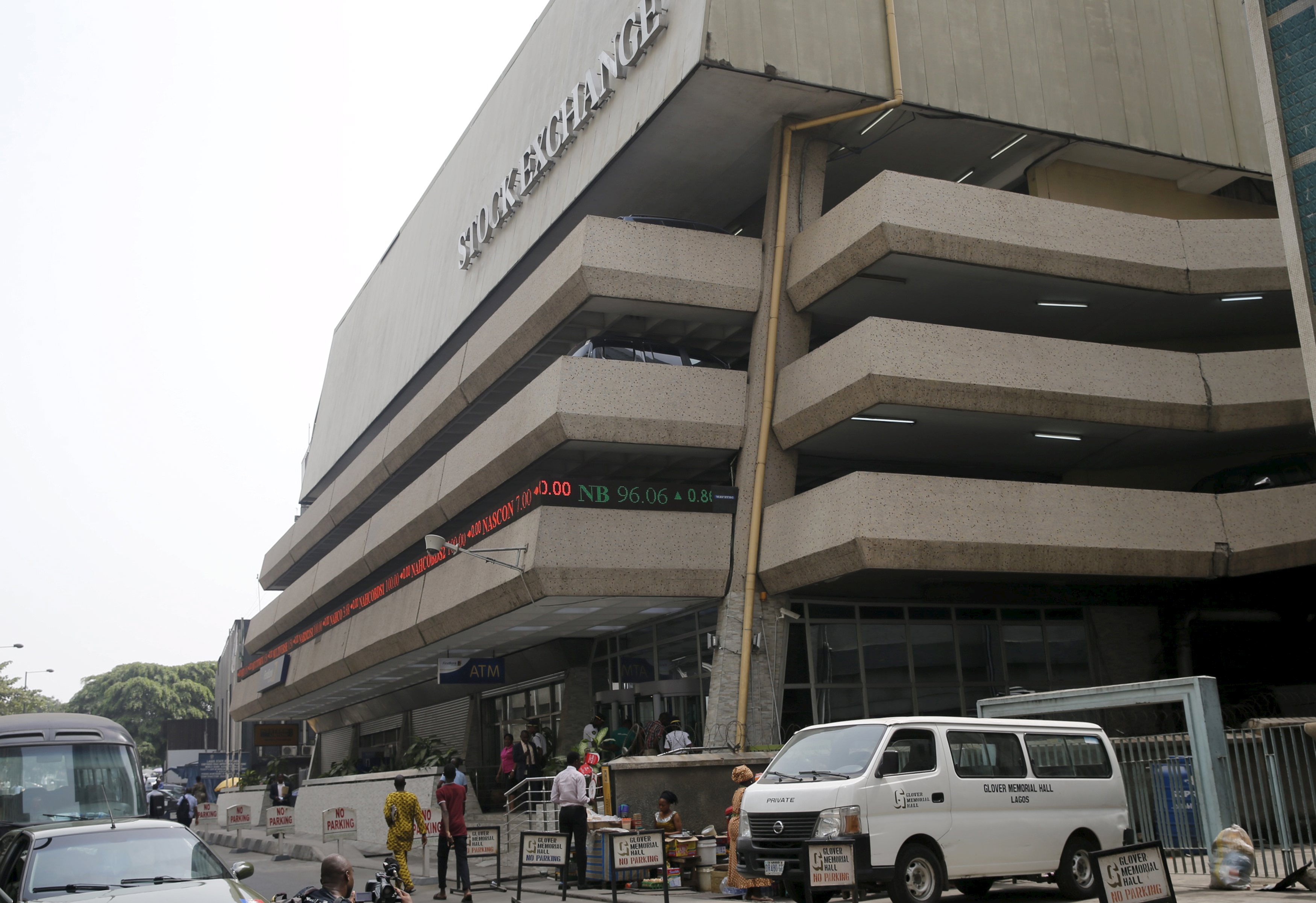
The Nigerian Exchange (NGX) Limited witnessed Santa Claus rally on Wednesday after it closed higher by 0.12 per cent.
Strong demand for Nigerian stocks lifted the All-Share Index (ASI) by 185.70 points during the pre-Christmas trading session to 153,539.83 points from 153,354.13 points.
In the same vein, the market capitalisation expanded at midweek by N118 billion to N97.890 trillion from the preceding day’s N97.772 trillion.
Investor sentiment on Customs Street remained bullish after closing with 36 appreciating equities and 22 depreciating equities, indicating a positive market breadth index.
Guinness Nigeria chalked up 9.98 per cent to trade at N318.60, Austin Laz improved by 9.97 per cent to N3.20, International Breweries expanded by 9.85 per cent to N14.50, Transcorp Hotels rose by 9.83 per cent to N170.90, and Aluminium Extrusion grew by 9.73 per cent to N16.35.
On the flip side, Legend Internet lost 9.26 per cent to close at N4.90, AXA Mansard shrank by 7.14 per cent to N13.00, Jaiz Bank declined by 5.45 per cent to N4.51, MTN Nigeria weakened by 5.21 per cent to N504.00, and NEM Insurance crashed by 4.74 per cent to N24.10.
Yesterday, a total of 1.8 billion shares valued at N30.1 billion exchanged hands in 19,372 deals versus the 677.4 billion shares worth N20.8 billion traded in 27,589 deals in the previous session, implying a slump in the number of deals by 29.78 per cent, and a surge in the trading volume and value by 165.72 per cent and 44.71 per cent apiece.
Abbey Mortgage Bank was the most active equity for the day after it sold 1.1 billion units worth N7.1 billion, Sterling Holdings traded 127.1 million units valued at N895.9 million, Custodian Investment exchanged 115.0 million units for N4.5 billion, First Holdco transacted 40.9 million units valued at N2.2 billion, and Access Holdings traded 38.2 million units worth N783.3 million.

By Adedapo Adesanya
Nigerian food and beverage company, Rite Foods Limited, has extended warm Yuletide greetings to Nigerians as families and communities worldwide come together to celebrate the Christmas season and usher in a new year filled with hope and renewed possibilities.
In a statement, Rite Foods encouraged consumers to savour these special occasions with its wide range of quality brands, including the 13 variants of Bigi Carbonated Soft Drinks, premium Bigi Table Water, Sosa Fruit Drink in its refreshing flavours, the Fearless Energy Drink, and its tasty sausage rolls — all produced in a world-class facility with modern technology and global best practices.
Speaking on the season, the Managing Director of Rite Foods Limited, Mr Seleem Adegunwa, said the company remains deeply committed to enriching the lives of consumers beyond refreshment. According to him, the Yuletide period underscores the values of generosity, unity, and gratitude, which resonate strongly with the company’s philosophy.
“Christmas is a season that reminds us of the importance of giving, togetherness, and gratitude. At Rite Foods, we are thankful for the continued trust of Nigerians in our brands. This season strengthens our resolve to consistently deliver quality products that bring joy to everyday moments while contributing positively to society,” Mr Adegunwa stated.
He noted that the company’s steady progress in brand acceptance, operational excellence, and responsible business practices reflects a culture of continuous improvement, innovation, and responsiveness to consumer needs. These efforts, he said, have further strengthened Rite Foods’ position as a proudly Nigerian brand with growing relevance and impact across the country.
Mr Adegunwa reaffirmed that Rite Foods will continue to invest in research and development, efficient production processes, and initiatives that support communities, while maintaining quality standards across its product portfolio.
“As the year comes to a close, Rite Foods Limited wishes Nigerians a joyful Christmas celebration and a prosperous New Year filled with peace, progress, and shared success.”











-
 Feature/OPED6 years ago
Davos was Different this year
-
Travel/Tourism9 years ago
Lagos Seals Western Lodge Hotel In Ikorodu
-

 Showbiz3 years ago
Estranged Lover Releases Videos of Empress Njamah Bathing
-
 Banking8 years ago
Sort Codes of GTBank Branches in Nigeria
-

 Economy3 years ago
Subsidy Removal: CNG at N130 Per Litre Cheaper Than Petrol—IPMAN
-

 Banking3 years ago
First Bank Announces Planned Downtime
-

 Banking3 years ago
Sort Codes of UBA Branches in Nigeria
-

 Sports3 years ago
Highest Paid Nigerian Footballer – How Much Do Nigerian Footballers Earn