Connect with us

Economy

Forex Session Times in Philippines – TU Experts Described Optimal Trading Times

Published

on

Forex session times in Philippines

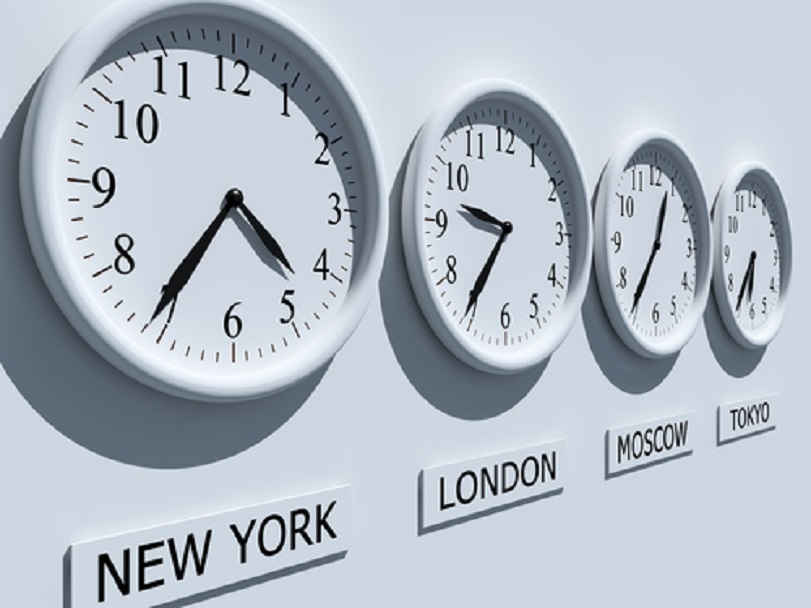
The intricacies of the foreign exchange market, which commands a staggering daily trade volume of over $5 trillion, have long intrigued traders. Recognized as the world’s most expansive financial playground, its decentralized nature stands in contrast to conventional stock exchanges. Instead of a physical trading floor, forex operates over the counter through interconnected global computer networks. This system grants traders from every corner of the globe, including the Philippines, unrestricted access. Yet, while it remains open 24/7, analysts at Traders Union point out that it’s a misconception that profitability remains constant throughout. This comprehensive guide from TU will shed light on the Forex session times in Philippines tailored for Filipino traders.

Time Zones in the Philippines: Navigating Forex Trading Windows

Forex might be a global phenomenon, but Traders Union experts stress that its heartbeat varies depending on the time zones and the bustling financial centers active within those hours. For diligent traders in the Philippines, mapping these sessions can pave the way for maximized returns.

  • Asian Forex Session:
    Beginning at 7:00 AM and wrapping up at 4:00 PM Philippine Standard Time (PHT), the Asian session is a hub of activity. Financial powerhouses such as Tokyo, Singapore, Hong Kong, and Shanghai fuel this session’s vibrancy. Filipino traders can witness significant movements, especially with currency pairs like USD/JPY, AUD/USD, and NZD/USD. It’s a golden window for those eyeing the Asian market dynamics.
  • European (London) Session:
    Operating from 4:00 PM to 2:30 AM PHT, this session is particularly riveting. Why? It not only overlaps with the tail end of the Asian session but also ushers in trading from London – a titan in the forex arena. The blend of Asian closeout and European commencement creates a melting pot of volatility. For those in the Philippines, pairs such as EUR/USD, GBP/USD, and USD/CHF often witness substantial fluctuations.
  • New York Session:
    Lasting from 8:00 PM PHT to the early hours of 4:00 AM PHT the subsequent day, the New York session is a heavyweight. Its significance is amplified as it overlaps with the European window and also marks the trading onset in New York, another behemoth in the currency world. For those nestled in the Philippines and looking to exploit this period, diving into currency pairs like USD/CAD, USD/CHF, and USD/JPY might prove fruitful.

Unraveling the Prime Forex Trading Slots in the Philippines

Amid the individual significance of each trading session, TU analysts argue that some moments emerge brighter than others. These are times when multiple sessions overlap, leading to a crescendo of trading activity:

  • From 3:00 AM to 4:00 AM EST, the convergence of Tokyo and London sessions unfolds.
  • Between 8:00 AM and 12:00 PM EST, New York and London sessions intertwine, ushering in heightened action.
  • Later, from 7:00 PM to 2:00 AM EST, the Tokyo and Sydney sessions overlap, creating another hotspot.

When to Exercise Caution in Forex Trading

While the allure of forex is undeniable, it’s essential to acknowledge that not all hours promise gold. According to Traders Union experts, certain periods are best approached with restraint:

  • Weekends: Specifically, the afternoons of Friday and Sunday. While trading is technically possible, the market often witnesses reduced liquidity, leading to potentially unfavorable wider spreads.
  • Bank Holidays: These can throw a spanner in the works, especially if they coincide with globally significant business days. Liquidity can dip, and unpredictable swings might ensue.
  • Major News Releases: Global events, whether political, economic, or social, can inject volatility into the market. Whether it’s election results or major policy shifts by central banks, such moments can be treacherous for the unprepared.

Conclusion

The world of forex offers an exhilarating journey for those equipped with knowledge. As TU experts have concluded, for traders in the Philippines, this means understanding the ebb and flow of different trading sessions. By aligning strategies with peak activity hours and treading cautiously during volatile or unpredictable times, one can chart a course toward consistent profitability in the forex market.


Dipo Olowookere is a journalist based in Nigeria that has passion for reporting business news stories. At his leisure time, he watches football and supports 3SC of Ibadan. Mr Olowookere can be reached via [email protected]

Economy

Crude Oil Slightly Rises as Iran Allows Safe Passage for Ships

Published

on

Brazilian Crude Oil

By Adedapo Adesanya

Crude oil marginally appreciated on Thursday after it was reported that about 30 vessels had crossed the Strait of Hormuz, with Brent crude oil futures gaining 9 cents or 0.09 per cent to trade at $105.72 a barrel, and the US West Texas Intermediate (WTI) futures expanding by 15 cents or 0.15 per cent to $101.17 a barrel.

Iranian state media reported that about 30 Chinese vessels were allowed safe passage by Iran through the Strait, which has been largely shut since the Iran war broke out at the end ​of February.

Before the report, a Chinese supertanker carrying 2 million barrels of Iraqi crude sailed through the contested waterway on Wednesday after being stranded in the Gulf for more than two months, while a Panama-flagged crude oil tanker managed by Japanese refining group Eneos had also passed.

Bloomberg also reported that the vessels were allowed to pass the Strait of Hormuz with the coordination of the Iranian authorities and Islamic Revolutionary Guard Corps’ navy, however, it added that it is yet unknown or unclear whether the US Navy side of the de facto blockade will also let them pass.

The move also follows formal requests by China’s foreign minister as well as its ambassador to Iran, with Iran reportedly agreeing based on safeguarding the two allies’ strategic partnership.

It also comes as President Donald Trump’s ongoing state visit to China, where he and President Xi Jinping agreed that the ‌Strait of ‌Hormuz must be open for ‌the free flow of energy.

President Xi expressed interest in purchasing more US oil to reduce China’s dependence on the Strait of Hormuz, according to the White House. China, the world’s largest oil importer, is not a big buyer of US crude and has not imported any since May 2025 due to a 20 per cent import tariff imposed during the trade war.

Iran, a member of the Organisation of the Petroleum Exporting Countries (OPEC), ​also appears to have tightened control over the strait, cutting deals with Iraq and Pakistan to ship oil and liquefied natural gas from the region.

The International Monetary Fund (IMF) said the global economy is clearly moving into a middle “adverse scenario,” which would see global real GDP growth falling to 2.5 per cent this year from 3.4 per cent growth in 2025, citing the Iran war as the cause.

Continue Reading

Economy

Run From Any Unregistered Online Investment Platform—SEC Warns Nigerians

Published

on

SEC Nigeria

By Aduragbemi Omiyale

For the umpteenth time, the Securities and Exchange Commission (SEC) has run to the rooftop to warn Nigerians against putting their hard-earned money in online investment platforms not authorised to operate in the nation’s capital market.

SEC is the apex regulatory agency in the Nigerian capital market. It issues licences to companies operating in the ecosystem.

In a statement on Thursday, the organisation expressed concerns over the rising “promotion of unregistered online investment schemes on social media applications and websites, including WhatsApp, Instagram, Telegram, Facebook, TikTok and other digital platforms.

In the notice, the SEC emphasised that, “Many of these investment schemes exhibit characteristics of Ponzi or Prohibited investment schemes, while some operators of such schemes also provide unauthorised investment services to members of the public.”

In view of these, the commission advised members of the public “to refrain from investing or participating in any unregistered online investment platform or scheme promising unrealistic or guaranteed returns.”

“Members of the public are further advised not to rely on investment advisories circulated through online platforms by persons or entities not registered by the commission, as reliance on such advisories may expose investors to significant financial losses and fraudulent schemes,” it noted.

“The public is reminded that, under the provisions of the Investments and Securities Act, 2025, only entities registered by the commission are authorised to promote investment services, provide investment advisory services or solicit funds from the public in the Nigerian capital market,” another part of the circular signed by the management noted.

The regulator urged the investing public to verify the registration status of any platform, company, or entity offering investment opportunities on its dedicated portal: https://sec.gov.ng/fintech-and-innovation- hub-finport/registered-fintech-operators/ or https://www.sec.gov.ng/cmos before transacting or investing with them.

Continue Reading

Economy

Dangote Rejects NNPC Bid to Raise Stake in Soon-to-Be Listed Refinery

Published

on

NNPC vs Dangote refinery

By Adedapo Adesanya

Nigerian businessman, Mr Aliko Dangote, has disclosed that he rejected requests by the Nigerian National Petroleum Company (NNPC) Limited to increase its 7.25 per cent stake in the Dangote Petroleum Refinery.

Mr Dangote stated this in a podcast with the Chief Executive Officer of the Norwegian Sovereign Wealth Fund, Mr Nicolai Tangen.

In the podcast interview, the billionaire revealed that the state oil company offered to increase its current 7.25 per cent stake in the 650,000 barrels per day plant.

However, this was rejected because the company is planning to go public and give other Nigerians the opportunity to own shares in the plant.

Recall that the refinery is planning a multi-exchange listing and targeting a valuation of $50 billion. It has appointed a consortium of three financial advisers to manage the offering. Stanbic IBTC Capital to handle international book-building process and lead engagement with foreign portfolio investors; Vetiva Capital Management to manage retail investor distribution within Nigeria; and FirstCap to focus on placements with Nigerian institutional investors, particularly pension funds.

It was reported in 2021 that the NNPC acquired the 7.25 per cent stake in the refinery for $1 billion, with an option to acquire the remaining 12.75 per cent stake by June 2024.

However, the national oil firm reneged on its decision.

During the interview with the Norwegian Sovereign Wealth Fund CEO, Mr Dangote revealed that the state oil company had made attempts to acquire more stakes in the refinery, but this was turned down.

The revelation came while he was responding to questions about what could be the biggest risks to his businesses.

“Actually, if there are civil wars, which is not in the offing at all.

“The other biggest risk is government inconsistencies in policies, and we are addressing that one because if you look at our refinery, the national oil company already owns 7.25 per cent, and they are trying to buy more. We are the ones that said no; we want to now spread it and have everybody be part of it.”

In 2024, Mr Dangote revealed that under the former Group Chief Executive Officer, Mr Mele Kyari, the NNPC reduced its stake in the refinery from 20 per cent to 7.25 per cent. He disclosed that the NNPC had only a 7.2 per cent stake in the refinery and not 20 per cent as many Nigerians believed.

“The agreement was actually 20 per cent, which we had with NNPC, and they did not pay the balance of the money up until last year; then we gave them another extension up until June (2024), and they said that they would remain where they had already paid, which is 7.2 per cent. So NNPC owns only 7.2 per cent, not 20 per cent,” Mr Dangote stated at the time.

Continue Reading

Trending