Connect with us

Economy

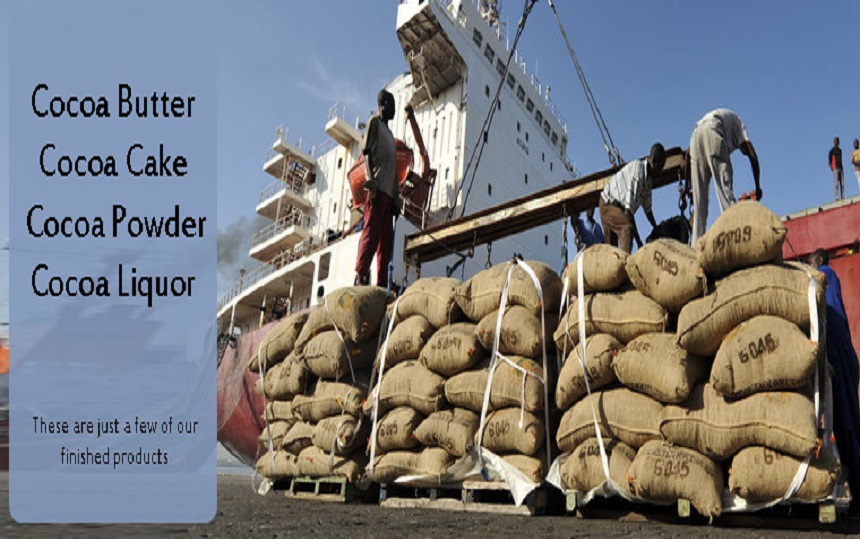
FTN Cocoa Blames Inadequate Working Capital for N664m FY20 Loss

Published

on

FTN Cocoa Processors

By Dipo Olowookere

In the 2020 financial year, FTN Cocoa Processors Plc recorded a loss after tax of N664.1 million in contrast to the loss after tax of N601.3 million it recorded in the 2019 reporting year.

According to the firm, this loss was caused by the “lack of adequate working capital to produce at optimal level coupled with heavy finance cost.”

In the past weeks, shares of FTN Cocoa have melted the hearts of investors, who started to develop feelings for the company’s equities after a suspension placed on the firm by the Nigerian Stock Exchange (NSE) was lifted.

The exchange sanctioned FTN Cocoa on September 1, 2020, for failing to file its results at the appropriate time and after the board did the needful and the embargo was removed on November 27, 2020, its equity price began to rise at the market.

FTN Cocoa, which was at 26 kobo when the suspension was placed by the NSE, rose as high as 89 kobo in December before falling to 55 kobo by end of January 2021 and closed at 53 kobo on Tuesday, February 2, 2021.

According to information scooped by Business Post, a rumour that an investor was planning to come into the company spurred market participants to have an interest in the shares.

Over the weekend, the company released its financial statements for the year ended December 31, 2020, and from the analysis by Business Post, the performance of the firm was awful.

The revenue generated by FTN Cocoa in the year significantly went down to N235.2 million from N672.2 million and this was mainly due to a decline in both local and export sales.

Though the cost of sales reduced to N532.4 million from N1.2 billion in 2019, the firm ended the year with a gross loss of N297.2 million in contrast to N476.1 million gross loss of the preceding year.

However, the operating expenses of the organisation increased in the period under consideration to N225.1 million from N167.8 million as a result of the cost incurred on office and general expenses; legal and professional fee; and AGM costs.

At the close of transactions for the year, FTN Cocoa reported an operating loss of N486.9 million, lower than the operating loss of N512.0 million of the previous year.

On the balance sheet, the total assets of FTN Cocoa stood at N4.6 billion in FY 2020 versus N4.7 billion in FY 2019, while the total liabilities stood at N5.8 billion last year as against N5.2 billion a year earlier and this was caused by an increase in borrowings.


Dipo Olowookere is a journalist based in Nigeria that has passion for reporting business news stories. At his leisure time, he watches football and supports 3SC of Ibadan. Mr Olowookere can be reached via [email protected]

Click to comment

Leave a Reply

Your email address will not be published. Required fields are marked *

Economy

NUPRC, NRS to Strengthen Oil Revenue Collection

Published

on

NUPRC NRS

By Modupe Gbadeyanka

Efforts are being made to deepen collaboration to promote transparency and accountability in the collection of oil and gas revenue in Nigeria.

Two key organisations involved in this, the Nigerian Upstream Petroleum Regulatory Commission (NUPRC) and the Nigeria Revenue Service (NRS), recently held a strategic meeting to further work on ways to achieve this goal.

The chief executive of NUPRC, Mrs Oritsemeyiwa Eyesan, was at the headquarters of the tax-collecting agency in Abuja on Wednesday.

In discussions with the chairman of NRS, Mr Zacch Adedeji, she praised him for driving reforms that culminated in the enactment of the NRS Act.

Speaking on the transfer of revenue collection responsibilities, Mrs Eyesan said the process had been seamless, highlighting her organisation’s efforts to create an enabling environment for operators in the oil and gas industry.

She further revealed that Nigeria had the potential to produce 1.9 million barrels per day, having hit a peak production of 1.86 million barrels per day in May.

In his response, the NRS chairman praised NUPRC for its dynamism, professionalism and transparency, promising continued collaboration with the commission, particularly on matters relating to the transfer of revenue collection functions under the new Act.

“I collect revenue. I don’t generate revenue. Wherever revenue is, I work on it and keep an account for you. So, I’m helping you to collect your royalties,” Mr Adedeji said.

He pledged that the NRS would continue to support the commission to achieve its shared objective of increasing government revenues in a fair, transparent and sustainable manner.

Continue Reading

Economy

NASD OTC Exchange Gains N26.99bn as Investors Drive 1.04% Rally

Published

on

NASD OTC exchange

By Adedapo Adesanya

The NASD Over-the-Counter (OTC) Securities Exchange jumped 1.04 per cent on Wednesday, June 17, with the market capitalisation adding N26.99 billion to settle at N2.619 trillion compared with the previous session’s N2.592 trillion, and the Unlisted Security Index (NSI) rising by 45.1 points to close at 4,378.45 points, in contrast to the preceding day’s 4,333.35 points.

The rally was driven by the gains reported by two securities, which outweighed the losses posted by three securities, led by FrieslandCampina Wamco Nigeria Plc, which dipped by N1.95 to N178.19 per unit from N180.14 per unit. Geo-Fluids Plc lost 19 Kobo to close at N2.61 per share compared with Tuesday’s closing price of N2.80 per share, and Food Concepts Plc slid by 1 Kobo to N1.77 per unit from N1.78 per unit.

On the flip side, Central Securities Clearing System (CSCS) Plc recorded a N6.33 appreciation to trade at N86.57 per share versus the previous day’s N80.24 per share, and Light House Financial Services Plc grew by 10 Kobo to N1.13 per unit from the N1.03 per unit it closed a day earlier.

In the midweek session, the value of stocks traded by investors surged by 181.0 per cent to N128.3 million from the preceding session’s N45.6 million, the volume of securities increased by 305.6 per cent to 2.8 million units from Tuesday’s 688,290 units, and the number of deals executed jumped by 6.5 per cent to 33 deals from 31 deals.

At the close of trades, Great Nigeria Insurance (GNI) Plc remained the most active stock on a year-to-date basis, with 3.4 billion units valued at N8.4 billion, followed by Infrastructure Credit Guarantee (Infracredit) Plc with 2.3 billion units sold for N6.5 billion, and CSCS Plc with 67.3 million units exchanged for N4.6 billion.

GNI Plc also ended as the most traded stock by volume on a year-to-date basis, with 3.4 billion units worth N8.4 billion, followed by Infracredit Plc with 2.3 billion units sold for N6.5 billion, and Resourcery Plc with 1.1 billion units traded for N415.7 million.

Continue Reading

Economy

Ayobo-Ipaja LCDA Explores Commercial Ostrich, Crocodile Farming

Published

on

ostrich and Crocodile Farming

By Dipo Olowookere

As part of moves to boost its internally generated revenue (IGR) and increase its streams of income, Ayobo-Ipaja Local Council Development Area (LCDA) is considering commercial ostrich and crocodile farming.

The council recently held a sensitisation programme, where agribusiness experts engaged stakeholders, including residents and entrepreneurs, on the viability of this.

The programme provided participants with the knowledge on investment requirements, training opportunities, startup funding, and regulatory frameworks guiding ostrich and crocodile farming in Nigeria.

The chairman of Ayobo-Ipaja LCDA, Mr Lukmon Agbaje, commended the initiative, reiterating his administration’s commitment to promoting innovative agricultural practices as a pathway to sustainable development.

He described agriculture as a critical driver of economic transformation, stressing that modern farming has evolved into a profitable business venture with immense potential for youth empowerment and enterprise development.

Mr Agbaje further assured participants of the council’s readiness to partner with investors, agricultural institutions, and other relevant stakeholders to facilitate training, capacity building, and access to opportunities across the agricultural value chain.

On his part, the council’s Head of Department of Agriculture, Mr Wale Atepe, emphasised the growing market demand for products such as leather, meat, feathers, and other valuable by-products, adding that strategic investment in the sector could unlock significant opportunities for employment, wealth creation, and export earnings.

Continue Reading

Trending