Connect with us

Economy

How to Build an Investment Portfolio

Published

on

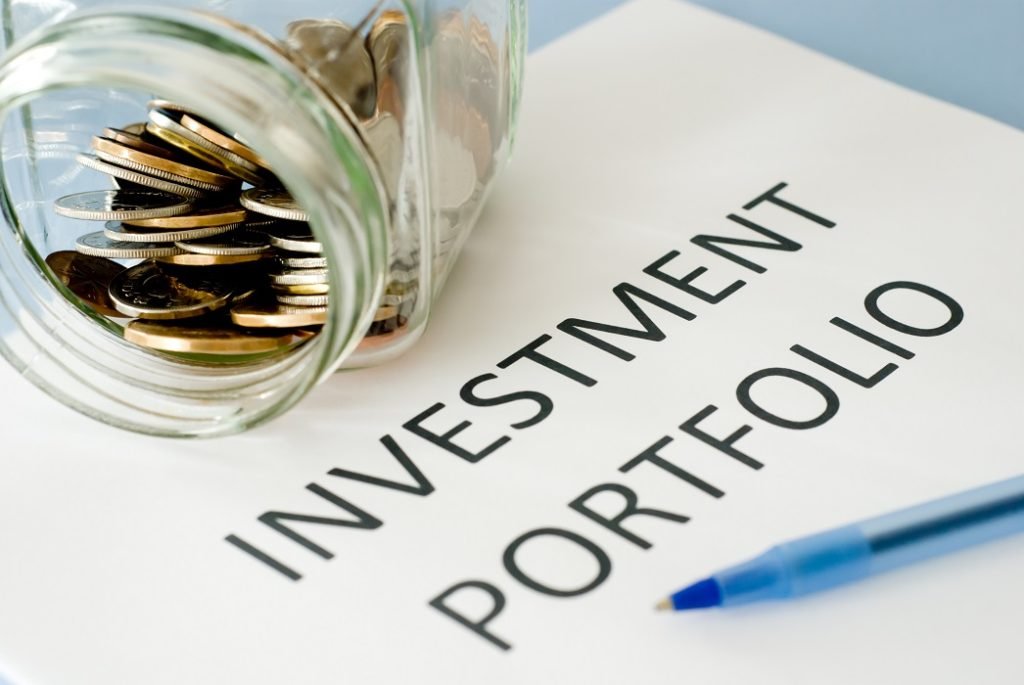
Investment Portfolio

By FBNQuest

Every investor who desires to build and grow wealth should have an investment portfolio. Wealth creation efforts are less likely to succeed if they are approached haphazardly, so building an investment portfolio is a great way to add the necessary strategy and intention to these efforts.

An investment portfolio, simply defined, is a collection of all the assets an investor owns. It can be likened to a roof under which you house all your investments. A good investment portfolio will be diversified and contain a wide variety of assets such as stocks, bonds, mutual funds, real estate, fine art, gold etc.

Types of Investment Portfolios

There are five major types of investment portfolios and they are built by taking the financial goals and risk appetite of the investor into consideration.

The Aggressive Portfolio – This type of portfolio is specially designed for investors with a high tolerance for risk. Investments that fall under this category are high risk but also have the potential to yield high returns. High beta stocks are an example of this kind of asset. They are more volatile and experience a greater fluctuation in price when compared to the overall market.

The Defensive Portfolio – This category is for people who have a low-risk appetite. Building a defensive portfolio usually involves investing in stocks of companies that will stay in business no matter what. These are companies that make products that are important for everyday survival.

The Income Portfolio – The goal of an income portfolio is to generate positive cash flow. This includes stocks that pay regular dividends and provide a steady source of income for the investor. An income portfolio can serve as a great supplement to an investor’s salary or retirement income.

The Speculative Portfolio – This portfolio is also tailored to an investor with a high-risk tolerance. It basically involves pre-empting which stocks are likely to do well. An example of speculative investment is an initial public offering (IPO) of a new tech company. Financial advisors usually advise investors against putting more than 10 per cent of their investment funds into such assets.

The Hybrid Portfolio – The hybrid portfolio, as the name implies, is a combination of different assets. This portfolio encourages diversification and provides the investor with a diversified portfolio which can include stocks, mutual funds, bonds, commodities, real estate, and even art. This portfolio category comes with the advantage of flexibility for the investor; it also reduces the negative impact of losses from one asset class.

How to start building an investment portfolio

Building an investment portfolio can seem like an uphill task, but it does not have to be. The first step is to identify your financial goals. As Bloomberg financial analyst and Chief Investment Officer of Ritholtz Wealth Management LLC, Barry Ritholtz aptly points out: “When it comes to investing, there is no such thing as a one-size-fits-all portfolio.”

Identifying your unique goals will determine if your money should go into short-term or long-term investments. It will also predict what kind of portfolio would be best suited to your needs. A portfolio tailored towards retirement will be different from one that is intended to provide income within the next five years.

It is also important to assess your risk tolerance. If you are risk-averse, this means you are careful about putting your money at risk for promising rewards. Therefore, your money should be invested as safely and predictably as possible. However, if you have a high tolerance for risk, you are open to taking risks for the possibility of making greater returns.

Once this is completed, you would need to honestly examine your investing skills, to establish whether you can build a portfolio yourself or would require the support of a Financial Adviser.

The next step is to decide on asset allocation. How much of your money will go into each investment? How do you plan to balance your portfolio and continue to diversify as time goes on? These are all questions that must be answered and it’s advisable to seek the help of a professional for this stage of the process.

In conclusion, the major keys to keep in mind when building an investment portfolio are to identify your goals, assess your risk appetite and talk to an expert. Ready support is available to you, as FBNQuest offers a variety of investment products and is available to offer advice to investors based on their risk appetite.


Click to comment

Leave a Reply

Your email address will not be published. Required fields are marked *

Economy

Crude Oil Slips to $88 Per Barrel as Iran Reopens Strait of Hormuz

Published

on

Utapate crude oil blend

By Dipo Olowookere

The price of crude oil on the global market dropped below the $90 per barrel mark on Friday after Iran announced the reopening of the Strait of Hormuz.

About 20 per cent of the world’s total oil and liquefied natural gas (LNG) consumption passes through this narrow body of water between Iran and Oman.

It was shut down by Iran after the United States and Israel launched airstrikes on it in late February 2026.

For the past few days, there have been talks between the US and Iran over the reopening of the Strait. The Middle East country reopened it after Israel and Lebanon struck a deal.

This action crashed the price of crude oil today, with the Brent grade selling at about $88 per barrel and the West Texas Intermediate (WTI) grade trading at $83 per barrel as of the time of filing this report.

Iranian Foreign Minister, Mr Abbas Araghchi, announced the reopening of the Strait of Hormuz, with the move already welcomed by President Donald Trump of the United States.

It will remain open during the ceasefire while further negotiations continue between America and Iran.

“In line with the ceasefire in Lebanon, the passage for all commercial vessels through the Strait of Hormuz is declared completely open for the remaining period of the ceasefire, on the coordinated route as already announced by Ports and Maritime Organisation of the Islamic Republic of Iran,” the Minister posted on X, formerly Twitter, on Friday.

This news will surely excite Nigerians, who have been forced to pay more to buy petroleum products since the war started, despite living in an oil-producing country.

The price of petrol jumped from about N827 per litre before the war to N1,250 and almost N1,300 per litre because of the Middle East crisis.

Dangote Refinery, which majorly supplies the local market, claimed it was buying crude oil at an international price.

Continue Reading

Economy

Tinubu Signs N68.32trn 2026 Budget into Law, Extends Implementation Period

Published

on

Tinubu 2026 budget

By Adedapo Adesanya

President Bola Tinubu has signed the 2026 Appropriation Bill into law, authorising an aggregate expenditure of N68.32 trillion for the current fiscal year.

He also signed a separate bill extending the implementation period of the 2025 budget from March 31 to June 30, 2026.

The budget allocates N4.799 trillion for statutory transfers and N15.8 trillion for debt service.

It further sets aside N15.4 trillion for recurrent expenditure and N32.2 trillion for capital expenditure through the Development Fund.

In a statement signed by Special Adviser to the President on Information and Strategy, Mr Bayo Onanuga, on Friday, it was that, “The N68.32 trillion budget for this year earmarks N4.799 trillion for statutory transfers and N15.8 trillion for debt service. It allocates N15.4 trillion to recurrent expenditure and N32.2 trillion to the Development Fund for Capital Expenditure.”

“With capital expenditure accounting for about 50 per cent, the 2026 budget underscores the administration’s continued commitment to economic stability, national security, infrastructure development, and inclusive growth.

“The allocations reflect a strategic balance between statutory obligations, debt servicing, recurrent expenditure, and capital investments critical to driving productivity and improving the quality of life for Nigerians,” it added.

The 2026 Appropriation Act took effect on April 1, with the federal government commencing full implementation in line with what the presidency describes as the Renewed Hope Agenda.

President Tinubu also assented to the Appropriation (Repeal and Enactment) (Amendment) Bill, 2026, which extends the capital component of the 2025 Appropriation Act by three months to June 30.

The presidency said the extension would ensure the full utilisation of appropriated funds, particularly for critical infrastructure projects at advanced stages of implementation.

“The extension will ensure the full and effective utilisation of appropriated funds, particularly for critical infrastructure and development projects that are at advanced stages of implementation across the country.

“It will enable Ministries, Departments, and Agencies (MDAs) to consolidate ongoing works, enhance project completion rates, and maximise value for public expenditure,” the statement read.

He directed MDAs to ensure disciplined, transparent, and efficient utilisation of allocated resources, with strong emphasis on value for money and timely project delivery.

The President reaffirmed the importance of sustained collaboration between the Executive and Legislative arms of government in advancing national development objectives, the statement noted.

President Tinubu also assured Nigerians of his administration’s resolve to deepen fiscal reforms and boost revenue generation.

Continue Reading

Economy

Decades-Long Ogoni Shutdown Costs Nigeria $226bn in Oil Revenue—PINL

Published

on

oil spills NNRC NOSDRA

By Adedapo Adesanya

Pipeline Infrastructure Nigeria Limited (PINL) says Nigeria has lost an estimated $226.734 billion in revenue from stalled crude oil production in Ogoniland over the past 32 years.

The group at the company’s monthly stakeholders’ meeting in Port Harcourt called for an urgent, structured restart of operations in the region.

PINL described the resumption of oil production in Ogoniland as a “strategic national priority,” stressing that the process must be driven by host communities and grounded in environmental sustainability.

Speaking at the event, Mr Akpos Mezeh, General Manager, Community and Stakeholder Relations at PINL, said the scale of losses highlights both the cost of inaction and the opportunity ahead.

“Available data shows that over $226.734 billion has been lost due to the suspension of crude oil production from 96 oil wells in Ogoniland over the past 32 years. This clearly underscores both the economic cost of inaction and the immense opportunity that lies ahead,” he said.

Ogoniland, covered under Oil Mining Lease (OML) 11, has the capacity to produce over 500,000 barrels of crude oil per day. Production was halted in 1993 following unrest and environmental concerns linked to oil exploration activities.

PINL outlined key conditions for restarting operations, including active community participation, sustained environmental remediation, adoption of community-based security models, and prioritisation of economic inclusion.

“The position of PINL aligns with growing calls from stakeholders in the Niger Delta for the Federal Government to restart oil production in Ogoniland in a manner that balances economic benefits with environmental justice and community interests,” Mr Mezeh added.

He further affirmed the company’s readiness to support the process, stating: “At PINL, we stand ready to support this process by applying our experience in stakeholder engagement and infrastructure protection to ensure a peaceful, secure, and sustainable resumption.”

PINL maintained that with the right framework, resuming production in Ogoniland could significantly boost Nigeria’s crude output, increase government revenues, and support broader economic growth.

Continue Reading

Trending