Connect with us

Economy

BDC Operators Blame CBN for Increase in Prices of Food, Others

Published

on

Prices of Food

By Aduragbemi Omiyale

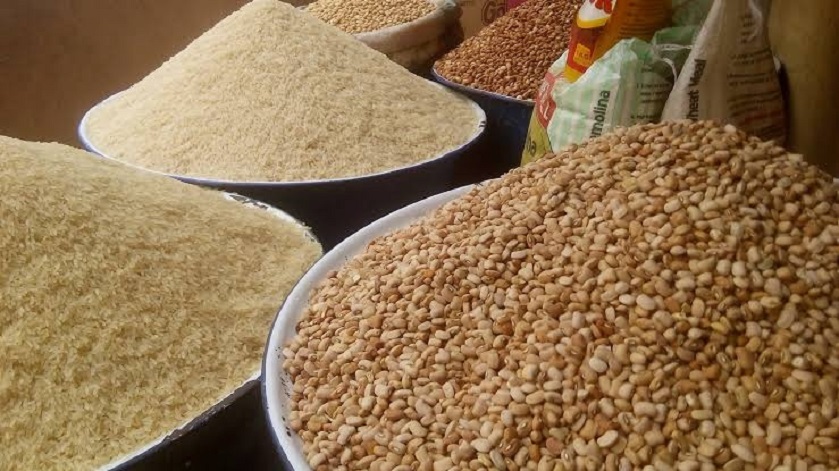
In the past months, the prices of food items, products and services in the country have been on the rise despite the National Bureau of Statistics (NBS) saying the inflation rate was moderating.

For most consumers, when they go to the market today, they are not sure the prices of items would remain the same tomorrow and this has been very frustrating for them.

Many have wondered how long they would have to experience this situation but it seems the Bureaux De Change (BDC) operators know the major cause of the problem and like the popular saying, when an issue is known, solving it is not far away.

Recently, the president of the Association of Bureau De Change Operators of Nigeria (ABCON), Mr Aminu Gwadabe, informed Daily Trust in an interview that the Central Bank of Nigeria (CBN) is the brain behind all these problems.

He said the decision of the apex bank to ban the sale of foreign exchange (FX) to his members in July 2021 is what is pushing the prices of goods and services in the country higher.

Mr Gwadabe said the central bank must see street forex traders as an important part of the market and the economy at large, emphasising that things were still better before the July 27, 2021, directive.

“The impacts of the CBN action include direct job losses of about 40,000 employees and over N200 billion capital to go toxic,” the ABCON leader informed the newspaper.

He stressed that the action of the apex bank paved the way for the “dominance of un-official online and Hawala activities.

“Dearth of BDCs expertise developed over the years, increased volatility and confidence crises of the naira, security concerns and increase in prices of goods and services.

“In all the BDCs remained the potent tool for CBN exchange rate stability instruments and accessibility.”

Business Post recalls that nearly two months ago, the Governor of the CBN, Mr Godwin Emefiele, while addressing newsmen after the Monetary Policy Committee (MPC) meeting in Abuja, said the bank would discontinue FX sales to BDCs over alleged round-tripping.

He said the operators were wasting the allocation to them, lamenting that the sale of $20,000 weekly to each of the over 5,500 BDC operators in the country taking a huge toll on the nation’s forex reserves. It was learned that in a year, the country was selling about $5.72 billion to the parallel side of the FX market in a bid to defend the Naira.

Since this policy commenced, the value of the local currency against the Dollar at the unregulated segment of the market has broadly nosedived. It traded on Monday at N532 to $1.


Economy

Ellah Lakes Records Stronger Revenue Momentum Amid N273m Operating Loss

Published

on

Ellah Lakes

By Aduragbemi Omiyale

Nigeria’s integrated agro-industrial company, Ellah Lakes Plc, significantly improved its revenue in the first quarter of 2026 to N359.49 million from N19.61 million in the same period of 2025.

The revenue growth was driven by initial harvests and sales of Crude Palm Oil (CPO), reflecting stronger commercial activity and improved pace of revenue generation as operations continue to scale.

The improved sales activity was supported by growing commercial output from its operating platform and continued focus on disciplined execution.

It was observed that while the gross profit rose to N285.35 million from N19.61 million, the operating loss moderated to N273.42 million from the N514.12 million recorded in the first quarter of last year.

“The first quarter represents another important step in Ellah Lakes’ transition into commercial execution. The stronger revenue momentum recorded during the period was supported by improved production stability, better operational uptime and more disciplined sales execution.

“Importantly, we also narrowed our operating loss year-on-year, reflecting the benefit of higher gross profit and continued cost discipline. These results provide an encouraging early indication that the business is gaining operating momentum,” the chief executive of Ellah Lakes, Mr Chuka Mordi, said.

Ellah Lakes continued to focus on scaling output, improving efficiency, and converting its agricultural asset base into stronger commercial performance.

The quarter’s results show early evidence of this transition, with revenue increasing significantly year-on-year and operating loss narrowing compared with the prior-year quarter.

“Our CPO mill is now operational, piggery operations continue to scale, and we are advancing the next stage of our processing roadmap through the planned installation of a 40 tonnes-per-day Palm Kernel Oil (PKO) mill in Q2 2026.

“In parallel, we are strengthening our operating systems and exploring technical partnerships to improve asset utilisation and execution as the business scales.

“Our focus remains on disciplined execution, prudent capital stewardship and long-term value creation for shareholders,” Mr Mordi stated.

Continue Reading

Economy

CAC Introduces Direct Payment Option to Ease Business Registration

Published

on

business registration in Nigeria

By Adedapo Adesanya

Businesses operating in Nigeria can now register easily as the Corporate Affairs Commission (CAC) introduces a direct payment option on its portal.

A statement posted on the commission’s handle on X (formerly Twitter) on Wednesday noted that the move is aimed at streamlining registration services as well as optimising the portal for efficiency.

“The Corporate Affairs Commission (CAC) wishes to notify its esteemed customers that payments for the following filings can now be conveniently made directly on our portal via ReVOps on the Intelligent Company Registration Portal (iCRP),” it announced.

The Revenue Optimisation and Assurance Project (REV-OP) was launched last year to strengthen public financial management.

The initiative focuses on blocking revenue leakages and improving transparency across government agencies.

It is built on three pillars: transparency, efficiency, and digital transformation.

The new payment systems allow users to pay for services through ReVOps on its Intelligent Company Registration Portal (iCRP).

Before now, the previous payment structure relied on the Remita gateway, which supported debit cards, bank transfers, and branch payments.

According to the Commission, the initiative is part of efforts to improve service delivery and streamline its processes for users.

The CAC listed services now eligible for direct payment include Annual Returns Filing, Change of Business Address, Cessation of Business, Change of Name, and Change of Objects.

It added that other services, such as Change of Proprietor or Partner details, are Certified True.

The move aligns with the federal government’s broader push to digitise public finance and improve revenue collection through technology.

REV-OP enables real-time monitoring and data-driven decision-making, marking a shift toward a more technology-driven approach to government revenue systems.

Continue Reading

Economy

Nigerians Pay More to Buy Eggs, Beans, Garri

Published

on

garri beans eggs

By Adedapo Adesanya

Nigerians paid more to buy staple foods, including eggs, beans, and garri, in March 2026 compared with what they paid in the preceding month, according to the National Bureau of Statistics (NBS).

The agency, in its Selected Food Prices Watch report for March 2026, released on Wednesday, said that the average price of eggs (a crate of 30 pieces) on a month-on-month basis went up by 2.00 per cent from N6,007.35 in February 2026.

However, the price of the proteinous meal decreased by 20.12 per cent on a year-on-year basis from N7,670.56 recorded in March 2025 to N6,127.63 in March 2026.

Similarly, the report said that the average price of 1kg of brown beans decreased by 49.39 per cent on a year-on-year basis from N2,616.26 in March 2025 to N1,325.85 in March 2026, but on a month-on-month basis, the price increased by 1.41 per cent from the N1,307.44 recorded in February 2026. It also showed the average price of 1kg of white garri decreased by 41.19 per cent on a year-on-year basis from N1,362.96 in March 2025 to N801.4 in March 2026, and on a month-on-month basis, it rose by 1.38 per cent from the N790.62 recorded in February 2026.

The report said that the average price of 1kg of onion decreased by 19.63 per cent from N1,434.85 recorded in March 2025 to N1,153.14 in March 2026. On a month-on-month basis, 1kg of onions increased by 1,59 per cent in March from the N1,135.12 recorded in February 2026.

The report said the average price of 1kg of fresh ginger increased by 20.46 per cent from the N4,600.23 recorded in March 2025 to N5,541.25 in March 2026. On a month-on-month basis, 1kg of ginger increased by 0.61 per cent in March from the N5,507.43 recorded in February 2026.

However, it said the average price of one litre of palm oil decreased by 4.71 per cent on a year-on-year basis from N2,511.77 recorded in March 2025 to N2,393.38 in March 2026.

Continue Reading

Trending