
Economy
Insecurity and Soaring Food Prices: Why CBN’s MPC Must Target the Real Enemy Despite Favourable Macroeconomic Tailwinds

By Blaise Udunze
Obviously, one would say that the macroeconomic indicators are finally pointing in the right direction, yet, daily realities for households and businesses tell a very different story because Nigeria stands at a delicate intersection. No doubt on paper, inflation is easing, the naira is stabilising, and sovereign ratings have improved; but food prices remain painfully high, purchasing power continues to deteriorate, and insecurity is ravaging the agricultural value chain while ensuring that any progress in inflation moderation remains fragile.
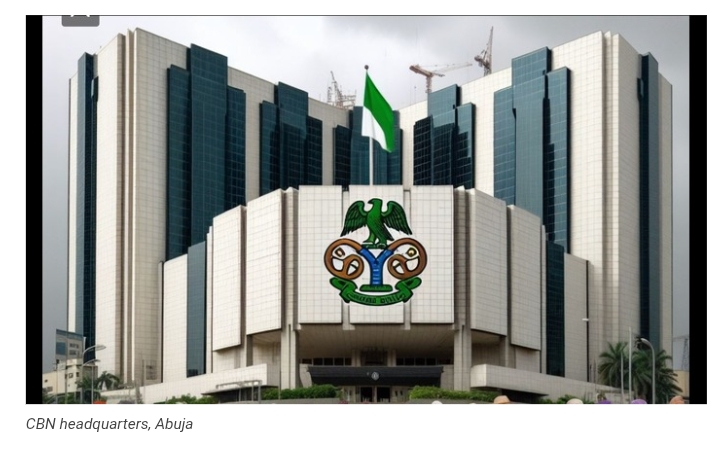
As the Central Bank of Nigeria (CBN) convenes its 303rd Monetary Policy Committee (MPC) as its final meeting of the year on 24-25 November, the dilemma before it is clear: Should it respond to improving macroeconomic data with further monetary easing, or should it recognise that the true enemy of price stability is not merely monetary but structural, deeply rooted in insecurity and collapsing food supply?
The reality confronting the nation is that, despite the favourable macroeconomic tailwinds, Nigeria’s biggest inflationary threat is insecurity-induced food inflation, which remains largely unaddressed. Until the MPC anchors its decisions around this core challenge, monetary policy will continue to chase shadows.
A Fall in Inflation, but Not in Hardship
The National Bureau of Statistics’ latest Consumer Price Index (CPI) report revealed that inflation improved for the second consecutive month, falling sharply from 18.02 percent in September to 16.05 percent in October 2025, which is the lowest in 44 months. This moderation was driven by a new CPI base year and some easing in food prices.
Whilst the headline inflation has slowed, month-on-month inflation increased from 0.72 percent to 0.93 percent, underlining persistent price pressure at the household level. Nigerians are still struggling to pay more for food, transport, energy, housing, and essential services.
Obviously, the Organised Private Sector (OPS) welcomed the drop but quickly cautioned that it does not reflect real-life conditions.
Dr. Muda Yusuf, CEO of the Centre for the Promotion of Private Enterprise, summarised this contradiction perfectly, “The sharp moderation in October inflation represents a significant win for macroeconomic stability. However, the full welfare benefits are yet to be felt due to persistent structural constraints, especially in food supply, transportation, energy, housing, and essential services.”
These “structural constraints,” in reality, are overwhelmingly traced to insecurity, which is the silent force disrupting agricultural production and distribution across Nigeria.
Food Inflation: The Heart of the Crisis
Presently, food inflation remains Nigeria’s most damaging and persevering price problem. Even with the October headline easing, food prices remain abnormally high.
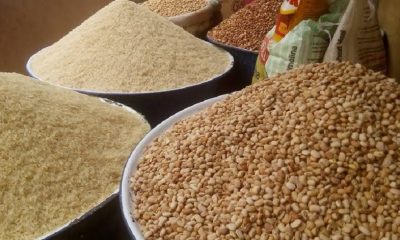
Eke Ubiji, the Director-General of the Nigerian Association of Small and Medium Enterprises (NASME), flagged the inflation data as disconnected from reality, “Send people to the market now. A half-bag of rice goes for between N30,000 and N40,000. Before, a full bag was about N20,000. So, are we moving forward or backwards?”
This is not a mere anecdote; it is the lived experience of millions. Food inflation has remained structurally high for nearly five years, and the root cause is not monetary expansion; it is insecurity.
Across key food-producing belts like Benue, Plateau, Niger, Kaduna, Katsina, Zamfara, Taraba, Kebbi, and Sokoto, farmers cannot access farmlands due to the following adverse factors:
– Banditry
– Terrorist attacks
– Herdsmen conflicts
– Kidnapping-for-ransom
– Destruction of crops and storage facilities
– Extortion and illegal “harvest taxes” by criminal groups
This is why the MPC’s decisions, no matter how sound, have limited impact. Monetary tightening cannot stop gunmen from attacking farmers. Interest rate adjustments cannot clear gridlocked rural roads. Liquidity controls cannot fix the collapse of rural markets emptied by chaos.
Femi Egbesola, the President of the Association of Small Business Owners of Nigeria, echoes this lived tension, “All of this has not translated to tangible results in the lives of households and small businesses. It has been very tough, and it is even getting tougher.”
Without resolving insecurity, food inflation will continue to undermine every macroeconomic gain.
OPS: Nigerians Don’t Feel the Relief
Across all private-sector groups, one message is constant, inflation numbers are falling, but hardship remains high.
– SMEs are shutting down due to high input costs.
– Consumers’ purchasing power is collapsing.
– Operational costs remain higher.
– Food remains largely unaffordable.
According to Ubiji, there is no relationship between what is sustainable in the market and what they are quoting in their boardrooms.
This scepticism is rooted in the fact that food prices, by far the largest part of household spending, remain stubbornly high because insecurity continues to decimate supply.
Even the Lagos Chamber of Commerce and Industry (LCCI) recognized that while there are “green shoots,” they are small and fragile.
LCCI President, Gabriel Idahosa, said, “A trend is being established… but Nigerians often doubt the inflation numbers because they do not see it on their dining table.”
The MPC must confront this reality: monetary policy cannot deliver price stability while insecurity is simultaneously destroying food production.
Improving Macroeconomic Indicators: A Window of Opportunity
Apparently, Nigeria’s macroeconomic fundamentals have improved significantly as inflation is moderating, FX liquidity is rising, the naira is strengthening, non-oil exports are growing, domestic production of refined petroleum is improving, S&P upgraded Nigeria’s sovereign credit outlook, and GDP grew by 4.2 percent in Q2 and is projected to record 3.6-3.9 percent in Q3.
No doubt, these are important achievements that create fiscal and monetary space for reforms. But favourable indicators cannot cover the fact that Nigeria is still battling a food inflation crisis fueled by worsening insecurity. If the MPC does not align its policy response with this structural reality, monetary policy may remain misaligned with on-ground economic forces.
What Analysts Expect at the November MPC Meeting
Ahead of the MPC meeting, analysts remain divided. Some are calling for further easing. Umar Abdulqadir of CFG Africa believed the MPC should cut by at least 50bps, citing sustained disinflation, improved FX liquidity, better food supply conditions, and lower risk premia after S&P upgrade. He argued that high lending rates were constraining SME credit access and that a cut would “stimulate investment and bolster economic recovery.”
Similarly, Afrinvest’s Damilare Asimiyu projects a 25-50bps cut, citing favourable inflation trajectory, improved macro data, global central banks adopting mild dovish tones, and strong GDP growth. He believes cautious easing is justified.
Meanwhile, other analysts suggest a hold at 27 percent. Jessica Ifada of Rostrum Investment & Securities insists that the MPC should maintain September’s rate cuts, which are still filtering through the economy. CRR reduction has increased bank liquidity, and banks have largely met recapitalisation thresholds, while festive-season inflationary pressures are imminent. She further says that the revised policy corridor already guides short-term rates close to the MPR, limiting the need for immediate policy action.
Meanwhile, another set of analysts is calling for aggressive easing (up to 200bps). On Nairametrics’ “Drinks and Mics,” Rencap Asset Management’s Arnold Dublin-Green and Nairametrics CEO Ugodre Obi-Chukwu argue that MPC should cut rates by 200bps, pointing to decreasing yields across fixed-income instruments, lower inflation, and improved macro stability.
But Here Is the Real Issue: Monetary Policy Cannot Fix Insecurity
Regardless of the MPC’s decision, whether it cuts by 50bps, 200bps, or holds, Nigeria’s biggest inflationary threat remains structural insecurity. Three facts are undeniable:
- Over 60 percent of Nigeria’s inflation is driven by food inflation
- Food inflation is overwhelmingly driven by insecurity in farming communities.
- No monetary policy tool like MPR, CRR, OMO, or interest-rate corridor can resolve insecurity.
Until Nigeria secures its food-producing regions:
– Farmers will stay away from farmlands.
– Food supply will remain inadequate.
– Transport costs will remain elevated.
– Market prices will continue to rise.
– Inflation will remain structurally high.
The MPC can only do so much with macro tools. The real work lies in addressing the insecurity choking Nigeria’s food supply chain.
What the MPC Must Do Differently
- Overtly recognize insecurity as a core inflation driver
The MPC must move beyond generic references to “structural challenges” and specifically identify insecurity as the primary threat to price stability.
- Collaborate with security agencies and governors
Price stability is impossible without coordinated policy across security, agriculture, and transportation ministries.
- Recommend federal and state investments in food-producing regions, such as:
– Secured farming clusters
– Military-protected agro-corridors
– Subsidised insurance for farmers in high-risk zones
– Rural road rehabilitation
- Prioritise credit schemes for agricultural security because credit without safety is meaningless.
- Strengthen data collaboration
Many inflation-relevant data points, including farm output, rural insecurity, and transport disruptions, are outside the CBN’s traditional purview. It needs deeper data integration with:
– Ministry of Agriculture
– Ministry of Interior
– Security agencies
– State governments
– Farmer associations
The MPC Must Fight the Real Enemy
Nigeria’s improving macroeconomic metrics are encouraging, but they shade a deeper crisis. Structural insecurity choking the nation’s food supply remains as the true enemy of price stability is not monetary. The MPC cannot continue to focus exclusively on interest rates while overlooking the underlying forces driving food inflation. Until insecurity is tackled, Nigeria will continue to experience high food prices, collapsing purchasing power, SME closures, persistent inflation, and monetary policy disorganization.
The November meeting provides a historic opportunity for the MPC to shift its policy approach that recognises insecurity as a macroeconomic crisis, not a security issue alone.
Nigeria does not merely have a monetary policy problem. Nigeria has a food problem driven by insecurity. And until that problem is solved, macroeconomic gains will remain fragile and incomplete.
Blaise, a journalist and PR professional, writes from Lagos, can be reached via: [email protected]









By Adedapo Adesanya
The Organisation of the Petroleum Exporting Countries and its allies (OPEC+) agreed to raise its oil output quotas by 206,000 barrels per day for May.
Eight members of OPEC+, comprising Saudi Arabia, Russia, Iraq, the UAE, Kuwait, Kazakhstan, Algeria, and Oman, agreed to the increase in May quota at a virtual meeting on Sunday, OPEC+ said in a statement.
However, the rise will be in theory, as its key members are unable to raise production due to the US-Israeli war with Iran, which has affected production.
The war has effectively shut the Strait of Hormuz, the world’s most important oil route, since the end of February and cut exports from some OPEC+ members, including Saudi Arabia, the UAE, Kuwait and Iraq. These are the only countries in the group which were able to significantly raise production even before the conflict began.
Besides the disruptions affecting Gulf members, others, such as Russia, are unable to increase output due to Western sanctions and damage to infrastructure inflicted during the war with Ukraine. For Nigeria, even as Africa’s largest producer, it has not been able to keep production quotas steady.
The OPEC+ quota increase of 206,000 barrels per day represents less than 2 per cent of the supply disrupted by the Hormuz closure, but it signals readiness to raise output once the waterway reopens.
Also meeting on Sunday, a separate OPEC+ panel called the Joint Ministerial Monitoring Committee (JMMC), expressed concern about attacks on energy assets, saying they were expensive and time-consuming to repair and so have an impact on supply.
May’s OPEC+ increase is the same as the eight members had agreed for April at their last meeting held on March 1, just as the war began to disrupt oil flows.
A month later, the largest oil supply disruption on record is estimated to have removed as many as 12 to 15 million barrels per day or up to 15 per cent of global supply.
The eight OPEC+ members have raised production quotas by about 2.9 million barrels per day from April 2025 through December 2025, before pausing increases for January to March 2026. The sub-group holds its next meeting on May 3.
Market analysts have warned that oil prices could hit $150 per barrel if the closure of the strait is prolonged and continues, due to damage to energy assets across the critical Middle East region.
As of the time of this report, Brent crude is trading at $108 per barrel, below the US West Texas Intermediate (WTI) crude at $109 per barrel.
By Adedapo Adesanya
Workers at Seplat Energy will resume work after a strike action that impacted production was called off by the Petroleum and Natural Gas Senior Staff Association of Nigeria (PENGASSAN) over the weekend, with the company issuing written commitments on pay rises.
Top employees began an indefinite strike last Friday as talks over a collective bargaining agreement and staff welfare issues broke down. The action came at a time when Nigeria is seeking to maximise production amid rising global oil prices.
According to Reuters, in an April 4 letter to the chief executive of Seplat Nigeria, Mr Roger Brown, PENGASSAN said it had directed members at the local energy firm to immediately suspend industrial action after negotiations resumed with the Nigerian National Petroleum Company (NNPC) Limited. Other less-skilled workers are covered by the Nigeria Labour Congress (NLC) and did not partake in the strike with PENGASSAN.
The union said talks on a 2026 collective bargaining agreement would continue, with the aim of concluding outstanding issues by April 13. However, according to the publication, the union did not disclose more details about its financial demands.
“We can confirm that the union has suspended its notice of industrial action to allow negotiations to conclude on outstanding items within an agreed framework,” Seplat spokesperson, Mr Ogechukwu Udeagha, said, adding that “operations are recommencing at our various locations.”
Seplat Energy’s group production averaged 131,506 barrels of oil equivalent per day in 2025, according to its latest audited results. That is the equivalent of around 7 per cent–9 per cent of Nigeria’s total liquids production.
The company expects output to rise to 155,000 barrels of oil equivalent per day, making any sustained disruption particularly sensitive for Nigeria’s supply outlook. This comes as it seeks to scale production while remaining a major supplier of gas to Nigeria’s domestic power market.
With the company’s output expected to rise, any prolonged disruption would have significantly impacted Nigeria’s oil supply and fiscal outlook.


By Dipo Olowookere
The weekly turnover of the Nigerian Exchange (NGX) Limited shrank by 27.70 per cent or 1.094 billion equities, partly due to the inability of market participants to trade last Friday as a result of the Good Friday public holiday declared by the federal government.
In the week, investors bought and sold 2.856 billion equities worth N113.597 billion in 215,287 deals versus the 3.950 billion equities valued at N201.312 billion transacted in 359,642 deals in the preceding week.
The activity chart was led by the financial services industry with 1.811 billion shares valued at N61.901 billion in 86,818 deals, contributing 63.41 per cent and 54.49 per cent to the total trading volume and value, respectively.
The services sector traded 299.895 million stocks worth N2.966 billion in 13,797 deals, and the ICT segment exchanged 183.233 million equities for N14.654 billion in 25,287 deals.
Wema Bank, Access Holdings, and Secure Electronic Technology accounted for 734.659 million shares worth N14.134 billion in 12,319 deals, contributing 25.72 per cent and 12.44 per cent to the total trading volume and value apiece.
Data from the NGX said 29 stocks gained weight versus 47 stocks of the previous week, as 57 shares lost weight versus 45 shares in the preceding week, while 62 equities closed flat versus 56 equities a week earlier.
Multiverse led the gainers’ chart after it gained 20.66 per cent to trade at N20.15, UPDC REIT appreciated by 15.49 per cent to N8.20, International Energy Insurance chalked up 12.54 per cent to quote at N3.32, Austin Laz grew by 10.47 per cent to N4.43, and Unilever Nigeria rose by 10.00 per cent to N103.40.
Conversely, Secure Electronic Technology topped the losers’ table after it lost 21.54 per cent to close at N1.02, John Holt declined by 18.47 per cent to N15.45, May and Baker depreciated by 16.57 per cent to N35.00, Aluminium Extrusion moderated by 16.27 per cent to N10.55, and Legend Internet slipped by 16.00 per cent to N6.30.
Business Post reports that the All-Share Index (ASI) was up by 0.39 per cent to 201,698,89 points, and the market capitalisation rose by 0.65 per cent to N129.806 trillion.
In the same vein, all other indices finished higher apart from the main board, insurance, MERI Value, consumer goods, industrial goods and growth indices, which went down by 0.29 per cent, 4.25 per cent, 0.36 per cent, 1.74 per cent, 0.24 per cent, and 0.06 per cent, respectively, while the sovereign bond index closed flat.
-
 Feature/OPED6 years ago
Davos was Different this year
-
Travel/Tourism10 years ago
Lagos Seals Western Lodge Hotel In Ikorodu
-

 Showbiz3 years ago
Estranged Lover Releases Videos of Empress Njamah Bathing
-
 Banking8 years ago
Sort Codes of GTBank Branches in Nigeria
-

 Economy3 years ago
Subsidy Removal: CNG at N130 Per Litre Cheaper Than Petrol—IPMAN
-

 Banking3 years ago
Sort Codes of UBA Branches in Nigeria
-

 Banking3 years ago
First Bank Announces Planned Downtime
-

 Sports3 years ago
Highest Paid Nigerian Footballer – How Much Do Nigerian Footballers Earn