
Economy
Intermarc Consulting Holds Summit On Waste Management


By Modupe Gbadeyanka
Foremost consultancy firm in Nigeria, Intermarc Consulting, will hold a National Waste Management Conference 2016 tagged CleaNigeria2016 next month.
Business Post gathered that Intermac came up with this programme due to poor the concrete national waste management plan in Nigeria.
The event, slated to hold on November 1 and 2 at the Civic Centre, Lagos, is themed ‘Developing a Sustainable Framework for Waste Management.’
During the conference, professionals, researchers, government departments and local authorities will have the opportunity to exchange ideas and discuss the work regarding the current situation in waste management as well as an anticipated future that will deliver an economically viable and sustainable waste management framework in Nigeria.
Those in the waste services companies (landfill owners/operators, independent contractors), government officials (including local governments and state regulatory authorities), composters and compost professionals (including private and public sector facility managers and owners, marketers, regulators, consultants), organic recycling professionals (including corporate sustainability managers, consultants, green waste haulers, and public sector organic professionals), NGOs involved in waste management and waste generators (businesses and organizations that create waste in manufacturing, retailing and/or providing services) are expected to attend the summit.
Others include recycling firms (including secondary materials processors, contractors and recyclers),
consulting engineering firms, trucking professionals (including fleet owners, operators and maintenance professionals), general contractors/PSPs health, safety and environment unit (HSE) of multinationals among others.
Also, an opportunity has been provided for those who have creative ways of turning wastes to wealth to pitch their ideas at CleaNigeria2016 for funding or partnership deal.
Intending participants have been urged to register on http://intermarc-ng.com/cleanigeria2016/ or contact +2348034394845 or write da****@**********ng.com.




By Adedapo Adesanya
The oil market slid about 2 per cent on Wednesday after paring deeper losses earlier in the trading session, as Iran reviewed a proposal by the United States to end the war that has disrupted global energy flows.
Brent futures fell $2.27 or 2.2 per cent to settle at $102.22 a barrel, while the US West Texas Intermediate (WTI) crude futures lost $2.03 or 2.2 per cent to trade at $90.32 per barrel.
It was reported that Iran was still reviewing a US proposal to end the war in the Gulf, despite an initial response that was negative, indicating that it had so far stopped short of rejecting it outright.
Pakistan delivered the 15-point proposal on behalf of the US government, and the consideration appeared to signal that at least some figures in Iran may be considering it.
Meanwhile, the White House Press Secretary, Mrs Karoline Leavitt, said President Donald Trump would hit Iran harder if it fails to accept that the Middle East country has been “defeated militarily”.
Currently, the market is facing the biggest-ever oil supply disruption as the US-Israel war has halted shipments of oil and liquefied natural gas through the Strait of Hormuz, which typically carries about 20 per cent of the world’s LNG and crude supply.
Market analysts noted that this has resulted in around 20 million barrels of crude losses daily, or some 500 million barrels, or five full days of global supply, since the war began on February 28. Countries have started rationing fuel use.
India, one of the world’s largest oil consumers, has bought its first cargo of Iranian liquefied petroleum gas in years after the US temporarily removed sanctions.
Meanwhile, Japan has called on the International Energy Agency (IEA) for an additional coordinated release of oil stockpiles, as it seeks to shield consumers from higher energy prices.
In Venezuela, oil production, including condensate and gas liquids, reached 1.1 million barrels per day in March.
Amid these developments, Russia’s major export terminals suspended crude oil and oil products loadings after massive Ukrainian drone attacks sparked blazes. At least 40 per cent of Russia’s oil export capacity has been halted following Ukrainian drone attacks on its energy infrastructure.
The US Energy Information Administration (EIA) said energy firms added 6.9 million barrels of crude into stockpiles during the week ended March 20.
That was higher than the build of 2.4 million barrels reported by the American Petroleum Institute (API) on Tuesday.
By Dipo Olowookere
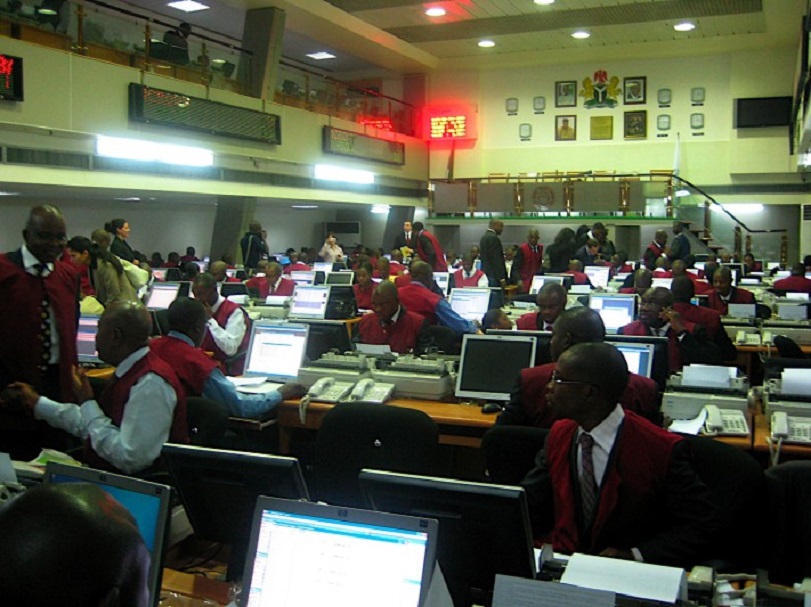
The Nigerian Exchange (NGX) Limited remained in the green territory on Wednesday after further appreciating by 0.11 per cent, driven by gains in bellwethers like MTN Nigeria, GTCO, and others.
Data from Customs Street showed that the insurance and the consumer goods sectors went up by 0.76 per cent and 0.42 per cent apiece, offsetting the 0.98 per cent loss posted by the banking index and the 0.11 per cent decline suffered by the industrial goods counter. The energy sector closed flat at the close of transactions.
When the closing gong was beaten at midweek, the All-Share Index (ASI) increased by 219.87 points to 200,925.75 points from 200,705.88 points, and the market capitalisation went up by N141 billion to N128.977 trillion from N128.836 trillion.
Investor sentiment remained strong yesterday after the bourse recorded 36 price gainers and 33 price losers, representing a positive market breadth index.
Legend Internet grew by 10.00 per cent to N7.26, Zichis gained 9.93 per cent to settle at N11.40, Premier Paints expanded by 9.93 per cent to N31.00, John Holt improved by 9.79 per cent to N15.70, and Consolidated Hallmark advanced by 6.26 per cent to N5.26.
On the flip side, Fidson declined by 9.97 per cent to N94.85, Austin Laz lost 9.89 per cent to quote at N4.01, Living Trust Mortgage Bank shrank by 7.08 per cent to N4.46, Secure Electronic Technology slumped by 7.04 per cent to N1.32, and Sterling Holdco depreciated by 5.56 per cent to N7.65.
The busiest equity for the day was Wema Bank, which transacted 104.3 million units worth N2.8 billion. Access Holdings traded 42.8 million units valued at N1.1 billion, Zenith Bank exchanged 33.9 million units for N3.6 billion, Zichis sold 26.6 million units worth N221.2 million, and GTCO recorded a turnover of 25.6 million units valued at N2.9 billion.
In all, investors bought and sold 538.0 million units for N25.4 billion in 45,641 deals on Wednesday compared with the 1.3 billion units worth N65.3 billion traded in 89,949 deals on Tuesday, implying a decrease in the trading volume, value, and number of deals by 58.62 per cent, 61.10 per cent, and 49.26 per cent apiece.

By Aduragbemi Omiyale
The federal government, through the Minister of Women Affairs and Social Development, is working together with the Nigerian Exchange (NGX) Group Plc to deepen the participation of women in capital markets.
The Minister of Women Affairs and Social Development, Ms Imaan Sulaiman-Ibrahim, underscored the urgency of inclusion in achieving national economic ambitions.
“The capital market reflects our collective choices, who participates, who has access, and who benefits. Women remain underrepresented in formal finance despite their critical role in Nigeria’s productivity.
“Through strategic partnerships and targeted interventions, we are working to change this narrative and expand opportunities for women across the economy.
“Achieving a one-trillion-dollar economy requires the full participation of Nigerian women,” she said at the closing gong ceremony at the NGX on Tuesday in Lagos.
She said the government was ready to partner with capital market stakeholders to expand financial access and unlock opportunities for women across the country.
Welcoming the Minister, the chairman of NGX Group, Mr Umaru Kwairanga, commended the Ministry’s leadership in promoting women’s development and economic participation.
“Women are central to Nigeria’s economic progress. As we work towards a more inclusive and resilient economy, the capital market remains a vital platform for expanding access to finance, supporting women-led enterprises, and enabling broader participation in wealth creation.
“NGX Group remains committed to partnering with the Ministry to drive sustainable impact and empower the next generation of women leaders,” he stated.
Also speaking, the Director General of the Securities and Exchange Commission (SEC), Mr Emomotimi Agama, emphasised the importance of deliberate inclusion.
“Behind every successful market are women. For Nigeria’s capital market to reach its full potential, we must be intentional about empowering women as active participants.
“Current participation levels do not yet reflect our population or potential. Collaborations like this send a strong call to action for more women across Nigeria to engage with the market and contribute to national growth,” the SEC chief stated.
On his part, the chief executive of NGX Group, Mr Temi Popoola, said, “At NGX Group, we are building a dynamic and inclusive market ecosystem that expands access to investment opportunities and supports diverse participants. Through partnerships such as this, we are unlocking new pathways for women to participate as investors, entrepreneurs, and wealth creators.”











-
 Feature/OPED6 years ago
Davos was Different this year
-
Travel/Tourism10 years ago
Lagos Seals Western Lodge Hotel In Ikorodu
-

 Showbiz3 years ago
Estranged Lover Releases Videos of Empress Njamah Bathing
-
 Banking8 years ago
Sort Codes of GTBank Branches in Nigeria
-

 Economy3 years ago
Subsidy Removal: CNG at N130 Per Litre Cheaper Than Petrol—IPMAN
-

 Banking3 years ago
Sort Codes of UBA Branches in Nigeria
-

 Banking3 years ago
First Bank Announces Planned Downtime
-

 Sports3 years ago
Highest Paid Nigerian Footballer – How Much Do Nigerian Footballers Earn