Economy
Investors Gain N2.281trn in One Day as Appetite for Stocks Soars
By Dipo Olowookere
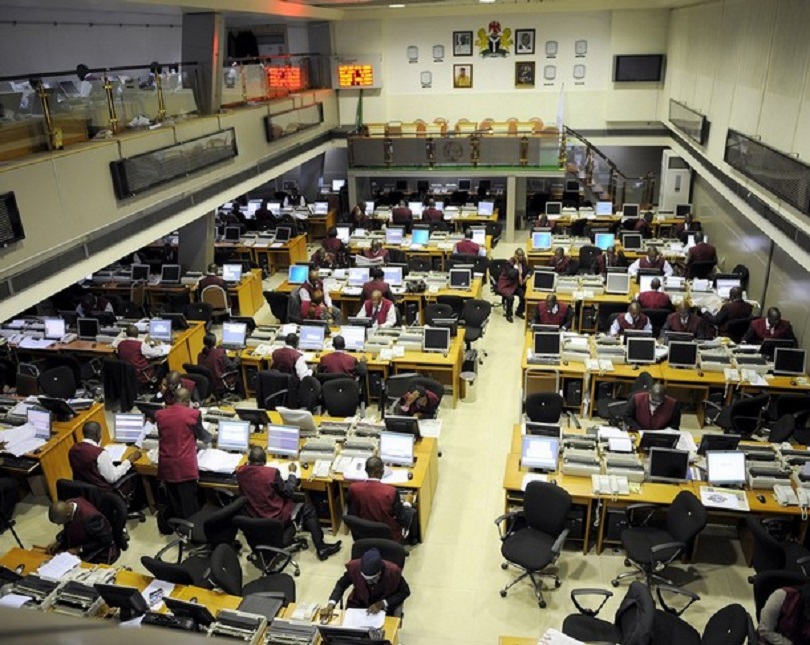
The local equity market maintained the bullish momentum on Wednesday, further appreciating by 1.69 per cent at the close of business.
The sustained appetite for stocks buoyed the growth reported by the Nigerian Exchange (NGX) Limited yesterday, although the buying pressure was on the energy and banking sectors, which gained 4.24 per cent and 3.15 per cent, respectively.
Business Post observed that selling pressure caused the insurance index to give up 1.33 per cent, the consumer goods industry to lose 0.20 per cent, and the industrial goods counter to shrink by 0.09 per cent.
But when trading activities came to an end, the All-Share Index (ASI) soared by 3,486.03 points to 209,317.41 points from 205,831.38 points, and the market capitalisation surged by N2.281 trillion to N134.773 trillion from N132.492 trillion.
The market breadth index was negative at midweek after the bourse ended with 35 price gainers and 37 price losers, showing weak investor sentiment.
Airtel Africa topped the advancers’ log after it chalked up 10.00 per cent to trade at N2,746.70. Aradel also appreciated by 10.00 per cent to N1,406.90, Ecobank grew by 9.98 per cent to N55.65, Trans-Nationwide Express improved by 9.89 per cent to N5.00, and Fortis Global Insurance jumped 9.82 per cent to N1.23.
Conversely, Austin Laz lost 9.77 per cent to close at N3.60, John Holt depreciated by 9.72 per cent to N13.00, CWG dropped 7.22 per cent to settle at N21.20, Conoil gave up 6.80 per cent to sell for N190.50, and Omatek decreased by 5.48 per cent to N2.07.
Zenith Bank led the activity with 73.3 million shares worth N8.8 billion, Tantalizers traded 56.5 million equities valued at N220.4 million, UBA sold 49.9 million stocks for N2.3 billion, Access Holdings exchanged 38.1 million shares worth N1.0 billion, and Secure Electronic Technology transacted 32.7 million equities valued at N31.7 million.
In general, investors bought and sold 706.4 million stocks worth N41.9 billion in 46,231 deals during the session versus the 569.3 million stocks valued at N32.3 billion traded in 45,777 deals on Tuesday, indicating an improvement in the trading volume, value, and number of deals by 24.08 per cent, 29.72 per cent, and 0.99 per cent, respectively.
Economy
Nigeria’s Petrol Import Bill Plunges 96% in First Quarter of 2026
By Adedapo Adesanya
Nigeria’s petrol import bill crashed further as the latest foreign trade statistics by the National Bureau of Statistics (NBS) indicated that about N87.401 billion was spent on the importation of fuel between January and March 2026.
A comparative analysis showed the figure plunged by 96.2 per cent or N2.184 trillion compared with the N2.271 trillion spent on fuel imports between January and March 2025.
The NBS data revealed that fuel did not feature among the top 19 traded products with the rest of the world, Africa, or West Africa during the review period.
The biggest factor is the ramp-up of production at Dangote Petroleum Refinery, which has significantly reduced Nigeria’s dependence on imported Premium Motor Spirit (PMS). As local supplies increasingly meet domestic demand, marketers have had less need to source petrol from overseas.
According to the data, the leading traded products included crude petroleum oils and oils obtained from bituminous minerals, gas oil, durum wheat, machines for reception, conversion and transmission of data, used vehicles, motorcycles, agricultural seeders, medicaments, aircraft parts, butanes, petroleum bitumen, sugar cane, herbicides and fuel additives.
The report read, “The value of total imports stood at N13,619.33bn in the first quarter of 2026, representing an 18.17 per cent decrease from the value recorded in the corresponding quarter of 2025 (N16,644.42bn) and a 21.05 per cent decrease compared to the value recorded in Q4 2025 (N17,250.93bn).
“Analysis of Nigeria’s import trade reveals that China remained the leading source of imports in the first quarter of 2026, followed by the United States of America, India, Germany, and the United Arab Emirates.
The most imported commodities during the quarter were petroleum oils and oils obtained from bituminous minerals (crude), gas oil, durum wheat, machines for the reception, conversion, and transmission of voice, images, or data, and used vehicles with diesel or semi-diesel engines.
“The value of other oil products imported in Q1 2026 stood at N748.10bn, reflecting an 85.05 per cent decrease from N5,005.22bn in Q1 2025 and an 81.38 per cent decrease from N4,018.31bn recorded in Q4 2025.
“Nigeria spent N2.694tn on petrol imports in the first quarter of 2022. The import bill declined by N661bn, or 24.5 per cent, to N2.033tn in the corresponding period of 2023.”
Economy
Ripple Invests in Flutterwave to Accelerate African Stablecoin Payments
By Aduragbemi Omiyale
Leading provider of blockchain-based enterprise solutions, Ripple, has participated in Flutterwave’s Series E fundraising, which values the company at $3.2 billion.
Ripple’s strategic investment marks the definitive next phase of Flutterwave’s long-term stablecoin strategy, seamlessly connecting its existing cross-border settlement capabilities with enterprise-grade digital liquidity.
This will enable African businesses to bypass legacy frictions, ultimately bolstering Nigeria’s role as the primary hub for global digital asset trade and driving sustained economic resilience across the African continent.
This is because it will accelerate the adoption of digital asset infrastructure, bringing unprecedented speed, liquidity, and cost-efficiency to cross-border commerce throughout Africa.
The partnership is built on three core pillars: embedding RLUSD into Flutterwave’s payment rails and Send App remittance corridors as a primary settlement asset for high-volume channels; leveraging the XRP Ledger (XRPL) for faster transaction clearing; and deploying a unified API to seamlessly bridge Flutterwave’s domestic network with Ripple Payments, Ripple’s global payments network.
By merging traditional fiat payment methods, including local cards, mobile wallets, and bank transfers, with Ripple’s enterprise blockchain technology, the partnership eliminates the historical friction points of African cross-border payments, such as multi-day delays and inflated FX margins. Instead, businesses will experience guaranteed liquidity, predictable pricing, and real-time settlement.
By embedding RLUSD into its core ecosystem, the company is finalising a ‘stablecoin-first’ payment architecture that eliminates traditional bottlenecks. This unified approach delivers a consistent, scalable, and compliant liquidity stack that transforms how African enterprises interact with global markets, effectively cementing a new way for digital money acceptance that is both borderless and locally grounded.
Commenting on the development, the Managing Director of MEA at Ripple, Reece Merrick, said, “Flutterwave has built one of the most advanced payments networks in Africa, and as its infrastructure evolves, stablecoins are becoming central to that story.
“Our investment will establish RLUSD within that infrastructure, with Flutterwave driving stablecoin flows over the XRPL and deepening its role as a settlement layer for real-world payments across the continent.
“Together we also plan to bring Ripple Payments’ speed and efficiency to cross-border transactions in the region, opening up faster, lower-cost financial services to businesses and consumers at scale.”
On his part, the chief executive of Flutterwave, Mr Olugbenga ‘GB’ Agboola, said, “This investment marks a pivotal moment in our journey, enabling us to significantly scale our infrastructure and expand our stablecoin-enabled payments roadmap. By unlocking faster settlement and lower-cost cross-border payments, we are building a payment superhighway that connects African commerce directly to the global economy.
“This partnership is a catalyst for Nigerian and African sovereignty in the digital financial age, ensuring our markets are primary participants in the global digital asset revolution.”
With this capital and a deepened product alliance, Flutterwave will accelerate its goal to bridge traditional financial systems with next-generation digital asset infrastructure.
Building on its established scale – having raised over $500 million and processed over a billion transactions worth over $50 billion – Flutterwave is positioned to unlock massive economic potential for small-to-medium enterprises (SMEs) and global enterprises operating across Africa.
Economy
FG Blames FX Volatility, Logistics Costs for Rising Cooking Gas Prices
By Adedapo Adesanya
The federal government has blamed the rising prices of cooking gas, also known as Liquefied Petroleum Gas (LPG), on market pressures from foreign exchange volatility and rising logistics costs.
In a statement, the Minister of State for Petroleum Resources (Gas), Mr Ekperikpe Ekpo, expressed the government’s concerns about the pain caused by rising cooking gas prices, announcing moves to ensure adequate, reliable and affordable gas for households, industry and power generation.
To remedy the situation, the FG said it has ordered the Nigerian Midstream and Downstream Petroleum Regulatory Authority (NMDPRA) to engage with cooking gas producers, marketers and other stakeholders to sustain supply and enhance market stability of the product.
“The recent price adjustments are driven largely by prevailing market realities such as foreign exchange volatility, rising logistics costs, infrastructure constraints and fluctuations in international LPG prices. These factors should not be misinterpreted as evidence of policy failure,” he stated.
According to him, the government’s commitment is reflected in the interventions designed to stabilise the domestic LPG market, including the directive that all LPG produced in Nigeria be prioritised for local consumption.
“This policy has already strengthened domestic supply, reduced dependence on imports and improved market resilience,” the statement said.
Business Post reports that residents in Lagos and Ogun States continue to face scarcity and high cost of LPG. For a few vendors with the product, the price ranged between N2,000 and N2,400. In early May, it was sold at N1,200.
Mr Ekpo said the commencement of LPG deliveries from the new Seplat gas facility in July will significantly boost national supply.
“The minister also confirms that no producer is exporting LPG volumes designated for the domestic market, as regulatory measures remain firmly in place to prioritise local needs.
“The outlook for LPG supply remains positive, and the Federal Government will continue to pursue measures that enhance availability, affordability and long-term energy security for Nigerian consumers,” the statement.
-
Feature/OPED6 years agoDavos was Different this year
-
Travel/Tourism10 years ago
Lagos Seals Western Lodge Hotel In Ikorodu
-
Showbiz3 years agoEstranged Lover Releases Videos of Empress Njamah Bathing
-
Banking8 years agoSort Codes of GTBank Branches in Nigeria
-
Economy3 years agoSubsidy Removal: CNG at N130 Per Litre Cheaper Than Petrol—IPMAN
-
Banking3 years agoSort Codes of UBA Branches in Nigeria
-
Banking3 years agoFirst Bank Announces Planned Downtime
-
Sports3 years agoHighest Paid Nigerian Footballer – How Much Do Nigerian Footballers Earn