
Economy
Investors Give Nigeria’s Orda $1.1m to Grow Services in Africa


By Adedapo Adesanya
A Nigerian restaurant management startup, Orda, has raised a $1.1 million pre-seed funding round to speed its growth and expand across Africa.
The pre-seed round was led by Lofty Inc Capital Management, with participation from Techstars – Boulder, Magic Fund, Hustle Fund, Norrsken Foundation, Microtraction, DFS Labs, Oxford Seed Fund, Enza Capital and Agroly Advisors, as well as Ire Aderinokun, Jesse Ovia, Ademola Adesina and other angel investors.
Following the raise, the startup is looking to increase its rate of growth and expansion across the continent.
Orda has developed a full-stack approach to integrating local payments, logistic companies while building inventory management, and business analytics for small to medium-sized food businesses.
It says it is the only technology solution on the continent that allows restaurants to accept and process all their in-store, website, social media, WhatsApp, Jumia Food, Glovo and Bolt Food orders from one easy-to-use interface.
The startup’s cloud-based solution is currently available for restaurants in Nigeria and Kenya.
In addition, its Gross Merchandise Value (GMV) has been growing at more than 15 per cent week-on-week as Orda now processes thousands of weekly transactions.
Speaking on the inspiration behind the technology, Mr Guy Futi, the startup’s CEO, said the team had kept trying to address the real pain points of chefs, caterers and small restaurants.
“From that Orda grew. Before Orda, a small food business owner could spend up to four hours a day reconciling transactions while trying to figure out losses. We looked to alleviate that burden. In the process, we noticed that food business owners were not fully integrated with local payment solutions, online sales channels, and logistic providers. This made their operations even more difficult,” he said.
On his part, the company’s Chief Technology Officer, Mr Fikayo Akinwale said, “Orda was built from a near 18 months of a collaborative customer feedback loop. We listened to everything, from how African restaurants reconcile inventory, how customers pay, to how they handle logistics and more.
“We can confidently say that no one has done as much work as we have to build an end-to-end solution for our food business owners. We are excited to usher in much-needed digitisation to the sector.”
Mr Idris Ayodeji Bello, a managing partner of LoftyInc Capital Management, said his team invested in Orda because it was building the core digital infrastructure for restaurants across Africa.
“The team has done the hard work of figuring out the core problems that African restaurant owners are facing and is building a solution that can revolutionise the food business across the continent. LoftyInc is excited to back a solution-focused team like Orda,” he said.
Launched in 2020, Orda is a cloud-based restaurant management system provider that hopes to provide one operating system to power African restaurants. Since its launch, the Lagos-based startup has worked with several well-known African and global restaurants including Barcelos, Eric Kayser, Johnny Rockets and Ofadaboy.






By Aduragbemi Omiyale
FCMB Capital Markets Limited, the investment banking arm of FCMB Group Plc, has promised to continue to contribute to the development of the fixed-income market in Nigeria.
The company gave this assurance while reacting to its top position on the Fixed Income Primary Markets Sponsors’ League Table of the FMDQ Securities Exchange Limited in 2025.
The company facilitated the raising of N1.53 trillion in corporate debt capital through bond listings and commercial paper quotations on the platform.
The exchange’s report shows FCMB Capital Markets led overall sponsor contributions across the bond listings and commercial paper quotation markets during the year.
In the bond market, the firm accounted for 11.66 per cent of total listings, for the top spot. In the commercial paper market, FCMB Capital Markets achieved the highest share of quotations at 7.68 per cent, outpacing other registration members in that segment.
The exchange reported that 58 registration members participated in listings and 77 in quotations. During the period under review, 47 institutions actively sponsored fixed-income securities listings or quotations, excluding federal government securities.
“Our ranking reflects the confidence issuers place in our ability to structure and execute capital market transactions.
“Mobilising more than N1 trillion in a single year demonstrates the depth of demand for capital market funding and the role we play in connecting issuers with long-term investors,” the Executive Director for Coverage and Investment Banking at FCMB Group, Mr Femi Badeji, said.
The chief executive of FCMB Capital Markets, Mr Ikechukwu Omeruah, on his part, said the firm remains focused on helping corporates access both long-term and short-term funding through the capital markets.
“Achieving this position reflects the work of our team and the trust of our clients. We remain committed to structuring financing solutions that enable businesses to raise capital efficiently while contributing to the continued development of Nigeria’s fixed-income market,” he said.
Over the past five years, FCMB Capital Markets has participated in several debt and equity transactions across sectors, including oil and gas, power, real estate, financial services, consumer goods and telecommunications.
By Aduragbemi Omiyale
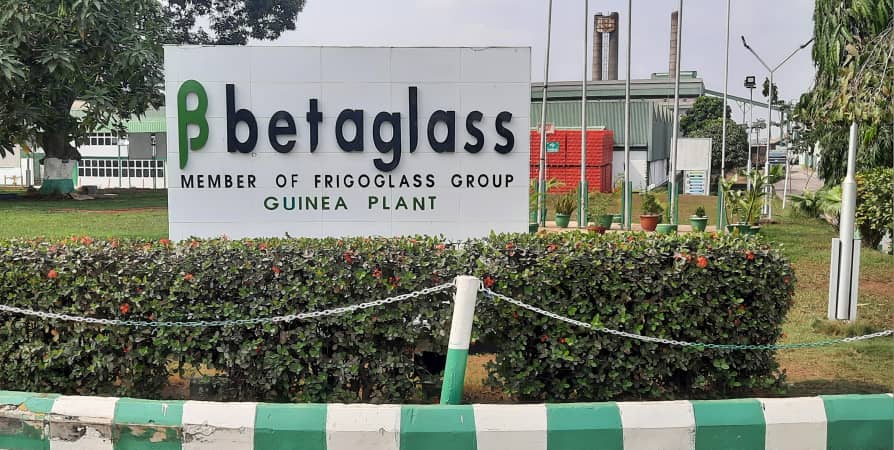
In the 2025 financial year, Beta Glass Plc grew its revenue by 27 per cent to N149.12 billion from N117.58 billion in 2024, reflecting continued demand for the company’s glass packaging products across key sectors of the Nigerian economy.
Despite market challenges, the organisation performed well due to improved production efficiency, effective cost management, and a clear focus on its key customers and segments.
In the year, the gross margin improved to 35.3 per cent from 26.3 per cent, operating margin rose to 32.3 per cent from 20.0 per cent, reflecting improved operating efficiency and effective cost management.
A look at the bottom-line showed that profit after tax (PAT) went up by 144 per cent to N33.25 billion from N13.63 billion, demonstrating the resilience of its operations despite evolving global and regional market conditions, while the Earnings Per Share (EPS) stood at N55.41 versus N22.71 in 2024.
The chief executive of Beta Glass, Mr Alex Gendis, said, “This year’s results reflect the resilience of our business model and the successful execution of our strategic initiatives.
“Despite market challenges, our commitment to delivering value to our shareholders was and remains strong. Our performance was underpinned by improved production efficiency, effective cost management, and a clear focus on our key customers and segments.
“At the same time, we continued to invest significantly in our asset base, with the rebuild of our furnace in Delta, positioning the business for sustainable long-term growth.”
By Adedapo Adesanya
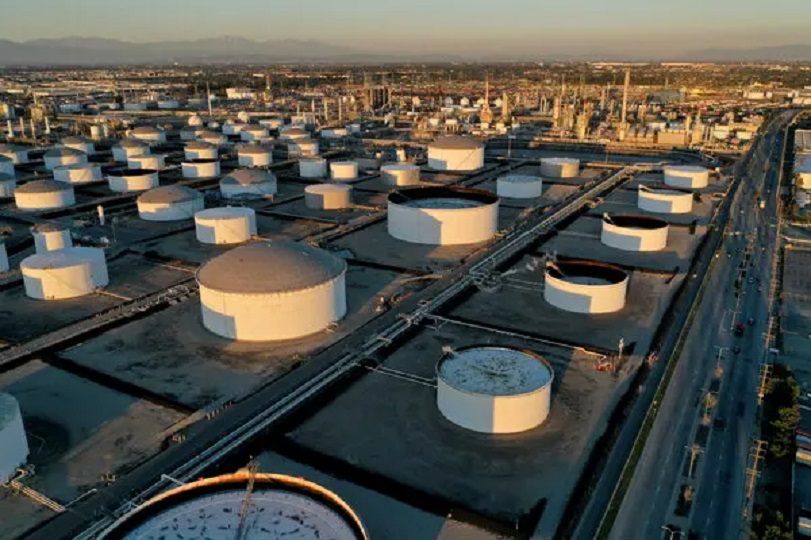
If Nigeria continues producing crude oil at its current pace, its proven reserves would be exhausted in about 59 years, according to the Nigerian Upstream Petroleum Regulatory Commission (NUPRC).
The regulator disclosed this on Wednesday in Abuja, as it released the nation’s official petroleum reserves position as of January 1, 2026.
In a statement signed by its chief executive, Mrs Oritsemeyiwa Eyesan, the commission said Nigeria’s total oil and condensate reserves stand at 37.01 billion barrels, while total gas reserves are about 215.19 trillion cubic feet.
“The Nigerian Upstream Petroleum Regulatory Commission, in keeping with its mandate, is committed to improving upstream sector performance, enhancing the growth of oil and gas reserves, and ensuring stable production for shared prosperity via the operationalisation of the Petroleum Industry Act, 2021, and implementation of the strategic pillars of the commission,” she said.
Providing a breakdown, she stated that “2P crude oil and condensate reserves stand at 31.09 billion barrels and 5.92 billion barrels, respectively, amounting to a total of 37.01 billion barrels.”
On gas, she said, “2P associated gas and non-associated gas reserves stand at 100.21 trillion cubic feet and 114.98 trillion cubic feet, respectively, resulting in total gas reserves of 215.19 trillion cubic feet.”
Explaining the changes recorded within the period, Mrs Eyesan noted that crude volumes declined slightly due to production activities during the previous year.
While Nigeria’s reserves life index stands at 59 years for oil, it was put at 85 years for gas, indicating the estimated duration the resources would last at current production levels.
“The Reserves Life Index is 59 Years and 85 Years for Oil and Gas, respectively. The reason for the slight change in 1.1.2026 oil and condensate reserves by 0.74 per cent is attributable to production in 2025 and reserves update due to field performance and technical evaluation based on subsurface studies.
“The reason for the increase in 1.1.2026 AG and NAG reserves by 2.21 per cent is largely because reserves update is based on discoveries and the result of robust reservoir studies,” she said.
In contrast, she said gas reserves increased on the back of fresh discoveries and improved technical assessments.
“The reason for the increase in 1.1.2026 associated gas and non-associated gas reserves by 2.21 per cent is largely because the reserves update is based on discoveries and the result of robust reservoir studies,” she added.
Declaring the figures official, Mrs Eyesan said, “Consequently, and in furtherance of the provisions of the Petroleum Industry Act, I hereby declare the total oil and condensate reserves of 37.01 billion barrels and total gas reserves of 215.19 trillion cubic feet as the official national petroleum reserves position as of 1st January 2026.”
Findings show that Nigeria’s reserves position in 2026 reflects a modest shift from 2025, when total oil and condensate reserves were slightly higher at about 37.3 billion barrels, while gas reserves stood at approximately 210–211 trillion cubic feet.
The 2026 data, therefore, indicates a 0.74 per cent decline in oil reserves, largely driven by sustained production and limited new oil discoveries, while gas reserves expanded by 2.21 per cent due to ongoing exploration success and renewed focus on gas development.












-
 Feature/OPED6 years ago
Davos was Different this year
-
Travel/Tourism10 years ago
Lagos Seals Western Lodge Hotel In Ikorodu
-

 Showbiz3 years ago
Estranged Lover Releases Videos of Empress Njamah Bathing
-
 Banking8 years ago
Sort Codes of GTBank Branches in Nigeria
-

 Economy3 years ago
Subsidy Removal: CNG at N130 Per Litre Cheaper Than Petrol—IPMAN
-

 Banking3 years ago
Sort Codes of UBA Branches in Nigeria
-

 Banking3 years ago
First Bank Announces Planned Downtime
-

 Sports3 years ago
Highest Paid Nigerian Footballer – How Much Do Nigerian Footballers Earn