Connect with us

Economy

TruQ, Orda, 23 Others to Share $4m Google for Startups’ Black Founders Fund

Published

on

TruQ Orda Google for Startups' Black Founders Fund

By Aduragbemi Omiyale

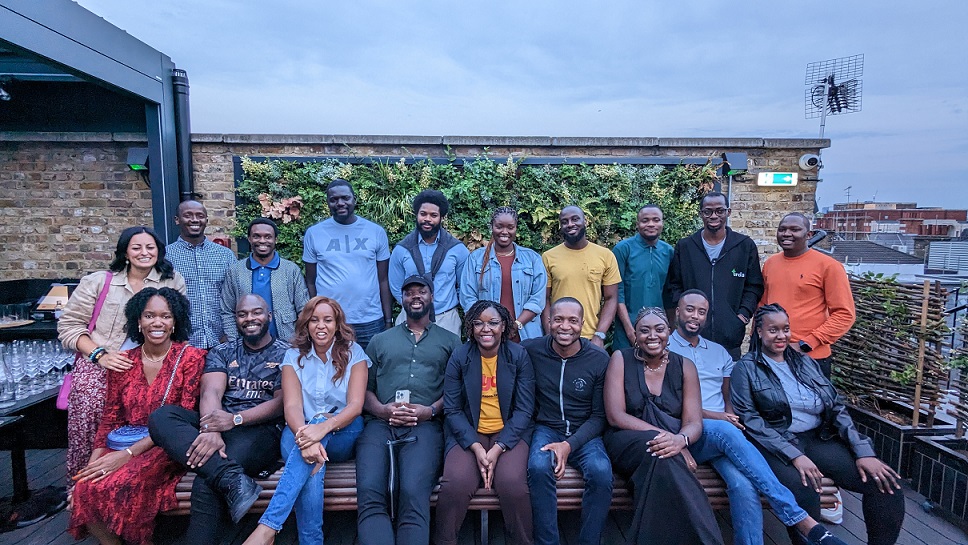
Twenty-five African startups chosen from Nigeria, Kenya and others have been selected to receive $4 million from Google for its Startups’ Black Founders Fund.

The funding will provide the businesses with the capital needed to take their ventures to the next level and expand to new markets, supercharging economic opportunities and job creation.

Each firm will receive up to $150,000 in non-dilutive cash awards, up to $200,000 in Google Cloud credits, Ad support, 1:1 mentoring by industry experts and invaluable connections within Google’s network.

A statement from Google said startups led or co-founded by women made up 72 per cent of the group, highlighting the role women play in shaping Africa’s startup ecosystem.

It further stated that the 25 African startups embody the diverse entrepreneurial spirit across the African continent.

From accessible healthcare to efficient logistics to innovative fintech solutions, these startups are harnessing the power of technology to address some of Africa’s most pressing challenges.

HealthDart is elevating healthcare by providing comprehensive services and insurance through its digital platform.

Tushop is reimagining retail with a group-buying platform in Kenya that encourages cost-saving and community engagement.

Herconomy is breaking new ground in the fintech sector with its goal to become Africa’s first women-focused bank.

“Startups play a major role in advancing Africa’s digital transformation. We look forward to working with this group of innovative founders who are using technology to solve some of the most pressing challenges in Africa.

“The Google for Startups Black Founders Fund is committed to addressing the stark inequality in VC funding by providing Black founders with the resources and support they need to succeed,” the Head of Startups Ecosystem for Africa at Google, Folarin Aiyegbusi, said.

One of the beneficiaries, Ms Ifedayo Durosinmi-Etti, the founder of Herconomy, said, “At Herconomy, we are on a mission to reimagine the financial landscape for women in Africa.

“Being chosen for the prestigious 2023 Black Founders Fund will fuel our revolutionary vision and accelerate our progress.

“With the funding and support provided by the program, we will expedite the development of our innovative solutions, enhance support for our valued customers, and expand our presence on an international scale.”

The Black Founders Fund, now in its third year, aims to help tackle systemic racial inequality in venture capital (VC) funding by providing equity-free grants and mentoring to early-stage Black-led high-growth businesses across Europe and Africa.

List of Startups 

  • Akoma Health (Nigeria): Tech platform for accessible, culturally conscious mental health services in Africa.

  • BezoMoney (Ghana): Digital banking for Africa’s underbanked via mobile/web platforms.

  • Chargel (Senegal): Digital trucking platform connecting shippers/carriers in Francophone West Africa.

  • Charis UAS (Rwanda): Provides 3D geospatial data via drone technology.

  • Evolve Credit (Nigeria): SaaS for digitising and managing banking services.

  • Excel At Uni (South Africa): Supports student funders via digital services.

  • EzyAgric (Uganda): AI-powered mobile technology to enhance Africa’s farming sector.

  • Fez Delivery (Nigeria): Last-mile logistics platform for various industries.

  • Fleetsimplify (Kenya): Monetization platform connecting gig drivers & vehicle owners.

  • HealthDart (South Africa): Digital HMO providing end-to-end health services with insurance.

  • Herconomy (Nigeria): Female-focused fintech aiming to be Africa’s first women’s bank.

  • Jumba (Kenya): Improving Kenya’s construction sector supply chain via B2B platform.

  • MDaaS Global (Nigeria): Tech-powered diagnostic centres for affordable healthcare.

  • My Pocket Counsel (Nigeria): Legal tech platform for contract generation and management.

  • Orda (Nigeria): Pan-African neobank for restaurants, offering cloud-based software.

  • Periculum (Nigeria): Data company aiding in credit assessment, fraud/churn risk.

  • Raenest (Nigeria): Fintech offering global financial services to freelancers/startups in Africa.

  • Ridelink (Uganda): E-logistics platform providing shipping and real-time tracking.

  • Susu (Côte d’Ivoire): Health platform providing healthcare services/insurance funded by African diaspora.

  • Talamus Health (Ghana): Tech solutions targeting healthcare inefficiencies in Africa.

  • TruQ (Nigeria): Streamlining mid-mile logistics across Africa with third-party vehicle connectivity.

  • Tushop (Kenya): Tech platform for group buying of daily essentials in Kenya.

  • Uzapoint (Kenya): Mobile/web POS for digitising bookkeeping in Africa’s informal sector.

  • Zinacare (South Africa): Online platform for accessible, affordable healthcare services.

  • Zydii (Kenya): Localised digital training solutions for African SMEs.

Dipo Olowookere is a journalist based in Nigeria that has passion for reporting business news stories. At his leisure time, he watches football and supports 3SC of Ibadan. Mr Olowookere can be reached via [email protected]

Click to comment

Leave a Reply

Your email address will not be published. Required fields are marked *

Economy

Ibeto Customs, Police Renew Joint Security Pact for Efficiency, Safety

Published

on

Nigeria Customs Service

By Adedapo Adesanya

The Nigeria Customs Service (NCS), Ibeto Seaport and Terminals Command, Port Harcourt, and the Nigeria Police Force have renewed their commitment to joint security operations at the nation’s maritime corridors, following a strategic meeting between top officials of both agencies.

According to a statement, the renewed partnership came as the Commissioner of Police, Eastern Port Police Command, CP Shuaibu Audu, paid a working visit to the Customs Area Controller, Comptroller Usman Yahaya, at the Command headquarters on April 17, 2026.

The engagement, according to a statement by the Command’s Public Relations Officer, Chief Superintendent of Customs Tangwa Emmanuel, was aimed at strengthening inter-agency cooperation and boosting operational efficiency within the port environment.

Speaking during the visit, Comptroller Yahaya described the engagement as significant, stressing that sustained collaboration among security agencies remains critical to safeguarding national assets and ensuring seamless port operations.

This visit is timely and highly appreciated. It reflects the importance of sustained cooperation among agencies entrusted with the security of our nation and the protection of critical economic assets,” he said.

He assured the police boss of Customs’ readiness to maintain strong working relations with the Eastern Port Police Command.

“We are fully committed to working with the new Commissioner of Police and giving all necessary support towards the successful discharge of his responsibilities,” Mr Yahaya added.

The Customs Area Controller noted that the synergy between both agencies has continued to play a vital role in maintaining order, facilitating legitimate trade and curbing criminal activities within the port system.

This was contained in a statement shared via the Customs official X handle.

Customs and the Police share common responsibilities in safeguarding the port environment. Synergy remains the cornerstone for achieving our collective mandate,” he stated.

He also briefed the visiting Commissioner on the operational relevance of the Ibeto Seaport and Terminals Command, reiterating the Command’s commitment to strengthening maritime security.

On his part, CP Audu said the visit was part of efforts to consolidate existing ties between the Nigeria Police Force and the Nigeria Customs Service.

“My presence here today is to reinforce the cordial relationship between the Nigeria Police Force and the Nigeria Customs Service. No organisation can function effectively in isolation,” he said.

He emphasised the importance of sustained collaboration among security agencies, particularly in securing the nation’s ports, which he described as vital to economic stability.

Synergy among security agencies is essential to addressing emerging threats. Our ports are strategic national assets, and we must work together to keep them secure,” Mr Audu stated.

The police commissioner also sought continued support from Customs officers in advancing shared security objectives.

Continue Reading

Economy

Tinubu Removes Wale Edun, Elevates Taiwo Oyedele as New Finance Minister

Published

on

swear in taiwo oyedele

By Modupe Gbadeyanka

Mr Taiwo Oyedele has become the new Minister of Finance and Coordinating Minister for the Economy after the exit of Mr Wale Edun.

This announcement was made on Tuesday by the Office of the Secretary to the Government of the Federation via a statement signed by Mr Yomi Odunuga, the Special Adviser of Media and Publicity to the Secretary to the Government of the Federation, Mr George Akume.

It was disclosed that President Bola Tinubu approved the removal of Mr Edun as Finance Minister as well his counterpart in the Housing and Urban Development Ministry, Mr Ahmed Musa Dangiwa.

According to Mr Akume, “These changes are aimed at strengthening cohesion, synergy in governance as well as achieving more impactful delivery on the economy to Nigerians, through the Renewed Hope Agenda.”

In approving the cabinet reshuffle, the President has fully exercised his powers as conferred on him by Sections 147 and 148 of the Constitution of the Federal Republic of Nigeria (1999, as amended), he added.

Before this minor cabinet reshuffle in the membership of the Federal Executive Council (FEC), Mr Oyedele the Minister of State for Finance.

Mr Muttaqha Rabe Darma has now been named as the ministerial nominee and minister designate for the Housing and Urban Development Ministry.

Mr Tinubu thanked the outgoing ministers for their services to the nation while wishing them the best in all their future endeavours, reminding others that “the process of reinvigoration shall be continuous.”

Continue Reading

Economy

Dangote Eyes Crude Oil Production to Ease Shortfalls

Published

on

Crude Oil Production

By Adedapo Adesanya

The Dangote Group has announced plans to begin its own crude production, to help cover shortfalls in local crude feedstocks, in the coming weeks through its upstream assets.

According to Mr Devakumar Edwin, the Vice President of the Dangote Group, the company has commenced early testing on crude from its Niger Delta licenses.

In an interview with Platts, part of S&P Global Energy, the official said the company has already begun standard well testing and is preparing to scale up output.

“We have opened a well and begun standard testing, which should be completed in the next three to four weeks, maximum.

“After that point, oil can start to be pumped in larger volumes, and the company can begin work on drilling new wells,” he said.

Also speaking, Mr David Bird, the chief executive officer (CEO) of the Dangote refinery, said the upstream assets could provide a more stable crude supply for the refinery.

“Alongside its upstream interests, the company is seeking to establish its own shipping presence to help reduce logistics costs and improve the reliability of its crude sourcing,” Mr Bird said.

While confirmation has come from the company, the Nigerian government or the Nigerian National Petroleum Company (NNPC) Limited is yet to officially confirm the development.

The 650,000 barrels-per-day facility has been able to get enough feedstock locally under the federal government’s Crude-for-Naira initiative, leading it to source crude from international markets at a premium, which is partly responsible for the high cost of petrol and other fuels.

However, in April 2026, the NNPC said it would increase its crude supply to Dangote Refinery to seven cargoes.

The refinery, on several occasions, has stated it sources the majority of its crude oil outside Nigeria despite being the country’s Naira-for-crude sale deal.

Last month, it said the NNPC only gave it four to five cargoes, which is less than 50 per cent of expected volumes. The majority of Nigeria’s crude is tied to joint ventures with international oil companies.

With the latest development, it would help reduce the dependency on international crude as well as allow Dangote to ease some of its import costs.

Continue Reading

Trending