
Economy
Iran, Russia Supply Risks, Venezuela Deal Buoys Oil Prices


By Adedapo Adesanya
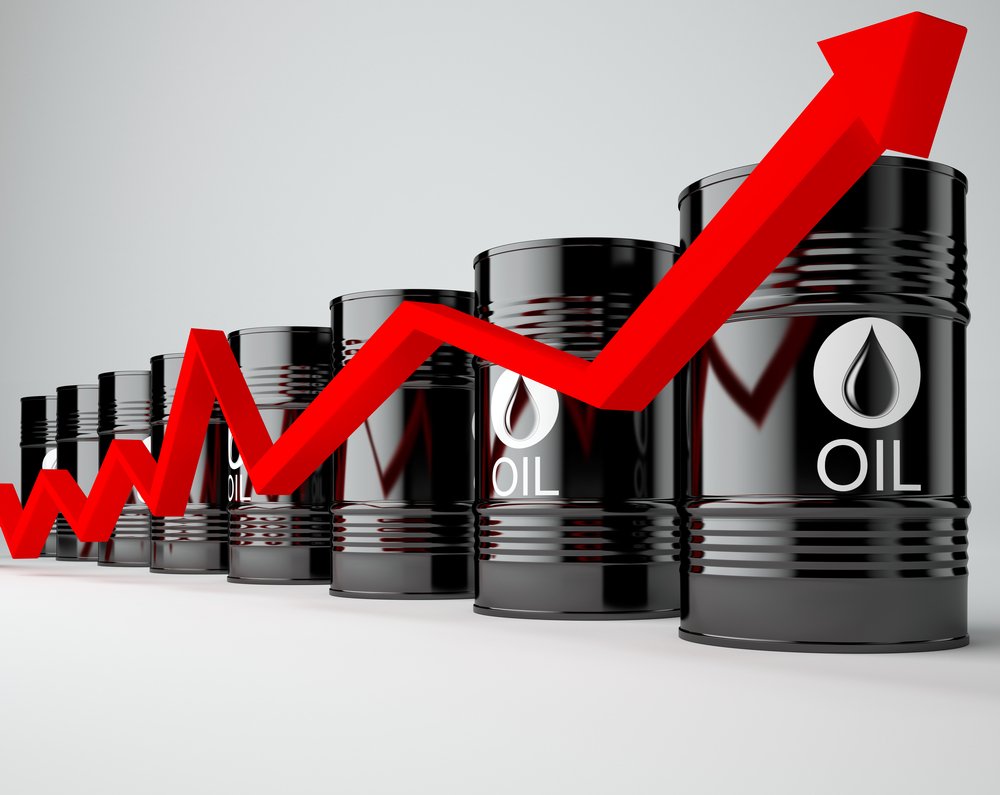
Oil prices rose by about 2 per cent on Friday on growing supply worries linked to intensifying protests in oil-producing Iran and an escalation of attacks in Russia’s war in Ukraine.
Brent futures appreciated by $1.35 or 2.18 per cent to $63.34 per barrel, while the US West Texas Intermediate (WTI) futures were up by $1.36 or 2.35 per cent to $59.12. For the week, Brent grew by about 4 per cent, while WTI gained about 3 per cent.
Worries over potential disruption of Iran’s oil output grew as the civil unrest in the Middle Eastern country, which is a member of the Organisation of the Petroleum Exporting Countries (OPEC), intensified.
President Donald Trump said on Thursday that Iran’s leader, Ayatollah Ali Khamenei, was planning on fleeing the country following the protests in the OPEC producer demanding a change in regime.
The Ayatollah is “looking to go someplace”, President Trump told reporters who asked for comment on reports that the Iranian leader could escape to Russia.
On Friday, Iran cut off Internet, as the regime frequently does amid protests in the autocratic country over economic hardships.
The action continued in the capital Tehran as well as in major cities of Mashhad and Isfahan and other areas around the country.
The protests that began nearly two weeks ago have left about 40 people dead and 2,000 have been detained as Iranian forces are trying to suppress the widespread protests.
The Ayatollah on Friday slammed the protests and protesters, accusing them of being “vandals” acting on behalf of President Trump.
In a televised address and amid the Internet blackout, Khamenei vowed that the Islamic Republic would “not back down” to protesters and President Trump.
A survey showed that OPEC pumped 28.40 million barrels per day last month, down 100,000 barrels per day from November’s revised total, with troubled Iran and Venezuela posting the largest declines.
The Russia-Ukraine war also added to supply worries as the Russian military said on Friday it had fired its hypersonic Oreshnik missile at targets in Ukraine. The targets included energy infrastructure supporting Ukraine’s military-industrial complex.
Despite these, global oil inventories are rising and oversupply remains the main driver that could cap gains.
The US moved to push a Venezuela oil deal to US energy companies including Chevron, ExxonMobil, ConocoPhillips, Halliburton, Valero, Marathon, Shell, Vitol, Trafigura, Repsol, Eni, and others, with President Trump saying the agreement would generate “tremendous wealth” for the industry and “great wealth” for the American people.






By Adedapo Adesanya
The Comptroller-General of the Nigeria Customs Service (NCS), Mr Adewale Adeniyi, has unveiled a Green Channel initiative at the Lekki Deep Sea Port as part of efforts to simplify cargo clearance, reduce delays, and improve operational efficiency for port users.
The launch marks a major step in customs’ drive to enhance trade facilitation through technology and stakeholder collaboration.
Speaking at the event in Lagos, Mr Adeniyi said the initiative was introduced by the Lekki Deep Sea Port and approved by NCS management to address persistent challenges in container stacking and examination at major ports, which often slow cargo processing.
“This particular intervention helps to move containers right from the vessel into a dedicated place where customers can have access. And between the time the container moves from the vessel to this particular place, it is tracked,” he said.
The customs boss explained that the Green Channel is designed to ensure seamless cargo movement through a dedicated corridor with minimal bureaucratic obstacles, enabling faster turnaround time for importers and other stakeholders.
He described the initiative as a product of mutual trust between the agency and its stakeholders, stressing that compliance and cooperation are essential to its success.
“What we have done today is a product of the kind of trust that we have invested in our stakeholders and the confidence that we also have in them, that they would do this in the spirit of compliance and trade facilitation,” he said.
Mr Adeniyi added that beyond easing port operations, the Green Channel supports Nigeria’s broader economic objective of building a more competitive trade environment, noting that the initiative is expected to reduce the cost and time required to do business, ultimately boosting revenue generation for the service.


By Aduragbemi Omiyale
The chairman of Zenith Bank Plc, Mr Jim Ovia, has dissociated himself from a video making the rounds, purporting that he has endorsed an investment scheme put together by Wealth Bridge.
In a statement, it was emphasised that the video of the businessman is fake, as he has no link with Wealth Bridge, which urged Nigerians to invest in the business.
The management of Zenith Bank has, therefore, advised the public to disregard videos circulated through the Greece Island Facebook handle.
The promoters of the investment scheme promised prospective customers up to N2 million in weekly returns on a contribution of N380,000.
But Zenith Bank stressed that any member of the public who conducts business with the entity does so at his or her risk, as claims in the video that the investment has the backing of the Central Bank of Nigeria (CBN) are untrue.
“The video redirects unsuspecting members of the public to an alleged Arise News webpage with the details of this scheme and an embedded registration portal for signups. This claim is also entirely false and has no connection whatsoever to the bank or its group chairman.
“For the avoidance of doubt, all the videos and promotional materials referenced above are FAKE and have nothing to do with Zenith Bank Plc or Dr Jim Ovia. The Group Chairman of Zenith Bank and the bank have no knowledge of the said investment scheme and have not entered into any partnership with the companies, individuals, or platforms behind these schemes.
“The general public is hereby advised to disregard these fraudulent communications. Anyone who engages with the Greece Island handle, Wealth Bridge, delicious sitee, AfriQuantumX, Stock market analyst 1, or any other entity on the basis of these fake videos and images published by impostors does so strictly at his or her own risk,” parts of the statement read.
By Adedapo Adesanya
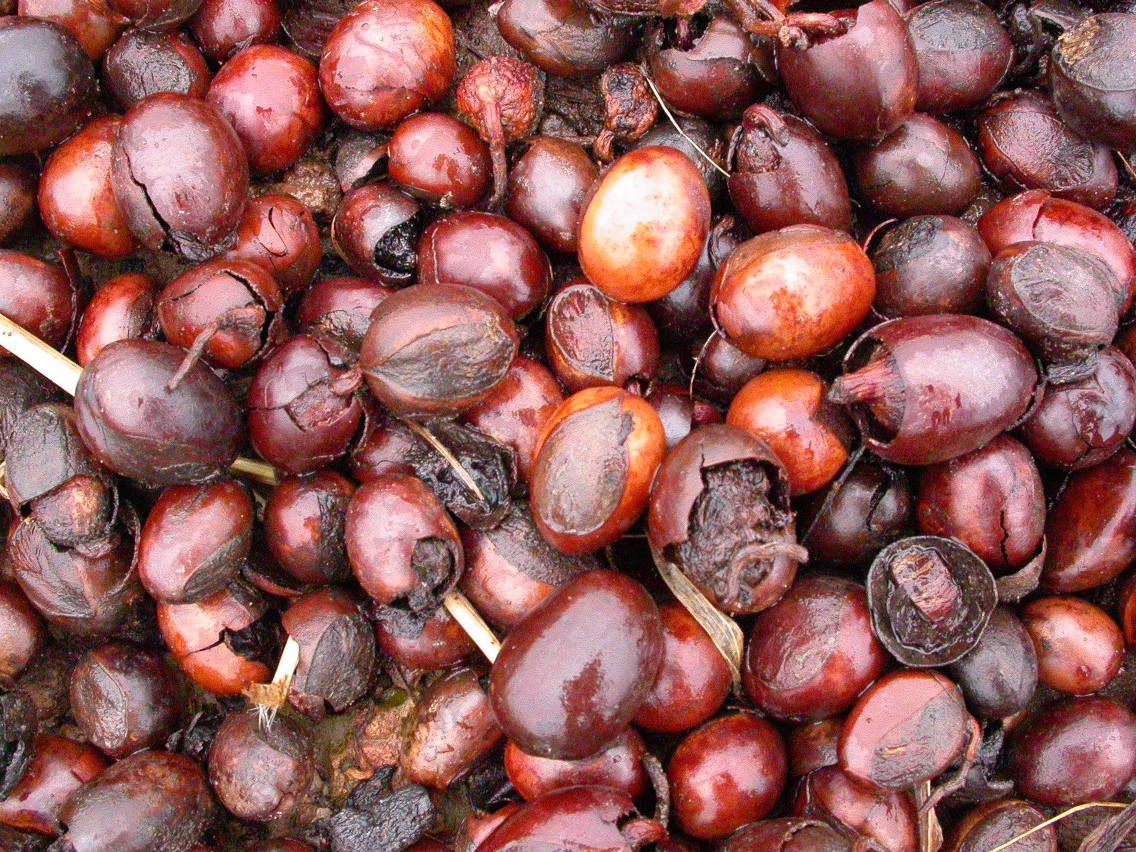
The federal government has assured stakeholders in the shea value chain that it would review the export ban on shea nuts, citing concerns over its impact on local producers, exporters and foreign exchange (FX) earnings.
On August 26, 2025, President Bola Tinubu directed a six-month temporary ban on the export of raw shea nuts.
According to NAN, the Minister of Industry, Trade and Investment, Mrs Jumoke Oduwole, at a stakeholders’ validation session on the ban on raw shea nuts exports in Nigeria on Thursday, said the ministry would brief the president after consultations across the value chain.
The Minister, at the gathering in Abuja, said the government recognises the right of citizens to earn a living and contribute to national development, adding that all inputs from stakeholders would be carefully reviewed and consolidated.
“All inputs from stakeholders will be carefully reviewed and consolidated before a decision is made on whether the ban should be extended immediately or deferred,” the Minister said, adding that, “The ministry will provide the president with factual and balanced information to guide further action.”
Mrs Oduwole said the ministry engaged widely with stakeholders to ensure all perspectives were considered in the ongoing policy deliberations.
The ministry, she said, received formal submissions from the umbrella association and held engagement sessions attended by various industry representatives.
The minister said the submissions were reproduced and circulated at the meeting to promote transparency and shared understanding.
“Relevant departments within the ministry worked jointly on the matter, and I personally reviewed the submissions to assess our position ahead of broader consultations,” she said.
In his remarks, the Minister of Agriculture and Food Security, Mr Abubakar Kyari, said the meeting was convened to review the ban objectively, underscoring the need for verified facts and transparency.
Mr Kyari said government decisions intend to protect jobs and encourage local value addition, adding that policies should be assessed holistically based on evidence and measurable impact.
Rationalising the ban last August, the Vice President, Mr Kashim Shettima, said while Nigeria produces nearly 40 per cent of the global Shea product, it accounts for only 1 per cent of the market share of $6.5 billion.
“This is unacceptable. We are projected to earn about $300 million annually in the short term, and by 2027, there will be a 10-fold increase. This is our target,” the VP stated.
He explained that the ban was a collective decision involving the sub-nationals and the federal government with clear directions for economic transformation in the overall interest of the nation, stressing that the “government is not closing doors; we are opening opportunities.”











-
 Feature/OPED6 years ago
Davos was Different this year
-
Travel/Tourism10 years ago
Lagos Seals Western Lodge Hotel In Ikorodu
-

 Showbiz3 years ago
Estranged Lover Releases Videos of Empress Njamah Bathing
-
 Banking8 years ago
Sort Codes of GTBank Branches in Nigeria
-

 Economy3 years ago
Subsidy Removal: CNG at N130 Per Litre Cheaper Than Petrol—IPMAN
-

 Banking3 years ago
Sort Codes of UBA Branches in Nigeria
-

 Banking3 years ago
First Bank Announces Planned Downtime
-

 Sports3 years ago
Highest Paid Nigerian Footballer – How Much Do Nigerian Footballers Earn